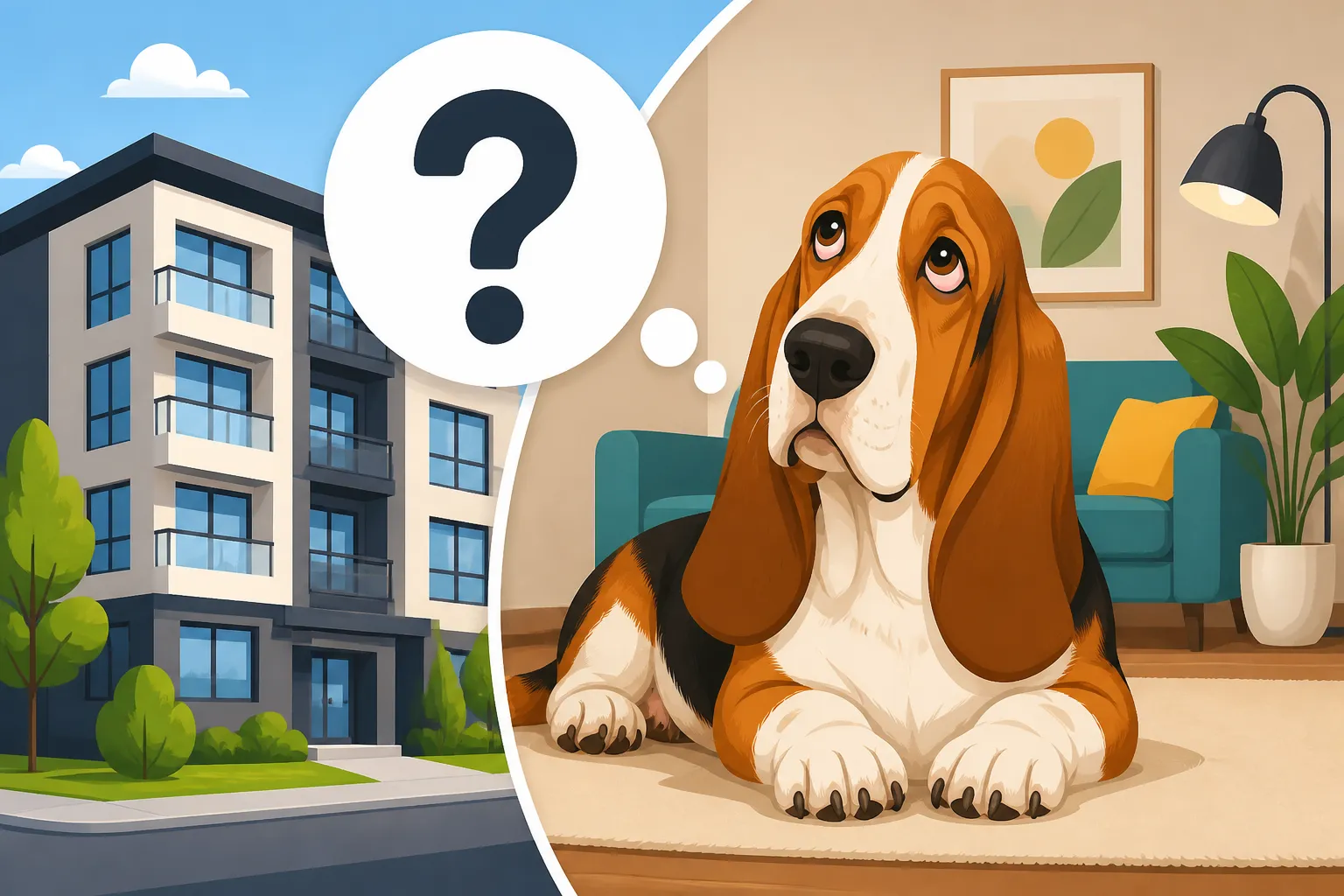
Whether a Basset Hound Suits an Apartment
A Basset Hound can live in an apartment, but its short legs and relaxed indoor manner do not automatically make it an easy fit. The harder questions are often about stairs, shared-wall noise, bathroom access and how to keep a scent-driven dog content without a yard. This guide explains what apartment life asks of both you and your Basset.
What apartment life gets right and wrong about a Basset Hound
A small height does not mean a small dog
Bassets are low to the ground, but they are solid, substantial dogs. That distinction matters in an apartment: your dog may fit comfortably in a compact living room, yet still take up space on a narrow landing or need help getting into a car. Think about the dog’s weight and length, not only its height, when you picture everyday life in your home.
Many Bassets are calm indoors once their needs are met. They may happily stretch out near the sofa while you work, and they do not need a large house simply because they are a hound. A yard is convenient, but it is not a substitute for walks, sniffing opportunities and company. For more on the breed’s build, see Why a Basset Hound Weighs as Much as a Labrador.
A useful test is to imagine the least convenient routine, not just the pleasant one. If your apartment is on an upper floor, how will you manage a sleepy dog on a rainy night? If the elevator is out, can you safely get your dog outside? If a vet recommends limiting movement, will the layout make that possible? Planning for these situations can prevent a charming apartment match from becoming a daily strain.
The real question is whether your building suits the dog
Some apartments are a natural fit: ground-floor access, a reliable elevator, a nearby patch of grass, enough room for a bed and a resident who enjoys regular walks. Others can be challenging, especially when the only route outside includes several flights of stairs or the nearest suitable walking area is far away.
Check the lease and building rules before bringing a dog home. Confirm whether there are restrictions on dog size, breed, number of pets or use of shared outdoor areas. Also consider the practical parts of common-space living: crowded elevators, tight hallways and neighbors who may be nervous around dogs. A friendly temperament helps, but you will still need to guide your dog calmly through those moments.
Apartments differ widely, so there is no universal answer to Whether a Basset Hound Suits an Apartment. A quiet ground-floor unit near a park may work better than a spacious apartment on a high floor with a slow elevator. The building’s routines and your own schedule matter just as much as the floor plan.
The daily needs that matter most in a flat
Walks and sniffing are still part of the deal
Bassets were bred to follow scents, and a walk can become a stop-and-sniff expedition rather than a brisk march around the block. That is not necessarily a problem. Sniffing gives your dog meaningful stimulation, and a few unhurried outings are usually more satisfying than one rushed trip around the nearest parking lot.
Build a routine that includes regular bathroom breaks and appropriate exercise. The right amount depends on your individual dog’s age, health and fitness, so ask your veterinarian for guidance, particularly if your Basset is a puppy, a senior or has joint or back concerns. Apartment living does not mean your dog should spend most of the day indoors simply because there is no yard.
Indoor enrichment helps fill the gaps between outings. You might scatter part of your dog’s meal across a snuffle mat, practise a few easy cues, or hide kibble in safe spots for a supervised search. A food puzzle from a retailer such as Chewy can be useful if your dog enjoys working for food, though it should match your dog’s ability and be checked for damage. For more ideas, Giving a Basset Hound's Nose Something to Do explores ways to make scent work part of everyday life.
Noise and alone time need an honest plan
A Basset’s bay can carry through shared walls and corridors. Not every individual is equally vocal, but you should not assume that a dog will remain quiet simply because it is friendly or relaxed. Sounds in the hallway, sirens, other dogs or time alone may prompt barking, whining or howling.
Before committing, consider how you would respond if your neighbors reported noise. You can work on calm routines and gradual alone-time practice, and you can provide exercise and enrichment before leaving. But do not rely on punishment or a bark collar as a shortcut; discomfort or fear can worsen the underlying problem. If the dog has persistent distress when alone, a veterinarian or qualified behavior professional can help you assess what is going on. The article Whether a Basset Hound Howls When Left covers this concern in more detail.
A long workday can be difficult for a dog that is not accustomed to being alone. Think through who can provide a bathroom break or companionship if your schedule changes. A dog walker or trusted neighbor may help, but the plan should be dependable rather than something you hope to arrange after the dog arrives. A Basset that seems perfectly settled during a weekend viewing may respond very differently to weekday hallway noise and extended solitude.
Stairs, floors and getting outside safely
Stairs and jumping deserve careful thought
A Basset’s long back and low, heavy build make it sensible to reduce repeated jumping and avoid unnecessary strain. That does not mean every stair is automatically dangerous for every dog. Age, fitness, coordination and medical history all matter, and your veterinarian can advise whether stairs are suitable for your particular Basset.
If your home has stairs, watch how your dog uses them and make the route as safe as possible. Keep steps clear, use a gate where needed, and avoid letting a puppy race up and down during play. If your dog is reluctant, wobbly or painful, do not force it to continue. For a broader discussion of home access, see Whether a Basset Hound Should Climb Stairs and Whether a Basset Hound Should Use a Ramp.
Jumping off a high bed or sofa is another everyday risk worth managing. You can block access to furniture or use a stable ramp if your dog can use it safely. A ramp needs enough traction and a gentle slope; a slippery or poorly positioned one may create a new hazard. If lifting is necessary, learn a supportive technique rather than pulling the dog up by its front legs. How to Lift a Basset Hound Safely offers practical guidance for handling.
Choose the apartment layout with the dog’s body in mind
Hard, slick floors can be difficult for dogs that have trouble keeping their footing. Put secure rugs or runners along common routes, especially near the water bowl, bed and exit. Check that rugs do not slide when your dog turns or gets up. This small adjustment can make an apartment more comfortable without requiring major changes.
Set up a resting area away from the busiest walkway. A bed should be large enough for your Basset to stretch out, with a washable cover if drool, wet paws or outdoor dirt are part of your routine. Chewy carries a range of pet supplies, but the important thing is to check measurements and choose a bed that is easy for your dog to enter and leave. For more on supportive rest, see Whether a Basset Hound Should Have an Orthopedic Bed.
Also consider temperature and ventilation. A sunny apartment can become uncomfortable, and a low-slung dog may be close to warm floors or drafts. Keep fresh water available and provide a cool, shaded resting place. If your building has shared outdoor space, check whether dogs are allowed there and whether the area is secure; a small courtyard is not always a safe substitute for a proper walk.
How to decide whether your apartment is a good match
Use the practical checklist, not the square footage alone
Before adopting or buying a Basset, walk through a normal weekday in your mind. Include the first trip outside, work hours, the evening walk, food and water, quiet time and the final bathroom break. Notice any point where your plan depends on an elevator always working, a neighbor always being available or your dog never making noise.
| Apartment factor | More manageable setup | Potential challenge |
|---|---|---|
| Access outside | Ground-floor door or dependable elevator | Several flights of stairs and no backup plan |
| Walk routine | Nearby safe routes and time for sniffing | Only brief, rushed bathroom trips |
| Noise | Dog-tolerant neighbors and a plan for alone time | Thin walls with frequent howling or barking |
| Indoor space | Room for a bed, clear pathways and secure rugs | Cluttered routes or slippery floors |
| Building rules | Written permission and clear pet policies | Uncertain restrictions or complaints about dogs |
| Physical access | Safe lifting plan and limited jumping | Regular high jumps or difficult stair access |
A Basset can thrive without a private yard when its people provide consistent outings and companionship. On the other hand, a large apartment will not solve a schedule that leaves the dog alone for long stretches or a building setup that makes every bathroom trip stressful. The Household a Basset Hound Actually Fits can help you think beyond the apartment itself and consider the whole household routine.
Try out the routine before you commit
If possible, spend time with adult Bassets before making a decision. A breed rescue, responsible breeder or experienced owner may help you understand how a particular dog handles elevators, stairs, city sounds and being left alone. An adult dog’s established habits can be easier to assess than a puppy’s future temperament, though individual behavior can still change as the dog settles in.
Ask specific questions about health and mobility. Has the dog shown discomfort on stairs? Does it tolerate being lifted if needed? How does it respond to hallway noise or time by itself? These details are more useful than a simple assurance that the dog is “good in apartments.” A Basset that already struggles with mobility may need a different living arrangement than a healthy, confident dog.
Make a backup plan for the ordinary disruptions of apartment life: a broken elevator, construction outside, a change in work hours or a stretch of bad weather. You may need a safe indoor activity for a rainy afternoon, an alternate bathroom route or help from someone you trust. If the plan still works when the day goes sideways, your apartment is more likely to be a realistic home for a Basset.
Disclaimer
This article is for general informational purposes only and does not constitute professional advice. Laws, prices and regulations vary by location and change over time. Consult a qualified professional for guidance on your specific situation.