Whether a Basset Hound Needs a Yard
A Basset Hound can be perfectly happy without a private yard, but a door that opens onto a patch of grass is not a replacement for walks, sniffing, and time with you. The real question is whether your home lets you meet those needs safely. This guide explains what matters in an apartment, townhouse, or house, and how to make a yard safer if you have one.
Does a Basset Hound need a yard
A yard is useful but not essential
A yard makes some everyday tasks easier. Your dog can go outside for a quick bathroom break, stretch its legs, or sniff around while you keep an eye on it. That convenience can matter on a rainy morning or when you are juggling work and household routines.
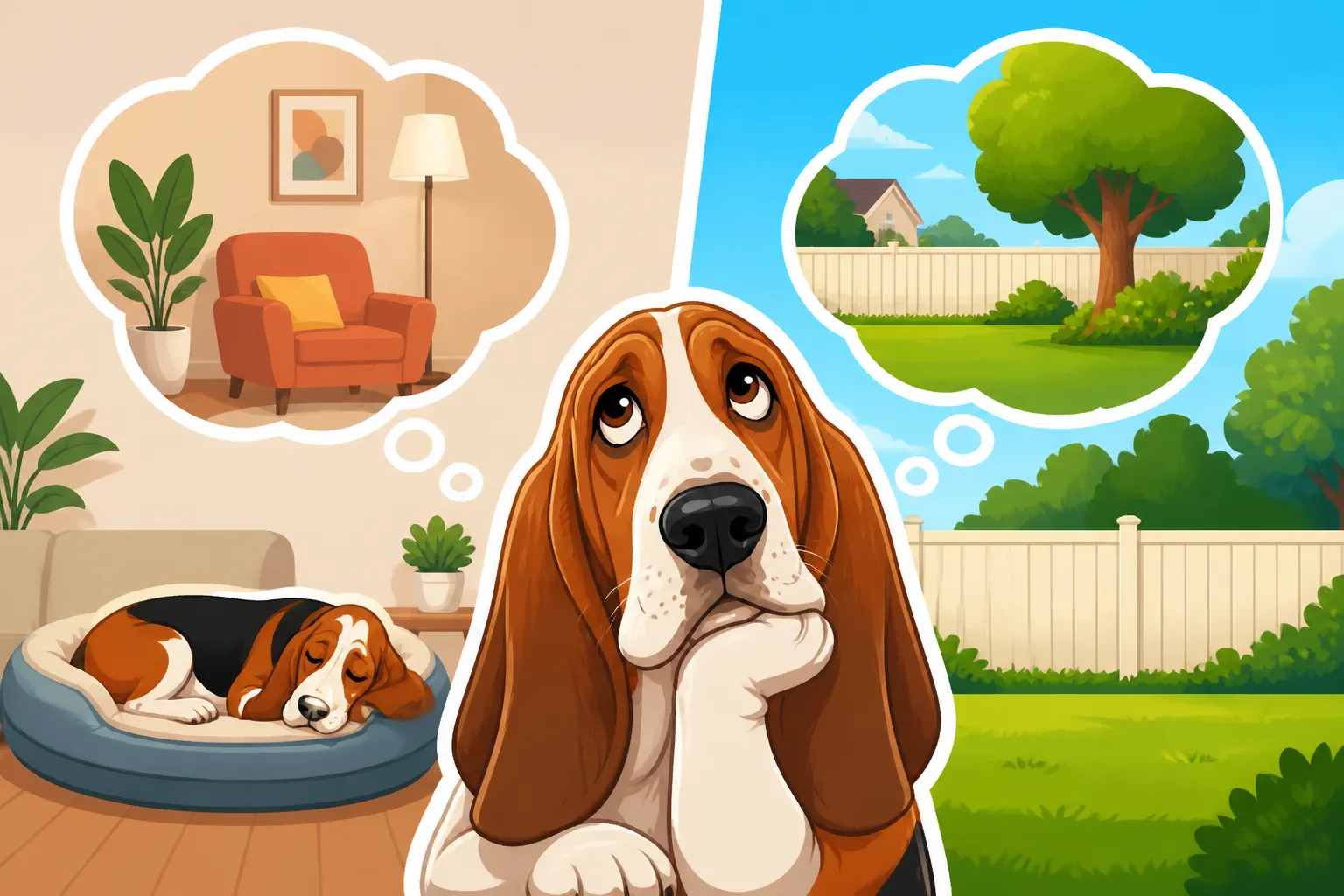
But a yard is not a basic requirement for a Basset Hound. A dog living in an apartment or home without outdoor space can do well if it gets regular opportunities to toilet, walk, explore, and spend time with people. What matters is the dog’s complete daily routine, not simply whether the home has a lawn.
A small yard can also create a misleading sense that exercise is taken care of. Many Basset Hounds will sniff the same few spots, then settle down. That might be a pleasant break outside, but it does not necessarily provide the variety, movement, and shared attention of a walk. For a closer look at different household setups, see The Household a Basset Hound Actually Fits.
A yard does not replace walks
Basset Hounds were bred to follow scent. A walk is not just a chance to cover distance; it lets a dog investigate the world through its nose. A route around the block, a quiet park path, or a slow stroll through a leafy neighborhood can offer much more mental engagement than being let out into a familiar yard.
Let your dog sniff at a comfortable pace, while keeping it on a leash in places where it could encounter traffic, wildlife, or an open gate. The aim is not to force a long, fast march. Basset Hounds have a heavy build and short legs, so exercise should suit the individual dog’s age, health, fitness, and the weather. If you are unsure what is appropriate, ask your veterinarian. For practical ideas, see How Far a Basset Hound Should Walk and Giving a Basset Hound's Nose Something to Do.
Think of the yard as one useful part of the routine: a place for bathroom breaks and casual outdoor time. Walks, gentle play, training, and scent-based activities provide other kinds of enrichment. A dog without a yard can get those things; a dog with a yard still needs them.
| Home setup | What it can offer | What the owner still needs to plan |
|---|---|---|
| Private fenced yard | Convenient bathroom breaks and supervised outdoor sniffing | Walks, enrichment, secure fencing, and supervision |
| Shared courtyard | A nearby outdoor space, depending on building rules | Leash use, cleanup, safe access, and walks elsewhere |
| Apartment without outdoor space | A comfortable home base close to sidewalks or parks | A reliable toilet routine and regular outings in varied weather |
| House with an unfenced yard | Easy access to outdoor space while accompanied | Leash or long line, close supervision, and a plan to prevent wandering |
What matters more than having a yard
A reliable toilet and exercise routine
Without a private yard, you will need to take your Basset Hound out for bathroom breaks. That is manageable, but it does require planning. Consider the route from your door, the nearest suitable place to toilet, the stairs or elevator, and how quickly you can get outside when your dog needs to go.
Puppies, older dogs, and dogs with medical needs may need more frequent opportunities than a healthy adult. Keep a predictable schedule as much as you can, and pay attention to your dog’s signals rather than relying on a fixed timetable alone. If you work away from home, arrange appropriate help instead of expecting a dog to wait uncomfortably for long stretches.
Exercise needs are individual. A leisurely sniffing walk may suit one Basset Hound, while another may need shorter outings because of age, weight, heat, or joint and back concerns. If your dog suddenly slows down, refuses a familiar route, or seems reluctant to move, consider discomfort rather than assuming it is simply being stubborn. For context on the breed’s proportions and care needs, see Why a Basset Hound Weighs as Much as a Labrador.
Enrichment that works indoors and outdoors
A yard can provide new smells, but you can offer scent activities without one. Scatter a portion of your dog’s food across a snuffle mat, hide a few pieces around a room, or let your dog search for a toy in a safe indoor space. Keep activities easy at first, then make them a little more challenging as your dog understands the game.
Short training sessions can help, too. Practice simple cues, calm leash skills, or handling routines using rewards your dog values. Food can be especially motivating for many Basset Hounds, but remember to account for treats within the dog’s daily food allowance. If you need a mat, leash, or other basic gear, Chewy is one retailer where owners can compare options; check that any item suits your dog and your home before buying.
Indoor enrichment is particularly helpful on days when weather, unsafe sidewalks, or a busy schedule makes a usual walk difficult. It does not have to be elaborate. A few minutes of searching, a gentle game, and relaxed companionship can be more useful than leaving a dog alone in a yard for a long time.
Living with a Basset Hound in a home without a yard
Apartments and shared outdoor spaces
An apartment can work if you can provide regular outings and your dog can settle comfortably indoors. Before bringing a Basset Hound home, think through the practical details: How far is the closest toilet area? Are there stairs? Is there an elevator? Can you manage the dog securely in a shared lobby or courtyard? Will the building allow a dog of this size?
If you live in a dense area such as Manhattan or central Boston, access to a suitable walking route may take more planning than it would in a quieter neighborhood. You may need to cross busy streets or use shared green space, and not every courtyard is appropriate for off-leash activity. Check building rules, follow local leash requirements, and clean up promptly.
Noise and neighbor comfort are worth considering as well. Basset Hounds can bay or bark, and sounds may carry through apartment walls or hallways. Set up a comfortable resting area away from the busiest entrance, and build a routine that gives your dog attention and activity. For more on the trade-offs, read Whether a Basset Hound Suits an Apartment and Whether a Basset Hound Suits a Full Time Worker.
Making a yard-free routine manageable
Keep the leash, waste bags, towel, and weather-appropriate gear near the door so that getting outside does not become a daily scavenger hunt. If your building has a long hallway or several flights of stairs, consider how your dog will manage that route as it grows older. A ramp or other home adjustment may be useful for some dogs, but suitability depends on the dog, the layout, and how the equipment is used. See Whether a Basset Hound Should Use Ramps at Home.
Have a backup plan for bad weather or schedule disruptions. That could mean asking a trusted neighbor or dog walker for help, using a different nearby route, or doing indoor scent games when conditions make a normal outing unpleasant. If you are comparing leads, waste bags, or indoor enrichment supplies, Chewy may be one place to browse, alongside local pet shops and other retailers. Choose equipment for fit, safety, and ease of cleaning rather than appearance alone.
A yard-free home works best when outings are part of the day rather than an afterthought. If your routine often leaves your dog waiting too long, or you cannot comfortably manage toilet trips, the issue is not the absence of a yard by itself. It is whether the practical demands fit your schedule and the dog’s needs.
Keeping a yard safe for a Basset Hound
Secure the boundary and supervise outside
A fenced yard is only useful if the fence is secure and appropriate for your dog. Check for gaps near the ground, loose panels, gates that do not latch reliably, and places where a dog could squeeze through or dig under. Walk the perimeter regularly, especially after storms or yard work.
Basset Hounds can become absorbed in a scent and wander farther than you expect. Do not assume that a dog will stop at the property line just because it knows the yard. Supervise outdoor time, particularly if the dog is new to your home, the fence has not been checked, or there are tempting scents nearby. For more on this behavior, see Whether a Basset Hound Wanders if the Gate Opens and How High a Fence a Basset Hound Needs.
Even in a fenced yard, keep identification information current and use a leash when leaving the property. A fence can fail, a gate can be left open, and a hound focused on a trail may not respond promptly to a call. More guidance is available in Whether a Basset Hound Should Ever Be Off Leash.
Check surfaces, weather, and yard hazards
Low-set dogs experience the yard close to the ground. Check for sharp sticks, garden tools, exposed chemicals, toxic plants, standing water, and holes that could trip a dog. Keep lawn treatments and other substances out of reach according to their labels, and ask a veterinarian if you are unsure whether a plant or product is safe.
Heat deserves particular care. A dog can overheat even when a yard looks shady, and a Basset Hound may not choose to stop exploring when it should. Offer fresh water, provide shade, and bring your dog inside if it seems uncomfortable. In cold, wet, or muddy conditions, check the dog’s belly and paws after time outdoors and dry damp areas gently.
If your dog spends time outside, keep the area pleasant rather than treating it as a place to leave the dog unattended for long periods. A shaded resting spot and water are helpful, but they do not replace companionship, walks, or supervision. Chewy may offer outdoor accessories such as bowls or cleanup supplies, but assess the yard itself first; no accessory makes an insecure boundary or unsafe weather situation safe.
Disclaimer
This article is for general informational purposes only and does not constitute professional advice. Laws, prices and regulations vary by location and change over time. Consult a qualified professional for guidance on your specific situation.