Whether a Basset Hound Needs a Professional Trainer
Many Basset Hound owners eventually reach a point of exasperation, wondering if their beloved, floppy-eared companion is truly "untrainable" or just exceptionally good at ignoring commands. It's a common frustration, especially with their independent spirit and legendary nose. This guide will explore whether a professional trainer is truly a necessity for your Basset Hound, when their expertise is most beneficial, and how you can work effectively with or without one.
Understanding the Basset Hound's Unique Training Challenges
Let's be real, Basset Hounds aren't your typical "eager to please" golden retrievers or highly biddable border collies. Their charm lies in their distinct personality, but that same charm can feel like a mountain when you're trying to teach them to sit or, heaven forbid, come when called. It's easy to feel like you're speaking a different language than your low-slung friend.
The Power of the Nose: A Basset Hound's True Master
If you've ever owned a Basset, you know their nose rules their world. It's not just a cute feature; it's a super-sniffer, capable of detecting scents that we can't even fathom. When that magnificent nose hits a trail, everything else, including your desperate pleas, fades into the background. Your Basset isn't being disobedient out of malice; they are simply fulfilling their deepest, most ancient instinct. They were bred for this, after all, to follow a scent trail relentlessly. This genetic predisposition means that even the most well-intentioned owner can find themselves battling an invisible force. It's why a Basset Hound that stops hearing you when it smells something is such a common complaint among Basset owners.
Imagine you're walking your Basset in a park, and suddenly, their nose drops to the ground. Their body language changes, their tail might give a slight, focused wag, and they become a furry, low-slung scent-detection machine. You call their name, perhaps even with a tasty treat in hand, but it's as if you're whispering in a hurricane. Their entire being is consumed by the intricate tapestry of odors beneath their paws. They're not being stubborn; they're simply being a Basset Hound. A professional trainer understands this deeply ingrained drive and can offer strategies that work with it, rather than constantly fighting against it. They can help you channel that drive into acceptable outlets, rather than trying to suppress what is core to their being.
The Myth of Stubbornness vs. Lack of Motivation
Many Basset owners throw their hands up and declare their dog "stubborn." While Bassets certainly have an independent streak, it's often more about motivation than outright defiance. They're not naturally driven by a desire to please in the same way some other breeds are. They're thinkers, and they often weigh the perceived value of your command against the inherent joy of whatever they're currently doing (usually sniffing or napping). If your offer isn't compelling enough, they'll simply opt for their own agenda. This isn't necessarily a bad thing, it just means you need to be smarter and more creative with your training approach. For more on this, check out What Actually Motivates a Basset Hound.
Think of it this way: if you're asking your Basset to perform a perfect "sit-stay" in a busy park, and you're offering a bland piece of kibble, while a fascinating squirrel just darted across their field of vision, what do you honestly expect them to choose? Their priorities are often different from ours, and they aren't afraid to let us know. This can manifest as a slow response, a deliberate turning away, or even a dramatic flop to the ground as if the effort of moving is simply too much. A professional trainer can help you understand your Basset's motivational hierarchy and teach you how to make your requests the most appealing option. They can guide you on finding those high-value rewards that make your Basset think, "Hmm, maybe listening to my human is worth it this time." For some Bassets, especially those with discerning palates, a high-value treat like fresh food options from Ollie can be a game-changer during training sessions.
When a Professional Trainer is Truly the Best Next Step
While every Basset Hound benefits from consistent, positive reinforcement training at home, there are definitely times when bringing in a professional isn't just helpful, but truly necessary. These are often situations where the safety of your dog or others is at stake, or when a particular behavior has become so ingrained that you feel completely lost.
Addressing Specific Behavioral Issues
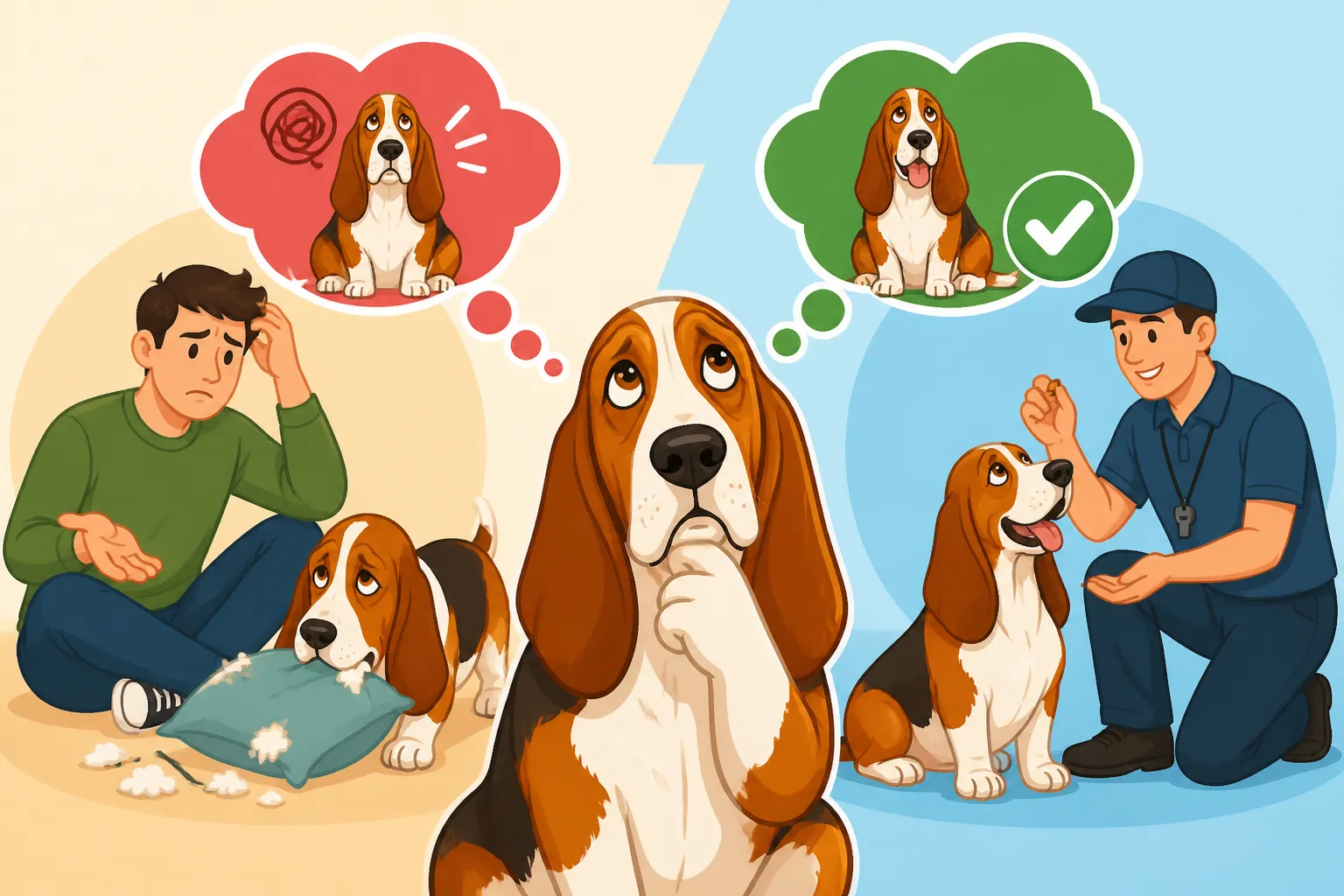
If your Basset Hound is exhibiting behaviors that go beyond typical Basset stubbornness, such as aggression towards other dogs or people, severe resource guarding, intense separation anxiety, or destructive chewing that impacts their safety or your home, it's time to call in the pros. These aren't just "naughty" behaviors; they're often signs of underlying stress, fear, or a lack of understanding that requires expert intervention. A qualified professional trainer, ideally one who specializes in behavior modification, can assess the root cause of these issues and develop a tailored plan. For dogs struggling with being left alone, understanding Whether a Basset Hound Gets Separation Anxiety is crucial, and a professional can offer coping strategies.
Consider a scenario where your Basset, usually a gentle soul, has started snapping at visitors or lunging at other dogs on walks. This isn't just inconvenient; it's a serious safety concern. Trying to self-diagnose and fix such complex issues can often make them worse. A professional behaviorist has the experience to read subtle canine body language, identify triggers, and implement counter-conditioning and desensitization protocols. They can also rule out pain as a cause; sometimes, a Basset who is acting out might be suffering from conditions like The Back Trouble a Basset Hound Is Built Into, making them uncomfortable and prone to lashing out. In such cases, a vet visit is paramount, and pet insurance, like that offered by Healthy Paws, can be invaluable for unexpected medical costs. They'll work with you to understand the specific nuances of your Basset's temperament and create a step-by-step program to manage and reduce these concerning behaviors, often with homework assignments for you to practice consistently.
Mastering Difficult Obedience Challenges
While Bassets aren't known for competitive obedience, basic commands are vital for their safety and your peace of mind. Some commands, like a reliable recall, can be incredibly challenging for a scent hound, especially when their nose has found something irresistible. If you've tried everything and your Basset still bolts the moment they catch a whiff of an interesting smell, a professional can offer new techniques and tools. They might introduce advanced long-line work, use specific motivational strategies, or help you understand how to build a rock-solid foundation for commands in distracting environments. The challenge of The Recall a Basset Hound Will Never Reliably Give You is precisely where a pro can make a world of difference, offering realistic expectations and practical solutions.
Another common struggle is leash pulling. Bassets are powerful for their size, and their low center of gravity makes them surprisingly strong pullers. If your walks feel like a constant tug-of-war, or if you're worried about hurting your Basset's neck or back, a professional trainer can introduce techniques like loose-leash walking, different types of harnesses, and consistent reinforcement strategies that you might not have considered. They can show you how to correctly use equipment and timing to communicate effectively with your Basset, transforming stressful walks into enjoyable outings. For example, they might recommend specific types of harnesses or training tools available from retailers like Chewy, coupled with high-value treats to reward good behavior.
Empowering Yourself: Effective Training Without a Pro
While professional help is invaluable in certain situations, it's important to remember that much of a Basset Hound's training and socialization can be successfully tackled by a dedicated owner. Many Basset owners find immense satisfaction in working directly with their dogs, building a strong bond based on trust and clear communication.
Consistency, Patience, and Positive Reinforcement
The cornerstone of successful Basset Hound training, whether you're working with a pro or not, is unwavering consistency, endless patience, and a steadfast commitment to positive reinforcement. Bassets don't respond well to harsh corrections or punishment; it often makes them shut down, become more resistant, or even fearful. Instead, they thrive on clear, rewarding experiences. Every interaction is a training opportunity. Reward the behaviors you want to see, and gently redirect the ones you don't. This means having treats readily available, being observant of your dog's cues, and praising generously.
For instance, if your Basset often lies down when you ask them to sit, reward the attempt and then guide them into the correct position, immediately rewarding the sit. Consistency means everyone in the household uses the same commands and expectations. If one person allows counter-surfing and another scolds it, your Basset will quickly learn which rules apply to which human. Positive reinforcement could be anything from a special verbal cue, a favorite toy, or a delicious treat. Remembering how much an adult Basset Hound eats monthly can help you portion out training treats so you don't accidentally overfeed them while teaching new skills. The key is making the desired behavior more appealing and more rewarding than anything else they might choose to do. This builds a foundation of trust and makes your Basset want to engage with you, even if their nose is telling them otherwise.
Leveraging Their Natural Instincts for Training
Instead of fighting their powerful nose, why not put it to good use? Basset Hounds excel at scent work and activities that engage their primary sense. Incorporating nose work games into your daily routine can be incredibly mentally stimulating for your Basset, tiring them out in a way that physical exercise alone often can't. This can also strengthen your bond and make them more attentive to you, as you become the facilitator of their favorite activity. Giving a Basset Hound's Nose Something to Do is not just fun, it's essential for their well-being and can significantly improve their overall trainability.
Think about hiding treats around the house or yard and encouraging your Basset to find them. You can start simply, with treats in obvious places, and gradually make the "hunt" more challenging. There are also formal nose work classes that cater specifically to scent hounds, allowing them to hone their natural abilities in a structured environment. You can use puzzle toys and snuffle mats to make meal times more engaging, turning a simple dinner into a rewarding mental challenge. You might find a great selection of durable chew toys or even a snuffle mat on sites like Chewy that can help with this. By channeling their instincts, you're not just training them, you're fulfilling their innate needs, which often leads to a much happier, better-behaved Basset at home. This kind of engagement can reduce boredom-related behaviors and make them more receptive to other forms of training.
Finding the Right Fit: Selecting a Professional Basset Hound Trainer
If you decide that a professional trainer is the right path for you and your Basset, choosing the right one is paramount. Not all trainers are created equal, and finding someone experienced with scent hounds and positive reinforcement methods is key to success.
Different Types of Trainers and Their Approaches
The world of dog training can be a bit of a maze, with various philosophies and methods. You'll encounter trainers who are certified professional dog trainers (CPDT-KA), certified dog behavior consultants (CDBC), veterinary behaviorists (DVM, DACVB), and more. It's important to understand the differences:
| Type of Trainer | Focus/Approach | Best For | Considerations |
|---|---|---|---|
| Certified Professional Dog Trainer (CPDT-KA) | Uses positive reinforcement and humane training techniques to teach basic to advanced obedience. | General obedience, puppy socialization, manners, basic behavioral issues (e.g., jumping, leash pulling). | Look for experience with Basset Hounds specifically. Certification indicates knowledge. |
| Certified Dog Behavior Consultant (CDBC) | Specializes in behavior modification for more complex issues, using science-based methods. | Aggression, severe anxiety, phobias, resource guarding, house-soiling problems. | Requires extensive experience and education. Often works in conjunction with a vet. |
| Veterinary Behaviorist (DVM, DACVB) | A licensed veterinarian with advanced training in animal behavior. Can diagnose and prescribe medication. | Medical conditions impacting behavior, severe aggression, complex mental health issues, combined with behavioral therapy. | Highest level of qualification for behavioral issues, often the last resort for complex cases. |
| Hobbyist/Experienced Trainer | May have significant experience but lack formal certification or adherence to modern, humane practices. | Might be good for sport-specific training (e.g., tracking) if experienced, but use caution for behavioral issues. | Always ask about methods and observe a session. Avoid any trainer using pain, fear, or intimidation. |
For Basset Hounds, seeking trainers who emphasize positive reinforcement, force-free methods, and have experience with scent hounds or "stubborn" breeds is critical. They should understand that a Basset's "disobedience" often stems from instinct or lack of motivation, not a desire to be difficult.
What to Look For and Questions to Ask
When interviewing potential trainers, don't be shy about asking direct questions. You're entrusting them with your beloved companion, and you need to feel comfortable with their philosophy and approach.
Key Questions to Ask:
- What methods do you use? Look for answers that focus on positive reinforcement, rewards, and humane training. Avoid trainers who mention "alpha," "dominance," choke chains, prong collars, or e-collars as primary tools. For a breed like the Basset, such methods are not only ineffective but can damage their trust and spirit.
- Do you have experience with Basset Hounds or similar scent hound breeds? A trainer who understands the Basset's unique drives will be far more effective. They should be familiar with the challenge of Whether a Basset Hound's Nose Is Second Only to a Bloodhound and how it impacts training.
- What are your qualifications and certifications? Look for certifications from reputable organizations.
- Can I observe a training session? A transparent trainer will welcome this. Observe how they interact with dogs and owners. Do they seem patient and knowledgeable?
- How do you handle specific problems like recall or leash pulling in Bassets? Listen for practical, humane strategies that address the root cause, rather than just suppressing symptoms.
- What kind of homework will I have? A good trainer empowers you to work with your dog, so expect homework and consistent practice.
- What are your rates and package options? While cost is a factor, prioritize expertise and humane methods over the cheapest option. What Training Classes Cost a Basset Hound Owner can vary significantly, so ask for a clear breakdown.
A professional trainer can be an invaluable resource, offering new perspectives, effective techniques, and much-needed support for those challenging Basset moments. However, remember that they are there to teach you how to train your dog. The ultimate success always lies in your consistent effort and the bond you build with your unique, wonderful Basset Hound. The first year with a Basset Hound puppy is often the most critical for setting these foundations, and a professional can guide you through it.
Disclaimer
This article is for general informational purposes only and does not constitute professional advice. Laws, prices and regulations vary by location and change over time. Consult a qualified professional for guidance on your specific situation.