The Recall a Basset Hound Will Never Reliably Give You
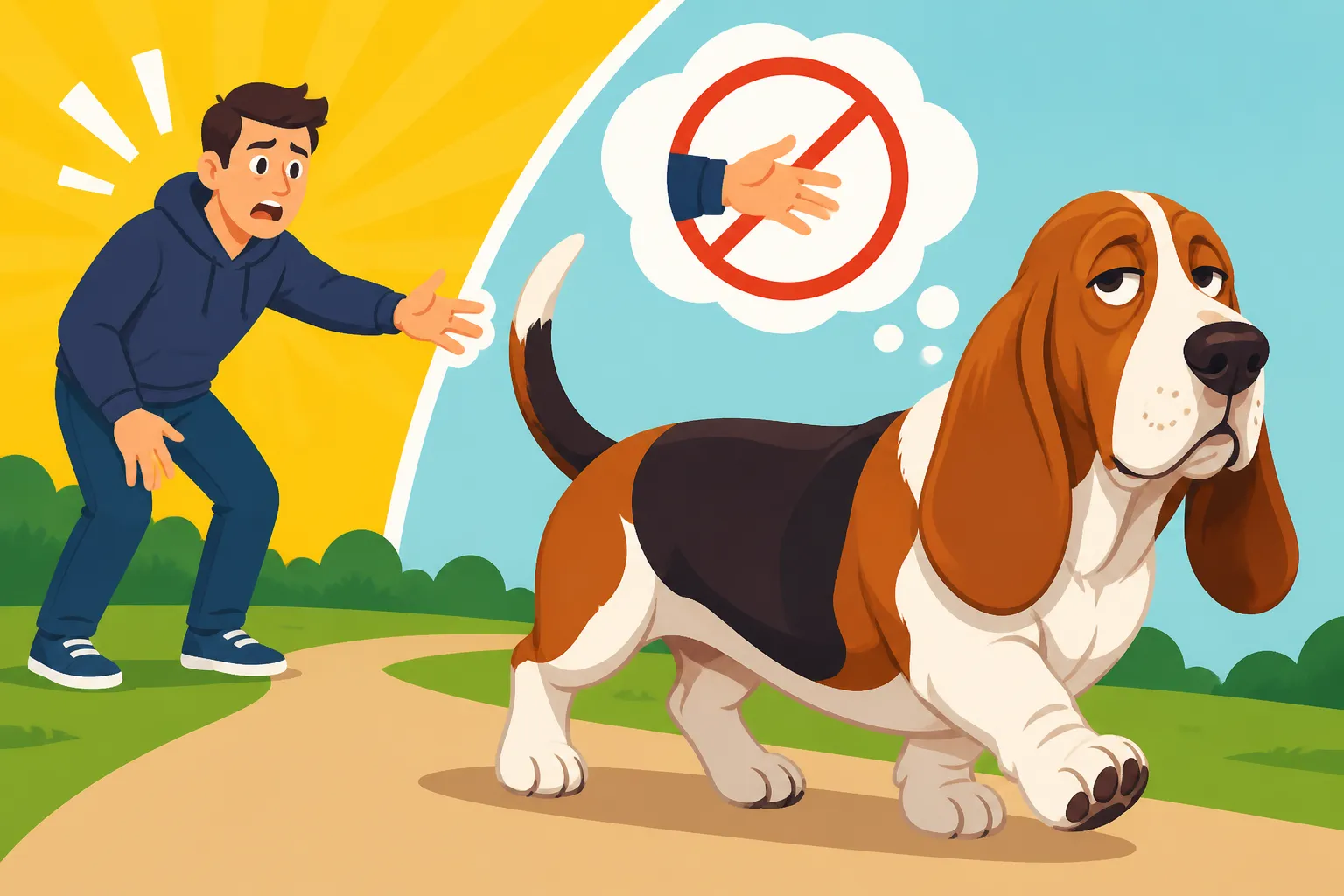
You call your Basset Hound across the park, and they lift their head, look straight at you, and then put their nose right back in the grass and trot the other way. If that feels personal, it is not. This guide explains why a dependable off leash recall is the one thing most Bassets will never give you, what kind of recall you can realistically build, and how to keep your hound safe anyway.
Why the Basset Recall Problem Is Built In
Most recall advice assumes a dog that wants to be near you more than it wants anything else outside. That assumption works for a lot of breeds. It falls apart with a scent hound whose entire history is about following a trail away from people until the job is done.
A Nose Bred to Ignore Everything Else
The Basset was developed in France to trail rabbits and hare at a pace hunters on foot could follow. The breed’s short legs kept it slow, and its nose kept it locked on. A good hunting Basset was one that stuck to a line through brush, past distractions and away from the people behind it. Breaking off a trail to check in was not a virtue. It was a fault.
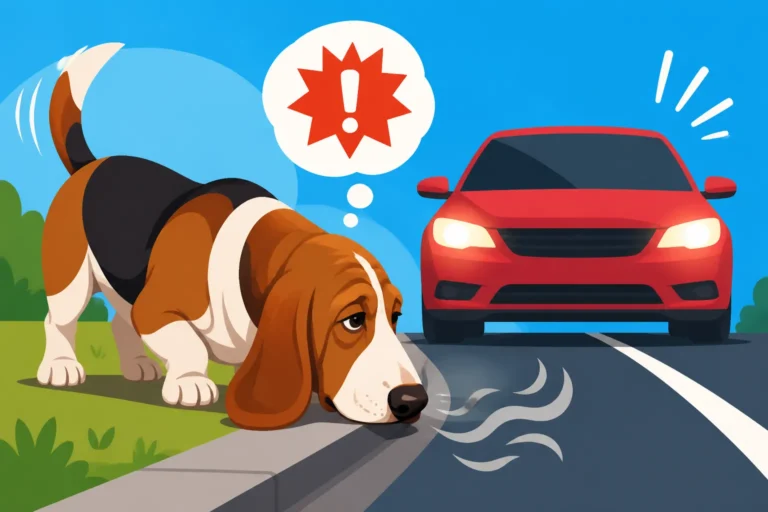
That is the dog you have on your couch. Its nose is one of the most capable in the dog world, ranked by most hound people just behind the Bloodhound. When that nose catches something interesting, it does not simply notice it. It narrows the dog’s attention so completely that your voice becomes background noise. The site’s piece Why a Basset Hound Ignores You on a Scent explains what is happening inside the dog when that switch flips.
Picture a Basset named Clementine on a quiet trail walk. For twenty minutes she ambles beside her owner, checks in and takes treats. Then a rabbit crossed that path an hour ago. Her head drops, her tail goes up and she starts moving with purpose. Her owner calls in the same happy voice that worked a minute earlier, and nothing happens. Clementine is not defiant. She is working.
Stubborn or Simply Somewhere Else
People often call Bassets stubborn. A fairer word is selective. Bassets are perfectly capable of learning cues, and many learn them quickly when the reward is right. What they will not do is put your request ahead of a strong scent unless you have built a habit that is stronger still, and even then it may fail at the worst moment.
That is why the article Whether a Basset Hound Is Stubborn or Just Not Interested is worth reading if you feel like you are failing at training. You are probably not failing. You are asking a hound to act against its breeding in the most tempting situation possible.
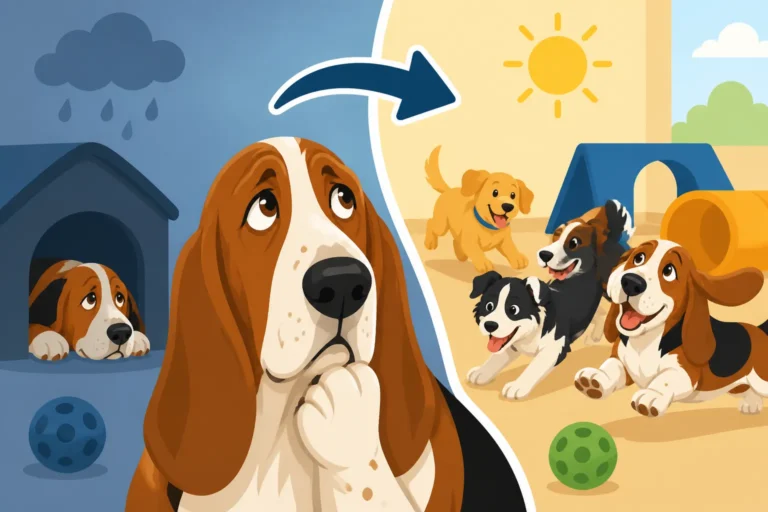
Understanding this changes how you train. Instead of trying to win an argument, you set things up so your dog rarely gets the chance to practice ignoring you, and you make coming back the most rewarding thing in its world in the situations you can control.
Why One Good Day Proves Nothing
Many Basset owners have a story about the time their hound came flying back across a field. Those moments are real, and they are worth celebrating. The trouble is that they tend to happen when there was nothing better to do. A recall that works in an empty yard tells you very little about what happens when a deer trail crosses the path.
Reliability means the dog comes back nearly every time, under real distraction, from real distance. Very few Bassets reach that standard, and the cost of guessing wrong is often a dog in traffic or a dog lost in the woods. The site’s piece Whether a Basset Hound Ever Comes When Called covers what owners actually report.
What a Realistic Basset Recall Looks Like
You can still teach a recall. It just looks different from the picture in a herding breed training video. Think of it as a tool for managed situations, not a license to unclip the leash in open country.
The Recall You Can Build
A realistic Basset recall is a strong, cheerful response in low and medium distraction settings: your house, a fenced yard, a quiet training field, or on a long line where you can back it up. In these settings, a well trained Basset can come quickly and happily most of the time.
That kind of recall is valuable. It means you can call your dog in from the yard, interrupt them in the house and redirect them on a walk before they lock onto a smell. It also gives you a better chance in an emergency, even if it is not a guarantee.
The Recall You Should Not Expect
What most Bassets will not reliably do is turn off a hot scent trail on command, especially at a distance, in open space, with wildlife scent in the air. Expecting that sets both of you up for frustration and puts your dog at risk.
The table below compares common recall expectations with what is realistic for most Bassets.
| Situation | Common Expectation | Realistic for Most Bassets |
|---|---|---|
| Calling from another room | Comes right away | Often yes, with good training |
| Fenced yard, no strong scents | Comes every time | Usually yes, may dawdle |
| Fenced yard, fresh animal scent | Comes when called | Inconsistent, may need to be collected |
| Long line in a park | Comes back to you | Often yes, line prevents failure |
| Off leash on a trail | Stays close and returns | Unlikely to be reliable |
| Off leash near a road | Stops and comes back | Not safe to rely on |
Why Distance and Wind Matter
Scent hounds work with the wind. Once a Basset gets twenty or thirty yards downwind of you on a trail, your voice gets weaker while the scent gets stronger. Short legs do not mean slow escape either. A Basset on a trail can cover ground steadily for a long time and will keep going long after a sprinting dog would have stopped.
That is why many experienced owners talk about a Basset’s working radius rather than its recall. Inside a small radius, with your voice and body clearly present, you have some influence. Beyond it, the nose is in charge. Keeping your dog within that radius is the whole game.
Building the Best Recall Your Basset Can Give
Even with limits, a solid recall in the right settings is worth the effort. These steps help most Bassets respond as well as they can.
Choosing a Cue and a Reward
Pick a recall word you have never used casually, like “here” or “come close,” and save it for training at first. If you have already worn out “come” by calling your dog for baths and nail trims, retire it and start fresh.
Food is usually your most powerful tool. Bassets are famously food motivated, but they can be picky. Test different treats and find a few that make your dog’s eyes light up. Soft, smelly options like small pieces of cooked chicken or cheese often work better than dry biscuits. The site’s guide Whether Food Beats a Scent for a Basset Hound covers how to rank rewards against the competition.
Remember that Bassets gain weight easily, and extra pounds are hard on their long backs. Take training treats out of their daily food allowance rather than adding them on top. The article Whether Treats Should Come Out of a Basset Hound’s Ration explains how to balance this.
Step by Step Recall Training
A structured progression keeps the game fun and avoids rehearsing failure:
- Start indoors with no distractions. Say the cue once in a happy voice, then back away a few steps. When your dog comes, mark the moment and give a high value treat.
- Practice several short sessions a day. Keep each session to a few repetitions so your dog stays keen.
- Add mild distractions, such as a toy on the floor or a family member walking past, and keep rewarding generously.
- Move to a fenced yard. Begin close, then slowly increase distance. Call only when you are confident your dog will respond, and do not repeat the cue over and over.
- Introduce a long line in open spaces. Practice recalls on the line, using it to prevent your dog from wandering off if they ignore the cue.
- Gradually add tougher distractions, like other dogs at a distance or areas with interesting scents, but keep the line on.
If your dog fails, make the next step easier. Shorten the distance, reduce distractions or use better rewards. You want many more successes than failures.
Using a Whistle
Some Basset owners find a whistle helpful. It cuts through wind and sounds the same no matter how stressed you are. Teach the whistle exactly like a verbal cue, pairing it with treats until your dog responds instantly.
A whistle will not give you a perfect recall around strong scents, but it can make your signal more consistent. The site’s article Whether a Whistle Works on a Basset Hound goes into technique and timing.
Structured Programs and Gear
If you like having a plan to follow, some owners use online training programs. BAXTER & Bella, for example, offers structured lessons and community support that some owners use to stay consistent. Any program you choose should rely on positive reinforcement and should be adapted for scent hound behavior rather than assuming a dog that lives to please.
Most of the gear you need is simple and easy to order from a large retailer like Amazon or from a local pet shop: a long line, a well fitted harness, a treat pouch and possibly a whistle. Compare materials and reviews carefully, especially for lines and harnesses that need to hold a determined hound.
Managing a Basset Safely Without a Perfect Recall
Because you cannot rely on recall around strong scents, management has to carry most of the safety load. Good management lets your Basset enjoy the outdoors without gambling on its listening skills.
Long Lines and Harnesses
For most Bassets, the long line is the best friend you will ever have. A line of fifteen to thirty feet attached to a harness, not a collar, gives your dog freedom to sniff while keeping them connected to you. Handle the line carefully to avoid rope burns or tangles, and never attach it to a collar where a sudden stop could injure the neck.
Choose a harness that fits the Basset’s deep chest and long body. Many owners prefer designs that do not press on the shoulders or restrict movement. The site’s guide Which Harness Suits a Basset Hound covers fit and style. For whether a long line covers every situation, read Whether a Long Line Is Enough for a Basset Hound.
Wear gloves when you first start using a long line. A Basset that suddenly lunges after a scent can pull the line through your hands faster than you expect.
Fences, Gates and Doors
A fully fenced yard with secure gates is the safest place for off leash time. Check your fence line for gaps and soft spots where a determined Basset could dig. While Bassets are not known for high jumping, they are good at squeezing through and tunneling under weak spots. See How High a Fence a Basset Hound Needs for details.
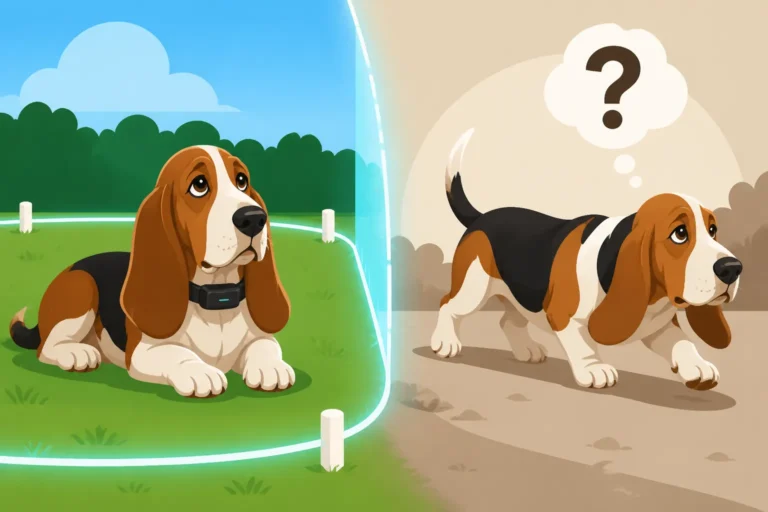
Invisible fences are risky for scent hounds. A Basset on a hot trail may push through the correction and then be reluctant to come back through it. Physical fencing is far more reliable.
Inside the house, teach your Basset to wait at doors and use baby gates or crates to prevent door dashing. A dog that slips past a guest and catches a scent can be blocks away before you get your shoes on.
Identification and Tracking Tools
No matter how careful you are, accidents happen. Make sure your Basset wears a collar with an ID tag and that their microchip registration is current. A good quality GPS tracker can help you find your dog quickly if they get loose.
Trackers do not replace good management, but they can turn a long, frantic search into a quick recovery. The site’s article Whether a Basset Hound Should Wear a Tracker discusses pros, cons and features to look for. Check battery life and subscription terms on the maker’s own page before you buy, because these vary between devices.
Giving the Nose a Job So It Stops Freelancing
One of the best ways to reduce problem trailing is to give your Basset legal outlets for that famous nose. A dog whose scent drive is satisfied is easier to live with and often easier to manage on walks.
Scent Games at Home
Simple scent games can be done in the house or yard. Hide treats under cups, behind furniture or in boxes and let your dog search. As your hound gets better, make hides harder or spread them across a larger area.
You can also teach your Basset to find a specific scent, such as a cotton swab with a drop of essential oil used in nose work training. Start by pairing the scent with food and rewarding your dog for showing interest. Over time, they learn to search for the target scent alone.
Tracking and Nose Work Activities
Many Bassets thrive in organized nose work or tracking activities. In tracking, dogs follow a laid trail to find an article or person. In nose work, they search for hidden odors in rooms, vehicles or outdoor areas. Both activities let your Basset use its natural strengths in a structured way.
These sports can also improve your relationship. When you learn to read your Basset’s body language on a trail, you gain respect for their skill and a better sense of when they are locked in. The site’s guide Giving a Basset Hound’s Nose Something to Do lists more options.
Turning Walks Into Sniff Walks
Not every walk has to be about covering distance. Some of the most satisfying outings for a Basset are slow sniff walks, where you follow their nose on a long line through a field or trail. Let them investigate, mark and absorb the scent picture.
Even ten or fifteen minutes of focused sniffing can tire a Basset more than a longer, faster walk with no chance to explore. A dog that gets these outings regularly is often calmer at home and less frantic when it hits a good smell.
Living Happily With a Hound That Follows Its Nose
The recall a Basset Hound will never reliably give you is the instant, dependable return from a hot scent trail in open country. Accepting that is not giving up. It is choosing to work with your dog’s nature instead of against it.
When Off Leash Is Ever Reasonable
There are a few settings where some owners choose to let a Basset off leash: a fully enclosed field with high fences and no gaps, a secure indoor arena or a small, well checked private yard. Even then, keep sessions short, stay close and watch for the nose dropping into trail mode. The site’s piece Whether a Basset Hound Should Ever Be Off Leash looks at the trade offs honestly.
If you ever feel tempted to test your dog off leash near a road, a trailhead or woodland with deer, remember what you are betting. A single bad moment can be permanent.
The Partnership You Actually Get
What you can build is a hound that comes happily in familiar settings, loves training games and shares many safe adventures with you. You can rely on fences, long lines, harnesses and tracking tools to keep your Basset safe. And you can give that incredible nose a job so it does not have to invent one.
A Basset that knows it will get to sniff, search and explore with you every day is a calmer, happier companion. That relationship, built on understanding rather than blind obedience, is one of the best parts of living with a scent hound.
Disclaimer
This article is for general informational purposes only and does not constitute professional advice. Laws, prices and regulations vary by location and change over time. Consult a qualified professional for guidance on your specific situation.