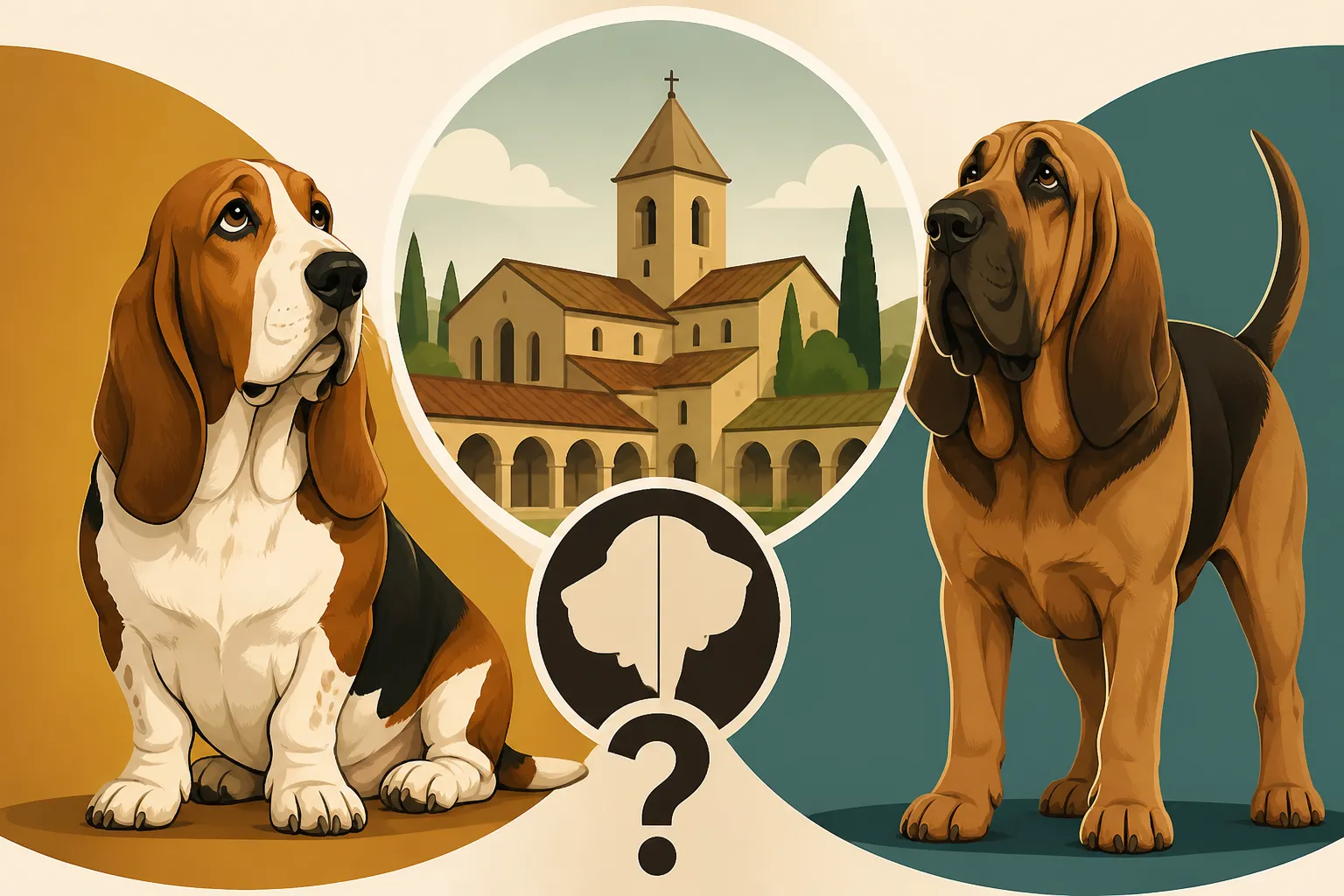
Whether the Bloodhound Came From the Same Abbey
It's completely understandable to wonder about the deep historical roots of our beloved Basset Hounds, especially when you see their unmistakable scent-hound features and ponder their connection to other famous tracking dogs like the Bloodhound. Many of us have heard whispers of ancient abbeys and monks playing a role in developing these incredible noses, and it naturally sparks curiosity about whether these magnificent breeds share a common cradle. This guide will dive into the fascinating history, exploring the origins of both the Basset Hound and the Bloodhound to see just how intertwined their early stories truly are.
The Ancient Lineage of Scent Hounds in Europe
Before we can pinpoint whether the Bloodhound and Basset Hound sprang from the very same abbey, it helps to understand the broader context of how scent hounds came to be in Europe. The idea of specialized dogs, bred for their incredible sense of smell and tracking prowess, goes back centuries. These weren't just random dogs; they were carefully selected and propagated for traits that made them invaluable hunting companions. It's a rich history, filled with dedicated individuals who understood the power of a dog's nose.
Saint Hubert and the Ardennes Abbey
When people talk about the ancient origins of scent hounds, particularly those from a monastic background, the name Saint Hubert almost always comes up. Legend has it that Hubert, a devout hunter, had a profound spiritual experience that led him to renounce his worldly ways and eventually become a bishop. After his death, his legacy was carried on by the Benedictine monks of the Abbey of Saint-Hubert in the Ardennes region, which today spans parts of Belgium, Luxembourg, and France. These monks became renowned for breeding a specific type of large, black-and-tan scent hound, often referred to as the "Hubert Hound" or "Chien de Saint-Hubert."
These dogs were highly prized for their exceptional tracking abilities, particularly for following cold trails over long distances. They weren't bred for speed, but for relentless persistence and an unmatched nose. Imagine the dense forests and challenging terrain of the Ardennes; a dog that could meticulously unravel a faint scent trail was worth its weight in gold. The monks were meticulous breeders, carefully maintaining the purity of their lines, and their hounds gained a reputation across Europe. It’s here, in this venerated abbey, that a significant branch of scent hound history undoubtedly begins. You can learn more about The Abbey Hounds a Basset Hound Descends From.
Early Development of Scent Hounds
The Hubert Hounds became the gold standard for tracking. Over time, as different hunting needs arose, variations began to emerge from this powerful foundation. European nobility and gentry often sought these dogs or their descendants to develop their own specialized hunting breeds. Some needed dogs that could chase down large game, others for smaller quarry, and some for tracking purposes purely. The focus was always on that incredible sense of smell, but other physical traits, like leg length or coat type, were selectively bred for to suit particular environments or hunting styles.
These early scent hounds weren't just for tracking deer or boar; they were also used to find lost people or even cattle. Their value was immense, leading to widespread interest in maintaining and developing their capabilities. It was a time of true canine specialization, driven by the practical needs and leisure pursuits of the era. The genetic material from these revered hounds would spread and diversify, eventually contributing to many of the hound breeds we know and love today.
Tracing the Bloodhound's Historical Roots
So, if the Saint-Hubert Abbey was a major hub for developing superlative scent hounds, where does the magnificent Bloodhound fit into this picture? The answer is a resounding "yes," the Bloodhound can indeed trace a direct and profound connection to those very same monastic efforts. The modern Bloodhound is widely recognized as the direct descendant of the hounds bred by the monks of Saint-Hubert.
The "Blood" in Bloodhound
The name "Bloodhound" itself often sparks curiosity, sometimes even a little apprehension. Did they track blood? Were they bloodthirsty? The truth is far more noble and speaks directly to their origins. The "blood" in Bloodhound doesn't refer to blood trails or any savage nature. Instead, it refers to "blooded" or "of pure blood." This designation was used to signify that these hounds were purebred, of aristocratic lineage, meticulously maintained and free from mixing with lesser stock. They were considered "bloodhounds" in the same way one might refer to a "blooded horse" – a testament to their carefully recorded and highly esteemed ancestry. This emphasis on purity aligns perfectly with the monastic breeding efforts aimed at preserving exceptional tracking abilities.
The term itself indicates how highly these dogs were regarded. They weren't just any hunting dog; they were the purest form of tracking hound, carrying a lineage directly back to the most dedicated breeders of their time. This careful documentation and selective breeding ensured that the unique traits of the Saint Hubert Hound were preserved and enhanced, making them the ultimate trackers.
Characteristics and Purpose of the Original Bloodhound
The original Bloodhound, much like its modern counterpart, was bred to be a powerful, persistent, and slow-moving tracker. Their physical characteristics — the heavily wrinkled face, the long, pendulous ears, and the loose skin, often referred to as a dewlap — were all thought to aid in scent detection. The wrinkles and folds would supposedly trap scent particles, while the long ears would sweep scent upwards towards the nose. This wasn't about speed or aggression; it was about an unwavering ability to follow even the faintest of trails, often days old.
Their primary purpose was tracking large game, like deer and boar, through dense forests. However, their unparalleled ability also made them invaluable for tracking humans, whether lost individuals, escaped prisoners, or even, in later history, to recover stolen property. Their keen nose and methodical pace meant they could unravel the most complex of scent puzzles. This dedication to following a trail, regardless of obstacles, is a hallmark of the breed and a direct inheritance from their monastic ancestors. They were, and remain, the quintessential trailing dog, a living testament to centuries of selective breeding. The Nose That Puts a Basset Hound Second to a Bloodhound is a fascinating read on just how powerful these noses are.
The Basset Hound's Distinct Emergence
Now, what about our adorable, low-slung Basset Hounds? While they share that unmistakable scent-hound profile and incredible nose, their physical form is quite different from the towering Bloodhound. This difference tells a story of divergent breeding purposes, even if they draw from a common ancestral wellspring.
The Meaning of "Basset" and Its Application
The word "Basset" itself is the key to understanding this breed's unique development. It's a French adjective meaning "low" or "dwarf." This isn't just a descriptive term; it signifies a deliberate breeding choice. While the Bloodhound emphasized sheer size and power for trailing large game, the Basset Hounds were specifically developed for their low stature. This meant breeding for achondroplasia, a form of dwarfism that results in short, sturdy legs but a body of relatively normal size. You can see how this term perfectly captures their essence when you consider Why the Word Basset Just Means Low.
This "low" trait was not an accidental mutation that was merely tolerated; it was actively sought out and reinforced through selective breeding. French hunters saw a practical advantage in a hound that sat low to the ground. This meant they could penetrate dense undergrowth more easily and, crucially, would move at a pace that hunters on foot could comfortably keep up with. It was about creating a functional, specialized hunting dog that fit a specific human need.
Why French Hunters Sought a Low-Slung Hound
Imagine hunting in the forests of France centuries ago. If you were on horseback, a swift, long-legged hound might be ideal for running down game. But if you were hunting on foot, especially for smaller game like rabbits, pheasant, or even badgers, a dog that moved too quickly would leave you far behind. This is where the low-slung Basset Hound shone. Their short legs meant they couldn't run at a blistering pace, allowing the hunter to follow on foot without exhausting themselves or losing track of the dogs.
Furthermore, being close to the ground had distinct advantages for scent work. Their long ears, often described as sweeping the ground, and their ample dewlap, were thought to help gather and concentrate scent particles directly into their powerful noses. This made them incredibly effective at following the intricate, often twisting trails of small game through thickets and brambles. It's a testament to the ingenuity of early breeders who understood precisely how to modify form to enhance function for their specific hunting needs. It's truly fascinating to think about Why French Hunters Wanted a Slow Hound.
The French Revolution's Impact and Subsequent Breeding
The French Revolution, while a period of immense social upheaval, also had an interesting, albeit indirect, impact on dog breeding. Before the revolution, hunting was largely the exclusive domain of the aristocracy. When the old feudal system was dismantled, hunting became more accessible to commoners. This shift likely led to an increased demand for practical, efficient hunting dogs that could be utilized by ordinary people, often on foot, rather than mounted hunters.
The Basset Hounds, with their "low-to-the-ground" utility, were perfectly suited for this new paradigm. Their development continued, with various regional types of Bassets emerging, such as the Basset Artesien Normand and the Basset Fauve de Bretagne, before the modern Basset Hound breed was standardized. These dogs were bred for their persistence and incredible noses, solidifying their place as beloved hunting companions for generations.
Shared Ancestry or Parallel Evolution?
So, back to the core question: Did the Bloodhound and Basset Hound come from the same abbey? The answer is nuanced, but largely, yes, in terms of their very distant ancestral stock originating from the work done at the Saint-Hubert Abbey, or at least from the widespread influence of the Saint Hubert Hounds. They aren't different breeds that were simultaneously developed by monks from the same specific litter, but rather, they represent different branches that grew from the same ancient, highly regarded tree of scent hounds cultivated by the monks and nobility of that region.
Common Ancestor in the Saint Hubert Hound
It's highly probable, and generally accepted, that both the Bloodhound and the Basset Hound share a common, ancient ancestor in the lineage of the Saint Hubert Hounds. These remarkable dogs, bred by the monks of the Ardennes, were the progenitors of many European scent hounds. They were the original, high-quality stock from which numerous varieties and breeds later diverged. So, while they might not have literally been born in the same kennel at the same time, their foundational genetic material, their 'blueprint' for an unparalleled nose and tracking drive, undoubtedly stems from that esteemed monastic tradition. Think of it like a family tree where the Saint Hubert Hound is the ancient patriarch, and Bloodhounds and Basset Hounds are distinct, yet related, descendants. The more you learn about Who Saint Hubert Was, the clearer this connection becomes.
Divergence into Distinct Breeds
Over centuries, as different hunting practices and terrains demanded specific traits, these ancestral hounds began to diverge. The Bloodhound continued to be refined for its large size, imposing presence, and ability to track grand game or people over vast distances, retaining much of the original Hubert Hound's physical stature. Its imposing size and power made it suitable for situations where strength and endurance were paramount.
The Basset Hound, on the other hand, was intentionally bred down. The 'basset' characteristic, or dwarfism, was selectively encouraged to create a hound perfectly suited for tracking small game in dense undergrowth, where a human hunter could easily follow on foot. This wasn't a mutation that was simply allowed to continue; it was a purposeful adaptation to a distinct hunting niche. The selection for specific traits, driven by practical application, led to the development of two wonderfully distinct, yet genetically linked, breeds. One emphasized stature and power, the other a low-slung, methodical approach, both stemming from the same deep-seated instinct to follow a scent.
| Feature | Bloodhound | Basset Hound |
|---|---|---|
| Origin | Direct descendant of Saint Hubert Hounds | Descendant of Saint Hubert Hounds, selectively bred low |
| Primary Use | Tracking large game, missing persons | Tracking small game (rabbits, pheasant) |
| Leg Length | Long, powerful | Very short, achondroplastic (dwarfism) |
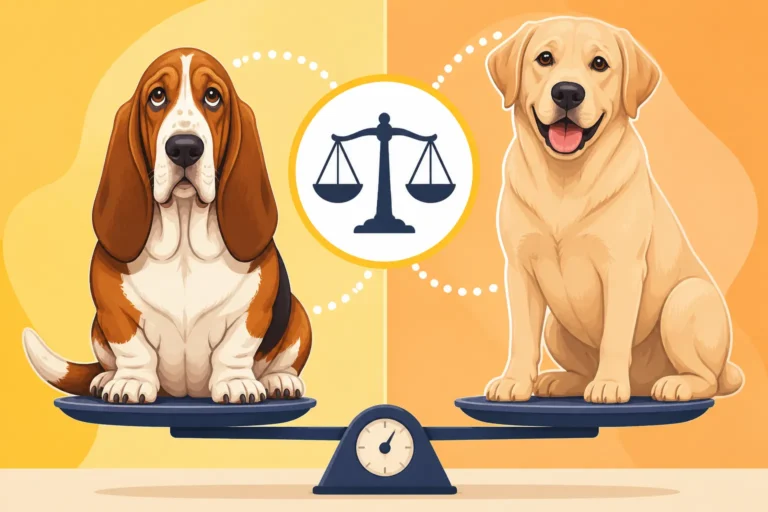
| Size/Weight | Large, heavy (often 90-110+ lbs) | Medium, surprisingly heavy (often 40-65 lbs) |
| Pace | Slow, methodical, relentless | Slow, methodical, persistent |
| Location of Development | Ardennes region, spread by nobility | France, favored by hunters on foot |
| Key Physical Trait | Large size, deep wrinkles, immense dewlap | Short legs, long ears, pronounced dewlap |
Modern DNA Insights and Historical Records
While we can't hop in a time machine to definitively watch every step of breed development, historical records, artworks, and more recently, genetic studies, have helped piece together this intricate tapestry. Historical accounts consistently point to the Saint Hubert Hounds as a foundational stock for many European scent hounds. When you look at the physical characteristics and the unparalleled scenting ability shared by both Bloodhounds and Basset Hounds, it's clear they come from a common heritage of highly specialized trackers. The slight differences in their physical form are the result of centuries of deliberate, selective breeding to meet different hunting objectives, rather than entirely separate origins. They are cousins, if you will, sharing a very distinguished family tree that originates in those ancient abbey lands.
When considering supplies for your own Basset, whether it's special bowls to keep those long ears out of their food or treats for nose work, reputable suppliers like Chewy offer a wide array of products designed with specific breed needs in mind. For example, Chewy carries elevated feeders and snoods which are often recommended for Basset Hounds to manage their unique physical traits. A great way to engage your Basset's natural instincts is through scent games, and you can find a whole host of puzzle toys and treats on Chewy to keep their incredible nose busy. Even something as simple as a puzzle feeder can provide mental enrichment for your Basset, available through retailers like Chewy.
The journey from the ancient Hubert Hounds to the Bloodhound and Basset Hound we know today is a testament to dedicated breeders and the enduring power of selective breeding. They may not have been literal littermates from the same abbey, but their ancestral roots undeniably intertwine in the esteemed lineage of the Saint Hubert Hound.
Disclaimer
This article is for general informational purposes only and does not constitute professional advice. Laws, prices and regulations vary by location and change over time. Consult a qualified professional for guidance on your specific situation.