Whether a Basset Hound Is Healthier Than a Dachshund
A Basset Hound may seem sturdier than a Dachshund, but neither breed is simply “healthier” across the board. Their short-legged builds bring different concerns: Dachshunds are especially known for spinal disc problems, while Basset Hounds can face back trouble alongside ear, eye, and joint issues. This guide compares those risks and explains how to judge an individual dog, not just a breed label.
Is a Basset Hound Healthier Than a Dachshund Overall
There is no single breed-wide winner
A Basset Hound is not automatically healthier than a Dachshund, and a Dachshund is not automatically less healthy. The more useful answer is that their typical health risks differ. A Dachshund’s long body and short legs make intervertebral disc disease, or IVDD, a major concern. Basset Hounds can also develop back problems, while their long ears and loose facial features can make ear and skin care a regular part of ownership.
Even within one breed, health varies. Two Basset Hounds from different lines may have very different histories, and one may need little more than routine care while another develops chronic ear disease or arthritis. A Dachshund’s build, weight, activity, family history, and access to veterinary care also affect its health. A breed comparison can point you toward questions to ask; it cannot predict exactly what will happen to one dog.
It helps to think in terms of risk management rather than finding a universally healthier breed. If you are choosing between the two, consider which health needs you could realistically manage. Are you comfortable checking and caring for long ears? Can you keep a dog at a lean weight and limit repeated high-impact jumping? Would you be prepared to seek prompt veterinary attention for a sudden change in walking or movement? Those practical questions matter more than a simple ranking.
The breeds share some risks, but not in equal measure
Both breeds have short legs and relatively long bodies, so protecting the back and maintaining a healthy weight are sensible priorities for either. A Basset Hound’s build should not be treated as proof that back trouble is inevitable, but its shape does make it important to recognize pain or mobility changes early. Learn more about The Back Trouble a Basset Hound Is Built Into and Whether a Basset Hound's Back Is as Fragile as a Dachshund's.
The two breeds also have different day-to-day care patterns. Basset Hounds’ heavy, hanging ears can hold warmth and moisture, so owners often need to monitor them for odor, redness, discharge, or repeated head shaking. Dachshund ears can also need routine attention, but their signature concern is not the same combination of ear, fold, and body-care issues. For a closer look at the Basset Hound’s ear risks, see The Ear Infections That Never Really Leave a Basset Hound.
A health issue being common in a breed does not mean every dog will develop it. Nor does an individual dog’s apparently healthy appearance rule out an inherited or developing problem. A responsible comparison includes both the conditions a breed is predisposed to and the steps an owner can take to reduce avoidable strain.
| Health consideration | Basset Hound | Dachshund | What an owner can do |
|---|---|---|---|
| Back and disc problems | Can develop spinal or disc-related problems | A particularly important breed concern because of body shape and inherited risk | Keep the dog lean, reduce repeated jumping, and seek care for pain or weakness |
| Weight and mobility | Extra weight can add strain to joints and the back | Extra weight can increase stress on the back and limbs | Measure meals, account for treats, and ask a vet to assess body condition |
| Ears | Long, hanging ears can be prone to moisture and infection | Ear problems can occur, though the breed’s most discussed risk is often spinal disease | Check ears regularly and get veterinary advice for persistent symptoms |
| Eyes and joints | Glaucoma and elbow or other joint concerns may be relevant | Eye and joint problems can also occur, depending on the dog and its lineage | Ask about family history and appropriate screening |
| Everyday care | Ear, skin-fold, weight, and mobility monitoring may be part of routine care | Back protection and weight management often deserve particular attention | Build preventive habits around the individual dog’s needs |
The Biggest Health Differences to Understand
Back and disc disease deserve special attention
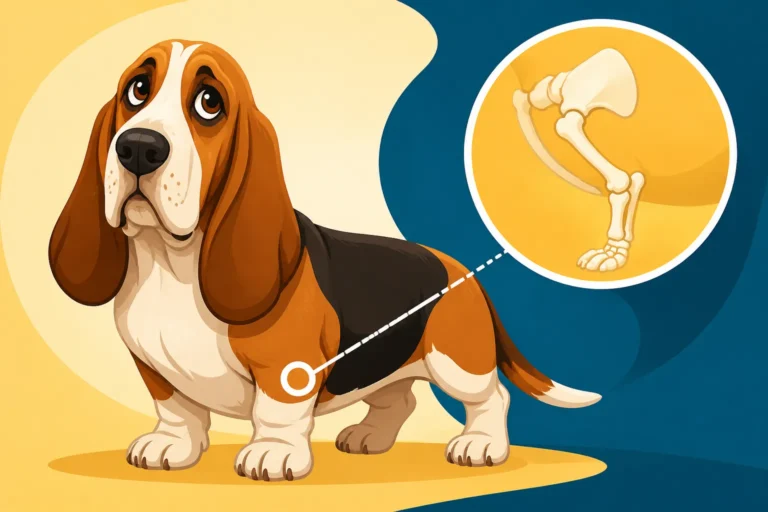
IVDD happens when discs between the spinal bones degenerate or become damaged and press on the spinal cord or nearby nerves. Dachshunds are widely recognized as a breed at elevated risk. Basset Hounds can also experience disc disease and other back problems, so it would be a mistake to assume that only Dachshunds need back-conscious handling.
Watch for a change from the dog’s normal movement: reluctance to climb or jump, a hunched posture, yelping when picked up, weakness, wobbliness, or difficulty using the back legs. A dog in pain may also become unusually quiet or irritable. Sudden inability to stand or walk, loss of coordination, or trouble controlling urination or defecation needs urgent veterinary attention. Do not try to diagnose the cause at home or wait to see whether a serious change resolves by itself.
Prevention cannot remove inherited risk, but everyday choices can reduce unnecessary strain. Use a ramp where appropriate, block unsupervised access to furniture or stairs if jumping is a concern, and lift a dog with support under both the chest and hindquarters. Avoid turning “exercise” into repeated leaps or rough, high-impact play. For more on the condition, read Intervertebral Disc Disease in a Basset Hound.
Weight can make both breeds’ problems harder
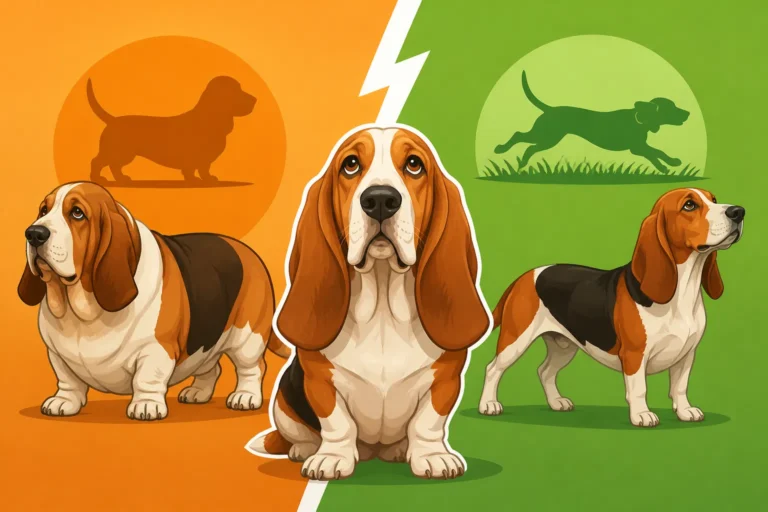
A round belly can be easy to mistake for a normal feature, especially on a Basset Hound. But a dog’s body shape does not make excess fat harmless. Added weight means more load on joints and the spine, and it can make exercise less comfortable. Dachshunds also benefit from careful weight management because extra body mass can place further stress on a back that is already a key concern.
Instead of judging by appearance alone, ask your veterinarian to assess body condition and show you how to feel for the ribs. Track portions, including treats and food used during training, and weigh the dog periodically. If the scale is creeping up, discuss a gradual plan rather than sharply cutting meals on your own. A measured approach helps preserve muscle and gives you a way to see whether the plan is working.
Treats can quietly add up, particularly with dogs that beg or are highly food-motivated. You can reserve part of the daily food allowance for training, break treats into small pieces, and agree with everyone in the household on what the dog is allowed. If you shop at Chewy for treats or food, check the product’s feeding directions and then confirm the overall plan with your veterinarian; a package recommendation cannot account for every dog’s age, activity, or medical needs. Related reading includes What Extra Weight Does to a Basset Hound and Whether an Overweight Basset Hound Lives Shorter.
Basset Hounds have additional ear and eye considerations
Basset Hound ears need regular observation because their shape can make airflow and drying less straightforward. That does not mean you should repeatedly flush a healthy ear or use leftover medication. Look for a new or strong odor, redness, discharge, tenderness, frequent scratching, or head shaking. If any of these signs persist, a veterinarian can examine the ear and determine whether the cause is infection, inflammation, a foreign object, or something else.
Basset Hounds can also be susceptible to glaucoma, a painful eye condition involving increased pressure inside the eye. A suddenly red, cloudy, enlarged, or painful eye should be treated as urgent rather than watched for several days. Squinting, pawing at the eye, or a sudden change in vision also deserves prompt professional attention. Learn more in The Glaucoma a Basset Hound Inherits.
Dachshunds can have eye conditions too, and neither breed is free of dental, skin, or age-related disease. The practical point is not to assume that the Dachshund’s back risk is the only issue worth planning for, or that the Basset Hound’s ears are merely a grooming nuisance. Ask about the health history of the specific dog and keep routine checkups on the calendar.
How to Compare Two Individual Dogs
Ask about family history and health screening
If you are considering a puppy, ask the breeder about health conditions in parents, siblings, and older relatives. Ask what screening has been done, what the results mean, and whether records are available. A vague assurance that the dogs are “healthy” is less useful than a clear conversation about known conditions, veterinary care, and how the breeder makes decisions when a problem appears in a line.
The right questions depend on the breed and the family history. For a Basset Hound, ask about eye, joint, back, ear, and bleeding concerns where relevant. For a Dachshund, discuss spinal history and any other conditions present in the line. Screening does not guarantee that a puppy will never become ill, but it can help you understand what has and has not been evaluated. See The Health Tests a Basset Hound Breeder Should Run for a starting point.
If you are adopting an adult dog, request veterinary records and ask about prior injuries, recurring infections, medications, and mobility changes. An adult dog’s known history can be valuable, but an incomplete record is not proof that the dog is unhealthy. Arrange an examination with your own veterinarian so you have a baseline and a chance to discuss any concerns before they become urgent.
Judge daily function, not just appearance
Notice how the dog stands, walks, turns, and gets up after resting. Does it move comfortably on different surfaces? Does it hesitate before getting into a car or onto a bed? Does it seem reluctant to be touched around the back or ears? These observations are not a substitute for an exam, but they can help you describe changes accurately to a veterinarian.
For Basset Hounds, look beyond a charmingly low stance or a heavy, loose outline. Ask whether the dog is mobile and comfortable, and whether its ears and skin are being maintained without persistent irritation. For Dachshunds, consider whether the household can avoid frequent jumping and keep the dog’s weight under control. In both cases, a dog’s comfort and function matter more than whether its body matches a stereotype.
Health history and care needs also affect ownership costs. Ongoing ear treatment, diagnostic tests, or spinal care can be demanding financially and emotionally. Chewy may be one place owners look for routine supplies, but medication decisions, ear treatment, and diet changes should come from the veterinary team rather than a product listing. If a vet recommends a specific type of cleaner or diet, use that guidance when comparing options, including products available through Chewy.
Which Breed May Fit Your Household Better
Choose based on the care you can sustain
A Basset Hound may suit someone who is prepared for regular ear checks, weight management, and attention to mobility. A Dachshund may require especially careful back-conscious habits, including preventing repeated jumps and keeping the dog lean. Neither set of needs is automatically easier. The better fit depends on your home, your ability to supervise, the dog’s temperament, and how consistently you can follow a care routine.
Think about the details of an ordinary week. If your home has slippery floors and furniture a dog is likely to leap from, can you add rugs, barriers, or a suitable ramp? If your dog dislikes ear handling, can you build tolerance gradually and get help from a veterinary professional when needed? If a dog refuses long walks, can you provide appropriate short activity and mental enrichment rather than letting weight rise? The everyday answer to those questions is more meaningful than a breed’s reputation.
If you already share your home with either breed, there is no need to panic over a list of possible conditions. Use the information to make a prevention plan and recognize warning signs. Routine veterinary visits, a healthy body condition, sensible exercise, and prompt attention to new symptoms can make a real difference in comfort, even when they cannot erase inherited risk.
A practical decision checklist
Before choosing a dog, consider these questions:
- Can I protect the dog’s back? Think about furniture, stairs, car access, play, and how the dog will be lifted.
- Can I keep the dog at a healthy weight? Plan measured meals, controlled treats, and activity suited to the individual.
- Can I handle routine care? Basset Hounds may need consistent ear and skin checks; both breeds need general grooming and veterinary care.
- Do I know the dog’s health history? Ask for available records, screening details, and information about relatives.
- Can I respond quickly to a change? Sudden pain, weakness, inability to walk, or a painful red eye should not be treated as routine aging.
- Have I discussed the breed’s risks with a veterinarian? A vet can help tailor prevention to the specific dog rather than relying on general breed advice.
If a veterinarian recommends routine ear-care products for a Basset Hound, you can compare ingredients and directions on listings at retailers such as Chewy, then follow the clinic’s advice about what is appropriate. Do not put a product into an inflamed or painful ear without checking first. The same principle applies to supplements, special diets, and pain relief: a convenient product is not a substitute for an individualized veterinary plan.
Ultimately, a Basset Hound is not categorically healthier than a Dachshund. Dachshunds have a particularly prominent risk of disc disease; Basset Hounds also need back protection and may require more attention to ear, eye, and joint concerns. The dog’s lineage, body condition, health history, and day-to-day care will shape its health far more than a simple breed-versus-breed verdict. For broader breed comparisons, see The Basset Hound Against the Dachshund.
Disclaimer
This article is for general informational purposes only and does not constitute professional advice. Laws, prices and regulations vary by location and change over time. Consult a qualified professional for guidance on your specific situation.