Whether Show Basset Hounds Can Still Work
A show-bred Basset Hound may still enjoy scent work, tracking, or even hunting, but a conformation title does not prove that a dog is fit or trained for field work. If you are wondering whether a show Basset can do more than look the part, this guide explains what “working” can mean, what affects a dog’s ability, and how to get started safely.
What it means for a show Basset Hound to work
Show lines and working ability are not opposites
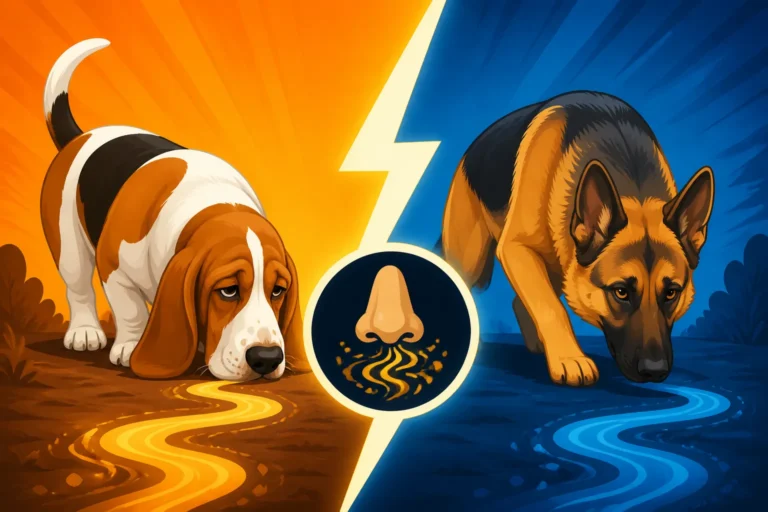
Basset Hounds were developed as scent hounds, and the basic traits that make them useful in the field—an interest in following scent, persistence, and a tendency to work at a measured pace—can still be found in show-bred dogs. Show breeding emphasizes how a dog compares with a conformation standard. It does not automatically remove scenting instinct or curiosity.
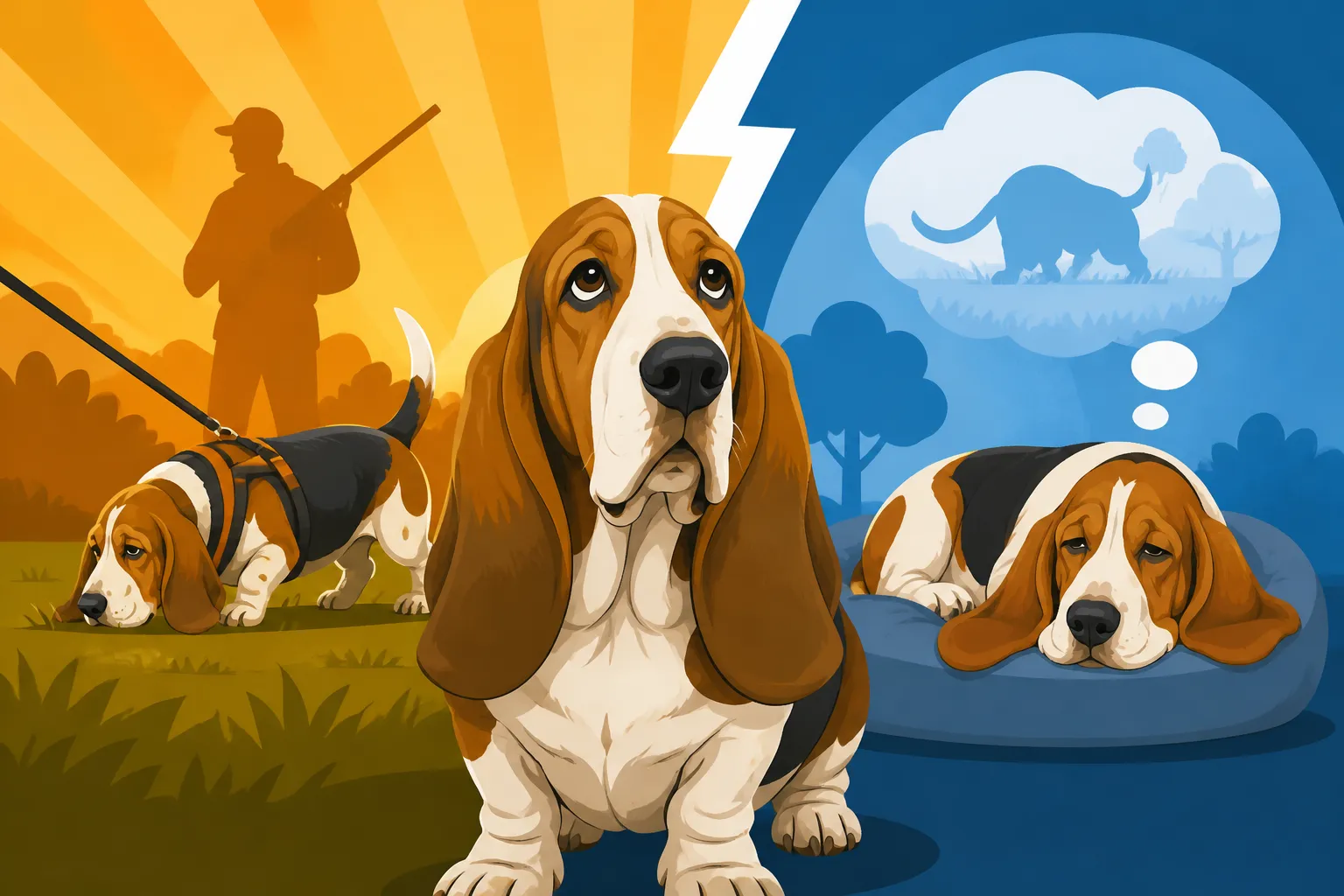
That said, a pedigree or show record cannot tell you exactly how an individual dog will perform. One Basset may eagerly follow a trail, while another would rather investigate a small patch of grass for ten minutes and then lie down. Both may be healthy, well-bred dogs. A dog’s enthusiasm, conditioning, structure, training, and experience all matter.
It also helps to be clear about what you mean by “work.” You might mean formal field trials, hunting, tracking, or a recreational scent activity in the backyard. Those activities make different demands, so a dog that enjoys one is not necessarily ready for another. For a broader look at why the breed is built around scent, see The Nose That Puts a Basset Hound Second to a Bloodhound.
Conformation success does not certify field fitness
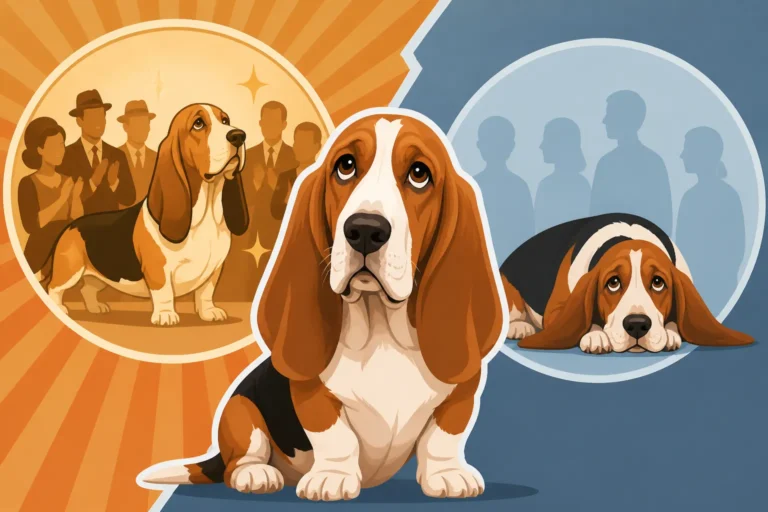
A show title tells you that a dog has been evaluated in conformation competition. It is not a field-work qualification, a measure of stamina, or a guarantee of sound movement over rough ground. Likewise, a dog without a show record may have excellent working ability. The two kinds of achievement answer different questions.
When assessing a particular dog, watch how it moves and recovers rather than relying on labels such as “show line” or “field line.” Does the dog walk comfortably on varied surfaces? Does it show interest in a trail without becoming distressed or exhausted? Does it recover normally after activity? These everyday observations can be more informative than assumptions based on appearance or ancestry.
The breed’s short legs and substantial body deserve practical consideration. Some dogs can move comfortably and steadily for a suitable outing, while others may have limitations related to their individual build or health. If you have concerns about bowed legs, lameness, or joint comfort, start with your veterinarian rather than trying to condition the dog through discomfort. Whether Show and Field Basset Hounds Differ offers more context on the distinction between breeding purposes.
What kinds of work a show Basset can try
Scent work and tracking
Organized scent activities and tracking are often accessible ways to explore a Basset Hound’s natural interests. They give the dog a clear job—locating a target scent or following a laid trail—without requiring the owner to assume that every dog must hunt. Sessions can be adapted to the dog’s pace, experience, and physical condition.
Start with a simple, short search in a familiar, safe area. Let the dog investigate, reward interest in the target, and stop while the session is still enjoyable. A Basset that works with its nose close to the ground may seem slow to a person walking beside it, but sniffing is the point. Rushing the dog or repeatedly pulling it away from a scent can make the activity frustrating for both of you.
If you want to build an activity routine, you can use a secure harness, a suitable long line, scent materials, and small rewards. Chewy is one place owners may look for basic dog-walking or enrichment supplies, but choose equipment that fits your dog and activity rather than buying a setup based only on a product description. A trainer or organized scent-work group can help you learn safe, positive handling. See Whether a Basset Hound Takes to Scent Work for more on this kind of activity.
Field trials and hunting
Some show-bred Basset Hounds may be capable of participating in formal field activities or hunting, but interest and fitness must be assessed dog by dog. A field trial involves training, rules, and conditions that may not resemble a casual walk. Hunting also involves environmental hazards, reliable handling, and local regulations. A dog that follows scent enthusiastically in the park is not automatically ready to work around traffic, wildlife, other dogs, or unfamiliar terrain.
If field work is your goal, speak with an experienced Basset Hound handler or a breed club that supports the activity. They can explain what preparation involves and help you understand whether the dog’s temperament, condition, and training are a good fit. Begin with controlled exercises and build gradually. Do not use a long, strenuous outing as the first test of whether your dog has “working ability.”
A show-bred dog may have the instinct but lack the conditioning or experience expected for a demanding field day. Conversely, a dog with a less typical build may still enjoy scent-based work at a recreational level. For more on the breed’s history and purpose, read Whether a Basset Hound Was Bred to Be Followed on Foot and Whether a Basset Hound Still Hunts.
| Activity | What it asks of the dog | A sensible starting point |
|---|---|---|
| Home scent games | Interest in searching and following a simple scent | Short searches in a quiet, familiar space |
| Organized scent work | Focus, learning, and working with a handler | Beginner sessions with a qualified instructor |
| Tracking | Following a laid trail over distance and varied ground | Short, controlled trails with rest breaks |
| Field trials | Training, fitness, handling, and comfort around other dogs | Talk with experienced handlers before entering |
| Hunting | Field skills, safe handling, fitness, and legal compliance | Learn local requirements and train under experienced guidance |
How to judge whether your dog is ready
Look at comfort, movement, and recovery
Before increasing exercise, consider the dog’s age, weight, health history, and current activity level. A young dog still growing should not be pushed into strenuous work simply because it seems eager. An older dog that has been mostly sedentary may need a gradual return to activity. A vet can help identify concerns that are easy to miss when a dog’s enthusiasm is doing the talking.
Pay attention to how the dog moves during and after activity. Persistent limping, stiffness that does not settle, reluctance to continue, unusual fatigue, or signs of pain are reasons to stop and seek veterinary advice. Do not assume that a Basset is being stubborn when it sits down or refuses to move; discomfort can look like unwillingness. Whether a Basset Hound Is Lazy or Sore and The Crooked Front a Basset Hound Is Built On may help you think through the difference between breed shape and a possible problem.
Weight also matters. Extra weight can make movement more demanding, particularly for a dog with a long body and short legs. If you are unsure whether your dog is carrying too much, ask your veterinarian to assess body condition and recommend a safe plan. What Extra Weight Does to a Basset Hound explains why weight management is relevant to activity and comfort.
Build skill gradually and keep the outing manageable
A useful first step is to separate “working” into small skills: responding to your cue, checking in with you, walking calmly on lead, and searching for a scent in a controlled area. Reward the dog for engagement and keep sessions short enough that it remains interested. If the dog gets overwhelmed or loses focus, make the task easier rather than repeating a cue louder.
Choose terrain carefully. Begin on level, familiar ground and avoid turning a scent session into a long hike with steep slopes, deep mud, or heat exposure. Bring water and allow rest. A dog’s nose may be eager to continue after its body needs a break, so the handler has to make the sensible call.
For equipment, fit and control matter more than a particular brand. A secure harness and a long line can give a dog room to explore while helping prevent it from wandering into unsafe areas. Chewy may be useful when comparing everyday walking or enrichment gear, but check fit, construction, and whether the item suits your dog’s size and activity. If you are unsure how to handle a long line safely, ask a trainer to show you. You can also explore Whether a Long Line Is Enough for a Basset Hound and Whether a Basset Hound Should Ever Be Off Leash.
How to choose the right path for your Basset
Match the activity to the individual dog
A show Basset Hound that loves food searches in the living room may be happiest doing scent games rather than formal field trials. Another may relish tracking outdoors but have no interest in repetitive obedience exercises. The goal is not to prove that a dog can perform every task associated with its breed. It is to find a safe activity the dog enjoys and can comfortably sustain.
Notice what your dog naturally does. Does it return to an interesting scent after being called away? Does it search methodically, or become distracted by every sound? Can it settle between turns? These observations can help a trainer tailor sessions and set realistic goals. They are not a substitute for a health assessment, but they make a more useful starting point than assuming all Bassets behave alike.
You can also ask the breeder about the parents’ temperaments and activities, while remembering that family history is only one clue. A dog’s own personality and physical condition still matter. Whether a dog comes from show or field lines, a positive introduction to the activity is more valuable than pressure to match someone else’s expectations.
Know when to get professional help
If you are interested in formal competition or hunting, seek guidance from people who regularly work with Basset Hounds in that setting. They can help you understand training steps, local expectations, suitable equipment, and whether your dog is ready for the next level. For a household activity, a qualified reward-based trainer can help you introduce scent games and build handling skills.
Ask questions before committing to an intense program: What physical demands will the dog face? How are rest and heat managed? What should you do if the dog shows discomfort? Does the instructor adapt the work to different dogs rather than expecting every Basset to perform the same way? Clear answers are a good sign that the dog’s welfare is being taken seriously.
Chewy can be a practical place to browse general supplies for enrichment or walking, but shopping cannot replace advice on training, health, or fit. Use your veterinarian for physical concerns and an experienced instructor for activity-specific guidance. Whether the dog is destined for a trial, a tracking class, or a few scent searches at home, the best measure of success is a comfortable dog that enjoys the work.
Disclaimer
This article is for general informational purposes only and does not constitute professional advice. Laws, prices and regulations vary by location and change over time. Consult a qualified professional for guidance on your specific situation.