Whether Monks Gave Hounds to the King of France
Have you ever wondered about the true lineage of our beloved Basset Hounds, those long, low, droopy-eared charmers who steal our hearts (and our counter snacks)? It’s a common misconception, or perhaps a romanticized notion, that these magnificent scent hounds were simply gifted from medieval monks to French kings. While the reality is a bit more nuanced than a simple exchange, the rich tapestry of their history is certainly woven with threads of monastic life and royal patronage. This guide will take a deep dive into the fascinating story of how these hounds came to be, tracing their roots back through the monasteries and royal kennels of old France, separating fact from charming folklore to truly understand their heritage.
The Monastic Foundations of Hound Breeding
The idea of monks as dedicated breeders of dogs might seem a little unusual to us today, but in medieval Europe, monasteries were often centers of learning, agriculture, and surprisingly, animal husbandry. These institutions had the resources, stability, and disciplined approach necessary to maintain and develop specific lines of animals, including hounds.
Saint Hubert and the Ardennes Abbey Legend
One of the most enduring and beloved legends surrounding the origins of many European scent hounds, including the ancestors of our Bassets, revolves around Saint Hubert. The story goes that Hubert, a nobleman, famously encountered a stag with a crucifix between its antlers while hunting on Good Friday. This profound experience led him to renounce his worldly life and become a bishop, eventually becoming the patron saint of hunters. It’s a wonderful tale, but its real significance for Basset Hounds lies in the abbey that bore his name.
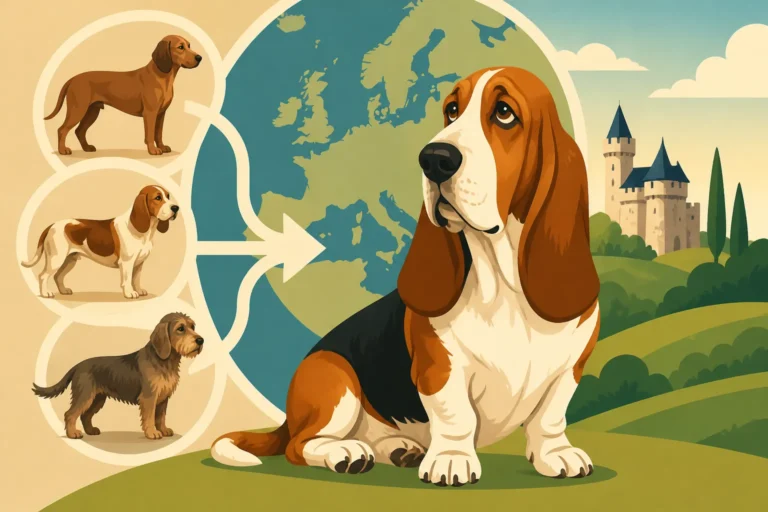
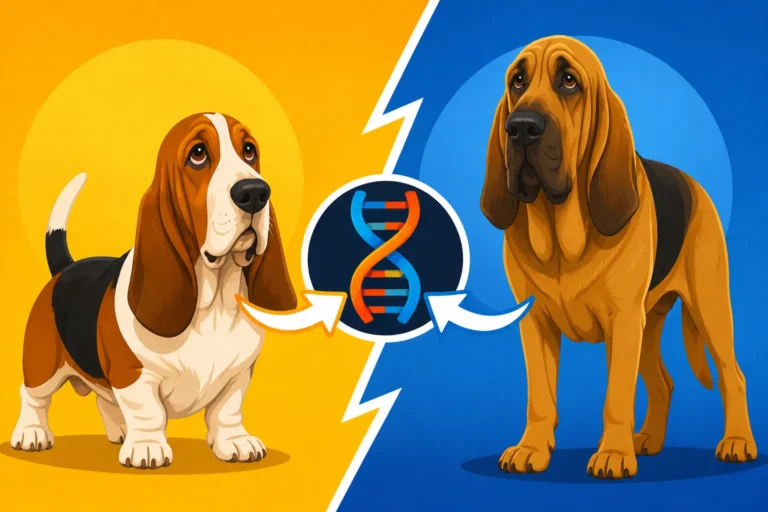
The Ardennes Abbey, situated in the forested regions of modern-day Belgium (which was then part of France), became a hub for breeding exceptional scent hounds, known as St. Hubert Hounds. These were large, powerful, black-and-tan dogs, renowned for their incredible noses and stamina. They were very much the ancestors of today's Bloodhounds, and through them, many other scent-trailing breeds. The monks at the abbey meticulously bred and maintained these dogs, not just for hunting, but as a valuable asset that could be gifted to powerful nobles and royalty, fostering goodwill and demonstrating the abbey's prestige. This systematic approach to breeding laid the groundwork for many of the distinct hound types that would emerge centuries later. The practice of selective breeding, even without modern genetic understanding, was surprisingly effective over generations. If you're curious about their ultimate lineage, you might like to read The Abbey Hounds a Basset Hound Descends From.
The Practicality of Monastic Kennels
Beyond the legends, there was a very practical reason why monasteries were involved in hound breeding. They owned vast tracts of land, often bordering wild forests, making hunting a necessity for food and pest control. Managing a pack of hounds required significant resources, including space, feed, and dedicated caretakers, all of which monasteries could provide. Unlike individual nobles whose fortunes could rise and fall, monastic institutions offered continuity across generations.
The monks, with their structured daily routines and commitment to long-term endeavors, were perfectly suited to the consistent effort required for selective breeding. They weren't necessarily breeding specifically for the short-legged Basset type at this stage, but rather for the overarching qualities of a superior scent hound: keen nose, endurance, and a steady temperament for trailing. These foundational traits are what make the Basset Hound's nose second only to a Bloodhound’s today. Their breeding programs were highly valued, and the reputation of their hounds spread far and wide. It wasn't just about a casual gift; it was about strategically sharing highly prized animals that represented centuries of dedicated effort.
Royal Patronage and the French Court's Influence
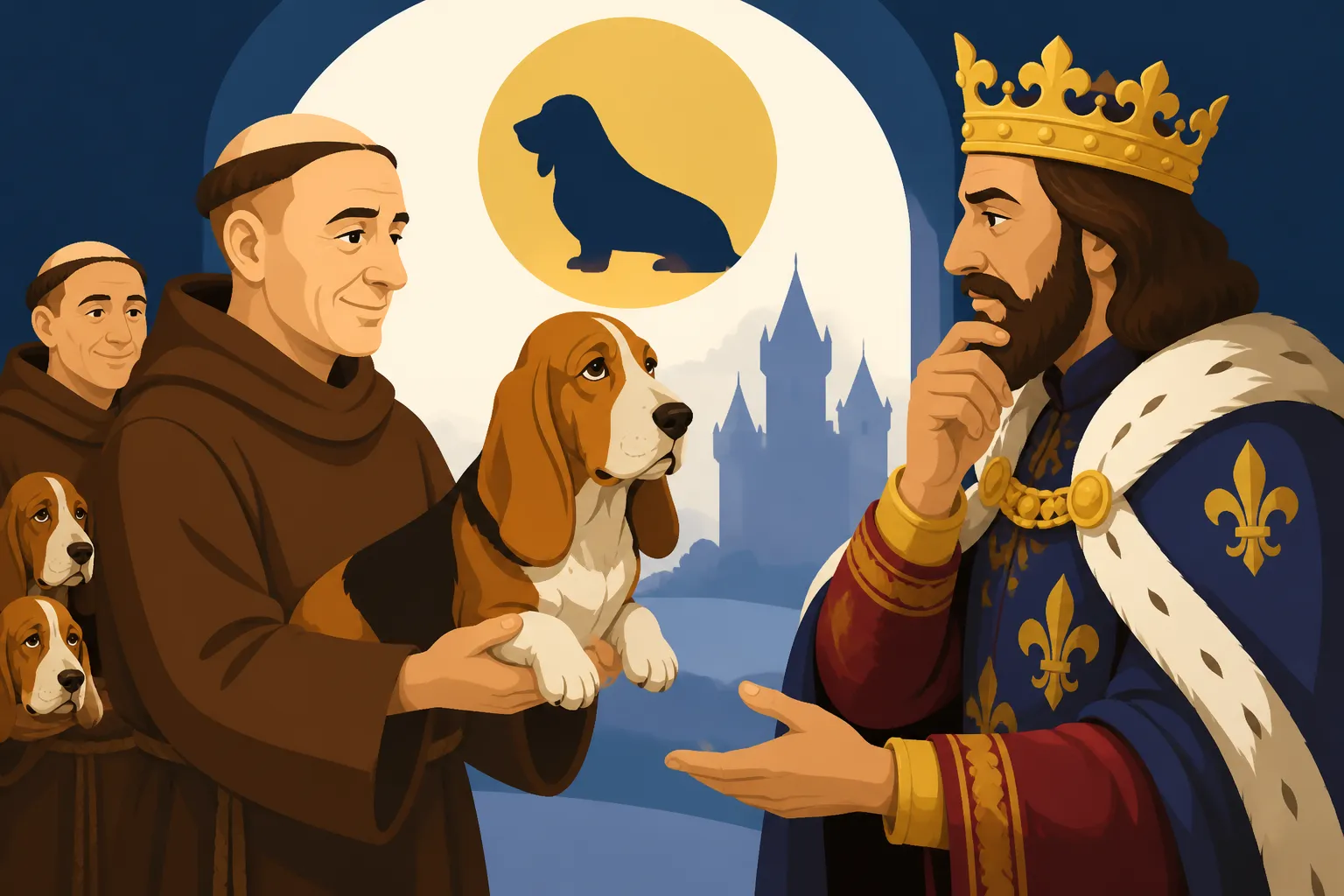
While the monks certainly cultivated superior hound stock, it was the French aristocracy and royalty who truly championed the development and popularization of distinct hunting breeds. The act of giving hounds to the King of France wasn't just a gesture of respect; it was a common way for powerful monasteries and nobles to solidify alliances and earn favor.
The Exchange of Esteemed Hounds
The practice of presenting valuable animals, especially finely bred hounds, to monarchs was a diplomatic and social tradition for centuries. Imagine a bustling medieval court: a monk or a lesser noble arrives, not just with a scroll, but with a magnificent pair of St. Hubert hounds, their deep bays echoing through the castle halls. These weren't mere pets; they were living symbols of power, prestige, and hunting prowess. The King of France, or any monarch of the time, would have highly valued such gifts, especially those from renowned breeding centers like the Abbey of Saint Hubert.
These exchanges weren't simply one-off events. Over time, the royal kennels would also develop their own specialized breeding programs, sometimes crossing the gifted hounds with other lines to suit their specific hunting needs and preferences. The objective was often to produce hounds with traits best suited for hunting specific game, such as deer or wild boar, or to improve certain characteristics like voice or speed. This constant interplay between monastic breeders, aristocratic kennels, and royal courts helped to diversify the hound population across France. The Basset Hound's ancestry, though initially rooted in these larger hounds, would eventually diverge to serve a more specific purpose, as we'll explore shortly.
The Royal Desire for a Specific Hunting Style
The King of France and other European nobility had a passion for hunting, not just as a sport, but as a demonstration of martial skill, wealth, and status. However, as hunting practices evolved, so did the demand for different types of hounds. While the large St. Hubert Hounds were excellent for tracking big game, they were often too fast or too powerful for hunting smaller quarry on foot, or for navigating dense underbrush.
This desire for a slower, more manageable hound, one that hunters could follow on foot rather than on horseback, spurred the development of the "basset" type. The French word "bas" literally means "low," and thus, "basset" came to refer to any short-legged hound. This wasn't about a single breed initially, but a type of hound bred for specific hunting conditions. The concept was simple: take a scent hound with an excellent nose, and selectively breed for shorter legs. This meant that the hunters, often commoners or less affluent nobles, could keep pace with the dogs on foot. This pragmatic approach to breeding eventually led to the distinct Basset breeds we know today, including our beloved Basset Hounds. You can learn more about this concept in Why the Word Basset Just Means Low.
Tracing the Lineage: From St. Hubert to the Modern Basset
The journey from the powerful St. Hubert Hounds of the Ardennes to the low-slung, distinctive Basset Hounds of today is a fascinating story of selective breeding and adaptation to changing hunting practices. It wasn't a direct line, but rather a branching tree of development.
The Divergence into "Basset" Types
The St. Hubert Hound, a robust and long-legged tracker, was the progenitor, but the Basset Hound as we know it didn't just suddenly appear. Instead, there was a gradual divergence. Imagine a litter of St. Hubert Hounds: most would be long-legged, but occasionally, a puppy might be born with shorter legs due to a spontaneous mutation. In many contexts, such a "fault" might have been culled, but in France, it was embraced.
These shorter-legged individuals, dubbed "basset" hounds, were deliberately bred together by local hunters and some aristocratic kennels. They found that these low-slung dogs excelled at tracking game like rabbits and hares in dense undergrowth, where their keen noses could follow a scent trail close to the ground, and their slower pace allowed the hunters to keep up. This was a significant shift from the grand, horseback hunts of old. The idea of selecting for specific traits that were once considered undesirable speaks volumes about the evolving needs of hunters. This is also where the concept of "whether every French hound had a short-legged version" comes into play, as the idea of a 'basset' variant became quite popular for several hound breeds.
| Trait | St. Hubert Hound (Ancestor) | Early Basset Type (Intermediate) | Modern Basset Hound |
|---|---|---|---|
| Leg Length | Long, powerful | Significantly shorter, bowed | Very short, heavily boned, distinctly bowed |
| Size | Large, substantial | Medium, robust | Medium to large, heavy for its height |
| Scenting Ability | Exceptional, high drive | Exceptional, methodical | Peerless, highly specialized |
| Pace | Fast, enduring | Slower, deliberate | Very slow, unhurried |
| Primary Game | Deer, wild boar | Rabbit, hare, small game | Rabbit, hare (historically), companion (modern) |
| Hunting Style | Horseback, open terrain | Foot-hunting, dense cover | Foot-hunting, scent work |
The Purpose of Short Legs and Droopy Ears
It's easy to look at a Basset Hound and see its unique physique as almost comical, but every aspect of its structure, from its short, bowed legs to its incredibly long, droopy ears, was intentionally selected for a specific purpose in scent trailing. The low stature ensures that its nose is constantly close to the ground, allowing it to easily follow a cold trail without lifting its head. This dedication to scent work is why A Basset Hound's Nose Is Second Only to a Bloodhound.
The long, pendulous ears, known as "leathers," were believed to help sweep scent particles upwards towards the nose, enhancing their ability to pick up and concentrate a trail. Similarly, the abundant loose skin, particularly the dewlap under the chin, was thought to trap scent, holding it close to the dog's face as it worked. These traits, combined with a deep, resonant bay, made them exceptionally efficient at tracking game, even if they were far from fast. They were designed not for speed, but for relentless, methodical tracking.
How Early Breeding Shaped the Basset's Unique Traits
The careful, if sometimes accidental, choices made by early breeders in France profoundly shaped the Basset Hound into the distinctive animal we recognize today. These decisions weren't about aesthetics but about maximizing functional traits for a specific kind of hunt.
The Focus on Scenting Prowess
From the very beginning, the absolute priority for Basset Hound ancestors was their nose. Without a superior scenting ability, all other physical adaptations would be meaningless. Breeders consistently selected individuals that demonstrated the keenest noses and the most unwavering focus on a trail. This relentless selection over generations cemented the Basset Hound's reputation as one of the finest scent hounds in the canine world. Their ability to pick up and follow old, faint trails in challenging conditions was unmatched by many other breeds.
This specialization in scent work meant that other characteristics, such as speed or agility, were secondary. The Basset's slow, ponderous gait is a direct result of prioritizing a low center of gravity and proximity to the ground for scenting, rather than swift movement. Modern Basset owners still see this dedication to scent every time their dog locks onto a smell in the park and becomes utterly deaf to their calls! It's a trait that defines the breed and requires understanding and management from any owner. You can learn more about this captivating trait in Why a Basset Hound Stops Hearing You When It Smells Something.
The Role of Bone and Build
The Basset Hound's heavy bone structure, particularly in its short legs, is another key trait developed through early breeding. This isn't just for aesthetics; it provides a sturdy, resilient frame capable of enduring long hours of work in varied terrain. Their powerful, short legs, often with a slight bow, are designed to move deliberately through underbrush, over fallen logs, and across uneven ground, maintaining constant contact with the scent trail. This unique build, often characterized as "achondroplastic" (a form of dwarfism), was a deliberate selection, though perhaps not fully understood in genetic terms at the time.
The result is a dog that is surprisingly heavy for its height. A Basset Hound can easily weigh as much as a medium-sized Labrador, despite being significantly shorter. This dense musculature and heavy bone contribute to their endurance and stability, allowing them to remain focused on a trail without tiring quickly. This robust build meant they could withstand the rigors of hunting for hours on end, methodically pursuing their quarry. Of course, this unique body shape also brings its own set of health considerations, which is why modern owners must be so diligent in managing their Basset's weight. Resources from places like Chewy can help ensure your Basset gets the right nutrition without overdoing it.
The Spread and Recognition of the Basset Hound
While the Basset type hounds had been developing in France for centuries, their journey to international recognition and becoming the beloved companion dogs they are today involved several key stages, including their arrival in Britain and America.
Journey Across the Channel: From France to Britain
The Basset Hound's journey to broader recognition truly began in the mid-19th century when they started to make their way across the English Channel. It was primarily wealthy British noblemen and enthusiasts who saw the unique qualities of these French hounds. They appreciated their scenting ability and distinctive appearance, recognizing their potential both as hunting dogs for smaller game and as interesting additions to their kennels.
One of the most notable figures in bringing Basset Hounds to Britain was Lord Galway, who imported a pair in the 1860s. Soon after, others followed suit, and the breed began to gain a foothold among the British aristocracy. It was during this period that the different French "basset" types started to be consolidated into what we now recognize as the Basset Hound breed standard. Queen Alexandra, wife of King Edward VII, was also famously fond of Basset Hounds, further boosting their popularity among the upper echelons of society. This aristocratic endorsement helped solidify their place and led to the formal establishment of breed clubs. For more on this, you might enjoy When the Basset Hound Reached Britain.
Crossing the Atlantic: Arrival in America
The Basset Hound's arrival in America followed a similar path of aristocratic interest and gradual popularization. The first Basset Hounds are believed to have been imported into the United States in the late 19th century. General George Washington Lafayette, son of the Marquis de Lafayette, is sometimes credited with bringing Bassets to America as gifts, though direct lineage to today's Bassets is unclear. More definitively, breeders began importing them from England and France in the 1880s.
The American Kennel Club (AKC) officially recognized the Basset Hound as a breed in 1884, a testament to their growing popularity and the dedicated efforts of early fanciers. In America, Basset Hounds were valued for their hunting capabilities, particularly for rabbit and hare, in much the same way they were in France. However, their unique appearance and generally docile temperament also quickly made them popular as companion animals. Their distinctive look, combined with their charmingly mellow (yet sometimes stubborn!) personality, soon captured the hearts of many American families. You can see how their reputation evolved by reading When the Basset Hound Reached America.
The Enduring Legacy: Basset Hounds Today
The historical journey of the Basset Hound, from the monastic kennels of ancient France to the modern family home, underscores their enduring appeal and the remarkable dedication of breeders throughout the centuries. These dogs are more than just their droopy ears and mournful eyes; they are living testaments to a rich and purposeful heritage.
Basset Hounds in the Modern World
Today's Basset Hounds, while still possessing that incredible scenting ability, are largely cherished as companion animals. Their calm demeanor indoors, coupled with their affectionate nature, makes them wonderful family pets. However, their deeply ingrained hunting instincts and unique physical traits still require a thoughtful owner. They need outlets for their powerful noses, whether through scent work games, long sniff-filled walks, or even structured activities like tracking trials.
Understanding their history helps us appreciate why they do the things they do—why they might suddenly become deaf to your calls when they hit a compelling scent, or why they seem to move at their own unhurried pace. It's not stubbornness so much as a finely tuned instinct passed down through generations of purposeful breeding. Modern Basset owners often find themselves needing specialized products, from slow feeders to prevent gorging to durable chew toys to keep them engaged. Luckily, resources from companies like Chewy offer a wide array of items tailored to a Basset's specific needs, helping owners provide the best possible care for these historically significant hounds.
Preserving the Heritage and Health of the Breed
While the romantic image of monks handing hounds to kings might be a simplification, it highlights the deep historical roots and the prestige associated with these animals. Dedicated breeders today continue the legacy of careful selection, focusing not just on preserving the Basset Hound's iconic appearance and working traits, but also on improving their health and temperament. They understand that the welfare of the breed depends on informed choices, drawing lessons from centuries of development.
From ensuring proper joint health, given their unique skeletal structure, to addressing common ear issues that stem from their long, heavy leathers, responsible ownership is about honoring their past. It’s about providing them with a life that respects their heritage as scent hounds while embracing their role as beloved family members. The efforts of early breeders, whether monastic or royal, laid a foundation for a breed that continues to charm and sometimes challenge its owners, offering a unique blend of historical gravitas and cuddly companionship. And finding the right dietary supplements or grooming tools, perhaps from Chewy, can be part of that commitment to their long-term well-being.
Disclaimer
This article is for general informational purposes only and does not constitute professional advice. Laws, prices and regulations vary by location and change over time. Consult a qualified professional for guidance on your specific situation.