Whether a Basset Hound Can Be Bred Straighter
It’s a common sight for Basset Hound owners, that distinctive low-slung body, those long, droopy ears, and of course, those adorable, sometimes wonky, short legs. But beneath the charm, many of us worry about the long-term health implications of that unique build, especially regarding their legs. You might have even wondered if it's possible, or even desirable, to breed a Basset Hound "straighter." This guide dives deep into the realities of Basset Hound conformation, genetics, and whether breeding for straighter legs is a viable path for the breed's future.
Understanding the Basset Hound's Unique Structure
The Basset Hound’s unmistakable appearance isn’t an accident; it’s the result of centuries of selective breeding. They were designed to have a particular structure that served a specific purpose. When we talk about breeding them "straighter," we first need to understand the fundamental components of their current, well-established build.
The Role of Achondroplasia
At the very heart of the Basset Hound’s physique is a genetic condition called achondroplasia, or disproportionate dwarfism. This isn't a disease in the way we usually think of it; for Basset Hounds, it's a defining breed trait. It’s what gives them their characteristically short limbs while their body length remains relatively normal. Think of it as a blueprint for their unique proportions.
This genetic trait was intentionally selected for by early breeders, primarily French monks and hunters, who wanted a hound that was slow and low to the ground. Why? Because hunters followed on foot, and a dog that could meticulously track scent without outrunning its human companions was invaluable. The short legs allowed them to follow a scent trail close to the ground, pushing through dense undergrowth, and ensuring the hunter could keep up. Without achondroplasia, a Basset Hound simply wouldn't be a Basset Hound; it would be a very different type of hound altogether. It's a foundational aspect of their very existence as a breed, responsible for their distinctive waddle and ground-hugging gait.
What "Straight" Means for a Basset Hound
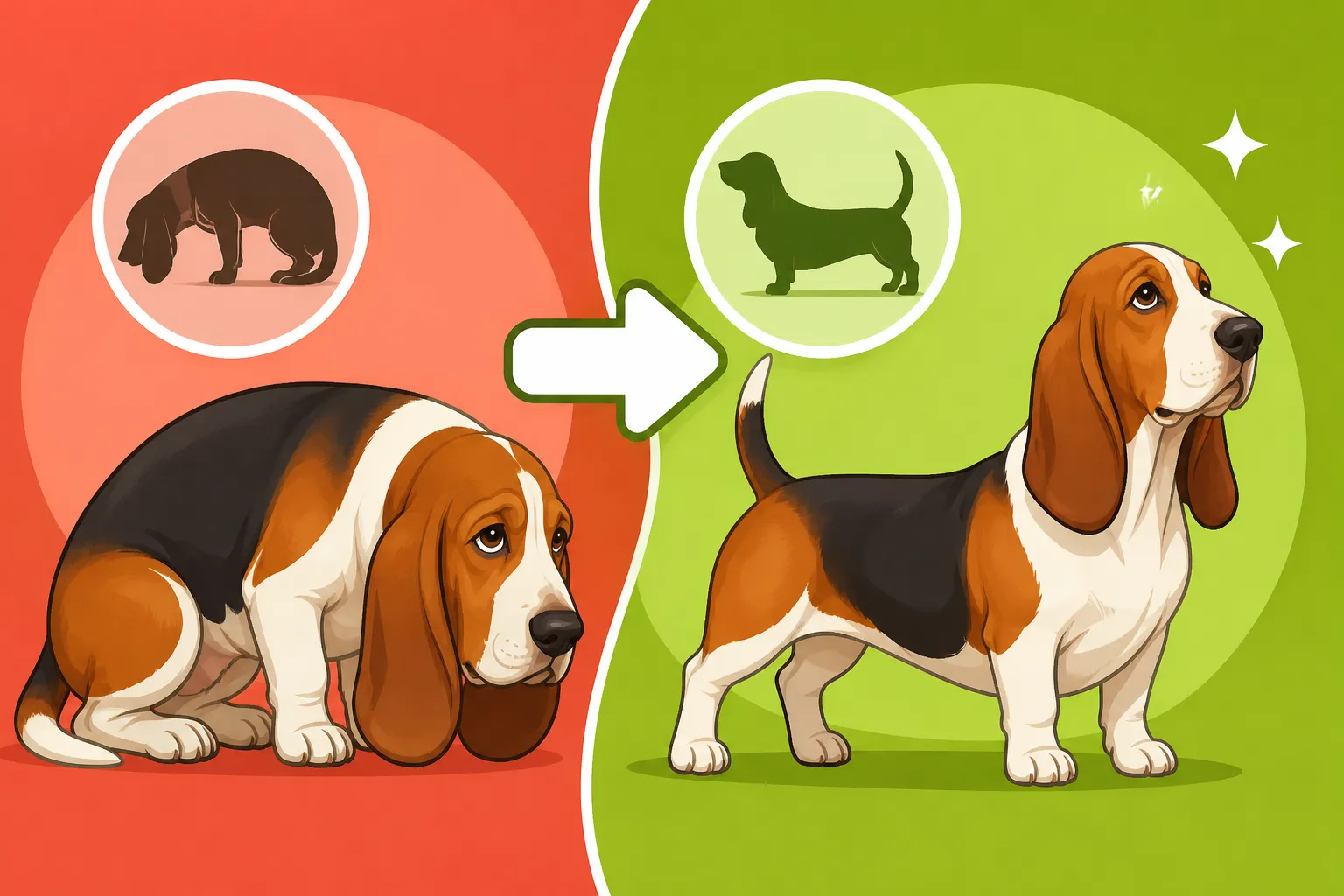
When we discuss breeding a Basset Hound "straighter," it's crucial to define what we mean by "straight." We’re not talking about transforming them into a Labrador or a German Shepherd with perfectly straight, long legs. That would fundamentally change the breed beyond recognition and erase centuries of selective breeding. Instead, the conversation often revolves around the degree of curvature and angulation in their front and rear limbs, and whether it falls within an acceptable, healthy range according to the breed standard, or if it's veering into exaggeration that could lead to welfare issues.
An ideally conformed Basset Hound, even with its achondroplastic traits, should still possess a functional, sound structure. The front legs, while short, should be substantial with plenty of bone, and the paws should point forward. While there might be some outward turn in the feet (known as "Whether a Basset Hound's Front Feet Should Turn Out"), extreme bowing, twisting, or splaying is generally considered a fault. Similarly, the hindquarters should be well-muscled and angled to provide propulsion, not appear weak or overly straight. The goal isn't to eliminate their unique short-legged nature but to ensure that the expression of these traits is moderate and doesn't compromise their ability to move without pain or develop serious health problems down the line. It's a delicate balance between maintaining breed type and ensuring functional soundness.
The Challenges and Realities of Breeding for Structure
The idea of breeding for a "straighter" Basset Hound sounds simple enough – just pick the straighter-legged dogs, right? However, the reality of dog breeding, especially with deeply embedded genetic traits, is far more complex than it appears on the surface.
Genetic Complexities of Modifying Breed Traits
Changing a fundamental breed trait like leg structure in Basset Hounds isn't like adjusting a dial. Achondroplasia is caused by a specific genetic mutation, and it's intertwined with many other aspects of their development. Attempting to breed for significantly "straighter" legs would mean trying to dilute or modify this core genetic blueprint. This isn't as straightforward as breeding out a single recessive gene. Genetic traits are often polygenic, meaning multiple genes influence them, and they can also have pleiotropic effects, where one gene influences several seemingly unrelated traits.
If a breeder were to intentionally select for less bowed legs or a more upright stance, they might inadvertently impact other characteristics that are also part of the breed standard or even crucial for health. For example, altering the leg structure could affect the length of their spine, potentially leading to different kinds of back issues than the ones currently associated with the breed, such as Intervertebral Disc Disease in a Basset Hound. Furthermore, such changes wouldn't happen overnight; it would take many generations of careful, consistent breeding, with a deep understanding of canine genetics, to make any significant, stable alterations. The risk of introducing new, unforeseen health problems or losing other desirable breed characteristics is incredibly high.
The Ethical Considerations of Selective Breeding
This brings us to the ethical considerations. Is it right to try and fundamentally alter a breed that has existed in its current form for centuries? On one hand, advocates for breed health argue that if certain exaggerated traits lead to suffering (like severe elbow issues or a spine that's too long for the legs), then breeders have a moral obligation to mitigate those problems. We know that conditions like Whether a Basset Hound Gets Elbow Dysplasia are a concern for the breed. If an excessively crooked front or overly short legs contribute to joint pain or mobility problems, then surely a slight modification that improves quality of life should be considered.
However, the counter-argument is that radically changing the breed's appearance might mean it's no longer a Basset Hound at all. The breed's identity is tied to its unique proportions. Where do you draw the line between improving health and losing the essence of the breed? This is a contentious debate within many purebred dog communities. Responsible breeders are constantly walking a tightrope, striving to produce healthy dogs that still meet the breed standard, preserving the heritage while also being mindful of welfare. The goal isn't to create a "new" breed, but to refine the existing one, ensuring that the unique characteristics are expressed in a way that allows the dog to live a full, active life. This often means carefully selecting breeding stock that exhibits sound structure within the context of the Basset Hound's defining traits.
Health Implications of Different Leg Structures
The Basset Hound’s unique body shape, while charming, does come with its own set of potential health challenges. Many of these issues are directly or indirectly linked to their specific bone structure and proportions.
Current Health Issues Linked to Conformation
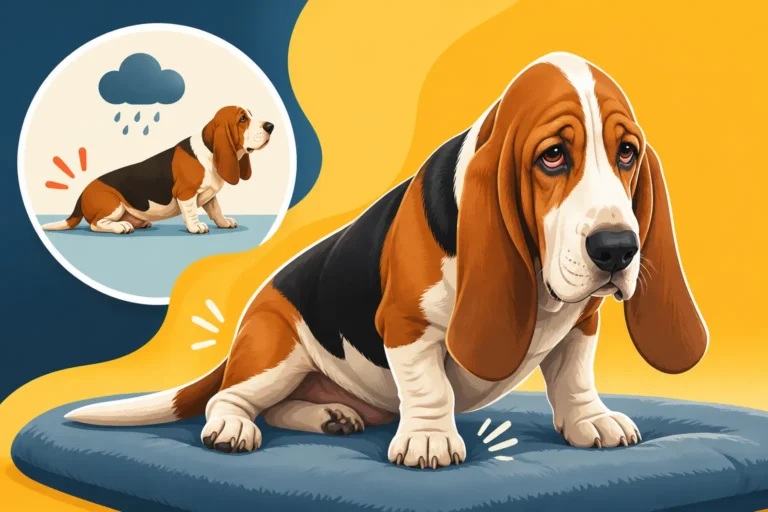
Because of their achondroplastic build, Basset Hounds are predisposed to several conformational health problems. Their short, heavy bones and substantial bodies mean their joints, particularly their elbows and hocks, take on a lot of strain. We often see cases of elbow dysplasia, which can range from mild lameness to severe debilitating arthritis. Their long backs, combined with those short legs, make them prone to spinal issues like intervertebral disc disease (IVDD), where the shock-absorbing discs between the vertebrae can rupture or bulge, causing pain, nerve damage, and even paralysis. It's one reason why we talk about preventing problems like The Back Trouble a Basset Hound Is Built Into.
Another issue can be patellar luxation, where the kneecap slips out of place, causing pain and a skip in their gait. The heavy, pendulous ears, while iconic, also contribute to chronic ear infections. While not directly related to leg structure, it highlights how specific breed traits can lead to unique health management needs. These are all things that a responsible breeder considers when selecting breeding pairs, striving to minimize the risk of passing on genetic predispositions to these ailments.
Potential Benefits and Risks of "Straighter" Legs
If a Basset Hound could be bred with slightly "straighter" legs – meaning less extreme bowing or better angulation in the joints without losing the essential low-slung body – there could be some potential benefits. Improved joint mechanics might lead to less strain on the elbows, hips, and knees, potentially reducing the incidence and severity of conditions like elbow dysplasia and arthritis later in life. A more functionally sound structure could allow for better mobility, a more natural gait, and potentially a reduction in the need for complex surgeries or lifelong pain management. A Basset Hound with better-supported joints might be able to enjoy walks for longer and generally experience a higher quality of life, without succumbing prematurely to issues that leave The Old Basset Hound That Cannot Get Off the Floor.
However, this hypothetical change also comes with risks. As discussed earlier, altering a fundamental genetic trait can have unintended consequences. If the legs were somehow made "straighter" but remained disproportionately short compared to the body, it could put even more stress on the spine, exacerbating back problems. If the legs were made longer, the dog might lose its distinctive low-to-the-ground trailing ability, changing its character and original purpose. There's also the risk of diluting the breed's unique appearance, something many breed enthusiasts and preservationists would vehemently oppose. It's a tricky balance, and any such breeding efforts would need to be undertaken with extreme caution, guided by comprehensive health testing and a deep understanding of Basset Hound genetics and function. The conversation needs to prioritize genuine welfare improvements over mere cosmetic alterations.
The Breed Standard and Breeder's Responsibility
The official breed standard serves as the blueprint for any purebred dog, guiding breeders in their efforts to produce dogs that conform to the ideal type. For Basset Hounds, this standard is a critical document, but its interpretation, especially concerning structure, is where much of the debate lies.
Interpreting the Official Basset Hound Standard
The Basset Hound breed standard, as set by organizations like the American Kennel Club (AKC) or The Kennel Club (UK), describes the ideal physical characteristics, temperament, and movement of the breed. When it comes to legs, it outlines specifics for bone, angulation, and foot placement. For instance, the AKC standard describes the front legs as "short, powerful, heavy in bone, with the forelegs bowed inward slightly to fit snugly against the chest." It also specifies that the feet "should point straight ahead or be very slightly turned out." The rear legs are described as "heavily boned and well-muscled, standing true."
The key here is "slightly bowed inward" and "very slightly turned out." This language indicates that some deviation from perfectly straight is not only acceptable but characteristic of the breed. The issue arises when this "slight" bowing or turning becomes exaggerated to the point of structural unsoundness, leading to compromised movement or health problems. It's a fine line, and different breeders or judges might interpret "slight" differently. The standard exists to define the breed, not necessarily to dictate extreme features. A responsible breeder aims for a dog that meets the standard and moves soundly, without limping or discomfort, suggesting that extreme angulation or crookedness is not desirable.
Balancing Tradition, Health, and Function
This brings us to the immense responsibility of breeders. They are the custodians of the breed, tasked with maintaining its unique characteristics while simultaneously striving for the healthiest possible offspring. This means navigating the complex interplay between tradition (the historical look and purpose of the Basset), health (minimizing genetic predispositions to disease), and function (the dog's ability to move and live comfortably). Many of the health tests a Basset Hound breeder should run are directly related to assessing the structural integrity of their dogs.
A truly responsible breeder won't simply breed two Basset Hounds because they both conform to an aesthetic standard. They will delve into health clearances, looking at hip and elbow scores, checking for signs of eye conditions like glaucoma, and considering the overall soundness and longevity of the ancestors. They understand that while a Basset Hound's legs are meant to be short and distinct, they should not be so poorly constructed that the dog suffers throughout its life. They may, for instance, choose breeding dogs that display good, moderate bone and angulation without excessive bowing or twisting, aiming to improve the overall soundness of future generations while still preserving the iconic Basset Hound silhouette. This mindful approach aims to reduce potential orthopedic issues without erasing what makes a Basset Hound, well, a Basset Hound.
Here’s a comparison to help illustrate the difference:
| Feature | Ideal Basset Hound (Breed Standard) | Exaggerated Basset Hound (Poor Conformation) |
|---|---|---|
| Front Legs | Short, heavy bone, slightly bowed inward, feet point forward or very slightly out | Severely bowed or twisted, feet splayed outward, pigeon-toed |
| Pasterns/Wrists | Strong, firm, straight (from front view) | Weak, "knuckled over," excessively bent |
| Rear Legs | Well-muscled, good angulation, strong hocks, parallel | Overly straight or overly angulated, weak hocks, cow-hocked |
| Movement | Smooth, effortless, unhurried, characteristic waddle | Stilted, labored, awkward, appears painful |
| Overall Health | Good mobility, lower risk of joint strain | Higher risk of elbow dysplasia, arthritis, spinal issues |
Supporting Your Basset Hound's Mobility, Regardless of Structure
Whether your Basset Hound has legs that are perfectly within the breed standard or tends slightly towards the more exaggerated side, proactively supporting their mobility is paramount. It’s about ensuring they have the best quality of life possible.
Proactive Care for Joint Health
Taking proactive steps for your Basset Hound's joint health should start from puppyhood and continue throughout their life. First and foremost, managing their weight is absolutely critical. We know that What Extra Weight Does to a Basset Hound can be devastating, putting undue stress on their already unique joint structure and exacerbating conditions like arthritis or disc issues. Keeping a Basset Hound at Its Correct Weight can significantly reduce the strain on their joints and back.
Beyond diet, consider joint supplements. Many Basset Hound owners find success with supplements containing glucosamine, chondroitin, and MSM, which can support cartilage health and reduce inflammation. Talk to your vet about appropriate brands and dosages, as not all supplements are created equal. Regular, moderate exercise is also key – not too much to overstress their joints, but enough to keep their muscles strong and flexible. Short, frequent walks are often better than one long, strenuous outing. Think about activities that are low-impact, like sniffing games in the yard, which engage their incredible nose without pounding their joints.
Environmental Modifications at Home
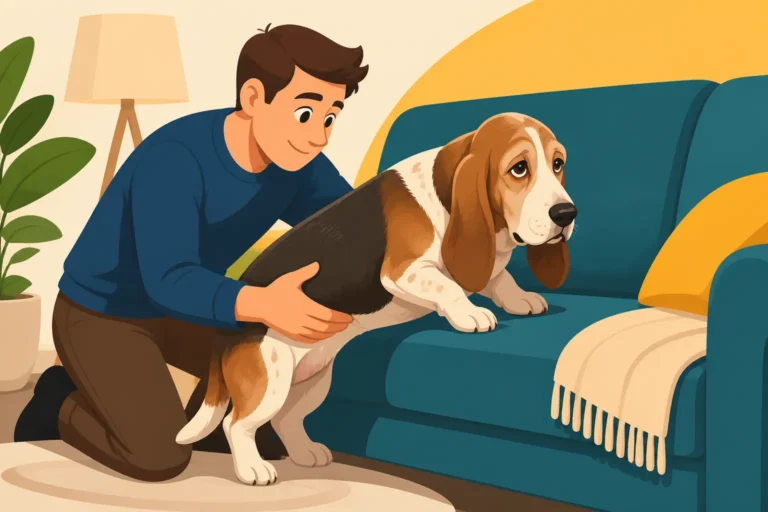
Your home environment can have a profound impact on your Basset Hound's long-term joint health. Their low stature and long backs make jumping on and off furniture a major risk factor for spinal injuries. Installing ramps for the couch and bed can prevent sudden impacts and cumulative stress on their discs. If you’re wondering Whether a Basset Hound Should Use a Ramp, the answer is almost always yes!
Slippery floors are another hazard. Hardwood, tile, or laminate floors can make it difficult for Basset Hounds to get traction, leading to slips and falls that can cause injuries or aggravate existing joint conditions. Laying down rugs or runners in high-traffic areas provides much-needed grip. Consider investing in an orthopedic bed that provides excellent support for their joints, especially as they age. An appropriate bed, such as What an Orthopedic Bed Costs for a Basset Hound, can make a huge difference in their comfort and ability to rest properly. These small but significant changes can truly extend your Basset Hound's active years and prevent unnecessary pain.
The Role of Veterinary Care and Insurance
Regular veterinary care is absolutely non-negotiable for a Basset Hound. Routine check-ups allow your vet to monitor their weight, assess their gait, and identify any early signs of joint discomfort or spinal issues. Don't wait until your Basset is clearly limping or in pain; early intervention can make a significant difference in managing these conditions. Your vet can recommend preventive measures, prescribe appropriate pain relief, or suggest specialist consultations if needed. They are your best resource for understanding "Whether a Basset Hound's Legs Are Too Short to Be Sound" for your individual dog.
Given the breed's predispositions to chronic conditions like ear infections, joint issues, and back problems, pet insurance can be an invaluable financial safety net. A reputable provider like Healthy Paws can help cover the costs of diagnostics, medications, physical therapy, and even potential surgeries for these conditions. Dealing with a Basset Hound's health issues, especially complex orthopedic or neurological ones, can quickly become incredibly expensive. Having a plan with Healthy Paws in place can alleviate some of that financial stress, allowing you to focus on getting your beloved hound the best possible care without worrying about breaking the bank. It's smart planning for a breed that, despite its adorable appearance, often faces significant health challenges tied to its unique conformation. Healthy Paws can really make a difference when unexpected (or even expected) vet bills roll in.
Disclaimer
This article is for general informational purposes only and does not constitute professional advice. Laws, prices and regulations vary by location and change over time. Consult a qualified professional for guidance on your specific situation.