What Thrombopathia Means for a Basset Hound
It’s a truly frightening moment for any Basset Hound owner: you notice a small cut that just won't stop oozing, or an unexpected bruise appears, seemingly out of nowhere. Your heart sinks as you wonder what could possibly be wrong. Many Basset Hounds face a specific, often misunderstood bleeding disorder called Thrombopathia, a genetic condition that impacts how their blood clots. This guide will walk you through what Thrombopathia means for your beloved Basset, from understanding its mechanics to managing the condition and ensuring their best possible quality of life.
Understanding Thrombopathia: More Than Just a Bruise
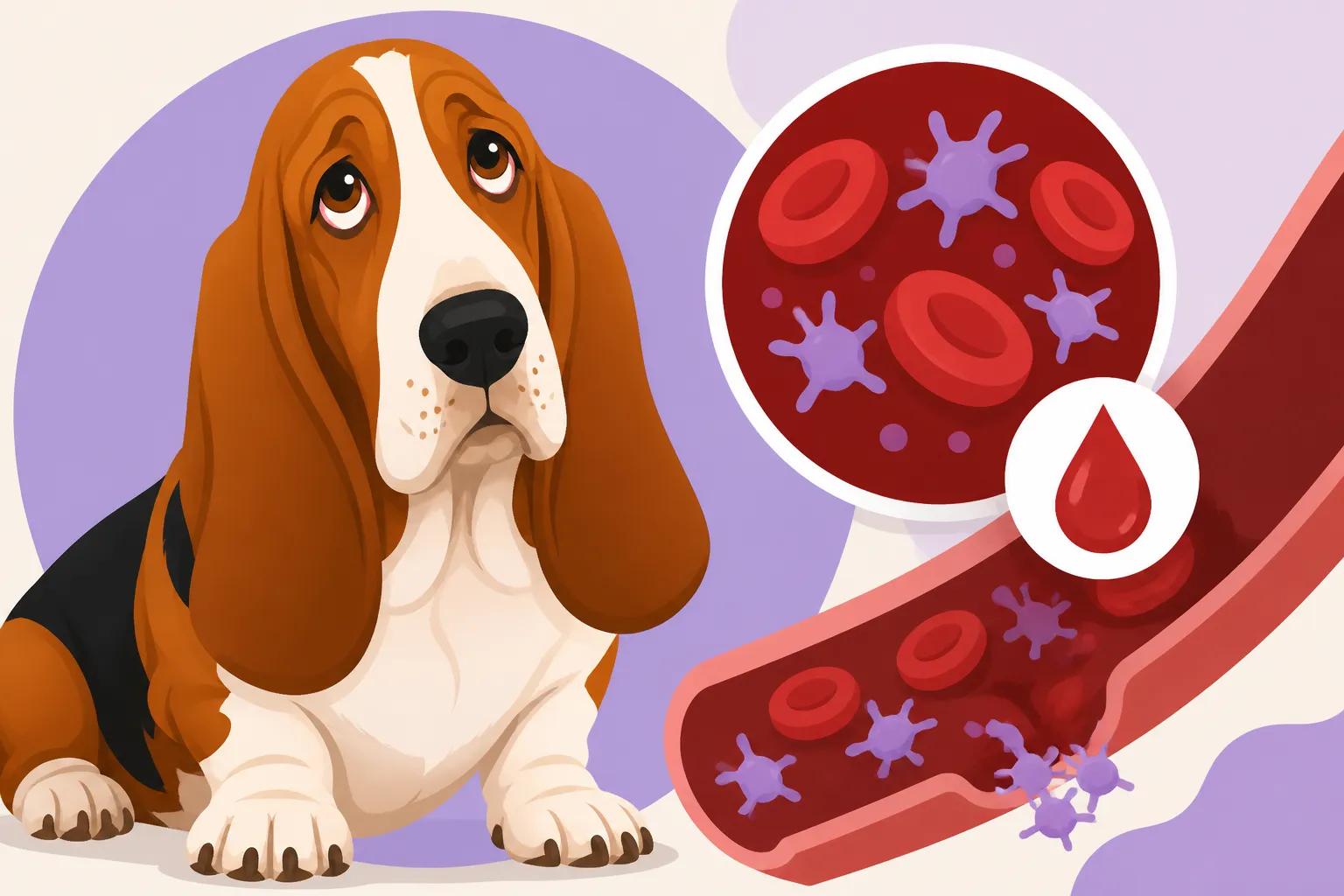
When your Basset Hound cuts itself or experiences any injury, your dog’s body has an incredible, intricate system designed to stop the bleeding. Platelets are tiny cell fragments in the blood that rush to the site of an injury, stick together, and form a plug to seal the wound. This is a crucial first step in the clotting process. However, for Basset Hounds with Thrombopathia, this vital first step is compromised, even if they have a normal number of platelets. It's not about how many platelets they have, but about how well those platelets function.
What Exactly Is Thrombopathia?
Thrombopathia in Basset Hounds is a specific, inherited platelet function disorder. Unlike some bleeding conditions where the body doesn't produce enough platelets, in Thrombopathia, the platelets are present in adequate numbers. The problem lies in their inability to properly activate, aggregate, or stick to the injured blood vessel wall to form that initial plug. Think of it like having all the necessary building blocks for a wall, but the mortar won't stick, so the wall can't be built effectively. This leads to prolonged bleeding even from minor wounds.
This condition is an autosomal recessive inherited trait, meaning a Basset Hound must inherit two copies of the defective gene—one from each parent—to be affected. Dogs that inherit only one copy are considered carriers; they typically don't show symptoms themselves but can pass the gene on to their offspring. This genetic component is why it's so important for responsible breeders to test their breeding stock. The faulty gene prevents the platelets from properly releasing their contents or adhering to each other and the vessel wall, leading to a weak or non-existent platelet plug.
How Thrombopathia Differs from Other Bleeding Disorders
It's easy to get confused when talking about bleeding disorders, as there are several types, each with a different underlying mechanism. Thrombopathia is often mistaken for or conflated with conditions like Von Willebrand Disease (vWD), but they are distinct. While both lead to abnormal bleeding, vWD involves a deficiency or defect in von Willebrand factor, a protein essential for platelet adhesion and the clotting cascade. In essence, vWD is like missing a key ingredient for the glue, whereas Thrombopathia is like having the glue, but it just won't stick properly due to an issue with the surface it needs to adhere to.
Another common distinction is from thrombocytopenia, which is a low number of platelets. A simple complete blood count (CBC) will often show normal platelet counts in a Basset Hound with Thrombopathia, which can be misleading and delay proper diagnosis if further specific tests aren't performed. Understanding these differences is crucial for accurate diagnosis and effective management. Knowing that your Basset Hound's issue is specifically with platelet function rather than quantity or clotting factors helps your veterinarian tailor the most appropriate care plan.
Recognizing the Signs: When to Worry About Bleeding
The signs of Thrombopathia can range from subtle and easily dismissed to alarming and life-threatening. Because Basset Hounds are generally a laid-back breed, any unusual bleeding should immediately raise a red flag. Owners need to be vigilant, especially during routine activities or after minor bumps and scrapes. The slow, persistent oozing rather than a quick stop to bleeding is a hallmark of this condition.
Subtle Indicators of a Problem
Often, the first clues are easily overlooked. You might notice your Basset Hound has a small cut on their paw from a walk, and it just takes an unusually long time to stop bleeding, maybe even starting again after you thought it had clotted. Unexplained bruising is another common subtle sign. You might find dark spots on their skin without recalling any specific injury or bump. These bruises tend to be larger and more diffuse than typical bumps from rough play.
Nosebleeds are another indicator to watch out for. While an occasional nosebleed can happen to any dog, repeated or prolonged nosebleeds in a Basset Hound should prompt investigation. You might also notice blood in your dog’s urine or stool, which can be a sign of internal bleeding from even minor trauma to organs. Even a seemingly insignificant procedure, like a nail trim, can become a prolonged bleeding episode, especially if their nails are cut too short. If you find yourself frequently wondering How Often a Basset Hound's Nails Need Cutting and still struggling with bleeding, it might be more than just clumsy clipping.
Emergency Situations and Severe Bleeding
The most critical situations often arise after surgery or significant trauma. A routine procedure, such as neutering or spaying, or even a dental cleaning, can turn dangerous if a Basset Hound has undiagnosed Thrombopathia. Post-surgical bleeding can be excessive and difficult to control, sometimes requiring transfusions. This is why it’s imperative to test your Basset Hound beforehand, as discussed in Whether a Basset Hound Bleeds After Surgery. You need to be prepared for potential complications, and your vet needs to know if this condition is present.
Signs of severe internal bleeding can include extreme lethargy, pale gums (a sign of anemia), difficulty breathing, a swollen or painful abdomen, and general weakness. If you observe any of these symptoms, especially following an injury or even just seemingly out of the blue, it's an immediate emergency. Head to your nearest veterinary emergency clinic without delay. Conditions like Whether a Basset Hound Bleeds From the Nose chronically should also be treated as an urgent matter, as excessive blood loss can quickly become critical.
Diagnosis and Testing: Getting to the Bottom of It
Given the potential severity of Thrombopathia, getting an accurate diagnosis is paramount. It’s not enough to simply suspect a bleeding disorder; you need definitive answers to manage your Basset Hound's health effectively. This often involves specific tests that go beyond a standard blood panel, and it's a conversation you should have with your veterinarian early on, especially if you know your Basset Hound's lineage.
The Importance of Pre-Surgical Screening
Before any planned surgical procedure, no matter how minor it seems, it is absolutely vital to screen your Basset Hound for bleeding disorders. This includes routine procedures like spaying or neutering, as well as dental work where extractions might be necessary. A regular complete blood count (CBC) will typically show a normal platelet count in a Basset Hound with Thrombopathia, which can give a false sense of security. This is precisely why more specialized screening tests are required.
Imagine the anxiety of taking your Basset Hound in for a simple dental cleaning, only to get a call from the vet hours later informing you they can't stop the bleeding from a minor tooth extraction. This scenario highlights why proactive testing is critical. Many veterinarians will specifically recommend additional screening for Basset Hounds because of the breed's known predisposition to Thrombopathia. Having this information upfront allows your veterinary team to take appropriate precautions, such as having blood products on hand, or altering anesthetic protocols if necessary. This pre-emptive approach can quite literally save your Basset's life. It truly goes to show Whether a Basset Hound Should Be Tested Before Neutering is a crucial question every owner must consider.
Specific Tests for Thrombopathia
There are two primary ways to diagnose Thrombopathia in Basset Hounds: a functional test and a genetic test. The functional test is called the Buccal Mucosal Bleeding Time (BMBT). This involves making a small, shallow incision on the inside of your dog's lip and timing how long it takes for the bleeding to stop. In a healthy dog, this usually takes a few minutes. In a Basset Hound with Thrombopathia, the bleeding time will be significantly prolonged, often exceeding ten minutes or even much longer. It's a quick, in-clinic test that can give a strong indication of a platelet function defect.
However, the BMBT test is not entirely specific to Thrombopathia; other platelet function issues could also cause a prolonged time. For a definitive diagnosis, especially to identify carriers for breeding purposes, a DNA test is the gold standard. This genetic test is usually performed by specialized veterinary laboratories, such as those at university veterinary schools or commercial genetic testing companies. A simple cheek swab or blood sample can be sent in, and the lab will analyze the DNA for the specific mutation associated with Basset Hound Thrombopathia. The results will indicate if your dog is clear, a carrier, or affected. Knowing Whether Thrombopathia Can Be Tested in a Basset Hound through genetic means provides undeniable proof and valuable information for lifelong management and future breeding decisions.
Living with Thrombopathia: Management and Care
Discovering your Basset Hound has Thrombopathia can be daunting, but it's not a death sentence. With careful management and proactive care, many affected Basset Hounds can live full and happy lives. The key is understanding the condition, minimizing risks, and having a solid plan in place for emergencies. This might involve making some adjustments to your daily routine and being in close communication with your veterinarian.
Minimizing Risks in Daily Life
Since there's no cure for Thrombopathia, the primary focus is on preventing bleeding episodes and managing them effectively when they occur. This means making conscious choices to minimize trauma and being aware of potential risks. For example, rough play with other dogs or boisterous children might need to be supervised more closely, or even adjusted, to avoid bumps and falls that could lead to injury. Selecting appropriate, softer toys that won't splinter or cause oral lacerations is also a good idea.
Furthermore, you'll need to be extremely careful with medications. Certain common drugs, like aspirin and non-steroidal anti-inflammatory drugs (NSAIDs), can further impair platelet function and should be strictly avoided unless specifically prescribed and carefully monitored by your vet. Always consult your veterinarian before giving any medication, supplement, or even certain foods, as some natural ingredients can also have blood-thinning properties. It’s a serious concern, which is why we delve deeper into Whether a Basset Hound Should Avoid Aspirin. Creating a safe home environment, perhaps by padding sharp corners or ensuring stable footing to prevent slips, can also go a long way in minimizing accidental injuries.
Treatment Options and Emergency Protocols
When a bleeding episode does occur, quick and appropriate action is vital. For external cuts, applying direct pressure with a clean cloth for an extended period (often 5-10 minutes or more) is the first step. Cold compresses can also help constrict blood vessels and slow bleeding. It's important to remain calm and patient, as clotting will take longer than in a non-affected dog. Always have an emergency kit ready, including sterile gauze, bandages, and your vet's emergency contact information.
For severe or internal bleeding, veterinary intervention is crucial and often urgent. Treatment options can include blood transfusions, which provide healthy platelets and clotting factors to help stop the bleeding. In some cases, platelet-rich plasma transfusions may be used. Medications like desmopressin acetate (DDAVP) are sometimes considered, though their effectiveness can vary depending on the specific type of Thrombopathia. The reality is, emergency care for a Basset Hound with a serious bleeding episode can be incredibly expensive, often leading to costs like What a Basset Hound's Emergency Surgeries Cost. Having pet insurance, like a policy from Healthy Paws, can provide significant financial relief during such stressful times, ensuring you can focus on your dog's health without added monetary worry. Be sure to discuss a detailed emergency protocol with your veterinarian, so you know exactly what steps to take and who to call if a crisis arises, especially outside of regular clinic hours.
Breeding Considerations: Preventing Future Cases
One of the most powerful tools we have in managing genetic conditions like Thrombopathia is responsible breeding. Understanding the genetic basis of this disorder allows breeders to make informed decisions that can significantly reduce its prevalence in future generations of Basset Hounds. This isn't just about individual dogs; it's about the health of the entire breed.
Why Health Testing for Breeders Matters
Because Thrombopathia is an inherited condition, the choices made by breeders directly impact the health outcomes of puppies. Responsible breeders are committed to improving the health of the breed, and that means thoroughly health testing all potential breeding stock before they are ever bred. This includes genetic testing for Thrombopathia. If a dog is found to be affected, it should not be bred. If a dog is a carrier, careful consideration must be given to its breeding partners.
A breeder who tests for Thrombopathia can ensure that no affected puppies are produced by breeding a carrier to a "clear" dog (one that does not carry the gene). Breeding two carriers together, however, carries a 25% risk of producing affected puppies. This kind of diligent testing is part of a broader commitment to canine health, which often includes other screens for common Basset Hound issues. Understanding The Health Tests a Basset Hound Breeder Should Run offers crucial insight into what to look for when choosing a puppy.
The Role of Genetic Counseling
Genetic counseling in canine breeding involves using DNA test results to make strategic decisions about mating pairs. For Thrombopathia, breeders typically aim to reduce the incidence of affected puppies while maintaining genetic diversity within the breed. This means not automatically ruling out carriers from breeding programs, as long as they are bred responsibly. A carrier Basset Hound, for instance, might have many other excellent qualities that contribute positively to the breed's health and conformation.
The ethical approach is to breed a carrier to a dog that has been tested and confirmed "clear." This ensures that none of the offspring will be affected by Thrombopathia, though roughly half will be carriers themselves. These carrier puppies can then be identified through testing and either removed from future breeding programs or carefully bred to clear mates. This methodical approach ensures that the defective gene is gradually phased out of the population over generations, without unnecessarily narrowing the gene pool. Understanding the implications for Whether a Carrier Basset Hound Bleeds (they typically do not) helps emphasize why careful selection of breeding partners is so critical. Ultimately, this transparency and commitment to testing is a mark of a truly dedicated breeder, and a strong argument against purchasing Whether an Untested Basset Hound Litter Is Worth Buying.
Thrombopathia Management Quick Guide
Here's a quick overview of key aspects of managing Thrombopathia in Basset Hounds:
| Aspect | Recommendation | Key Considerations |
|---|---|---|
| Diagnosis | Buccal Mucosal Bleeding Time (BMBT) & DNA Test | BMBT is a functional test, DNA test is definitive for carriers/affected. |
| Prevention | Avoid trauma, supervise play, use soft toys | Reduce risk of cuts/bruises. |
| Medication Avoidance | NO Aspirin or NSAIDs without vet approval | These can worsen bleeding. Always consult your vet. |
| Emergency Prep | Know vet's emergency number, have sterile gauze, cold packs | Direct pressure for external bleeding; immediate vet visit for severe/internal. |
| Veterinary Care | Inform all vets/groomers of condition, discuss protocols | Ensure continuity of care; tailor procedures accordingly. |
| Breeding | Test all breeding stock (DNA test) | Only breed clear to clear, or clear to carrier with careful planning. |
| Financial Planning | Consider pet insurance (e.g., Healthy Paws), emergency fund | Treatment for severe bleeding can be costly (transfusions, surgery). |
| Daily Life | Observe for subtle signs: prolonged bleeding from minor cuts, unexplained bruising | Vigilance is key to early detection. |
Disclaimer
The information provided in this article is for educational purposes only and should not be considered a substitute for professional veterinary advice. Always consult with a qualified veterinarian for any health concerns or before making any decisions related to your Basset Hound's care.