Whether a Basset Hound Knocks Small Children Over
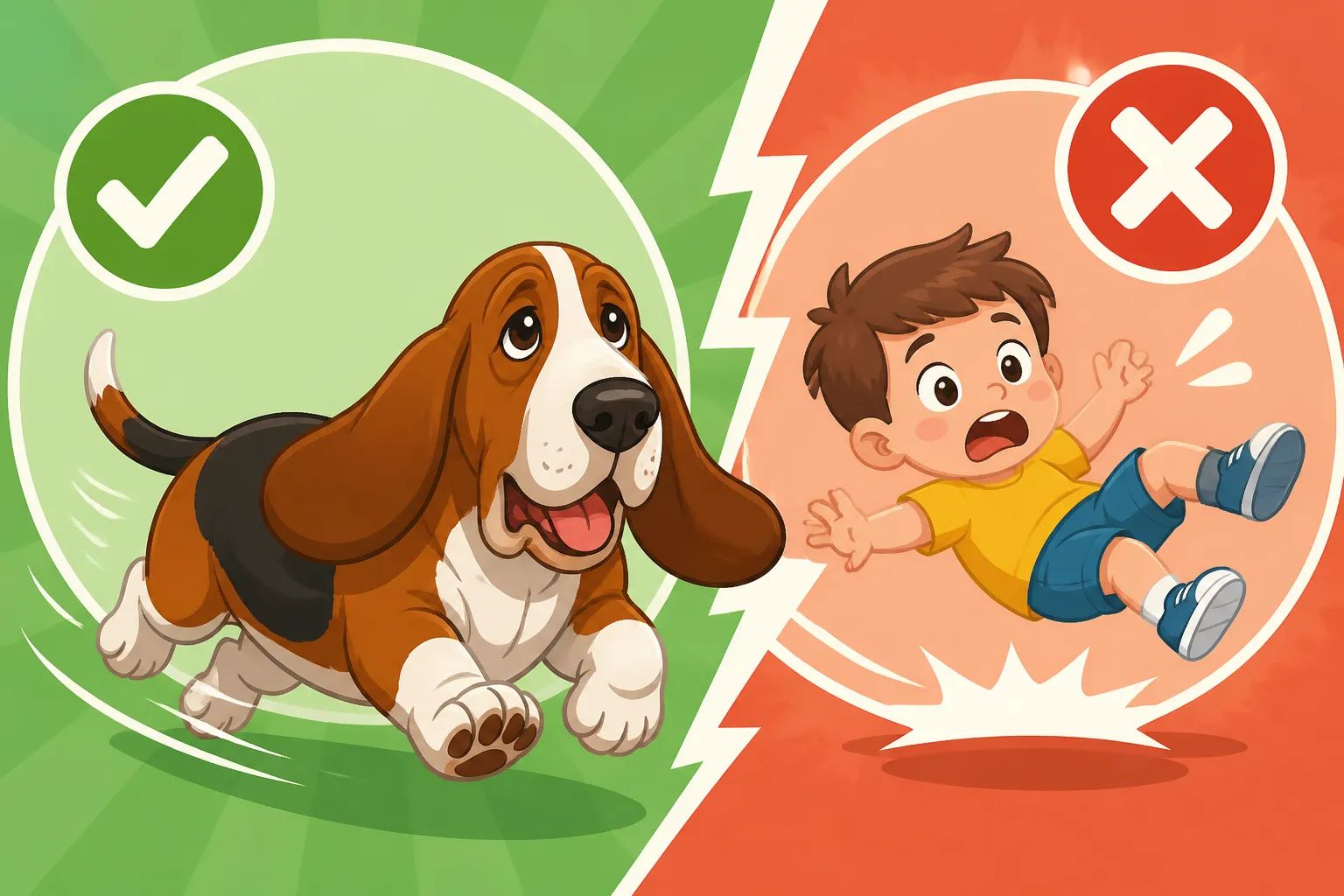
Many folks picture a Basset Hound as a slow, sleepy, almost cartoonish dog, perfectly content to lounge around all day. But beneath that placid exterior and floppy ears lies a surprisingly solid, heavy-boned companion with an incredible nose, and sometimes, a burst of energetic clumsiness that can unexpectedly send a small child sprawling. This guide will walk you through why a Basset Hound might accidentally knock over a little one, and crucially, what you can do to manage those interactions safely for everyone in your household.
Understanding the Basset Hound's Physicality and Play Style
It's easy to look at a Basset Hound with their short legs and long body and assume they're delicate or perpetually slow. However, their unique build contributes significantly to how they interact with their environment, including small, unsteady humans. It's not about malice; it's pure physics mixed with hound instincts.
The Surprising Weight Behind Those Short Legs
One of the biggest surprises for new Basset owners is just how heavy these dogs are. They might only stand a foot or so tall at the shoulder, but they are built like little tanks, with dense bone and a stocky frame. An adult Basset Hound can easily weigh in the 50 to 70-pound range, sometimes even more. Imagine a child of, say, 30 pounds, who is still a bit wobbly on their feet. If a Basset of 60 pounds rounds a corner too fast or gets a sudden burst of zoomies, that weight becomes a significant force. It’s less like being pushed by a fluffy cushion and more like a low-slung, furry bowling ball.
When a Basset Hound decides to move, especially when excited or chasing a scent, they can build up considerable momentum despite their short stature. Their low center of gravity means they are incredibly stable, but that stability also makes them difficult to stop or redirect once they're in motion. A child, on the other hand, is high-centered, less stable, and far more prone to losing balance with even a glancing blow. So, while it's almost always an accident, the sheer bulk of a Basset is a major factor in whether a child gets knocked over. This isn't a breed known for its grace, and their heavy build can catch you, and your little ones, off guard. You can learn more about this by reading Why a Basset Hound Weighs as Much as a Labrador.
The Nose-Driven World and Selective Hearing
Basset Hounds live through their noses, and when a captivating scent hits their radar, the rest of the world, including small children, can temporarily cease to exist. They are bred to follow a trail relentlessly, and that instinct is deeply ingrained. This isn't stubbornness, though it certainly feels like it when they're ignoring your calls; it's their purpose. If a Basset catches a whiff of something truly interesting – a crumb dropped on the floor, an intriguing smell from outside that wafted in, or even just another dog's scent – they can become hyper-focused.
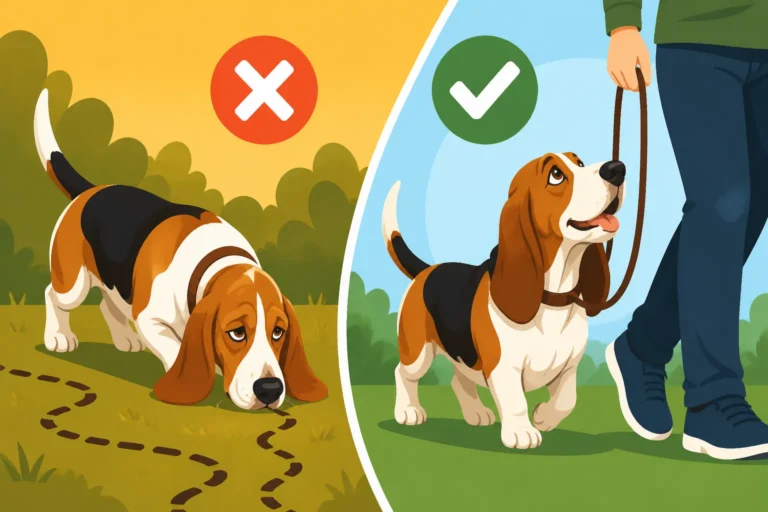
In this state of scent-driven concentration, a Basset Hound might plow forward, nose to the ground, utterly oblivious to a toddler playing nearby. They aren't looking up, they aren't scanning their surroundings for obstacles, they're simply following their nose. A sudden pivot or an unexpected dash after an invisible scent trail can lead to an accidental collision. It's not that they want to knock over a child; it's that the child isn't even in their consciousness when that powerful nose takes over. This makes constant supervision and early training in impulse control absolutely vital in a home with both Bassets and young children.
Puppy Playfulness Versus Adult Bulk
While adult Basset Hounds are certainly capable of accidental tumbles due to their weight, Basset Hound puppies can be a whole different ballgame. They're still learning about their bodies, their environment, and how to control their boundless, if short-lived, bursts of energy. A Basset puppy, despite being smaller, still has that solid build and can be incredibly clumsy. They often trip over their own enormous paws and floppy ears, stumble, and bounce off things as they explore. Imagine a wiggly, clumsy puppy running full-tilt, suddenly changing direction, or body-slamming into something because they misjudged their speed.
Puppies also tend to be mouthy and might jump up more readily in excitement. While an adult Basset is less likely to jump high due to their structure, a puppy hasn't quite figured that out yet. A playful puppy trying to "herd" a child or simply join in a game can easily trip them up. Their sharp little puppy teeth and claws, even when not intending to harm, can also cause scrapes or nips during these boisterous interactions. This is why early socialization and training are crucial from the moment they join your family. Getting a handle on their boisterous puppy stage can prevent bigger problems when they mature into a hefty adult. You can find excellent resources on early training through platforms like BAXTER & Bella, which offer structured programs for puppies and young dogs. The First Year With a Basset Hound Puppy covers more about these formative stages.
Proactive Strategies for Safe Interactions
Having a Basset Hound and small children in the same home can be a wonderful experience, bringing joy and companionship to everyone. However, it requires thoughtful management and consistent effort to ensure safety. It's about setting everyone up for success and teaching respect from both ends of the leash.
The Power of Supervision and Management
When you have a Basset Hound and young children under the same roof, direct, active supervision is non-negotiable, especially during initial introductions and playtime. "Supervision" doesn't just mean being in the same room; it means actively watching, ready to intervene, and interpreting the body language of both your dog and your child. Never leave a Basset Hound unattended with very young children, even for "just a minute." It only takes a second for an accidental bump to occur. Think of it like this: you wouldn't leave a toddler unsupervised near a hot stove, and while a Basset Hound isn't a stove, they are a powerful, sometimes unpredictable animal.
Management also extends to controlling the environment. Baby gates are your best friend. They allow your Basset to be part of the family but create safe zones for children to play without the risk of being bowled over by an excited or scent-driven hound. These are readily available on platforms like Amazon and can be invaluable tools for creating harmony. Using a tether in a common area can also provide supervised interaction without allowing the Basset full range to dash unexpectedly. Consider a long line or a house leash for training and managing puppy behavior, especially as they're learning impulse control.
Training for Both Basset and Child
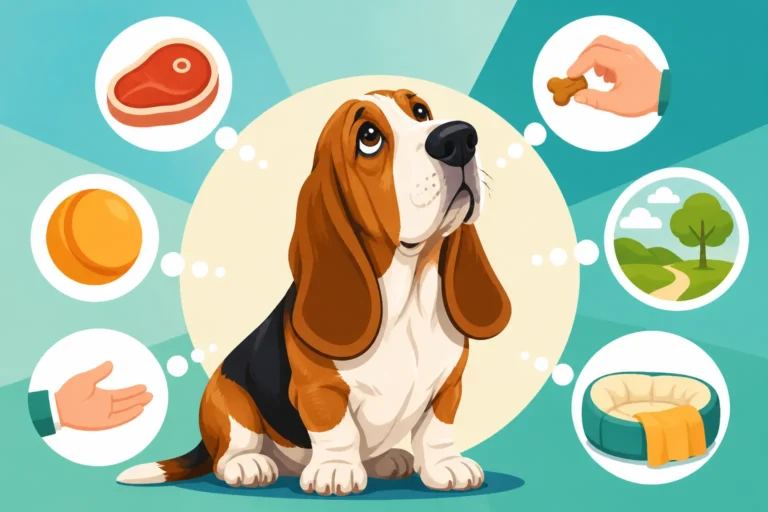
Effective training is the cornerstone of preventing accidents. For your Basset Hound, focus on core obedience commands like "sit," "stay," "down," and especially "leave it." The "leave it" command is incredibly powerful for diverting their attention from dropped food or objects, which can often trigger a sudden dash. Start teaching these commands in a calm, distraction-free environment and gradually introduce distractions, including the presence of children, at a distance. Positive reinforcement, using high-value treats and praise, works wonders with Bassets. They might be perceived as stubborn, but they are highly motivated by food! What Actually Motivates a Basset Hound delves deeper into their drive.
Just as important as training your dog is teaching your children how to interact respectfully and safely with the Basset Hound. This means teaching them not to pull ears or tails, not to climb on the dog, and to understand when the dog needs space. Teach them to "be a tree" if the dog gets too boisterous – standing still and quiet until the dog calms down. Always model calm and respectful interactions yourself. Explain that the Basset's ears are very sensitive, and rough handling can cause pain. Gentle petting is okay, but always under your watchful eye. If you want to delve deeper into training, BAXTER & Bella offers excellent online programs that can guide you through these crucial steps with positive, family-friendly methods.
Managing Excitement and Energy
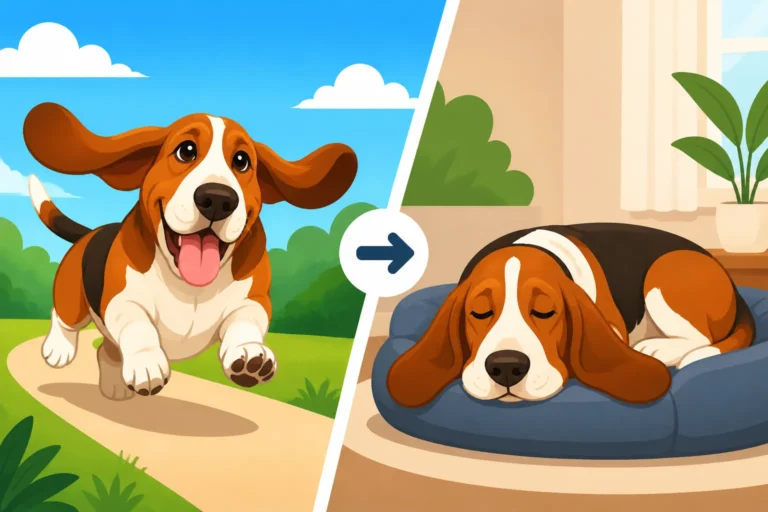
Basset Hounds are often described as lazy, but that's a misnomer. While they love to lounge, they also have bursts of surprising energy. When they're excited – perhaps someone just came home, or it's dinnertime, or they've just woken up from a nap and need to stretch their legs – they can bound around with a clumsy enthusiasm. These are the moments when accidental collisions are most likely. It's important to manage these "high-energy" moments.
For instance, if your Basset gets overly excited when guests arrive, have them on a leash or behind a baby gate until they've calmed down. Use these moments to practice "sit" or "down" commands before allowing them to greet. Regular, moderate exercise, like a good daily walk that allows for plenty of sniffing, can help burn off some of that pent-up energy and reduce the likelihood of uncontrolled zoomies indoors. Remember, mental exercise, such as nose work games, can be just as tiring as physical exercise for a Basset Hound and can help channel their instincts positively, rather than letting them express that energy in ways that might lead to accidental bumps.
Creating a Harmony-Filled Home Environment
Beyond direct training and supervision, setting up your home to prevent potential mishaps is key. It's about designing a space where both your Basset Hound and your children can coexist safely and happily, minimizing the opportunities for accidental tumbles.
Physical Barriers and Safe Zones
As mentioned, baby gates are truly invaluable. They allow you to create designated safe zones for children where the Basset cannot enter freely, as well as areas where your Basset can retreat if they need some quiet time away from enthusiastic little hands. Think about placing gates at doorways to living rooms, playrooms, or even the kitchen if that's a common area for dropped food. This simple physical barrier can prevent a charging Basset from unexpectedly encountering a child.
Consider the layout of your furniture as well. Ensure there's enough clear space for both children to play and for your Basset to move around without obstacles. Sharp corners on coffee tables or low furniture can be hazards if a child falls or if a Basset bumps into it while a child is nearby. Non-slip rugs, easily found on Amazon, can also be beneficial in areas where your Basset might get excited and try to sprint, preventing them from slipping and potentially falling into a child. How High a Fence a Basset Hound Needs can give you an idea about thinking about boundaries more broadly, even within the home.
Teaching "Doggy Manners" and Respectful Interaction
It's not enough to simply separate; we also need to foster positive interactions. Teach your children about "doggy manners." This includes always asking an adult before approaching any dog, petting gently on the back or shoulder, and knowing when to give a dog space. Never allow children to approach a Basset Hound while it's eating, sleeping, or chewing on a favorite toy. These are prime times when even the most placid dog might react defensively if startled or disturbed. Establishing clear rules, like "no disturbing the dog in its bed" or "no taking toys from the dog," helps prevent misunderstandings and teaches children respect for an animal's personal space.
Conversely, your Basset Hound needs to learn how to be gentle and respectful around children. This comes from consistent training and reinforcing calm behavior. If your Basset tends to jump up, consistently redirect them to a "sit" or "down" command and reward them for keeping all four paws on the floor. Never encourage jumping, even playfully, especially around children. If a Basset is overly excitable around children, a good strategy is to have them on a leash in the house during family time so you can gently correct or redirect their behavior immediately. Remember that a gentle pat or a quiet word is much more effective than yelling or harsh punishment. For specific training techniques, resources from BAXTER & Bella can be incredibly helpful in shaping positive behaviors for both dog and child.
Safe Play and Activity Choices
When it comes to playtime, choose activities that are safe and appropriate for both your Basset Hound and your children. Fetch in the yard can be great, but perhaps not in a crowded living room where a child could get in the way. Instead of high-energy chasing games indoors, opt for quieter, more controlled activities. Snuffle mats, puzzle toys, and slow feeder bowls can keep a Basset Hound mentally engaged and calm, especially if they are prone to getting overstimulated. These types of enrichment activities are wonderful for Bassets, as they satisfy their natural foraging and scenting instincts in a safe, contained way.
Consider giving your Basset Hound a special "job" to do during children's playtime, like lying on their dog bed with a long-lasting chew or a favorite Kong toy. This keeps them occupied and prevents them from wandering into the children's play area inadvertently. Remember, the goal is to create an environment where everyone feels secure and understood, and where accidental bumps and tumbles are minimized through thoughtful planning and consistent effort. While a Basset Hound might seem like a low-risk dog due to its size, their solid build and sometimes single-minded focus on scent means that vigilance is always key in a busy family home.
Understanding Potential Triggers for Accidental Knock-Overs
It's helpful to anticipate the moments and situations where an accidental knock-over is most likely to occur. By recognizing these triggers, you can be proactive in preventing them.
Food-Related Excitement
Food is a huge motivator for Basset Hounds, and their enthusiasm around meal times or dropped treats can be intense. If a child drops a piece of food, even a tiny crumb, a Basset Hound can become a furry projectile, rushing to get to it before anyone else does. This sudden, fast movement, often with their head down, is a common scenario for accidental collisions. Always ensure children eat away from the Basset, preferably at a table, and teach both children and the dog that dropped food is off-limits. The "leave it" command is paramount here.
Similarly, if the Basset Hound's own meal time causes high excitement, ensure children are safely out of the way before putting down their food bowl. You might even consider using a slow feeder bowl, available on Amazon, to make meal times a calmer, more prolonged activity, rather than a frantic gulping session.
Doorway Dashes and Greetings
When someone arrives home, especially after a period of absence, a Basset Hound's joy can manifest in a burst of excited wiggles and clumsy dashes to the door. This can be especially dangerous if a small child is also eagerly greeting the newcomer. The Basset might weave around legs, bump into knees, or try to get to the front of the greeting party. To avoid this, teach your Basset to wait politely at the door or even behind a gate before anyone enters. This provides a moment for everyone to compose themselves and greet calmly, without the risk of an excited dog causing a child to fall.
Consider having a designated spot for your Basset to go to when the doorbell rings or someone comes to the door, like their bed or a mat, and reward them for staying there until released. This helps manage their enthusiasm in a controlled manner. A Basset Hound in a House With Children offers more insights into managing these daily dynamics.
Startle Response or Unexpected Movement
Even a calm Basset Hound can be startled. A loud noise, a sudden movement by a child, or even an unexpected touch from behind can cause them to jump, spin, or move abruptly. If a child is in the immediate vicinity when this happens, an accidental bump is highly probable. While it's impossible to eliminate all startling situations, teaching children to move calmly and predictably around the dog, and to always announce themselves before touching the dog, can reduce the risk.
Similarly, teach your Basset that gentle, unexpected touches are not a threat. This can be achieved through positive conditioning, where you occasionally give soft, unexpected touches (like on their back or shoulder) followed immediately by a treat. This helps build their tolerance and confidence, making them less likely to react with a sudden lurch if a child brushes past them accidentally.
Table: Basset Hound Behaviors and Mitigation Strategies for Children
Here’s a quick overview of common Basset Hound behaviors that might lead to accidental tumbles and practical ways to mitigate them:
| Basset Hound Behavior | Risk for Children | Mitigation Strategy |
|---|---|---|
| Sudden dashes/Zoomies | Accidental collision, child falling | Active supervision, baby gates (e.g., from Amazon), regular moderate exercise, redirect with toys, use a long line or house leash indoors during high excitement times. |
| Scent-driven focus | Plowing into child, ignoring commands | "Leave it" command training (BAXTER & Bella has good modules), leash management, clear eating areas for children, mental enrichment (snuffle mats, puzzle toys). |
| Excited greetings | Jumping up, bumping legs, child falling | Doorway manners training (sit/stay), designated "place" command for greetings, keep dog on leash or behind gate until calm. |
| Puppy clumsiness/Mouthiness | Tripping, minor nips/scratches | Early socialization, consistent positive reinforcement training, appropriate chew toys, redirection from nipping, structured puppy classes (like those from BAXTER & Bella). |
| Food guarding/Excitement | Rushing for dropped food, potential growling | Teach "leave it" to dog, teach children not to approach dog during meals, feed dog in a quiet, separate area, use slow feeders. |
| Startle response | Sudden movements, potential collision | Teach children calm movements, gentle interaction, and to announce presence; desensitize dog to unexpected touches with positive reinforcement. |
Ultimately, while a Basset Hound is generally a calm and loving companion, their unique physical characteristics and strong hound instincts mean that accidental bumps and tumbles with small children are a real possibility. However, with consistent training, proactive management, and clear communication within the household, you can create a safe and harmonious environment where both your beloved Basset and your cherished children can thrive together.
Disclaimer
This article is for general informational purposes only and does not constitute professional advice. Laws, prices and regulations vary by location and change over time. Consult a qualified professional for guidance on your specific situation.