How Good a Basset Hound’s Nose Actually Is
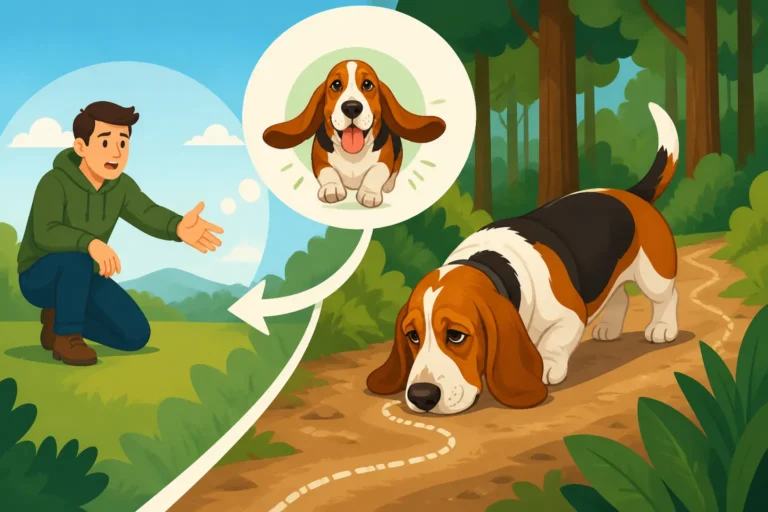
One of the most common frustrations Basset Hound owners face is feeling completely invisible when their beloved dog catches a scent. You might call their name, wave a treat, or even do a little dance, but once that magnificent nose hits a compelling trail, it’s like you’ve vanished into thin air. This guide is all about understanding just how incredibly powerful a Basset Hound's nose truly is, delving into the science, the real-world applications, and practical tips for living with and harnessing this extraordinary gift.
The Basset Hound's Nose: A Scent Tracking Masterpiece
There's a reason Basset Hounds are often described as a nose with legs. Their entire anatomy, from those long, floppy ears to their low-slung bodies, is perfectly designed to excel at scent work. It’s not just a cute quirk; it’s an evolutionary marvel that allows them to follow trails that other breeds simply can't detect, or certainly can’t stick to with the same single-minded devotion.
Anatomical Adaptations for Scent
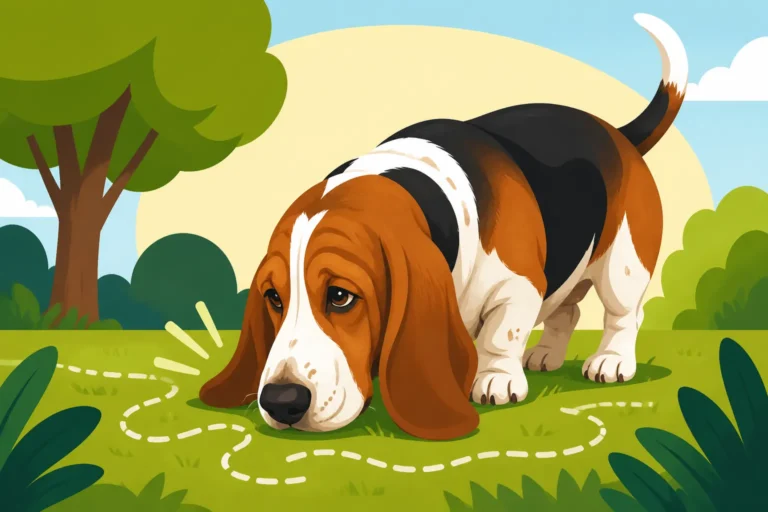
Imagine a living, breathing, highly specialized scent vacuum cleaner. That’s essentially what you have in a Basset Hound. Their physical characteristics are far from accidental; they are specific adaptations that enhance their olfactory prowess. Those famously long, heavy ears, for instance, don't just hang there looking adorable. As a Basset moves, especially with its nose to the ground, those ears sweep the ground in front of them, stirring up scent particles and directing them towards their nose. It's like having built-in scent antennae, making sure no subtle whiff escapes detection.
Beyond the ears, consider the Basset's prominent dewlap—that loose, wrinkled skin around their neck and throat. This excess skin, along with the deep folds around their face, serves a crucial purpose. It creates additional surface area and traps scent particles close to their nose, allowing them to collect and process more information from the air and ground. It's a natural scent trap, maximizing their ability to pick up and hold onto a trail. Their short legs and heavy bone structure also play a role, forcing them to move slowly and keep their nose closer to the ground, minimizing the dissipation of scent trails and enabling a more concentrated focus on the task at hand. This deliberate, unhurried pace is ideal for complex scent work, making them relentless trackers.
The Science Behind Their Olfactory Power
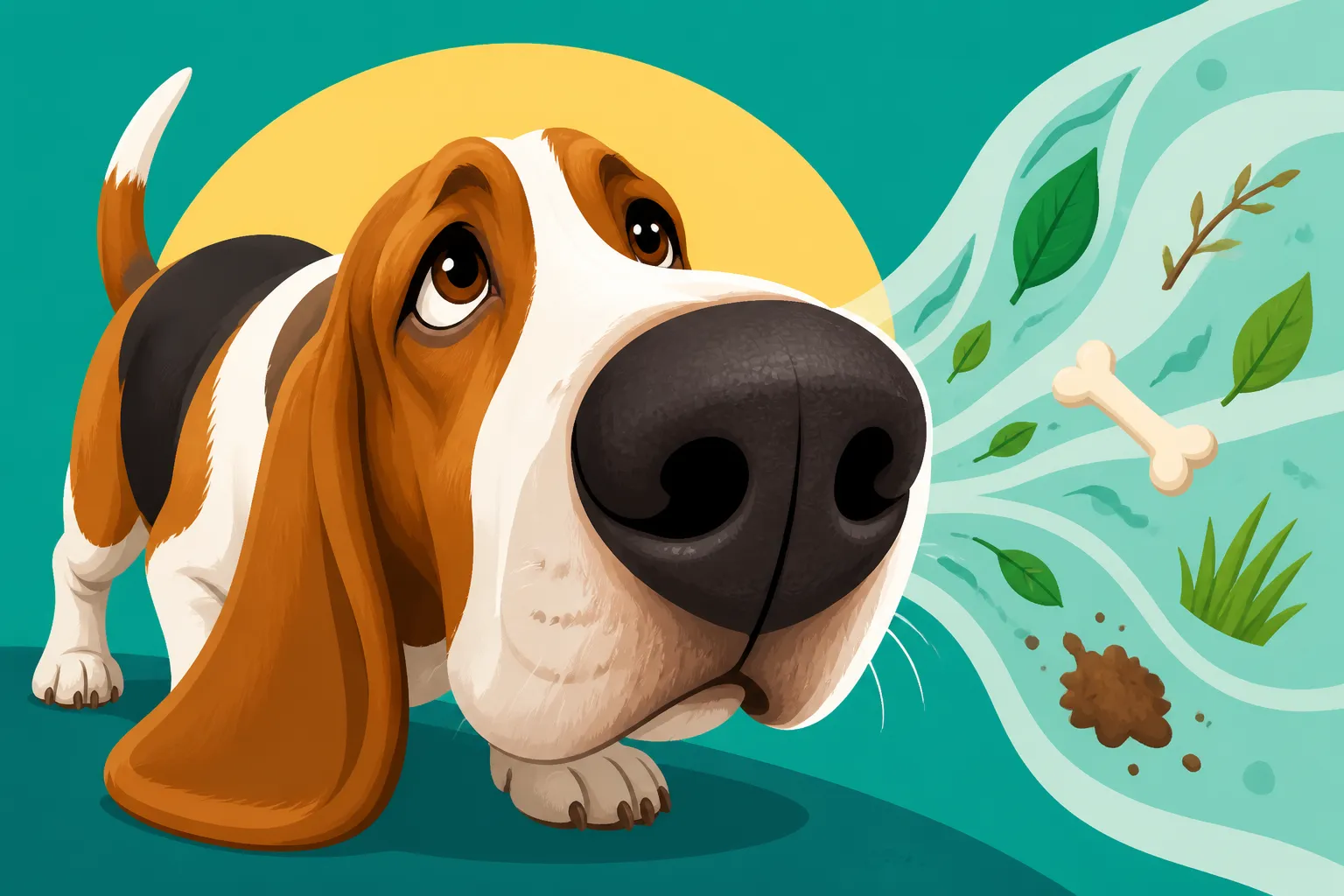
When we talk about a Basset Hound's nose, we're really talking about a sophisticated biological instrument. The internal structure of their nasal cavity is incredibly complex, housing an astonishing number of olfactory receptors – the specialized cells that detect scent molecules. While humans have around 5 million such receptors, a Basset Hound boasts an estimated 220 million to 300 million. This massive difference in receptor count means they can detect a far wider range of smells and at much lower concentrations than we ever could. It’s like comparing a basic point-and-shoot camera to a high-powered scientific microscope.
Furthermore, a Basset Hound’s brain dedicates a significantly larger proportion of its capacity to processing olfactory information compared to other sensory inputs. When a human walks into a kitchen and smells dinner, we largely process it as "food." A Basset Hound, however, might discern the precise ingredients, the specific spices, how long it's been cooking, and even who handled it last. Their ability to "smell in stereo" allows them to pinpoint the direction of a scent, and they can even hold multiple scent trails in their "mind" simultaneously, prioritizing and working through them. This highly evolved olfactory system isn't just about detecting a smell; it's about interpreting a rich tapestry of scent data, making them exceptional for tasks requiring persistent and precise tracking.
Beyond the Myth: Real-World Scenting Abilities
Many people understand that Basset Hounds have good noses, but few truly grasp the extent of their capability. It's not just a cute trait; it's a profound, innate talent that has shaped their history and continues to make them invaluable in specific roles, even if those roles aren't always immediately obvious in a suburban backyard. They possess a tracking instinct that is legendary, leading them on grand adventures whether you're ready or not. This is a big part of Why a Basset Hound Stops Hearing You When It Smells Something.
Tracking Game and Lost Items
Historically, Basset Hounds were bred for hunting small game like rabbits and pheasants. Their low stature allowed them to navigate dense underbrush, and their exceptional noses enabled them to follow cold trails for hours, eventually cornering their quarry for the hunter on foot. They weren't built for speed, but for relentless, methodical tracking. This instinct remains incredibly strong in modern Bassets. Give a Basset Hound a piece of clothing with a specific person's scent, and they can often follow that trail over diverse terrain, through crowded areas, and even hours after the scent was laid. This is where you really start to appreciate The Nose That Puts a Basset Hound Second to a Bloodhound.
In real-life scenarios, Basset Hounds can be incredibly effective at finding lost objects or even lost people. Imagine a child wanders off in a park; if a Basset can get a scent from one of the child's belongings, they can systematically work the ground, differentiating the target scent from countless others. Their deliberate pace, often seen as stubbornness by owners, is actually a strength here, ensuring they don't rush past crucial scent particles. While they might not be the fastest trackers, their persistence and accuracy are truly remarkable. They process the world through scent, and that means a "lost" item isn't lost at all if they can pick up its unique odor signature.
The Challenge of Human Scent
While Basset Hounds are phenomenal scent trackers, working with human scent presents its own unique set of challenges. Unlike animal trails, which might consist of fur, urine, and disturbed vegetation, a human scent trail is a complex mixture of skin cells, sweat, personal care products, and environmental factors. This intricate blend requires an even more refined olfactory skill to isolate and follow. Furthermore, human trails are often laid in environments filled with other human scents, making it a "needle in a haystack" situation for the dog.
For a Basset Hound, the sheer volume of competing human scents in an urban park or even a busy hiking trail can be overwhelming. They might pick up dozens of interesting trails, and it takes specific, focused training to teach them to discriminate and stick to a single target scent. This is where their inherent drive and stubbornness can either be a boon or a hindrance; once they commit to a trail, they are incredibly difficult to distract. However, if they commit to the wrong trail, it can be a challenge to redirect them. Owners often find their Bassets sniffing every single lamppost or patch of grass, not out of mischief, but because each one tells a story through scent.
Training a Basset Hound for Scent Work
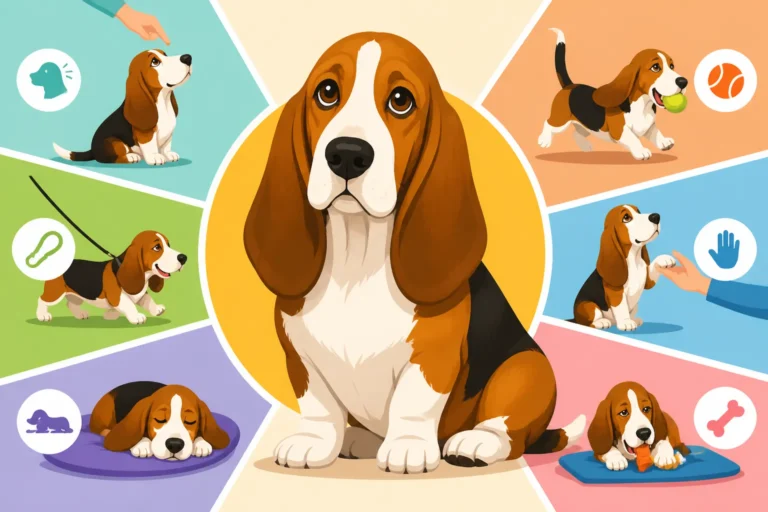
Living with a Basset Hound means recognizing that their nose is their primary way of interacting with the world. Trying to suppress this instinct is not only futile but can also lead to frustration for both you and your dog. Instead, embracing and channeling their natural abilities through scent work can be incredibly rewarding, providing mental stimulation and strengthening your bond.
Harnessing Their Natural Instincts
The key to successful scent work with a Basset Hound is to understand that you're not teaching them how to smell; you're teaching them what to smell and how to communicate that they've found it. Their instinct to follow a scent is hardwired, almost primordial. It's a deep, satisfying drive for them, far more compelling than any visual cue or verbal command once they're on a hot trail. This is why Why a Basset Hound Ignores You on a Scent is such a common complaint. Rather than fighting it, lean into it!
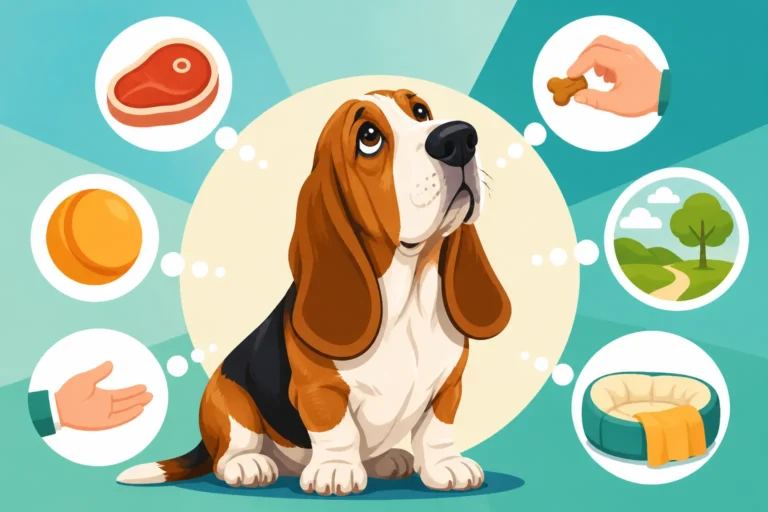
Start with simple scent games in a low-distraction environment. "Find it" games with treats are an excellent introduction. Hide a high-value treat, let your Basset watch you, and then give them a clear "find it" cue. As they get better, make the hides more challenging, out of sight, and in different rooms. Gradually introduce a specific target scent – it could be a particular essential oil (diluted and safe for dogs, of course), a specific herb, or even a toy that only comes out for scent work. The goal is to make the act of searching and finding intensely rewarding. This positive reinforcement approach taps directly into their innate drive and builds a foundation for more complex tasks. Remember, a Basset Hound's motivation is often directly tied to what's in it for them, making food rewards incredibly effective. You can find many scent work kits on Amazon that provide safe, canine-specific essential oils and equipment to get started.
Tools and Techniques for Nose Work
To effectively train a Basset Hound in scent work, you'll need a few specialized tools and a solid understanding of positive reinforcement techniques. A long line is absolutely essential, especially in any unfenced area. Basset Hounds have an insatiable desire to follow a scent, and their recall, even with the best training, can vanish when their nose is engaged. A 15 to 30-foot long line allows them to explore and follow scent trails safely while still giving you control. This is key to understanding Whether a Basset Hound Should Ever Be Off Leash.
For formal nose work or tracking, a well-fitting harness that doesn't restrict their movement is preferable to a collar, as it prevents strain on their neck if they pull on the long line. You'll also want to invest in some high-value, easy-to-eat training treats – small, soft, and extremely palatable. Brands like Zuke's or Wellness offer excellent options that capture a Basset's attention. Consider joining a local nose work class or exploring online courses like those offered by BAXTER & Bella, which can provide structured guidance and build upon your Basset’s natural abilities. These programs can teach you how to properly introduce target scents, read your dog’s subtle cues, and progress through different levels of complexity, ensuring both you and your Basset have a fun and successful learning experience.
Understanding the Basset Hound's Scent-Driven World
Living with a Basset Hound means accepting that their world is primarily experienced through their nose. This isn't just a fun fact; it's a fundamental aspect of their being that influences their behavior, their needs, and how they perceive their environment. Embracing this truth can help you better understand your floppy-eared friend and provide them with a richer, more fulfilling life.
The Impact on Everyday Life
For a Basset Hound, every walk is a sensory novel unfolding on the pavement. That patch of grass isn't just grass; it's a bulletin board of who's been by, what they ate, where they're going, and even how they're feeling. This intense focus on scent can lead to behaviors that owners might interpret as stubbornness or distraction. When your Basset puts the brakes on mid-walk to investigate a speck on the ground, they're not being disobedient; they're simply following an irresistible narrative that you can't even perceive. This deep dive into the olfactory world is why they often become temporarily deaf to your calls, completely absorbed in the information their nose is relaying.
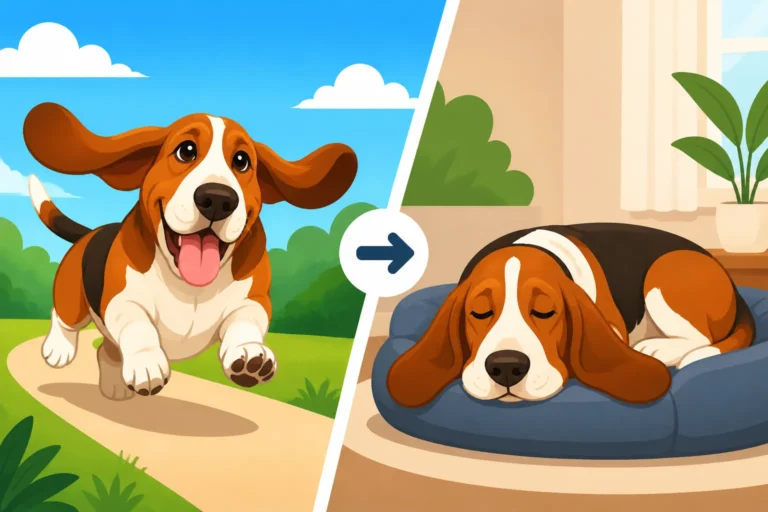
This profound connection to scent also means that boredom can manifest differently in a Basset Hound. Without adequate opportunities to use their nose, they can become restless, destructive, or even depressed. Simply throwing a ball in the yard often isn't enough mental stimulation. Their minds crave the challenge of scent puzzles and the satisfaction of following a trail. Providing outlets for their natural abilities, even if it's just scattering their kibble in the grass or using a snuffle mat, can significantly improve their overall well-being and reduce unwanted behaviors born out of frustration.
Managing Their Nose-First Approach
Managing a Basset Hound's nose-first approach requires patience, understanding, and a proactive attitude. The most crucial rule for Basset owners is that if your Basset is outside, they are on a leash or in a securely fenced area. Their desire to follow a scent is so strong that they will often ignore traffic, fences, or your frantic calls. Whether a Basset Hound Should Wear a Tracker is a question many owners consider for peace of mind, and for good reason. A GPS tracker can be an invaluable tool for a breed so prone to wandering off on a scent.
Beyond physical containment, it's about providing appropriate outlets. Engage them in regular scent games. Hide treats around the house, play "which hand has the treat," or even try some basic tracking in your yard. Enrichment toys that dispense treats slowly or require problem-solving are fantastic for Bassets, allowing them to engage their brains and noses simultaneously. Think of it as providing a mental workout that is just as important as a physical one. This helps fulfill their natural drive and gives them a sense of purpose, making them happier and more settled companions. It's truly about Giving a Basset Hound's Nose Something to Do.
The Basset Hound's Nose vs. Other Breeds
When people talk about excellent scent hounds, Bassets often come up, but where do they truly stand among their peers? It's easy to assume all hounds are created equal when it comes to smelling power, but each breed has its own nuanced strengths and specialties. Understanding these differences can highlight just how uniquely adapted the Basset Hound is.
Comparing Scenting Acuity
While breeds like German Shepherds and Beagles are also renowned for their noses, the Basset Hound possesses a particular brand of olfactory excellence. Bloodhounds are generally considered the gold standard for scent tracking, with an even greater number of olfactory receptors and an unmatched ability to follow extremely old or faint trails over vast distances. However, Bassets are often placed just a hair below them in terms of pure scenting power, and some argue they are more precise on certain types of trails. When it comes to Whether a Basset Hound Tracks Better Than a Beagle, many enthusiasts would say yes, especially on a cold trail. Beagles are quick and agile, excellent for flushing game, but a Basset's slower, more methodical pace often allows for a more thorough, less hurried investigation of a scent trail.
The difference often lies in the type of scent work they excel at. Beagles are often used for detection work where speed and covering a wide area are important. Bloodhounds are unsurpassed for human trailing in missing person cases due to their incredible tenacity and ability to differentiate individual human scent. Basset Hounds, with their deliberate movement and ground-hugging bodies, are fantastic for intricate, low-to-the-ground scent puzzles, meticulously unraveling complex scent pictures over time. They are the ultimate slow and steady wins the race scent dog, making them incredibly reliable once locked onto a specific target.
Why a Basset Hound Excels in Specific Scenarios
A Basset Hound's unique combination of physical traits and temperament makes them shine in specific scent-related scenarios. Their short legs and heavy bodies, while not built for speed, force them to keep their noses very close to the ground, allowing for an incredibly concentrated and detailed examination of scent particles. This makes them exceptional for tracking on varied terrain, especially through dense undergrowth or areas where scent might be subtle and dissipated. They don't just follow a trail; they dissect it.
Their characteristic bay also serves a purpose in traditional hunting, signaling to the hunter exactly where they are and what they've found. In modern scent work, this vocalization can be trained as a "alert" signal. Furthermore, their unwavering persistence, often perceived as stubbornness, becomes a tremendous asset. Once a Basset Hound commits to a scent, they are notoriously difficult to deter. This single-minded focus, coupled with their phenomenal nose, means they will stick to a trail long after other breeds might have given up. This tenacity, combined with proper training and What Actually Motivates a Basset Hound, can make them brilliant at competitive nose work, where precision and endurance are highly valued. Engaging in activities like barn hunt or tracking trials can be a fantastic way to give your Basset a job that truly utilizes their inherent gifts and fulfills their deep-seated desire to hunt with their nose.
| Olfactory Trait | Basset Hound | Bloodhound | Beagle |
|---|---|---|---|
| Olfactory Receptors | Very High (~220-300 million) | Extremely High (~300 million+) | High (~150-200 million) |
| Scenting Method | Slow, methodical, ground-hugging, ears sweep scent | Extremely persistent, covers vast distances, can trail cold scent for days | Fast, energetic, wide-ranging search patterns |
| Physical Adaptations | Long ears, dewlap, low body, heavy bone | Loose skin, deep wrinkles, long ears, powerful build | Medium length ears, agile, compact |
| Primary Specialty | Meticulous ground tracking, complex scent detail | Human trailing, very old/faint trails | Flushing game, broad area scent detection |
| Persistence | Extremely High (once on a scent) | Unrivaled | High (but can be distracted by new scents more easily) |
Disclaimer
This article is for general informational purposes only and does not constitute professional advice. Laws, prices and regulations vary by location and change over time. Consult a qualified professional for guidance on your specific situation.