Whether a Basset Hound Can Be Called Off a Trail
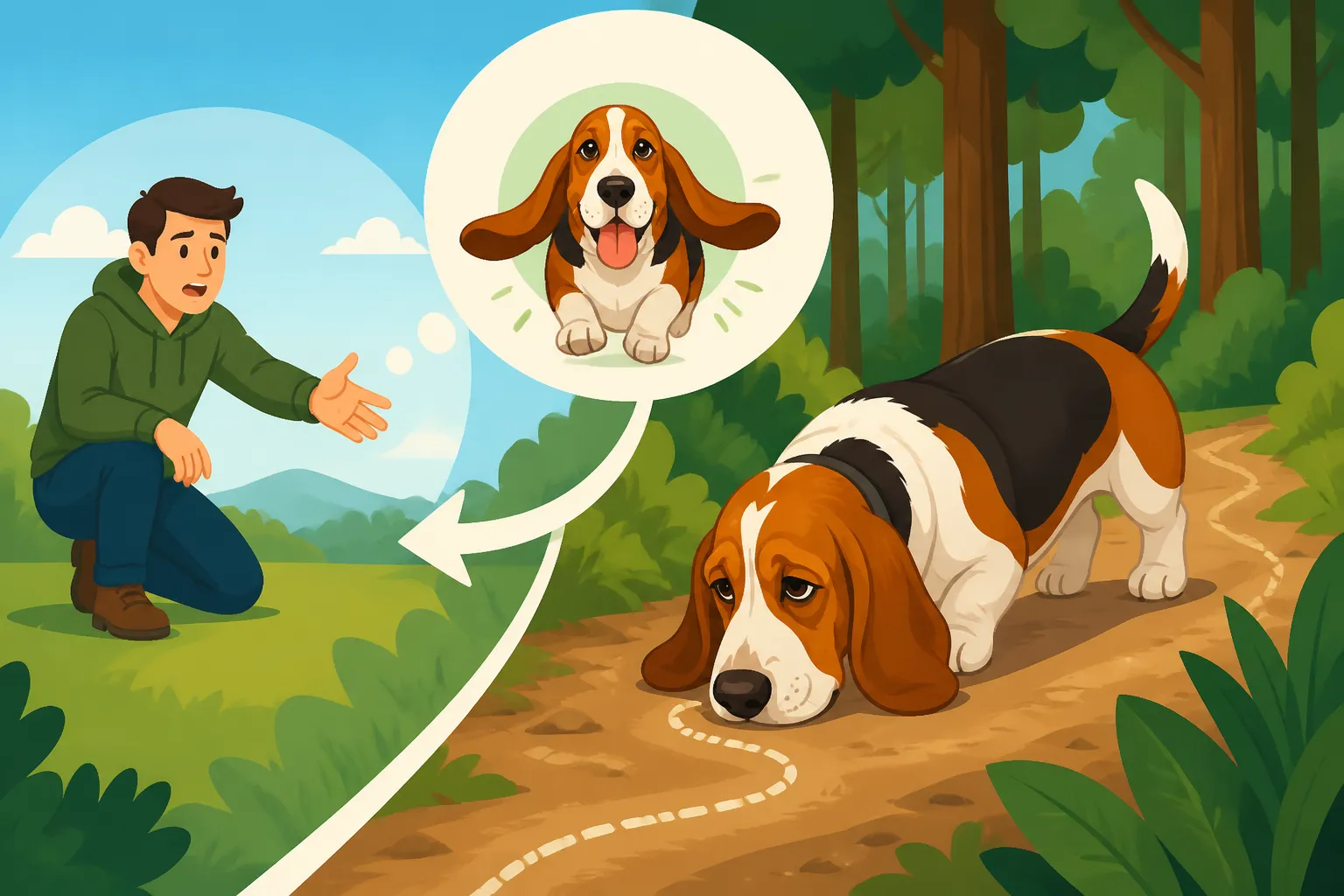
The moment your Basset Hound catches a scent, it's like they've hit a mental mute button on everything else, including your desperate calls. That feeling of watching them disappear, nose to the ground, completely oblivious to your existence, is one that fills many Basset owners with dread and frustration. This guide is all about tackling that very challenge: whether you can truly call a Basset Hound off a compelling trail and how to implement strategies that actually work to keep your beloved scent hound safe.
Understanding the Basset Hound's Olfactory World
To even begin discussing recall with a Basset Hound, we have to first truly grasp the incredible power of their nose. It's not just a cute feature; it's their entire world, their primary sense, and the driving force behind so much of their behavior. Ignoring this fundamental aspect of their being means fighting an uphill battle.
Their Olfactory Superpowers
Basset Hounds possess one of the most remarkable noses in the canine kingdom, often touted as second only to the Bloodhound. Their long, pendulous ears are thought to sweep scent particles towards their nose, while their loose facial skin, or dewlap, helps to trap and concentrate these odors. This isn't just a casual sniffing; it's an intricate, highly specialized sensory input that paints a vivid, irresistible picture for them. Imagine if your primary way of experiencing the world was through smell, and then picture a scent so captivating, so rich in detail, that it became your entire focus. That's what a fresh trail is to a Basset. We've talked before about How Good a Basset Hound's Nose Actually Is, and it's truly astounding.
When your Basset's nose hits a prime scent, it's like an alarm bell goes off in their brain, overriding all other signals. This isn't a deliberate act of disobedience; it's a deep-seated instinct taking over. They aren't trying to be naughty; they are simply fulfilling their genetic imperative. It’s a profound difference from a breed whose primary driver might be pleasing their human or chasing a ball. For a Basset, the scent is the reward, and it’s a reward that far outweighs any treat or praise you might offer in that moment.
Instinct Over Obedience
The Basset Hound was bred for centuries to do one thing exceptionally well: follow a scent trail, often for hours on end, without distraction. They were developed to be slow enough for hunters on foot to keep up with, yet persistent enough to never give up on a track. This history means their instinct to trail is deeply ingrained, practically hardwired into their DNA. It’s not something you can simply "train out" with a few obedience classes. While other breeds might respond beautifully to a stern "come!" when distracted by a squirrel, a Basset on a hot trail is often in a different dimension.
This deep-rooted instinct is why many Basset owners lament that their dog "stops hearing them" when a good smell comes along. In reality, they are hearing, but their brain is prioritizing the scent information above all else. This isn't a lack of intelligence; it's a difference in intelligence, focused acutely on olfactory pursuits. Understanding this helps manage expectations and shift training approaches. It teaches us that our recall needs to be more powerful, more compelling, and often, more proactive than with many other breeds.
The World Through a Basset's Nose
For a Basset Hound, the world is a complex tapestry of smells. Every blade of grass, every lamppost, every discarded wrapper tells a story. When they put their nose to the ground, they're not just sniffing; they're reading the newspaper, catching up on neighborhood gossip, and tracking the movements of every creature that has passed by. A compelling trail isn't just a faint odor; it's a vibrant, constantly unfolding narrative that draws them deeper and deeper into its plot. It's a mental game, a puzzle to solve, and they are incredibly driven to see it through to the end.
This means that a Basset isn't just ignoring you; they are intensely focused on something incredibly stimulating and rewarding to them. It's akin to trying to get a child to put down their favorite video game during a critical level. Their concentration is elsewhere, their motivation is strong, and your requests are background noise. Appreciating this perspective allows us to be more patient and strategic in our training. It makes us realize that we're not dealing with defiance, but rather with an ancient, powerful instinct that defines their very being.
The Challenge of Recall on Scent
Now that we understand the incredible power of a Basset's nose, it's easier to see why recall, particularly when a compelling scent is involved, presents such a unique and significant challenge. It's not impossible, but it demands a level of dedication, consistency, and realistic expectation-setting that might surprise new owners.
The 'Deaf' Basset Phenomenon
Anyone who has owned a Basset Hound knows the moment: you're walking along, maybe in a park or an open field, and suddenly their nose locks onto something. Their body language changes, their tail might give a few low, focused wags, and their entire attention funnels into that invisible path. You call their name, maybe once, twice, with increasing urgency. Nothing. They seem utterly deaf to your commands, disappearing further into the bushes or down the path. This isn't actual deafness; it's what we affectionately call "selective hearing" or the "Basset mute button." It's their brain prioritizing the scent over auditory input.
This phenomenon is incredibly frustrating, and it's a primary reason why Whether a Basset Hound Should Ever Be Off Leash is a question with a resounding "rarely, if ever." The risk of them following a scent into danger – a road, another dog's territory, or simply getting lost – is extremely high. Their single-minded focus on scent means that even if they are well-trained in a distraction-free environment, a sudden, strong scent can completely derail their obedience. This is why building an emergency recall is paramount, but even then, it's not a foolproof guarantee.
High-Value Rewards vs. Irresistible Scent
When training recall, most dog owners learn to use high-value treats or toys to motivate their dogs. For many breeds, a piece of chicken or a favorite squeaky toy is enough to break their focus on a passing distraction. With a Basset Hound, however, a truly irresistible scent often trumps even the highest-value treat you can offer. This isn't to say treats don't work – they absolutely do, and they are a vital part of training – but their power diminishes significantly when competing with a fresh deer track or the lingering scent of a rabbit.
Think of it this way: you might love your favorite snack, but would you drop everything if you suddenly found a winning lottery ticket on the ground? For a Basset, a strong scent is that lottery ticket. It's an innate, deeply satisfying reward that doesn't need external validation. This means your training needs to focus on making you the ultimate source of reward and happiness, not just through food, but through interaction and fun, to build a bond strong enough to compete. We also need to be strategic about what constitutes a high-value reward in their eyes, saving truly exceptional treats for critical recall moments. What Actually Motivates a Basset Hound delves deeper into finding those motivators.
The Thrill of the Chase
While Basset Hounds are slow, their hunting instinct isn't about speed; it's about the thrill of the chase, the intellectual puzzle of tracking, and the eventual satisfaction of finding what they're looking for. This innate drive means that once they've committed to a trail, their motivation to pursue it is immense. It's not simply a casual sniff; it's a mission. The longer they're on the scent, the harder it is to break their concentration. Each step they take reinforces the behavior, making them less and less likely to respond to your calls.
This persistence, while admirable in a hunting context, is precisely what makes recall so difficult in modern environments. A Basset won't give up easily, and they will follow that trail wherever it leads, regardless of fences, roads, or other hazards. This is why proactive management and prevention are often more effective than reactive recall attempts when they're already deep into a scent. We need to set them up for success by minimizing opportunities for them to get lost in their olfactory world in unsafe situations.
Training Strategies for Off-Trail Recall
While calling a Basset Hound off a blazing trail might feel like trying to herd cats, it's not entirely hopeless. The key is to approach recall training with realistic expectations, immense patience, and a deep understanding of what makes your Basset tick. We're not aiming for perfection, but for reliability in critical situations.
Building a Bomb-Proof Foundation Recall
The foundation of any successful recall, especially with a Basset Hound, is building a rock-solid association between the recall cue (e.g., "come!") and incredibly positive experiences. This starts in a distraction-free environment, like your living room or a securely fenced yard, using the highest value treats you can find. Every time your Basset comes when called, it should feel like winning the lottery. You want a rapid, enthusiastic response. Practice this dozens of times a day, making it a game and always ending on a high note. Think pieces of hot dogs, cheese, or cooked chicken – not just regular kibble.
Gradually introduce minor distractions: a squeaky toy in the distance, a family member walking by, or a few scattered pieces of kibble on the floor. Always set your Basset up for success, only increasing difficulty when they are consistently nailing the recall. If they fail, reduce the distraction level. Remember, you're competing with their nose, so your rewards need to be truly exceptional. Online puppy training programs like those offered by BAXTER & Bella can be fantastic for establishing these early foundations with clear, structured lessons, even for older Bassets learning new tricks. They can help build that positive association with the "come" command before you even think about outdoor distractions.
Introducing Distractions Incrementally
Once your Basset has a strong recall in a low-distraction environment, you can slowly begin to introduce more challenging scenarios. This is where patience is truly a virtue. Start with mild outdoor distractions – perhaps a quiet park on a weekday morning, or your own backyard after a rabbit has hopped through. Use a long line (we'll discuss these more in a moment) to ensure safety and prevent them from actually getting away. Call them before they get completely engrossed in a scent, rewarding them lavishly for turning back to you. The goal is to interrupt their focus before it becomes tunnel vision.
If you let them get deep into a trail and then try to recall, you've likely lost the battle. Instead, observe your Basset. When you see their nose start to drop intently, and their body language shifts, that's your cue to call them back immediately. Reward them, then release them to go sniff again, reinforcing that coming to you briefly isn't the end of their fun. It's about building a pattern where checking in with you is even more rewarding than sticking to the trail, even for a moment. This takes time, vigilance, and many, many delicious treats.
Emergency Recall: The Lifeline Command
Beyond your everyday "come," it's incredibly beneficial to train an "emergency recall" – a completely separate, unique command that is only used for life-or-death situations. This command should be reserved for those times when your Basset is heading towards a road, a dangerous dog, or is about to disappear entirely. This command should never be overused, and when it is used, the reward must be absolutely, unequivocally phenomenal. Think an entire hot dog, a handful of cooked chicken, or their absolute favorite toy for an extended play session.
Choose a distinct word or sound – maybe a whistle, a specific clap pattern, or a word you rarely use, like "NOW!" or "HOUUND!" (with emphasis). Introduce this command in a low-distraction setting, making it the most exciting thing that has ever happened to your Basset. Practice it very rarely in real life, perhaps once a month, to keep its power. The idea is that it retains its "nuclear option" status. When you absolutely need them, this command should cut through any distraction, including a strong scent. The sheer magnitude of the reward associated with it, kept consistently high, is what gives it its power.
Tools and Aids to Support Recall
Given the Basset Hound's incredible nose and stubborn streak, relying solely on voice commands in uncontrolled environments is often a recipe for disaster. Luckily, there are a number of tools and aids that can significantly enhance your ability to manage your Basset and support their recall training, making outings safer and more enjoyable for everyone.
The Indispensable Long Line
If you want to give your Basset Hound some freedom to explore scents in an open, unfenced area while still maintaining control, a long line is your best friend. These are typically 15 to 30 feet long, made of lightweight but durable material, and can be found easily on platforms like Amazon. They allow your Basset to roam a considerable distance, giving them the mental stimulation of sniffing and trailing, while you retain a physical connection. This is crucial for their safety, preventing them from bolting into traffic or disappearing over the horizon when they hit a hot trail.
A long line also serves as an invaluable training tool for recall. When you call your Basset and they get distracted, you can gently reel them in, rather than letting them practice ignoring you. This teaches them that "come" always means coming to you, reinforcing the command without having to chase them. Remember to attach the long line to a well-fitting harness, not their collar, to prevent neck injuries if they hit the end of the line at speed. Whether a Long Line Is Enough for a Basset Hound is a question many owners ponder, and for safe outdoor exploration, it truly is.
Harnesses and Collar Choices
For a Basset Hound, the right walking gear is critical. Their strong necks and tendency to pull on a scent mean that a flat collar can put undue pressure on their throat, potentially causing injury or even making them less responsive to commands due to discomfort. A well-fitting harness is almost always the superior choice. Look for harnesses that distribute pressure across their chest and shoulders, rather than their neck. Front-clip harnesses can be particularly effective at discouraging pulling, as they redirect the dog's momentum back towards you when they pull forward.
When selecting a harness, ensure it fits snugly but comfortably, allowing full range of motion without chafing the sensitive skin around their armpits. Brands like Ruffwear or Kurgo offer durable, well-designed options that can stand up to a Basset's enthusiasm. Even with a harness, a sturdy leash is essential, and many owners opt for a leash that feels comfortable in their hand, perhaps with a padded handle, for those long walks where a Basset might be pulling intermittently. We've gone over Which Harness Suits a Basset Hound in more detail previously, and it's worth a read.
GPS Trackers for Peace of Mind
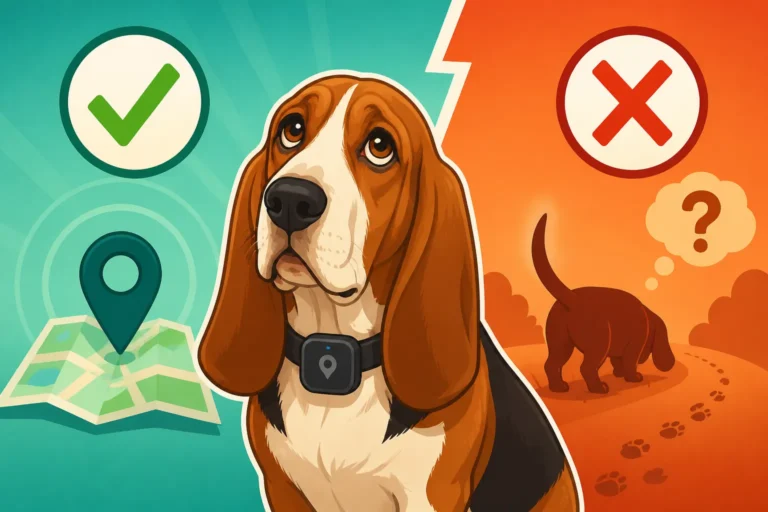
Despite our best efforts, Basset Hounds can be incredibly opportunistic when it comes to following their nose. A gate accidentally left open, a momentary lapse in attention on a walk, and suddenly your Basset is gone, nose to the ground, with no idea where they are going. This is where a GPS tracker becomes an invaluable tool for any Basset owner. These small, lightweight devices attach to your dog's collar or harness and allow you to track their location in real-time via a smartphone app.
While a GPS tracker won't prevent your Basset from running off, it dramatically increases your chances of finding them quickly and safely. Many trackers offer features like virtual fences, alerting you if your dog leaves a designated safe zone, or activity monitoring. This peace of mind is priceless, especially for a breed so prone to wandering on a scent. Think of it as a safety net, an extra layer of protection for your beloved hound. Providers like Fi or Tractive are popular choices, and you can explore options on Amazon to see which features best suit your needs. Whether a Basset Hound Should Wear a Tracker is a definitive yes in our book.
Managing Expectations and Safety
The journey of owning a Basset Hound is one filled with unique joys and equally unique challenges. When it comes to recall, especially off-trail, it's crucial to manage your expectations. While you can certainly improve your Basset's response, it's rare to achieve the kind of bulletproof recall you might see in a Border Collie or a Golden Retriever. Safety, therefore, becomes a multi-faceted approach of training, management, and acceptance.
Accepting Limitations
One of the most important lessons in Basset Hound ownership is understanding and accepting their inherent limitations, particularly when their nose is involved. It’s not a personal affront; it’s simply who they are. Trying to force a Basset to ignore every enticing scent is like asking a bird not to fly. While training can mitigate some behaviors, it cannot fundamentally alter their deeply ingrained instincts. This means accepting that a Basset Hound will likely never be a reliably off-leash dog in open, unfenced areas where irresistible scents abound. Many owners find The Recall a Basset Hound Will Never Reliably Give You to be a difficult truth to swallow, but it's essential for their safety.
Instead of fighting their nature, learn to work with it. Provide opportunities for them to use their nose safely, like in a securely fenced area for scent games, or on a long line during walks. Celebrate every small victory in recall training, but don't beat yourself up when the ultimate scent wins out. Your goal isn't to create a non-Basset; it's to create a well-managed, safe, and happy Basset Hound who still gets to enjoy their natural talents.
Fenced Yards and Secure Environments
For a Basset Hound, a securely fenced yard is not a luxury; it's a necessity. Their determination to follow a scent means they will test fences, dig under them, and squeeze through surprisingly small gaps. A fence needs to be solid, at least 4-5 feet high (Bassets are not jumpers, but better safe than sorry), and ideally, have a secure bottom edge to prevent digging. Invisible fences, while sometimes effective for other breeds, are generally not recommended for Basset Hounds, as the lure of a scent often outweighs the discomfort of the static correction. Whether an Invisible Fence Holds a Basset Hound is a question often answered with a harsh dose of reality.
When venturing out of a fenced area, a leash is non-negotiable. Even in seemingly safe, open spaces, a sudden burst of scent can lead your Basset astray. Dog parks can be good for socialization, but always be vigilant. A Basset lost in a busy dog park, nose to the ground, can easily become separated from you. Prioritizing safe, secure environments for off-leash exploration is the most effective way to prevent them from becoming a lost dog statistic.
When to Use a Professional Trainer
While much of Basset Hound training can be done at home with consistency and patience, there are times when bringing in a professional trainer can be incredibly beneficial. If you're struggling to make progress with recall, if your Basset's selective hearing is becoming a safety concern, or if you simply feel overwhelmed, a qualified professional can offer tailored guidance. Look for trainers who use positive reinforcement methods and have experience with scent hounds or other independently-minded breeds. They can help you identify effective motivators, refine your timing, and create a personalized training plan that accounts for your Basset's unique drives.
A professional trainer can also help you understand the nuances of Basset behavior, offering strategies for managing their scent drive and building a stronger bond that translates into better responsiveness. Sometimes, just having an objective eye observe your interactions can reveal subtle cues or missed opportunities. Companies like BAXTER & Bella, while offering online resources, also often have networks or can recommend local trainers who specialize in these areas. Don't view seeking help as a failure; view it as an investment in your Basset's safety and your peace of mind.
Strategies for Real-World Success
Navigating the world with a Basset Hound means being constantly aware of their powerful nose and planning accordingly. While perfect recall off a hot trail is often a dream, smart strategies can ensure your Basset lives a fulfilling life while staying safe.
Prioritizing Scent Work Safely
Since a Basset's nose is their greatest asset and joy, depriving them of opportunities to use it can lead to frustration and unwanted behaviors. Instead, channel that drive into safe, structured scent work. This could be as simple as scattering their kibble in the grass in your fenced yard, making them "hunt" for their meal. Snuffle mats, puzzle toys, and hide-and-seek games with treats are fantastic ways to engage their mind and nose indoors. Giving a Basset Hound's Nose Something to Do is crucial for their mental well-being.
More formally, consider enrolling in scent work classes or barn hunt if available in your area. These activities allow your Basset to use their natural abilities in a controlled, fun environment, building confidence and providing immense mental stimulation. When their natural instincts are satisfied through appropriate outlets, they may be less compelled to desperately pursue every random scent they encounter on a walk, making your training efforts more effective.
The Importance of a Strong Bond
Beyond treats and commands, the most powerful tool in your recall arsenal is the bond you share with your Basset Hound. A dog that genuinely enjoys being with you, that sees you as the source of all good things, is more likely to choose you over a distraction. Spend quality time together, engage in play, and be consistent in your affection and fair training. If your Basset enjoys your company, they will be more inclined to check in with you, even when there's an interesting smell.
This bond is built on trust and positive experiences. Never punish your Basset for not coming when called, as this will only teach them to associate recall with something negative, making them even less likely to return. Instead, focus on rewarding success and managing situations to prevent failure. When they do come back, even if it took a moment, celebrate it like they just won Best in Show. A strong, loving relationship forms the bedrock of all successful training, particularly with a Basset Hound's independent spirit.
Consistent Management and Prevention
Ultimately, the most effective strategy for managing a Basset Hound's recall is consistent management and prevention. This means being proactive rather than reactive. Always assume your Basset will follow their nose if given the chance. Keep them leashed in unfenced areas, even if you think it's "safe." Double-check gates and doors. Supervise them closely in new environments. It's not about being overprotective; it's about being a responsible owner who understands and respects the breed's natural instincts.
Consider the layout of your home and yard. Are there any escape routes? Could a visitor accidentally leave a door ajar? Installing baby gates can add an extra layer of security. During walks, be attentive to your surroundings. If you see something your Basset might want to chase or smell, prepare to intervene or redirect them before they're fully committed. By consistently managing their environment and preventing opportunities for them to get lost on a trail, you are ensuring their safety and your peace of mind.
Here's a quick comparison of recall training approaches for Basset Hounds:
| Approach | Description | Pros | Cons |
|---|---|---|---|
| Foundation Recall | Training "come" in distraction-free settings with high-value rewards. | Builds strong positive association with the cue; essential starting point. | Not effective alone against strong outdoor scents; requires significant repetition. |
| Emergency Recall | A unique, rarely used command reserved for urgent situations with extreme rewards. | Can cut through intense distraction due to extreme reinforcement; potential lifesaver. | Overuse diminishes its power; requires careful, infrequent practice to maintain impact. |
| Long Line Training | Using a long leash to allow exploration while maintaining physical control. | Provides mental stimulation of scent work safely; allows for gentle physical guidance during recall. | Can be cumbersome; requires handler vigilance to prevent tangles or injuries; not truly "off-leash". |
| Scent Work Games | Structured activities to engage the nose (e.g., hidden treats, puzzle toys). | Satisfies natural instincts; reduces drive to seek out distracting scents in unsafe ways; mentally stimulating. | Doesn't directly train recall off a trail; requires dedicated time and resources for setup. |
| GPS Tracker | Device on collar for real-time location tracking. | Offers peace of mind; helps locate a lost Basset quickly; virtual fence alerts. | Does not prevent running off; still requires owner to physically retrieve the dog. |
Disclaimer
This article is for general informational purposes only and does not constitute professional advice. Laws, prices and regulations vary by location and change over time. Consult a qualified professional for guidance on your specific situation.