How Long a Basset Hound Puppy Holds It Overnight
Oh, the joys and challenges of bringing a Basset Hound puppy into your home! One of the biggest hurdles, and frankly, a source of many sleepless nights for new puppy parents, is the dreaded question of overnight potty training. You've got this adorable, floppy-eared bundle of joy, but their tiny bladder seems to have a mind of its own, leading to surprise puddles and frantic middle-of-the-night dashes. It's frustrating to wake up to a mess, and it can feel like you're constantly scrubbing floors instead of enjoying those precious puppy snuggles. This comprehensive guide is here to walk you through exactly what to expect when it comes to how long your Basset Hound puppy can realistically hold it overnight, and more importantly, how you can set both of you up for success.
Understanding Your Basset Hound Puppy's Bladder Development
It’s easy to look at a Basset Hound puppy and assume they're robust and ready for anything, but their internal systems, especially their bladder and sphincter muscles, develop at a predictable rate. Just like human babies, puppies don't come pre-programmed with perfect bladder control. It's a gradual process that relies on physical maturity and consistent training. Expecting too much too soon is a recipe for frustration for both you and your little one.
The Age-Related Holding Capacity Rule
A good rule of thumb that many seasoned dog owners and trainers swear by is that a puppy can generally hold their bladder for approximately one hour for every month of their age, up to about 8-10 hours when they are adults. So, a two-month-old Basset Hound puppy might realistically hold it for about two hours. A three-month-old? Three hours. This rule, however, applies mostly during the day when they are active. Overnight, when they're sleeping and their metabolism slows down, they might manage a little longer, but it’s crucial not to push it too far, especially in the early months.
For a Basset Hound, whose strong scent drive can sometimes override their physical needs if they're too focused, understanding this physiological limitation is key. You might think they're "stubborn" if they have an accident, but often, it's simply a case of their body not being physically capable of holding on any longer. For more on the general house training timeline, you might want to read How Long a Basset Hound Puppy Takes to House Train.
The Role of Physical Maturity
A Basset Hound puppy's bladder is simply smaller and less developed than an adult dog's. The muscles that control urination are still strengthening, and their ability to recognize the sensation of a full bladder and consciously hold it is still a work in progress. This means that a very young puppy often doesn't even realize they need to go until the urge is immediate and overwhelming. They don't have the same level of conscious control that an older dog or human does.
As they grow, usually between four to six months of age, their bladder capacity increases significantly, and their neurological connections become more refined, allowing for better control. This is the period when you'll likely see a noticeable improvement in their ability to sleep through the night without needing a potty break. However, individual variation is huge, and some Bassets might hit this milestone earlier, while others take a little longer. Patience and consistency are truly your best friends during this stage.
Factors Influencing Overnight Holding Capacity
While age is a primary indicator, several other factors play a significant role in how long your Basset Hound puppy can comfortably hold their bladder overnight. Ignoring these can lead to unnecessary accidents and make the potty training process feel like an uphill battle.
Diet and Feeding Schedule
What and when your Basset Hound puppy eats and drinks directly impacts their need to relieve themselves. If your puppy has access to water right up until bedtime, or if they've had a large meal late in the evening, their digestive and urinary systems will naturally be more active. This means a higher likelihood of needing to go out during the night.
It’s generally recommended to establish a consistent feeding schedule and stick to it. For puppies, typically three meals a day are appropriate. Try to schedule their last meal and water intake a few hours before their final potty break of the night. For instance, if your puppy's last potty break is at 10 PM, aim to have their last meal around 6-7 PM, and pick up the water bowl an hour or two before their final outing. This gives their body ample time to process food and liquid before they settle down for a longer stretch. For detailed information on their feeding needs, check out The Meal Schedule a Basset Hound Puppy Needs.
Activity Levels and Crate Comfort
A tired puppy is a sleeping puppy, and a sleeping puppy is less likely to need to go out. Ensuring your Basset Hound puppy gets adequate exercise and mental stimulation during the day can contribute significantly to a solid night's sleep. This isn't just about physical exhaustion; mental exercise, like scent games or short training sessions, can be just as tiring.
Crate training is another cornerstone of successful overnight potty training. The natural instinct of dogs is not to soil their sleeping area. A properly sized crate, just big enough for them to stand up, turn around, and lie down comfortably, leverages this instinct. If the crate is too large, they might use one end as a bathroom and the other as a bed, defeating the purpose. Many owners find excellent, durable crates on Amazon that fit a Basset Hound's unique dimensions. This topic is explored further in Whether a Basset Hound Puppy Should Be Crated.
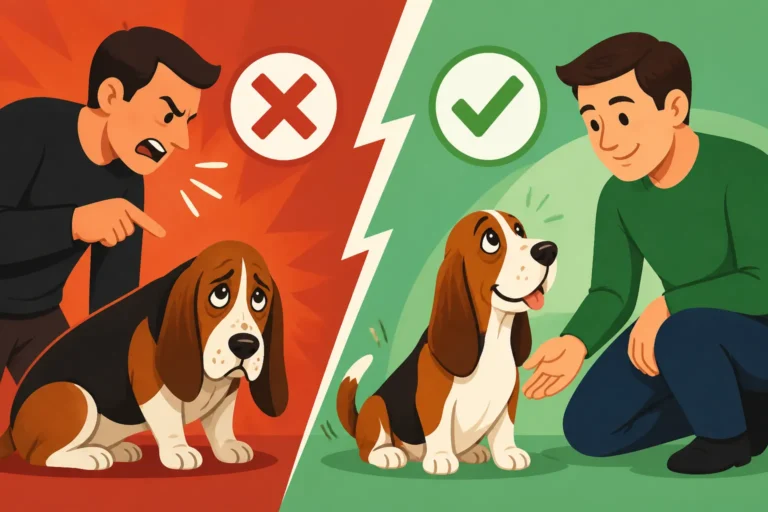
However, the crate must be a positive, comfortable space. It shouldn't be used for punishment. Ensure it has a soft, washable bed and maybe a safe chew toy. A comfortable and secure puppy is more likely to settle down and sleep, extending their holding time.
Stress and Environmental Changes
Puppies, especially Basset Hounds who can be quite sensitive despite their stoic appearance, can experience stress that impacts their bodily functions. Moving to a new home, changes in routine, loud noises, or even feeling lonely can contribute to anxiety, which might manifest as more frequent urination or accidents.
Creating a calm, predictable environment is vital. Keep their sleeping area consistent and quiet. If they are accustomed to sleeping in a crate, ensure it is in a location where they feel safe and connected to the family, but not necessarily in the busiest part of the house. A consistent bedtime routine – a final potty break, a quiet snuggle, then into the crate – can help reduce anxiety and signal that it’s time to settle for the night. Remember that consistency is crucial for building good habits in a Basset Hound.
Strategies for Successful Overnight Potty Training
Potty training a Basset Hound puppy overnight requires a systematic approach, a healthy dose of patience, and a recognition that accidents will happen. The goal isn't perfection, but consistent improvement.
Establishing a Consistent Bedtime Routine
Dogs thrive on routine, and Basset Hounds are no exception. A predictable bedtime routine helps your puppy understand what’s expected of them. Start with a final play session to burn off any remaining energy, then gradually wind down.
Your routine should always include a very last potty break right before you put them into their crate for the night. Take them to their designated potty spot and wait patiently. Praise them enthusiastically when they go. Make this trip efficient and business-like; avoid turning it into another play session. This "last call" is perhaps the most critical step in preventing overnight accidents. If your puppy needs to go out in the middle of the night, keep the interaction minimal – no play, no greetings, just out to potty and straight back to the crate. This teaches them that nighttime potty breaks are for business, not fun.
The Role of Crate Training
We've touched on it already, but let's dive a little deeper into crate training for overnight success. A crate, when used correctly, is a Basset Hound puppy's den. It's their safe space. For overnight training, the crate should be:
- Properly Sized: As mentioned, just large enough for them to stand, turn, and lie down. If it's too big, they'll soil one end. Crate dividers are available on many platforms, including Amazon, allowing you to adjust the size as your puppy grows.
- Comfortable: A soft bed, maybe a blanket, and a safe chew toy. Make it inviting.
- Near You (Initially): For very young puppies, having their crate in your bedroom can be reassuring. They hear and smell you, which can reduce anxiety. When they wake up and whine, you'll hear them immediately, allowing you to take them out before an accident occurs. This immediate response reinforces that whining in the crate means a trip outside.
- Never for Punishment: The crate should always be a positive place. If they have an accident, clean it up without scolding or punishing the puppy, and definitely don't put them in the crate as a punishment. This will create negative associations and defeat the purpose.
Middle-of-the-Night Potty Breaks
For very young Basset Hound puppies (8-12 weeks), you will likely need to set an alarm for a middle-of-the-night potty break. For a two-month-old, this might mean a trip out every 3-4 hours. As they get a bit older, you can gradually extend these intervals.
How to manage these breaks:
- Set an Alarm: Don't wait for your puppy to whine. Proactively take them out.
- Keep it Calm and Quiet: No lights, no talking, just outside, potty, and back in. This teaches them that nighttime is for sleeping, and the potty break is purely functional.
- No Food or Water: Don't offer food or water during these breaks.
- Praise for Success: Quietly praise and reward them with a small, high-value treat when they relieve themselves outside.
As your puppy matures, you'll notice they can hold it longer. You can then start gradually extending the time between these nighttime breaks. For example, if you were going out at 2 AM, try pushing it to 2:30 AM for a few nights, then 3 AM, and so on. This slow progression helps their bladder muscles strengthen and their control improve without setting them up for failure.
Here's a rough guide to a Basset Hound puppy's overnight holding capacity:
| Age (Months) | Approximate Overnight Holding Time (Hours) | Potty Breaks Needed Overnight |
|---|---|---|
| 2-3 months | 3-5 hours | 1-2 |
| 3-4 months | 4-6 hours | 1 |
| 4-5 months | 5-7 hours | 0-1 (closer to 0) |
| 5-6 months | 6-8 hours | 0 (usually) |
| 6+ months | 8+ hours | 0 |
Note: These are approximations. Every Basset Hound puppy is an individual.
When to Seek Professional Help or Adjust Expectations
Potty training isn't always a linear process. There can be setbacks, plateaus, and moments where you feel like you're back at square one. It's important to know when these are normal parts of puppy development and when they might indicate a deeper issue.
Normal Plateaus and Regressions
Just when you think your Basset Hound puppy has mastered overnight bladder control, they might have an accident. This can be incredibly frustrating! However, a regression or a plateau in training is often a normal part of development. It could be due to:
- Growth Spurts: Their body is changing, and their needs might temporarily shift.
- Distraction: They might have been too excited or distracted during their last potty break and didn't fully empty their bladder. Basset Hounds, with their incredible noses, can get very distracted by scents on their potty patch.
- Changes in Routine: Even minor changes can throw a puppy off.
- Pushing Too Hard: Perhaps you extended their overnight holding time a bit too quickly.
In these cases, simply go back to basics for a few days. Re-establish the stricter schedule, ensure all factors like food and water timing are optimized, and patiently reinforce the routine. Don't punish them for accidents; simply clean them thoroughly with an enzymatic cleaner (like one you can find on Amazon) to eliminate the scent, which can otherwise draw them back to the same spot.
Signs of Underlying Medical Concerns
If your Basset Hound puppy suddenly starts having frequent accidents overnight, or during the day, after a period of being reliably clean, it's wise to consult your veterinarian. While it could be a behavioral regression, it could also signal an underlying medical issue.
Things to watch out for:
- Increased Thirst/Urination: Are they drinking significantly more water than usual, leading to more frequent urination?
- Straining or Discomfort: Do they seem to be straining to urinate, or show signs of pain or discomfort when going?
- Changes in Urine: Is the urine cloudy, discolored, or does it have an unusual odor?
- Lethargy or Other Symptoms: Are there other signs of illness, such as decreased energy, vomiting, or changes in appetite?
These could be indicators of a urinary tract infection (UTI), bladder stones, kidney issues, or even early diabetes. While less common in very young puppies, it's always best to rule out medical causes. A vet visit can provide peace of mind or identify and treat an issue early.
Considering Professional Guidance
Sometimes, despite your best efforts, you might feel stuck. If you're consistently struggling with overnight potty training, or if your Basset Hound puppy seems to be developing other challenging behaviors related to it (like severe anxiety in the crate), don't hesitate to seek professional guidance.
A certified professional dog trainer or a behaviorist can observe your routine, offer tailored advice, and help you troubleshoot specific challenges. Online platforms like BAXTER & Bella offer fantastic resources, live sessions, and personalized coaching that can be incredibly helpful for navigating the nuances of puppy training, including tricky overnight bladder control. They can provide strategies that account for your Basset Hound's unique temperament and your household's dynamics, helping you both achieve those peaceful, dry nights. Remember, you're not alone, and getting expert advice can make a world of difference.
Consistency, patience, and understanding your Basset Hound puppy's developmental stage are the keys to success. Enjoy those precious puppy months, even the messy ones!
Disclaimer
This article is for general informational purposes only and does not constitute professional advice. Laws, prices and regulations vary by location and change over time. Consult a qualified professional for guidance on your specific situation.