Whether Harsh Correction Works on a Basset Hound
It’s a common frustration for Basset Hound owners: you try to get your beloved hound to do something, and it just… doesn't. Or worse, it looks at you with those mournful eyes and seems to simply ignore you, especially when that incredible nose is engaged. This can lead many of us to wonder if a firmer hand, or even a harsh word, might be the only way to get through. This guide is going to dive deep into why that instinct is often misguided and explore the powerful, positive methods that truly work with a Basset Hound’s unique personality.
Understanding the Basset Hound Mindset
Before we even consider correction, it's vital to truly understand the creature at the end of the leash. Basset Hounds aren't like many other dog breeds. Their history, their build, and their very purpose in life have shaped a personality that responds very differently to traditional training approaches. What might work for a Border Collie, eager to please and driven by a desire for a job, simply won't resonate with a Basset.
Not Stubborn, Just Scent-Driven
One of the biggest misconceptions about Basset Hounds is that they are stubborn. Oh, how often I've heard owners sigh and say, "He's just so pig-headed!" But here's the truth: what you perceive as stubbornness is almost always their innate, overwhelming drive to follow a scent. Imagine being presented with the most captivating, irresistible smell you've ever encountered – the kind that makes your mouth water and your brain buzz with excitement. Now imagine someone trying to pull you away, telling you to "heel." Your Basset Hound experiences this level of sensory overload every time their nose hits an interesting trail. Their brain is literally wired to prioritize that scent above all else. It's not a choice to defy you; it's a primal instinct taking over. They aren't ignoring you out of spite; they literally can't process your commands over the intoxicating symphony of smells. This is a crucial point to grasp because if we misinterpret their behavior, our reactions will be equally misdirected. For more on this, check out Why a Basset Hound Stops Hearing You When It Smells Something.
The Independent Hunter's Instinct
Basset Hounds were bred for hunting. Specifically, they were bred to follow a scent trail at a slow, methodical pace, allowing hunters on foot to keep up. This meant they needed to be highly independent thinkers. They weren't meant to constantly check in with their human or be easily recalled from a hot trail. Their job was to stick to the scent and keep going, no matter what. This deep-seated independence is still very much a part of their genetic makeup today. They're not looking to you for constant direction in the same way a retriever might. They're capable of making their own "decisions" based on what their nose tells them, which can be challenging for owners who expect immediate compliance. This independence isn't a flaw; it's a feature of the breed, and understanding it helps us adjust our expectations and, more importantly, our training methods. They thrive when they feel they have a role, even if that role is simply exploring the neighborhood smells.
The Basset Hound's Learning Style
When it comes to learning, Basset Hounds aren't typically the quickest to pick up complex commands or elaborate tricks. This isn't because they lack intelligence, but rather because their motivation structure is unique. They often operate on a "what's in it for me?" basis, and frankly, pleasing you often ranks lower than following a tantalizing smell or finding a dropped crumb. Repetitive, drill-like training sessions can quickly bore them, leading to them "tuning out" or simply plopping down. They need training to be fun, engaging, and highly rewarding. Short, frequent sessions with high-value treats and plenty of praise are far more effective than long, demanding ones. They're not going to perform perfectly after just a few repetitions; they need consistency and patience, and an understanding that their primary driver is often their stomach or their nose. If you want to dive deeper into their mental processes, consider Whether a Basset Hound Is Stubborn or Just Not Interested.
The Detrimental Effects of Harsh Correction
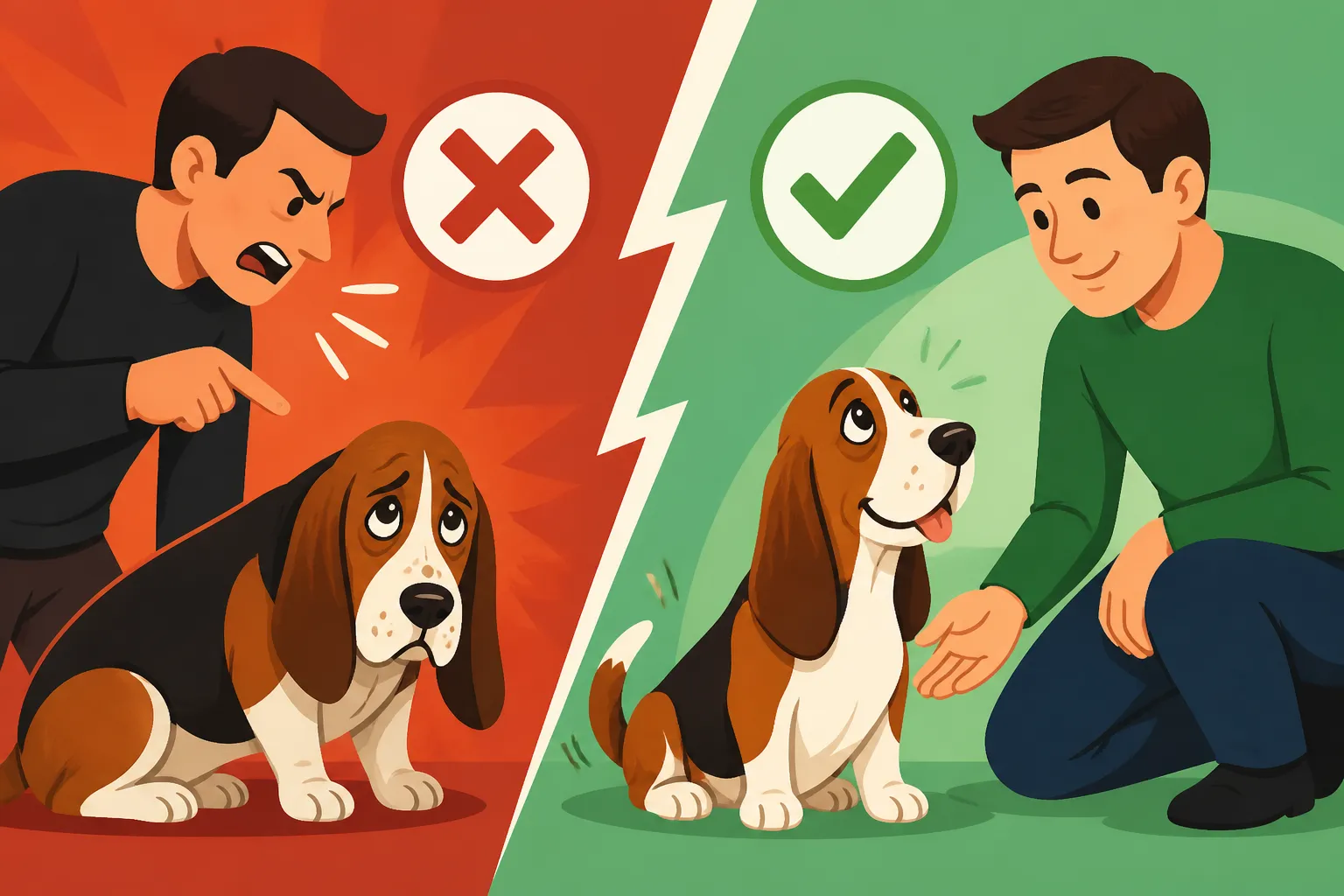
Given the Basset Hound's sensitive and independent nature, it's not surprising that harsh correction methods are not only ineffective but can actually cause significant harm. When we resort to scolding, yelling, or physical punishment, we're working against their very core instincts and risking a breakdown in the bond we share.
Damaging Trust and Relationship
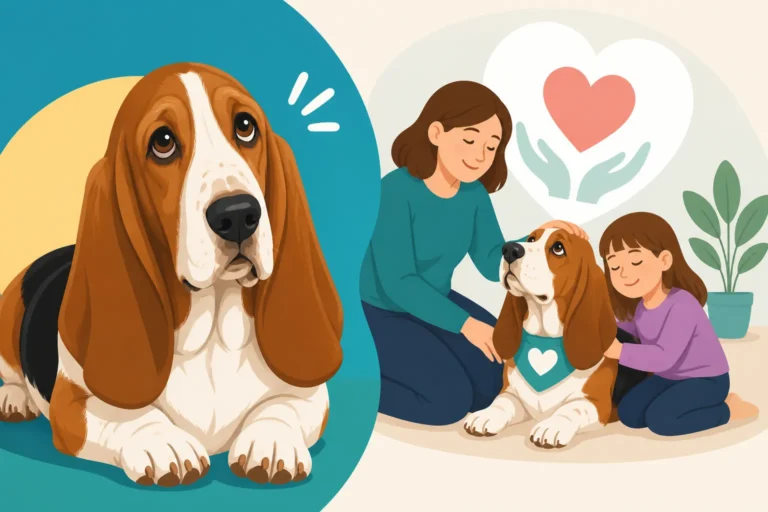
A Basset Hound might look sturdy and robust, but they are often quite sensitive souls. A harsh word, a loud "NO!", or a sharp tug on the leash can deeply upset them. Instead of understanding what you want, they learn to associate you with fear or discomfort. This erodes the trust that is so vital in any human-animal relationship. If your Basset learns that approaching you or trying something new might lead to an unpleasant experience, they'll become hesitant, withdrawn, or even avoid you. Imagine your best friend constantly yelling at you for things you don't fully understand; eventually, you'd start to pull away, wouldn't you? The same applies to our hounds. A broken trust is incredibly difficult to rebuild, and it can make any future training efforts an uphill battle. They might become reluctant to engage, making it harder to even get them to come near for a cuddle, let alone a training session.
Increased Fear and Anxiety
Harsh corrections often breed fear and anxiety. A Basset Hound that is regularly corrected harshly might develop generalized anxiety, becoming jumpy, withdrawn, or even showing appeasement behaviors like excessive licking, submissive urination, or cowering. They might start to anticipate punishment, even when they haven't done anything "wrong." This is particularly true if the correction isn't immediately paired with the unwanted behavior, which is often the case with Basset Hounds who are already lost in their scent world. They simply don't make the connection between the correction and their action, only between the correction and you. This can also manifest as fear of certain objects (like a particular leash or collar if it's used for harsh corrections) or specific environments. An anxious Basset is not a happy Basset, and certainly not one that is receptive to learning. It can also lead to more serious behavioral issues down the line, as fear can be a precursor to aggression when the dog feels it has no other option.
Suppressing Natural Behaviors
Another critical issue with harsh correction is that it often suppresses natural, breed-specific behaviors rather than teaching an alternative. For instance, a Basset Hound that is punished for baying might learn to suppress the bay when you are around, but the underlying drive to vocalize when excited or on a scent is still there. This can lead to frustration and stress for the dog, potentially manifesting in other, less desirable ways, like destructive chewing or obsessive behaviors. You're not "fixing" the behavior; you're just teaching them to hide it or find another outlet. Their incredible nose is a natural part of who they are; punishing them for using it is akin to punishing a bird for flying. Instead of suppressing these instincts, our goal should be to manage them and redirect them into acceptable channels. For instance, instead of punishing them for following a scent, we can work on a strong recall before they get too far, or engage them in structured scent games.
Why Positive Reinforcement Excels with Basset Hounds
If harsh correction is out, what's left? Positive reinforcement, my friends, is not just a gentler approach; it's by far the most effective approach for a Basset Hound. It works with their natural inclinations, builds a stronger bond, and makes training a joy for both of you.
Building Motivation and Engagement
Basset Hounds are, at their core, motivated by what they find rewarding. This usually means food, exciting smells, or comfortable snoozing spots. Positive reinforcement taps directly into this by rewarding desired behaviors. When your Basset does something you like – even something as simple as looking at you when called – and immediately receives a delicious treat or enthusiastic praise, they learn that performing that action leads to good things. This builds a powerful positive association, making them want to offer the behavior again. It transforms training from a chore into a game they actively want to play. You're not forcing them to comply; you're creating a scenario where they choose to engage with you because it's consistently enjoyable and rewarding. This is especially effective when you use high-value treats, something truly irresistible that outweighs the lure of a faraway scent. What Actually Motivates a Basset Hound delves deeper into these motivators.
Clear Communication and Understanding
Positive reinforcement offers much clearer communication to your Basset Hound. When you reward a specific action, you're explicitly telling them, "Yes, that's exactly what I want!" There's no guesswork, no fear of getting it wrong. If they don't perform the desired action, there's no punishment, just a lack of reward. This helps them understand what you do want, rather than just what you don't want. Think of it this way: telling a child "Don't touch the stove!" doesn't teach them what they can touch. Showing them "Touch this cool toy instead, and you get a cookie!" is much more informative. For a Basset Hound who processes information differently when on a scent, this clarity is invaluable. They learn that focusing on you, even for a moment, yields a tangible, delicious benefit, which helps cut through the sensory distractions of the world.
Long-Term Behavioral Changes
The behaviors learned through positive reinforcement are typically more robust and long-lasting. When a dog performs an action out of fear of punishment, they often only do it when the punisher is present or when they feel they can't get away with not doing it. It's about avoiding negative consequences. However, when a dog performs an action because it's genuinely rewarding, they're doing it out of positive association and internal motivation. This means the behavior is more likely to generalize to different situations and persist even when you're not actively holding a treat. It builds a deeper understanding and a genuine desire to cooperate, rather than just compliance. This is crucial for a breed like the Basset, where consistency and building positive habits are key to managing their strong instincts.
Effective Positive Reinforcement Techniques
So, how do we put positive reinforcement into practice with these charming, scent-driven hounds? It's about being smart, consistent, and always having a plan.
High-Value Rewards and Timing
When training a Basset Hound, not all treats are created equal. Kibble might work in a quiet living room, but out on a walk with tantalizing smells everywhere, you'll need the "big guns." Think small pieces of cooked chicken, cheese, hot dogs, or liverwurst. These are what we call "high-value" rewards. They are so incredibly delicious that they can temporarily override the Basset's intense focus on scent. The key is timing. The reward must be delivered within 1-2 seconds of the desired behavior. This immediate feedback helps your Basset connect their action directly to the positive outcome. If you're too slow, they might not understand what they're being rewarded for. Carry these high-value treats in an easy-to-access pouch on your walks. The moment your Basset looks at you when called, or sits politely instead of pulling, bam! – a delicious morsel. Consistency in this timing is paramount. Many trainers even recommend keeping a variety of treat values, so you can increase the "paycheck" for harder behaviors or in more distracting environments.
Redirection and Management
Sometimes, the best training isn't about teaching a new behavior, but about managing the environment and redirecting unwanted behaviors before they escalate. For a Basset Hound, this often means managing their environment to prevent them from practicing undesirable habits. For example, if your Basset counter-surfs, don't leave food out on the counter where they can get it. Manage the situation by putting food away or using baby gates to block access. If they constantly pull on the leash to follow a scent, instead of yanking them back, you can redirect their attention with a treat and a cheerful "Let's go!" before they hit the end of the leash. Or, even better, use a front-clip harness or head halter (we'll talk about those below) to give you more control without discomfort.
Redirection also involves providing appropriate outlets for their natural behaviors. If your Basset loves to sniff, engage them in scent work games, puzzle toys you can find on Amazon, or sprinkle their kibble in the yard for them to "hunt." This gives their nose a job in a controlled way, satisfying that instinct without letting it lead them into trouble. The principle is simple: make it easy for them to do the right thing and difficult for them to do the wrong thing.
Structured Training Programs
While Basset Hounds can sometimes seem like they're marching to the beat of their own drum, they absolutely benefit from structured training. Online training resources, like those offered by BAXTER & Bella, can provide a systematic approach to teaching basic obedience cues, leash manners, and polite house behavior using positive reinforcement. These programs often break down complex behaviors into small, achievable steps, which is perfect for a Basset's learning style. They also emphasize consistency and practice, both crucial for a breed that needs time to generalize behaviors.
Structured programs also help you, the owner, learn how to communicate effectively with your Basset. They'll teach you about marker words, clicker training, and how to fade lures, all of which are essential for clear communication. Remember, Bassets don't necessarily forget what they've learned, but they might need more reinforcement over time to keep those behaviors sharp, especially when competing with fascinating new smells. Having a consistent framework, whether it's through online courses or local classes, can make all the difference. How Long a Basset Hound Will Train For offers more insights into their attention spans.
Addressing Common Basset Hound Challenges Positively
Let's face it, Basset Hounds come with their own unique set of quirks and challenges. But even these can be tackled successfully with patience and positive methods.
The Ever-Present Nose: Recall Challenges
Ah, the Basset Hound recall. It's legendary, and not in a good way. That powerful nose often overrides any desire to come when called. For a Basset, a good scent is like a siren song, and your voice is just background noise. This is why off-leash reliability is so difficult and often ill-advised for the breed. Instead of punishing them for ignoring you, which they truly can't help when on a hot trail, focus on building a bullet-proof recall in distraction-free environments first.
Start in your house or a securely fenced yard with zero distractions. Use your highest-value treats. Call their name, say "Come!", and the moment they turn towards you or take a step, reward them lavishly. Make it a party! Gradually introduce minor distractions, always ensuring success. When you move to an unfenced area, a long line (a very long leash, often 15-30 feet) is your best friend. This allows your Basset to explore while still giving you a means to gently guide them back without harsh yanking. You can find excellent long lines on Amazon. Practice calling them and reeling them in gently, always pairing it with a reward when they reach you. Never use the long line for punishment; it's a safety and training tool. Remember, for most Basset Hounds, The Recall a Basset Hound Will Never Reliably Give You is a stark reality in truly distracting environments, so managing expectations and using physical containment (like a long line or secure fencing) is key.
Managing the Basset Hound Bay
The Basset Hound's bay is a thing of beauty to some, and a headache to others. It's a deeply ingrained part of their heritage, a vocalization meant to alert hunters to a found trail. Punishing a Basset for baying is incredibly unfair and largely ineffective. Instead, we need to understand why they are baying and address the root cause, or redirect the behavior.
Are they baying when left alone? This might indicate separation anxiety, boredom, or simply a desire for attention. Address the underlying anxiety with desensitization training, provide plenty of enrichment, and ensure they're getting enough mental and physical exercise before you leave. If they bay at every passerby or squirrel, work on a "quiet" cue. When they bay, let them get one or two barks out, then calmly approach, get their attention (perhaps with a high-value treat), and ask for a "quiet" or "thank you." Reward them the instant they stop baying, even for a moment. Gradually increase the duration they must be quiet before receiving the treat. This teaches them that being quiet pays. For deeper understanding of their vocalizations, refer to The Bay a Basset Hound Uses and the Neighbors Hear.
Leash Manners and the Reluctant Walker
Walking a Basset Hound can be an exercise in patience. They are powerful for their size and can pull with surprising strength when a scent catches their attention. Conversely, they can also decide they've had enough and simply become a furry, immovable object. Yelling or yanking will only make the pulling worse or make them even more reluctant to move.
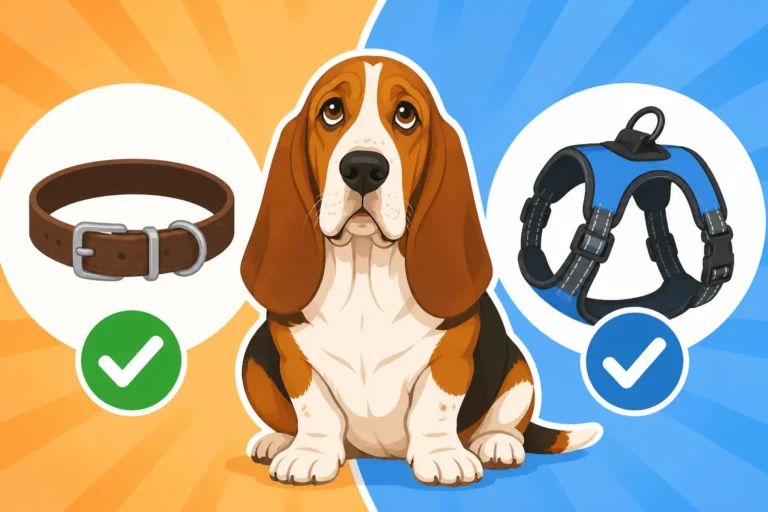
For pulling, a front-clip harness is often a game-changer. Brands like Easy Walk or Freedom Harness distribute pressure away from their sensitive throats and redirect their pulling energy sideways, making it harder for them to drag you. A head halter (like a Gentle Leader) can also be very effective for strong pullers, as it gives you steering control without pain. Pair these tools with positive reinforcement. Every time your Basset walks with a loose leash, even for a few steps, reward them. Stop walking if they pull, and only resume when the leash slackens. This teaches them that pulling gets them nowhere, but a loose leash keeps the adventure going.
If your Basset decides to stop dead in their tracks, it's usually for one of two reasons: they've found an irresistible scent, or they're tired/sore. If it's a scent, try to gently redirect them with a high-value treat and a cheerful "Let's go!" If they're genuinely tired, respect that. Bassets aren't built for long, fast jogs. Their short legs and long backs mean that sometimes, they simply can't or shouldn't go further. Carrying a Basset Hound can be a reality for some walks, especially puppies or seniors, as discussed in The Basset Hound That Will Not Walk Any Further. Remember to check for signs of discomfort or pain if this happens frequently.
Tools and Resources for Positive Training
To make your positive reinforcement journey with your Basset Hound a success, having the right tools and seeking appropriate guidance can be incredibly helpful.
Recommended Training Aids
When it comes to Basset Hounds, the right equipment can make all the difference in preventing frustration and promoting success. Here are a few indispensable items:
- Front-Clip Harnesses: As mentioned, these are fantastic for managing pulling without causing discomfort or damage to your Basset's neck. Brands like Easy Walk or Freedom No-Pull harness are widely available and can be found easily on Amazon. They redirect the dog's forward momentum, making it much harder for them to pull you along.
- Long Lines: For practicing recall in semi-open, but contained, areas, a 15-30 foot long line is invaluable. It allows your Basset to explore and sniff while still giving you a safety net and a way to gently guide them back. Again, Amazon has many options, often made from Biothane for easy cleaning.
- High-Value Treat Pouch: A functional treat pouch is essential for immediate reinforcement. It keeps treats easily accessible, allowing you to reward your Basset within that crucial 1-2 second window.
- Puzzle Toys and Snuffle Mats: These are brilliant for providing mental stimulation and satisfying your Basset's natural foraging and sniffing instincts indoors. Instead of just eating their meal from a bowl, they can "work" for it, which is incredibly enriching. Look for durable, Basset-proof options online.
- Orthopedic Bed: While not a direct training aid, a comfortable, supportive bed is crucial for a Basset's joint health, especially their long backs. A comfortable dog is a happier, more settled dog, and less likely to be irritable or resistant to training due to physical discomfort. Many high-quality options are available.
- Snood: If you're tired of your Basset's long ears dragging in their food and water, a snood is a simple fabric tube that keeps their ears clean and dry during meal times. It's a small quality-of-life improvement that can make a big difference in daily management.
Using these tools effectively means understanding their purpose and integrating them into a positive training approach. A harness, for example, is not a magic fix; it's a tool that makes it easier for you to teach loose-leash walking through consistent rewards.
Professional Guidance and Support
Sometimes, you hit a wall, or you just need an extra boost of confidence and expertise. That's when professional guidance becomes invaluable.
- Certified Professional Dog Trainers (CPDT-KA): Look for trainers who specialize in positive reinforcement and understand scent hounds. A good trainer can help you troubleshoot specific behavioral issues, teach you precise timing and technique, and develop a customized training plan that suits your Basset's individual personality. They can help you with foundational skills and help you translate your understanding into practical application.
- Online Training Platforms: As mentioned, platforms like BAXTER & Bella offer comprehensive online courses that can be done at your own pace, from the comfort of your home. These are often great for new puppy owners or for refreshing skills, providing a structured curriculum and access to trainers for questions. They can be particularly useful if local, in-person classes aren't readily available or don't cater well to the Basset Hound's specific needs.
- Breed-Specific Clubs and Forums: Connecting with other Basset Hound owners can offer a wealth of practical advice and shared experiences. They often have tricks and tips that work particularly well for the breed, from managing ear care to dealing with separation anxiety. These communities can provide a support network and reassurance that you're not alone in facing certain Basset quirks.
Remember, seeking help from a professional is a sign of a responsible owner, not a failing one. It shows you're committed to giving your Basset Hound the best possible life and building a strong, loving relationship based on mutual understanding and respect. They can help you implement strategies for issues like Whether a Basset Hound Can Be Trained Off Trailing or Whether a Basset Hound Pulls Hard for Its Size.
By embracing positive reinforcement, understanding the unique world of your Basset Hound, and utilizing the right tools and support, you can build an incredibly strong bond and enjoy a happy, well-adjusted companion for years to come.
Disclaimer
This article is for general informational purposes only and does not constitute professional advice. Laws, prices and regulations vary by location and change over time. Consult a qualified professional for guidance on your specific situation.