Whether a Basset Hound Sinks
Oh, the age-old question that many Basset Hound parents ponder when they look at their long, low-slung companions: "Can my Basset Hound actually swim, or will they just sink like a stone?" It’s a very real concern, and a valid one, too, because their unique build, while utterly charming, isn't exactly designed for graceful aquatic adventures. This guide will dive deep into why Basset Hounds often struggle in water and, more importantly, how you can keep your beloved floppy-eared friend safe and even help them enjoy a little splash time.
The Unique Anatomy of a Basset Hound and Water Safety
Let's be honest, when you picture a champion swimmer in the dog world, you're probably imagining a Labrador Retriever, a Golden Retriever, or perhaps a Portuguese Water Dog. You're not picturing a Basset Hound. And there's a good reason for that: their very anatomy, which makes them such incredible scent hounds and gives them that distinct, lovable waddle, works against them in the water.
Dense Bone Structure and Short Legs
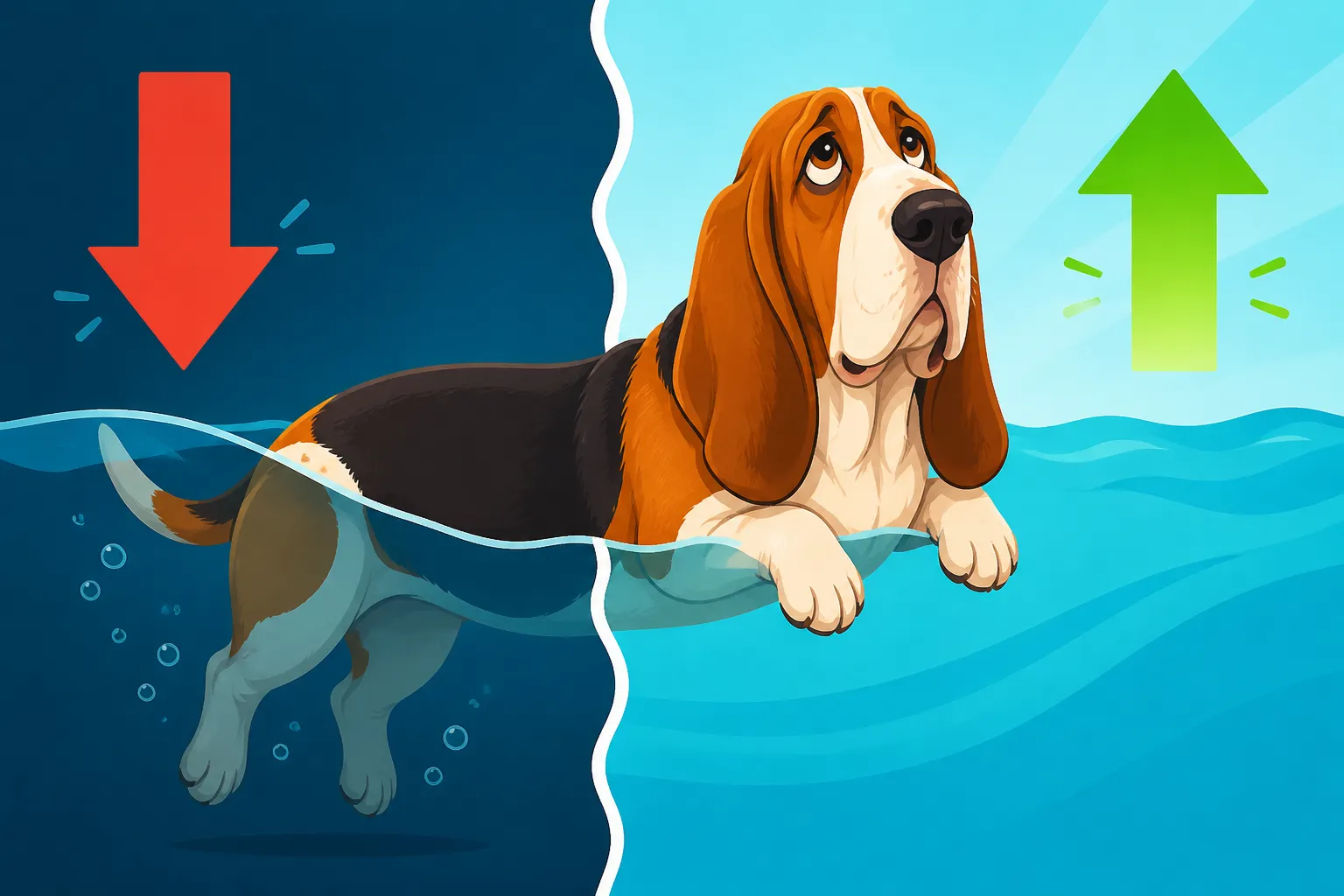
One of the biggest factors contributing to a Basset Hound's buoyancy issues is their remarkably dense bone structure. These dogs are solid, built low to the ground with substantial bone, which gives them weight that lighter-boned breeds don't carry. This heavy build, coupled with their incredibly short legs, means they have to work significantly harder to stay afloat and propel themselves forward. Think of it this way: their bodies are naturally inclined to sink, and their stubby little legs, while great for navigating thick underbrush on a scent trail, just don't have the leverage or reach to paddle effectively. It's like trying to swim laps with ankle weights and short fins – exhausting and often unsuccessful. The Crooked Front a Basset Hound Is Built On discusses their unique structure in more detail.
When a Basset Hound tries to swim, you'll often see them paddling frantically, expending a huge amount of energy just to keep their head above water. They might manage a few strokes, but exhaustion sets in quickly, and that's when real danger can arise. Their short legs simply aren't long enough to generate sufficient thrust to overcome the natural sinking tendency of their heavy bodies. This isn't a matter of them being lazy; it's a matter of physics and selective breeding for a different purpose altogether.
Large Head and Loose Skin
Beyond the dense bones and short legs, a Basset Hound's distinctive head and abundant loose skin also play a role in their aquatic challenges. Their heads are quite large and heavy relative to their body size, especially when compared to a more streamlined swimming breed. This can make it difficult for them to keep their head comfortably above the waterline without tilting or struggling, which further compromises their ability to breathe easily. Imagine trying to swim with a heavy, oversized helmet on; it throws off your balance and makes keeping your face clear of water a constant battle.
Then there's all that wonderful, wrinkly, loose skin – the dewlap, the facial folds, the long, heavy ears. While these features are fantastic for trapping scent and looking incredibly charming, they can become a hindrance in the water. The dewlap, in particular, can act like a drag, creating resistance as they try to move. Their long, heavy ears, which are designed to sweep scent towards their powerful noses, also absorb water and become even heavier, flapping about and making it hard for them to maintain a stable position. All these factors combined mean that a Basset Hound isn't just a poor swimmer; they're essentially designed in a way that makes swimming an uphill battle against their own build. What an Adult Basset Hound Weighs can give you an idea of their substantial build.
Assessing Your Basset Hound's Natural Affinity for Water
It’s easy to generalize about Basset Hounds and water, but just like people, every dog is an individual. While the breed's general characteristics predispose them to sinking, that doesn't mean every single Basset Hound will hate water or be completely incapable of moving through it. Some might even enjoy a good splash, especially on a hot day. The key is to observe your own dog and never assume or force them into a situation they're uncomfortable with.
Individual Differences and Temperament
You might find that your Basset Hound, despite all the breed's typical traits, absolutely loves to wade in shallow streams or splash around in a kiddie pool. These individual preferences often come down to early experiences, temperament, and even just personality. Some Bassets are naturally more curious and adventurous, while others are cautious and prefer to keep all four paws firmly on dry land. A Basset that was introduced to water in a positive, gentle way as a puppy might be more inclined to enjoy it than one who had a startling or negative experience.
It's also worth noting that some Basset Hounds might just enjoy the idea of water – the cooling sensation, the chance to chase a floating toy – but still not possess the physical ability to swim well. Don't mistake enthusiasm for aquatic prowess. Always differentiate between a dog enjoying water activities and a dog being a competent swimmer. What a Basset Hound Needs Every Day includes considerations for their general well-being and enrichment.
Signs Your Basset Might Struggle or Enjoy Water
Observing your Basset's body language around water is crucial. If they show signs of fear, such as a tucked tail, flattened ears, trembling, or trying to back away, then water play is probably not for them, and you should respect that. Forcing them into water will only create a negative association and potentially put them in danger.
On the other hand, a Basset Hound who is curious, sniffing at the water's edge, wagging their tail, or even tentatively dipping a paw, might be open to exploring. If they wade into shallow water where their feet can touch the bottom, and they seem relaxed and happy, that's a good sign. However, if they start flailing or panicking when the water gets deeper than their chest, it's a clear signal that they are not comfortable or physically capable of swimming. Remember, even if they enjoy shallow water, the physics of their build don't change, so deep water will always be a challenge. Whether a Basset Hound Needs Any Real Exercise talks about appropriate physical activity for the breed.
Here's a quick guide to spotting the signs:
| Behavior | Interpretation | Action |
|---|---|---|
| Hesitant, tail tucked, ears back | Fear or discomfort with water. | Do not force. Respect their boundaries. |
| Sniffing, curious, paw dipping | Mild interest, open to gentle introduction. | Start with very shallow water, positive reinforcement. |
| Wading comfortably in shallow areas | Enjoys splash time where feet touch. | Supervise closely. Keep water shallow, consider a life vest. |
| Flailing, struggling in deeper water | Cannot swim effectively, at risk of sinking. | Immediately assist them out of the water. Life vest is essential. |
| Panting excessively, signs of fatigue | Overexertion. | Get them out of the water to rest. Hydrate. |
Essential Safety Measures for Basset Hounds Around Water
Given their unique build, water safety isn't just a suggestion for Basset Hounds; it's an absolute necessity. You wouldn't send a child who can't swim into the deep end without a floatation device and supervision, and the same goes for your Basset. Their enjoyment of water should always be secondary to their safety.
The Lifesaving Importance of a Dog Life Vest
If you have a Basset Hound and plan on being anywhere near water – be it a pool, a lake, or even a slow-moving river – a well-fitting dog life vest is not an option; it's a non-negotiable piece of equipment. This isn't about making them look cute; it's about providing essential buoyancy that their body simply lacks. A good life vest will keep their head and body afloat, allowing them to paddle without immediately sinking and buying you crucial time to assist them if they get into trouble.
When choosing a life vest, look for one that fits snugly but doesn't restrict movement. It should have strong, adjustable straps around the chest and belly. Crucially, it needs a sturdy handle on the back. This handle is your lifeline to your dog, allowing you to easily lift them out of the water if they tire or panic. Features like bright colors and reflective trim are also excellent for visibility, especially if you're in an open body of water. You can find a wide range of options on platforms like Amazon, offering different styles and sizes to ensure a proper fit for your Basset's unique shape.
Supervised Water Activities Only
Even with a life vest, a Basset Hound should never, ever be left unsupervised around water. Their instinct to follow a scent or chase a duck can override their awareness of danger, and even a moment of distraction could lead to a perilous situation. If they fall into a pool, they might struggle to find the steps or edge, especially if they're panicked.
Always be within arm's reach when your Basset is in or near water. This means no quick dashes inside to grab a drink while your Basset is "just splashing" in the shallow end. If you have a pool, consider investing in a pool alarm or a safety cover, and ensure your yard is securely fenced to prevent accidental access. Remember, even a small, seemingly innocent body of water like a garden pond or a large bird bath can pose a drowning risk to a struggling Basset Hound. The Ramps, Beds and Gates a Basset Hound Needs also discusses home safety equipment that can apply to water situations.
Gradual Introduction to Water
If your Basset Hound shows an interest in water, introduce them to it very gradually and in a controlled environment. Start with just a few inches of water in a kiddie pool on a warm day. Let them approach it at their own pace. Toss in a favorite floating toy to entice them, but don't force them in.
Once they're comfortable wading in shallow water, and if you feel they might tolerate a bit more depth (always with a life vest on!), choose a calm, shallow entry point, like a gradual slope at a lake or a beach where the water deepens very slowly. Avoid fast-moving rivers, large waves, or deep, murky waters where you can't see the bottom. Keep initial water sessions short and positive, ending before they show any signs of fatigue.
Training and Encouraging Water Comfort
While swimming might not be their forte, many Basset Hounds can learn to enjoy water in a safe, controlled way. It's all about positive experiences, patience, and understanding their physical limitations.
Positive Reinforcement and Play
The key to encouraging any new behavior or comfort level with your Basset Hound, especially around water, is positive reinforcement. Use high-value treats, lots of enthusiastic praise, and their favorite toys to make the experience fun and rewarding. Every small step they take towards the water, every paw dipped, every little splash, should be celebrated.
Never scold or punish your Basset if they're hesitant or scared. This will only create a negative association and make them even more reluctant. Instead, keep it light, playful, and low-pressure. If they're not into it one day, try again another time. The goal isn't to turn them into Olympic swimmers, but to help them feel safe and perhaps even enjoy cooling off on a hot day. Resources like BAXTER & Bella, known for their positive training methodologies, can offer valuable guidance on building confidence and making new experiences enjoyable for your dog. They emphasize a gentle, encouraging approach that works wonders with sensitive breeds like Bassets.
Shallow Wading and Splash Pads
For many Basset Hounds, the most appropriate and enjoyable water activity will be shallow wading. This allows them to cool off, play with water, and even "track" scents in the wet environment without the risk of sinking. A simple kiddie pool filled with just a few inches of water is often a huge hit. You can throw in some rubber duckies or other floating toys for them to "hunt" with their magnificent noses.
Splash pads, increasingly popular in public parks or available as backyard inflatable versions, are another fantastic option. These provide water jets and shallow puddles for play without any significant depth, making them inherently safer for Basset Hounds. They get the sensory experience of water, the cooling effect, and the fun of a play area, all while keeping their feet on a solid surface. Remember, the objective is their comfort and safety first and foremost.
Ultimately, while a Basset Hound might not be built for the open water, with the right precautions, a life vest, and a healthy dose of positive encouragement, they can certainly learn to enjoy a little splash now and then.
Disclaimer
This article is for general informational purposes only and does not constitute professional advice. Laws, prices and regulations vary by location and change over time. Consult a qualified professional for guidance on your specific situation.