Whether the Basset Hound Will Survive as a Breed
A Basset Hound is unlikely to disappear overnight, but the breed’s future is not guaranteed simply because people recognize its droopy ears and long body. Falling demand, narrow breeding choices, and health problems can all shape what comes next. This guide explains what “survival” means for a dog breed, what could threaten Basset Hounds, and how responsible owners and breeders can help.
What it means for the Basset Hound to survive
A breed can persist without staying popular
When people ask whether the Basset Hound will survive, they may mean different things: whether Basset Hounds will still be bred, whether they will remain familiar to the public, or whether they can retain their recognizable type while becoming healthier. Those are related questions, but they do not have the same answer.
A breed can become less common without vanishing. A smaller number of dedicated breeders may continue producing Basset Hounds even if fewer households are looking for one. That can keep the breed going, though a small breeding population may bring other challenges, particularly if too few unrelated dogs are used.
Nor does a breed’s continued existence guarantee that it is thriving. If a dog remains popular because of its appearance but breeding decisions do not give enough attention to health, sound movement, and comfortable daily life, the breed may persist while its welfare concerns grow. The important question is not only whether Basset Hounds will still be here, but what kind of Basset Hound people will choose to preserve.
Popularity is not the same as population health
Public visibility can give a misleading impression. A familiar face in advertising or entertainment may make a breed seem abundant, while changes in registration numbers or breeder activity may tell a different story. Likewise, a breed can remain present across the country but have limited genetic variety if breeding relies heavily on a small number of popular dogs.
Breed popularity can also shift with fashion. Families may gravitate toward a breed after seeing it frequently in media, then lose interest when another type of dog becomes more fashionable. That does not necessarily mean the Basset Hound is close to disappearing. It does mean that breeders and prospective owners should avoid treating short-term attention as a reliable measure of the breed’s long-term prospects.
For a closer look at that distinction, see Whether the Basset Hound Is Losing Popularity and Whether Fewer Basset Hounds Are Bred Each Year. Registration trends can be useful clues, but they do not tell the whole story: they may not capture every dog, and they do not by themselves show how responsibly dogs are being bred.
What could put the breed’s future under pressure
A smaller breeding pool can limit good choices
If fewer people breed Basset Hounds, the number of available breeding dogs may shrink. A small population is not automatically doomed, but it can become harder to find suitable mates without repeatedly using closely related dogs or leaning heavily on the same popular sire. Over time, that can reduce genetic variety and make inherited problems harder to manage.
This is one reason responsible breeding is more than producing puppies that look like the breed standard. Breeders need to consider family health history, temperament, physical function, and the risks of concentrating particular traits in a bloodline. They also need to be willing to make careful choices even when those choices mean producing fewer litters.
The risks are not solved by simply breeding more dogs. Increasing numbers without managing relatedness and health may produce a larger population that still carries serious problems. Long-term preservation involves keeping enough healthy, well-documented dogs in the breeding population and making decisions with the next generations in mind.
Health and extreme physical traits matter
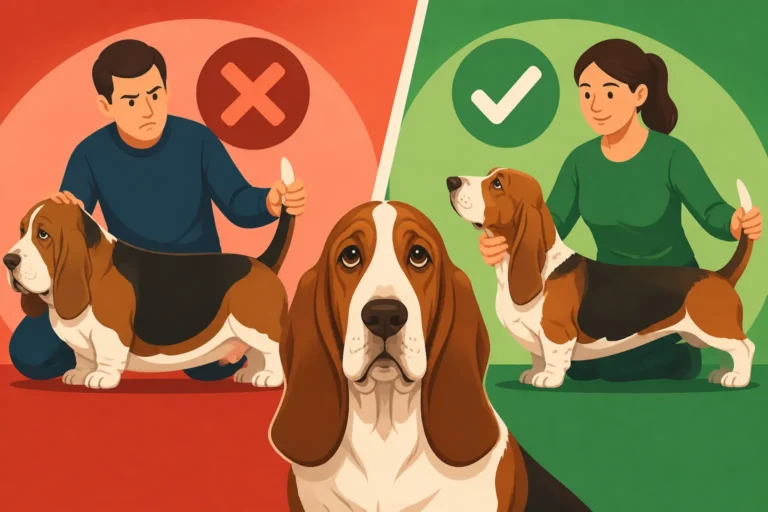
The Basset Hound’s familiar shape is part of its appeal, but health and comfort have to be part of any conversation about the breed’s future. A short-legged, long-backed dog with heavy bone and loose skin can face practical challenges. The goal should not be to erase the breed’s identity; it should be to avoid rewarding exaggerated features at the expense of a dog’s ability to move, rest, and live comfortably.
Potential owners can learn more about the breed’s structure in Why the Basset Hound Has Been Bred Too Low and Whether Breeders Are Correcting the Basset Hound. These topics matter because public demand influences what breeders feel encouraged to produce. If buyers consistently choose dogs for increasingly extreme appearance, that preference can put pressure on breeding decisions. If buyers ask about health, movement, and temperament, they help signal that those qualities matter too.
Health is not a single issue, and no one screening or test can guarantee a healthy dog. Responsible breeding means looking at the individual dog and its relatives, following appropriate health guidance, and being honest with puppy buyers about known risks. The Health Tests a Basset Hound Breeder Should Run guide is a helpful next read when you are assessing a breeder’s approach.
Ownership demands can affect demand
Basset Hounds are not the right match for every household. Their scent-driven nature, distinctive voice, grooming needs, and potential health-care demands can surprise people who choose one based mainly on appearance. Some owners are also unprepared for the practicalities of managing a heavy dog with a low body and long back, especially in a home with slippery floors or lots of stairs.
When people do not understand those needs before bringing a dog home, the result can be frustration, preventable discomfort, or rehoming. That does not mean the breed is unsuitable as a companion; it means realistic expectations matter. The guide The Household a Basset Hound Actually Fits can help prospective owners think through lifestyle and household fit before committing.
Planning for routine care is part of that decision. Owners may compare food and basic supplies at retailers such as Chewy while putting together a realistic care budget, but the important step is to account for ongoing veterinary care as well as everyday purchases. A dog’s needs should guide product choices, and medical questions belong with a veterinarian.
What a healthier future could look like
Preserve the breed without preserving avoidable problems
Preservation does not have to mean keeping every current breeding habit unchanged. A breed can retain its recognizable character while breeders work toward dogs with better function and fewer avoidable health burdens. That requires careful selection rather than chasing a single idealized look.
For Basset Hounds, useful priorities include sound movement, manageable body condition, stable temperament, and health-conscious breeding choices. Breeders can also support a healthier future by sharing accurate records, explaining the reasoning behind pairings, and staying in contact with puppy buyers. Buyers can ask questions about how adult relatives are doing, what health concerns appear in the family, and what support is offered if a problem emerges.
It is reasonable to care about appearance; breed characteristics are part of why people love Basset Hounds. But appearance should not be the only measure of a good breeding decision. The wider discussion in The Split Between Show and Hunting Basset Hounds can help explain why different breeding priorities may shape dogs in different ways.
Responsible buyers reward responsible breeding
A prospective owner cannot fix the whole breed’s future alone, but purchasing and adoption decisions do have an effect. Taking time to find a breeder who is transparent about health and temperament helps support practices that value the dogs beyond their sale. A reputable breeder should welcome sensible questions and should not pressure someone to make a quick decision based on scarcity or a particular color.
If you are considering a puppy, ask what health information is available for the parents and close relatives, how the breeder evaluates temperament, and what happens if a puppy develops a significant inherited concern. Be cautious of claims that any dog is completely free of risk. A responsible answer usually acknowledges uncertainty and explains what has been done to manage it.
Adoption can also be a meaningful choice for people who want to give an existing dog a stable home. Breed-specific rescue groups and general shelters may have Basset Hounds or Basset Hound mixes, though availability varies by area. Whether buying or adopting, prepare for the real demands of care rather than assuming a dog will be easy because it is calm at home. For a broader look at common buyer surprises, see What Nobody Warns a Basset Hound Buyer About.
Everyday care supports individual dogs, not just the breed’s image
Good care cannot replace responsible breeding, but it helps dogs live healthier, more comfortable lives. Keeping a Basset Hound at an appropriate weight, arranging veterinary checks, and making the home easier to navigate can all matter. Owners can ask their veterinarian how to tailor exercise and feeding to their dog’s age, body condition, and health.
Care planning includes the unglamorous details, too. A new owner might compare food options at Chewy or another retailer, but should choose based on the dog’s nutritional needs rather than marketing claims alone. If a veterinarian recommends a particular diet or treatment, follow up with the clinic about what is appropriate for that individual dog. Routine supplies are only one part of the commitment.
Rescue and foster homes also contribute to the breed’s future by helping dogs find suitable homes and by sharing honest information about their needs. A well-supported dog is not a substitute for sound breeding practices, but a culture that values responsible ownership can reduce avoidable hardship and help people make better-informed choices.
So will the Basset Hound survive as a breed
The likely answer depends on what people choose to preserve
The Basset Hound is not defined only by how many puppies are born or how often the breed appears in public. Its future depends on a wider set of choices: whether enough responsible breeders remain active, whether breeding populations retain useful genetic variety, whether health and function receive serious attention, and whether new owners understand the commitment.
A reduction in popularity would not automatically mean the breed is headed for extinction. It could mean the Basset Hound becomes less common while remaining established among committed breeders and owners. On the other hand, a larger population would not necessarily mean the breed is doing well if poor breeding choices or unrealistic demand keep health concerns in place.
| Future pattern | What it could mean | What helps |
|---|---|---|
| The breed becomes less fashionable | Fewer people may seek puppies, but dedicated breeding may continue | Careful breeding, informed owners, and responsible homes |
| Breeding becomes concentrated | A limited number of dogs may contribute heavily to future generations | Attention to relatedness, health history, and genetic variety |
| Appearance outweighs function | Extreme traits may receive more attention than comfort and sound movement | Buyers who ask about health, temperament, and everyday function |
| Ownership expectations improve | Fewer people may be surprised by care demands | Honest breeder guidance, adoption support, and realistic preparation |
There is no simple way to predict every change in a breed’s popularity or breeding population. Still, the practical answer is hopeful: Basset Hounds can continue as a breed if people support responsible breeding and ownership rather than treating the dog’s recognizable look as the only thing worth preserving.
What prospective owners can do
If you hope to welcome a Basset Hound, start by learning about the breed’s everyday needs, not just its history and appearance. Talk with knowledgeable owners, ask breeders or rescue organizations detailed questions, and consider whether your home and routine can accommodate a dog with a strong nose, a sturdy body, and ongoing care needs.
When comparing breeders, look for openness rather than promises that sound too perfect. Ask about health, temperament, the dogs’ daily lives, and how the breeder makes decisions across generations. If adopting, request the information available about the dog’s medical and behavioral history, while recognizing that a rescue may not know everything about the dog’s past.
A breed’s future is shaped over generations, but it is also shaped by ordinary decisions: choosing a healthy, well-matched dog; giving that dog thoughtful care; and supporting people who prioritize welfare. Those steps do not guarantee the Basset Hound will always be common. They do make it more likely that the Basset Hounds who are here have a better chance to live comfortable, fulfilling lives.
Disclaimer
This article is for general informational purposes only and does not constitute professional advice. Laws, prices and regulations vary by location and change over time. Consult a qualified professional for guidance on your specific situation.