When a Basset Hound Drops to Two Meals
One of the trickiest parts of raising a Basset Hound puppy is figuring out their feeding schedule, especially knowing when it's time to shift from several small meals a day to fewer, larger ones. Many new Basset owners worry about underfeeding or overfeeding their ever-hungry pups, and this guide is all about navigating that crucial transition to a twice-daily meal routine without any tummy upsets or missed growth spurts.
Understanding Your Basset Hound's Growth Stages
Raising a Basset Hound from a tiny, floppy-eared pup to a dignified, somewhat chunky adult is a journey, and their dietary needs evolve significantly along the way. It’s not a one-size-fits-all approach, and what works for a tiny toy breed certainly won’t cut it for our sturdy hounds. Their unique growth pattern, characterized by rapid development in their first year, means we need to be mindful of how their meals support their strong bones and developing joints.
The Puppy Powerhouse Phase
When you first bring home a Basset Hound puppy, they're typically on a schedule of three to four small meals a day. This isn't just because they have tiny tummies; it's also about managing their energy levels and ensuring a steady intake of nutrients for their explosive growth. Imagine a little furry furnace constantly burning fuel! Their metabolism is incredibly high, and they need consistent calories to build strong muscles and support their developing skeletal system. Skipping meals or giving them too much at once can lead to digestive upset or, in rare cases, blood sugar dips in very young puppies. This frequent feeding helps keep their energy stable and their bodies growing at a healthy, steady pace, which is particularly important for preventing issues later in life. We really want them to grow slowly and steadily, not in big, sudden spurts that can stress their developing joints. You might be interested in reading How Many Meals a Basset Hound Puppy Needs for more insights into this early stage.
Adolescent Awkwardness to Adult Elegance
As your Basset Hound moves from being a clumsy, adorable puppy into the lanky, adolescent phase (usually around 4 to 6 months), their growth rate might start to slow a little, but their calorie needs often remain high. They're exploring more, playing harder, and their bodies are still maturing. By the time they hit around six months to a year, most Basset Hounds are approaching their full adult height, even if they still have some filling out to do. This is the sweet spot when many owners start contemplating reducing the number of meals. An adult Basset Hound, generally considered to be fully grown between 18 months and two years, typically thrives on two meals a day. This schedule is generally maintained for the rest of their lives, adjusting portions as needed for activity level and age. For a deeper dive into their mature diet, check out When a Basset Hound Moves to Adult Food.
The Great Transition: Moving from Three Meals to Two
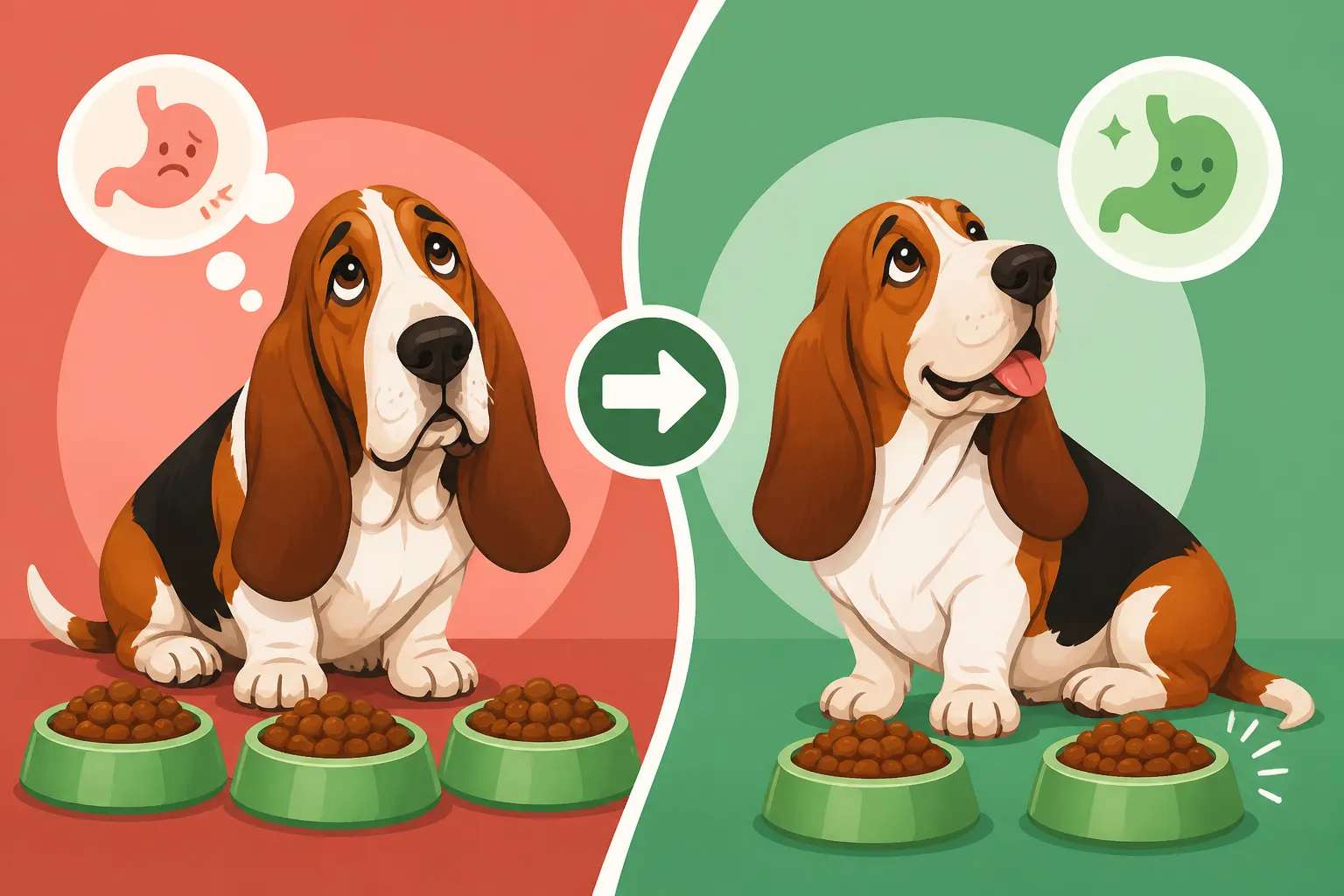
Deciding when and how to shift your Basset Hound from three meals a day to two can feel like a big decision. It's a natural progression, but it’s one that should be handled thoughtfully to avoid unnecessary stress for your pup – and for you!
Signs Your Basset Hound is Ready
Typically, the transition from three meals to two happens around 6 to 9 months of age, but every Basset is an individual. You'll want to watch for a few key indicators that your pup is ready. First, are they consistently finishing their three meals without enthusiasm? If they're leaving food in the bowl at the third meal, it might be a sign they don't need that extra feeding. Second, observe their body condition. Are they maintaining a healthy weight, or perhaps looking a little plump on three meals? Bassets are notorious for carrying extra pounds, and fewer, well-portioned meals can help manage this. Third, consider their energy levels. If they’re no longer having those wild puppy zoomies that demand constant refueling, they might be ready for a slightly less frequent feeding. Finally, listen to your vet! They can offer personalized advice based on your dog's specific health and growth curve. It's not about an arbitrary age, but rather a combination of physical signs and professional guidance.
Making the Switch Smoothly
When you've decided it’s time to drop a meal, the key is to do it gradually. Don't just eliminate one meal cold turkey and expect your Basset to be happy about it. They'll likely be confused, possibly a bit whiny, and definitely hungry!
Here's a common approach:
- Observe your schedule: If you're feeding breakfast, lunch, and dinner, the "lunch" meal is usually the one to slowly phase out.
- Gradual reduction: Over a week or two, begin to reduce the amount of food given at the midday meal. Simultaneously, slightly increase the portions of the breakfast and dinner meals. The goal is to redistribute the total daily caloric intake across two meals instead of three.
- Monitor intake: Pay close attention to whether your Basset is finishing their larger breakfast and dinner. If they're struggling to eat the increased portions, you might be moving too fast, or they might still need the additional meal for a little longer.
- Watch for hunger cues: While Basset Hounds are masters of the "starving dog" look, true hunger pangs after the transition could indicate they're not getting enough food in their two meals, or perhaps they just weren't ready for the change yet.
This transition period is a great time to ensure you’re accurately measuring your Basset’s food. Brands like Purina Pro Plan or Royal Canin, often found on platforms like Chewy, provide clear feeding guidelines based on age and weight. Using a dedicated measuring cup, rather than just eyeballing it, helps prevent accidental over or underfeeding. For ideas on managing their weight generally, consider Keeping a Basset Hound at Its Correct Weight.
What About the Midday Blues?
It’s completely normal for your Basset to seem a little out of sorts for a few days after dropping a meal, especially if they’re used to that consistent lunch. They might whine, pace, or stare at you with those mournful eyes that only a Basset can truly master. This is where your patience and consistency come in. Stick to the new schedule. You can offer a distraction during their usual midday mealtime – a short walk, a puzzle toy with a few low-calorie treats, or some playtime. This helps them associate that time with something positive, rather than just a missed meal. Some owners find that a longer-lasting chew, like a dental stick, can help bridge the gap, but be sure to account for those calories in their daily total.
Why Two Meals (or More) for an Adult Basset Hound?
Once your Basset Hound is an adult, a twice-daily feeding schedule becomes the gold standard for several very good reasons. It's not just about convenience for you; it's about their health and well-being.
Managing Hunger and Metabolism
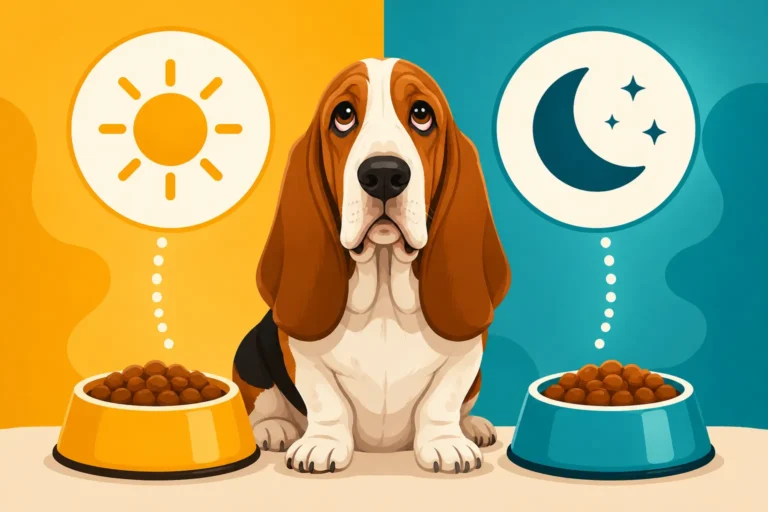
Basset Hounds, bless their hungry hearts, often act like they haven't eaten in a week, even after finishing a substantial meal. Spreading their daily food intake across two meals rather than one large one can help manage that constant feeling of hunger. It provides a more consistent supply of nutrients, preventing long stretches of emptiness that can lead to begging, raiding the trash, or gulping food too quickly. A slow feeder bowl, readily available on Amazon, can be a game-changer for Bassets who bolt their food, helping them feel fuller and aiding digestion. If your Basset is known for devouring their dinner, you might find some useful tips in Whether a Basset Hound Bolts Its Food.
Reducing the Risk of Bloat (GDV)
This is a really critical point for Basset Hound owners. Like many deep-chested breeds, Basset Hounds are at a higher risk of Gastric Dilatation-Volvulus (GDV), commonly known as bloat. This is a life-threatening condition where the stomach fills with gas and can twist, cutting off blood supply. While the exact causes aren't fully understood, feeding one large meal a day, especially combined with vigorous exercise directly before or after eating, is considered a significant risk factor. Splitting their daily ration into two or even three smaller meals reduces the volume of food in the stomach at any one time, potentially lowering the risk. For more information on this serious condition, see Whether a Basset Hound Gets Bloat.
A typical feeding schedule for an adult Basset Hound on two meals might look something like this:
| Meal Time | Typical Amount (Example for a 50lb Basset) | Notes |
|---|---|---|
| Morning Meal | 1.5 cups dry kibble | Offered shortly after waking or after a morning potty break. Allows time for digestion before any major activity. |
| Evening Meal | 1.5 cups dry kibble | Offered several hours before bedtime. This allows ample time for digestion before they settle down for the night, further reducing bloat risk. |
| Total Daily | 3 cups dry kibble | This is just an example; actual amounts depend on the dog's age, weight, activity level, and specific food. Always consult your food's packaging or your vet for precise figures. |
Remember, these are just illustrative numbers. Brands like Ollie, which provides fresh, pre-portioned meals, will often give specific recommendations tailored to your dog's caloric needs.
Monitoring and Adjusting Your Basset Hound's Feeding Schedule
The transition to two meals isn't a set-it-and-forget-it deal. Your Basset Hound's needs will continue to change throughout their life, requiring ongoing monitoring and adjustments to their feeding schedule and portions.
Weight Management is Key
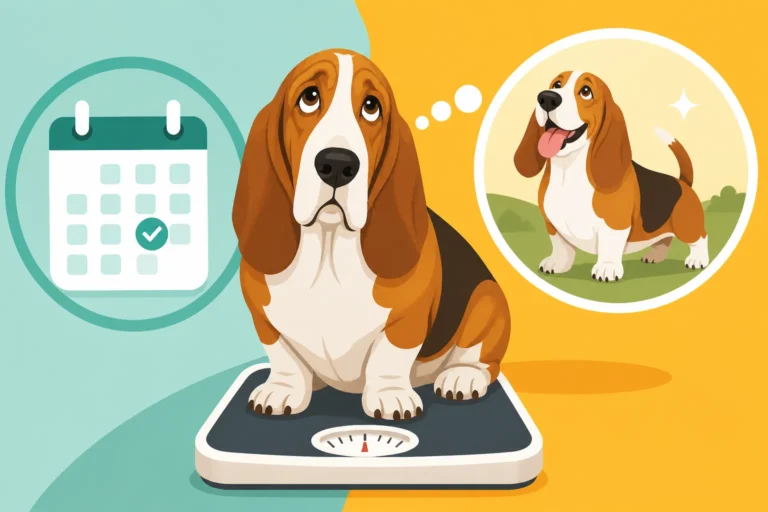
Basset Hounds are prone to weight gain, and extra pounds put undue stress on their unique skeletal structure, particularly their back and elbows. What Extra Weight Does to a Basset Hound is a must-read on this topic. After transitioning to two meals, regularly assess your Basset's body condition. You should be able to feel their ribs easily, but not see them prominently. Their waist should tuck in slightly when viewed from above. If they start to look a bit rounder, it's time to reduce their meal portions slightly or increase their exercise, not add another meal. Conversely, if they seem too thin, you might need to slightly increase portions. It’s a delicate balance! Getting into the habit of feeling for your Basset's ribs under their loose skin is more important than just glancing at them.
Adjusting for Age and Activity
An energetic adolescent Basset Hound will naturally burn more calories than a sedate senior dog. As your Basset matures and their activity level potentially decreases, their caloric needs will likely drop. Senior Basset Hounds, usually starting around seven to eight years old, may need adjustments to their food type and quantity. The Age a Basset Hound Counts as Senior can help you understand this life stage better. Similarly, a Basset Hound that enjoys long, leisurely walks and scent work will require more fuel than one whose primary exercise is moving from the sofa to the food bowl. Always keep their individual needs in mind. If you ever have concerns about their weight or overall health, your veterinarian is your best resource for tailored advice.
When to Consider Three Meals Again (or More)
While two meals a day is the standard for adult Bassets, there are specific circumstances where a return to more frequent, smaller meals might be beneficial or even necessary. For instance, if your Basset Hound is diagnosed with a medical condition like diabetes, where stable blood sugar levels are crucial, your vet might recommend three or more small meals a day to align with insulin injections or other medication schedules. Similarly, a pregnant or lactating female Basset Hound will have significantly increased caloric and nutritional needs, often requiring more frequent meals to support her health and the developing puppies. And as Bassets get very old, sometimes small, frequent meals are easier for them to digest. You might find yourself offering smaller, more enticing meals to an older Basset who isn't eating much, which is covered in Feeding an Old Basset Hound That Has Slowed. These situations are exceptions, however, and should always be discussed and guided by your veterinarian.
Ultimately, the goal is to provide a consistent, healthy feeding routine that supports your Basset Hound's unique needs at every stage of their life, ensuring they thrive and enjoy their characteristic long, happy existence.
Disclaimer
This article is for general informational purposes only and does not constitute professional advice. Laws, prices and regulations vary by location and change over time. Consult a qualified professional for guidance on your specific situation.