What the Tricolor Basset Hound Looks Like
It's quite common for new Basset Hound admirers, and even some seasoned owners, to have a mental picture of a Basset that's perhaps just 'brown and white' or a simple 'black and white.' But step into the wonderful world of Basset Hound colors, and you quickly discover a rich tapestry of shades and patterns. Among the most classic and striking is the tricolor Basset, a combination that often sparks questions about what exactly those three colors entail and where they usually appear. This guide aims to clear up any confusion, walking you through the distinctive markings that make a tricolor Basset Hound truly stand out, from their soulful eyes to their jaunty tail tip.
Understanding the Basset Hound Color Palette
When you first start looking into Basset Hounds, it’s easy to think of them in broad strokes – maybe a floppy-eared, low-slung dog that’s a particular shade of brown and white. But the reality is far more nuanced and, frankly, quite beautiful. Their coats come in a surprising array of patterns and combinations, each adding to their individual charm. It’s not just about a single hue; it’s about how these colors blend, streak, and settle across their unique physique.
More Than Just "Hound Colors"
For many, the term "hound colors" conjures up images of beagles or foxhounds – perhaps a classic black, tan, and white. While Basset Hounds certainly share some of these ancestral color patterns, their distinct body shape, abundant loose skin, and famously long ears mean these colors present themselves in their own special way. You might expect a uniform coat, but often, it's a dynamic interplay of patches and points. It's not uncommon to see a Basset Hound whose coat seems to tell a story, with each color patch having a particular placement that seems almost intentional, highlighting their broad chests and substantial bone structure. This variety is part of what makes each Basset so undeniably unique. Don't be surprised when you dive deeper into the breed and find yourself discussing the subtle differences between a "tri" and a "red and white" with the passion of an art critic. To truly appreciate the spectrum, it's worth exploring The Colors a Basset Hound Comes In.
The Importance of the Breed Standard
While our Basset Hounds are, first and foremost, beloved family members, the breed standard exists for a reason: to define the ideal characteristics of the breed, including acceptable colors and markings. This standard ensures that breeders have a guide to maintain the distinctive Basset Hound look and health for generations to come. For colors, it’s not about restricting beauty but about preserving what makes a Basset a Basset. The American Kennel Club (AKC) and other kennel clubs around the world outline the recognized colors, and tricolor is a venerable and well-established option. Understanding this standard helps you appreciate why certain color combinations are celebrated and why others, while perhaps attractive, might fall outside the traditional expectations for the breed. It ensures that breeders are working towards a consistent ideal, which helps maintain the breed's integrity, even if, as pet owners, we simply adore our dogs for who they are, regardless of their compliance with a strict color chart.
Deconstructing the Tricolor Pattern
The term "tricolor" might sound straightforward – three colors, right? But with a Basset Hound, it's more about how those colors are distributed and the specific shades involved that define this classic pattern. It's a combination that's both striking and, once you know what to look for, instantly recognizable. It’s not just a random splash of different hues; there’s a distinct blueprint that most tricolors follow, giving them that signature Basset charm.
The Three Essential Shades
At its heart, a tricolor Basset Hound features three primary colors: black, white, and tan. Let’s break down what each of these typically looks like on a Basset:
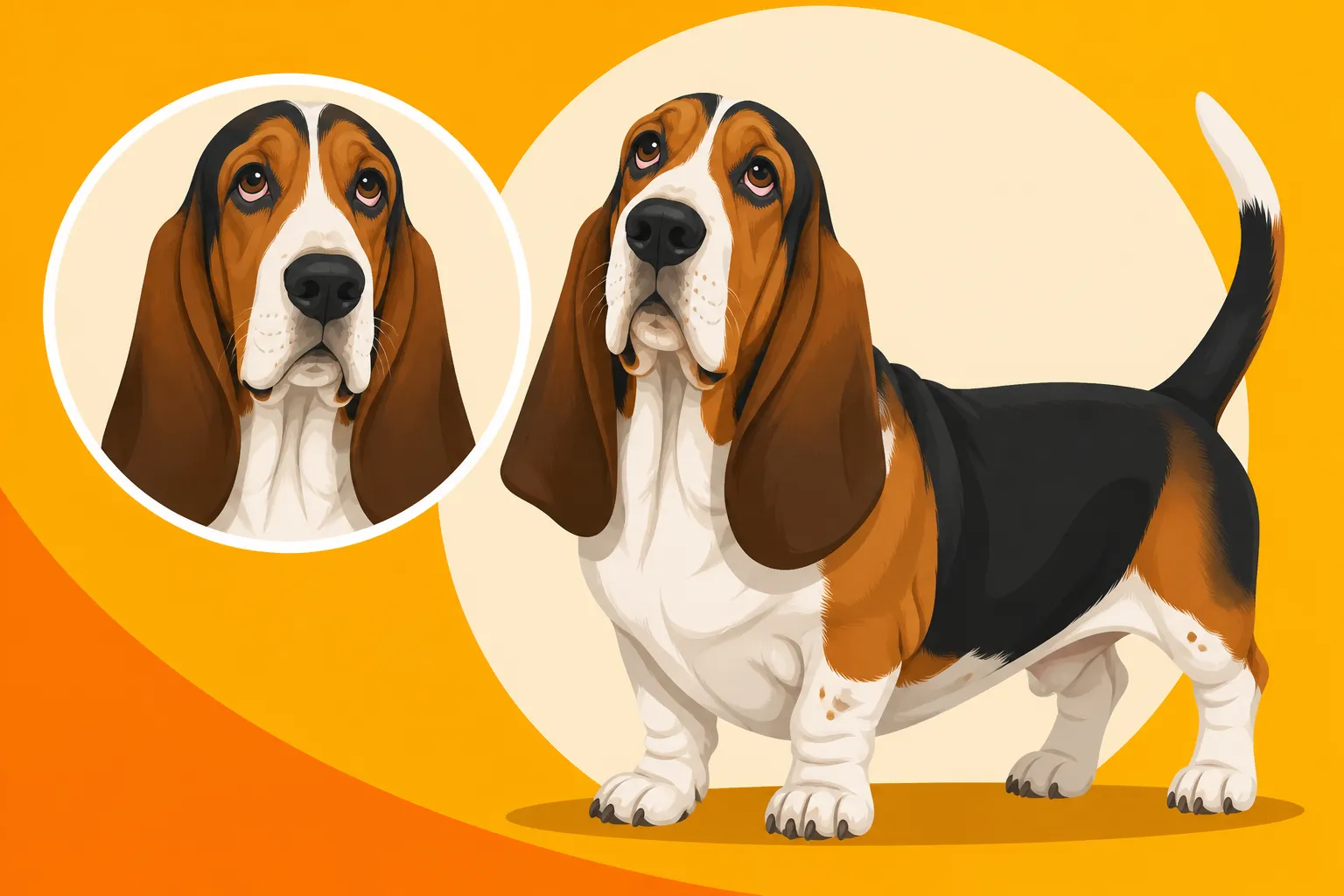
- Black: This isn't usually a deep, solid black like you might see on a Labrador. On a tricolor Basset, the black tends to be rich and glossy, forming distinct patches rather than an overall blanket. It's often concentrated on their back and sides, creating what's often referred to as a "saddle" or "blanket" pattern. The quality of this black can vary from a deep, almost inky hue to a softer, more charcoal shade, especially as the dog ages or spends time in the sun.
- White: The white is typically the foundational color, providing contrast and often making up a significant portion of their coat. You'll find it predominantly on their chest, belly, legs, and usually extending up their neck and face. This white should be clean and clear, providing a crisp backdrop to the darker colors. It’s this expansive white that really allows the black and tan to pop and define the tricolor look, creating a balanced and visually appealing pattern.
- Tan (or Brown): The tan is arguably the most charming element, providing warmth and depth. These aren't usually large swathes of color but rather specific "points." Think of it as accents: bright tan splashes above their eyes, giving them those famously expressive "eyebrows," on their cheeks, inside their ears, along the edges of their black patches, and often on their lower legs. The tan can range from a light cream to a rich, burnished copper or even a fox-red hue, adding incredible dimension to their overall appearance. These tan points are critical; without them, you'd likely have a black and white Basset, not a true tricolor.
Variations and Markings within Tricolor
Even within the "tricolor" designation, no two Basset Hounds look exactly alike, and that's part of their enduring appeal. The precise distribution of these three colors can vary quite a bit, making each tricolor Basset a unique work of art.
You'll see Basset Hounds with a large, sweeping black "blanket" that covers most of their back, sometimes extending down their sides, almost like they're wearing a fitted coat. Other tricolors might have more fragmented black patches, scattered across their back and flanks, giving them a more "patched" or "spotted" appearance within the tricolor scheme. The tan points are equally diverse. Some Bassets might have very prominent, almost dramatic tan eyebrows and cheek patches, while others display more subtle, understated tan accents. These variations are perfectly acceptable within the breed standard and simply add to the individual character of each dog. It's this beautiful unpredictability that makes observing Basset Hound colors such a delight. Sometimes, the white itself might be broken by small black or tan ticks, which are tiny colored flecks within the white areas, adding another layer of detail.
Where Do the Colors Appear? A Map of the Tricolor Basset
To truly understand a tricolor Basset Hound, it helps to visualize where each of those three distinct colors – black, white, and tan – typically settles on their body. It's not just a random splatter; there's a characteristic pattern that makes them so endearing and instantly recognizable. Think of it as nature's own paint-by-numbers, but with a lot more floppy ears and soulful eyes.
The Black Saddle and Blanket
One of the most defining features of a tricolor Basset is the presence of significant black markings, most notably forming a "saddle" or "blanket" over their back. This usually starts around their neck or shoulders and extends down their spine, covering a good portion of their back and sometimes spilling over onto their sides, like a finely fitted equestrian blanket. The edges of this black blanket are often softened by the surrounding white, or bordered by those warm tan points.
The size and shape of this black area can vary from dog to dog. Some tricolors will have a very large, unbroken swathe of black, creating a dramatic contrast against the white and tan. Others might have a more fragmented or "broken" blanket, with smaller black patches scattered across their back and hips, making them look a little more spotted. Regardless of the exact size or shape, this black marking is a hallmark of the tricolor pattern and gives them a sturdy, classic hound appearance. It’s important to remember that even within the black, you might see subtle shifts in tone, especially in areas that are frequently exposed to sunlight, which can sometimes give the black a slightly reddish cast.
White as the Base and Blazing Markings
The white on a tricolor Basset Hound serves as the canvas upon which the black and tan artistry is painted. It typically covers a substantial portion of their underside, including their chest, belly, and inner legs. This is the clean, crisp backdrop that truly makes the other colors pop. But white isn't just for the belly; it also often forms striking markings on their face and neck.
You'll commonly see a white "blaze" running up the center of their forehead, between their eyes, sometimes extending to their muzzle. This facial blaze can be narrow or quite broad, adding character to their already expressive faces. Many tricolors also have a white "collar" or partial collar around their neck. The legs are usually predominantly white, often with some tan or black ticking. And, of course, that iconic Basset Hound tail almost always sports a white tip. This little flag of white at the end of their tail is not just charming; it's a traditional hound marking that was historically useful for hunters to spot their dogs in tall grass. For more on this, you might be interested in Whether a Basset Hound's Tail Should Have a White Tip. The purity of the white is often a point of pride for breeders, as it helps create that sharp, distinctive tricolor look.
The Tan Points: Eyebrows, Cheeks, and More
The tan points are what truly elevate a black and white Basset to a tricolor, adding warmth, depth, and character to their already adorable faces. These tan markings are strategically placed to highlight their features and are usually the first thing people notice after the overall black and white.
The most prominent tan points are often seen above their eyes, creating those famous "eyebrows." These aren't always sharply defined arcs but can be softer smudges of tan, contributing to their mournful or soulful expressions. You'll also typically find tan on their cheeks, around their muzzle, and often extending up their long, velvety ears, particularly on the inner surfaces or along the edges. Beyond the face, tan appears on their legs, sometimes as small splashes on their forelegs, or more significantly on their hindquarters. Look closely, and you might even spot tan on the underside of their tail, near the white tip. The intensity of this tan can vary, from a pale creamy fawn to a deep, rich reddish-brown or copper hue. These tan accents are not just decorative; they are an integral part of the tricolor pattern, distinguishing it from a simple black and white. The way the tan blends with or defines the black patches and the white background is a key aspect of their aesthetic appeal.
Common Misconceptions and Nuances of Tricolor Basset Hounds
The world of Basset Hound colors can be a bit more intricate than it first appears, leading to some common misunderstandings. When you're looking at a dog with three distinct colors, it's easy to jump to conclusions, but there are specific criteria that define a true tricolor Basset. It’s important to clarify these nuances, especially when distinguishing between similar-looking patterns or understanding how colors might evolve over time.
Not All Black and White is Tricolor
This is perhaps the biggest misconception. Just because a Basset Hound has black and white on its coat doesn't automatically mean it's a tricolor. For a Basset to be officially considered tricolor, it must have discernible tan markings in addition to the black and white. If you have a Basset with striking black patches against a white background, but without any of those warm tan accents on the eyebrows, cheeks, or legs, then you actually have a "black and white" Basset. These are beautiful in their own right, and the crisp contrast of black and white can be incredibly appealing.
The key differentiator is always the tan. It's the "third" color that completes the tricolor definition. Without it, you're missing a crucial component of the pattern. So, next time you spot a beautiful black and white Basset, take a moment to look for those subtle tan points – if they’re there, you’ve found a tricolor! If not, you’re simply admiring another perfectly acceptable and lovely color combination. For those curious about the full range of possibilities, it's insightful to consider Whether a Basset Hound Can Be Any Color.
Tricolor vs. Red and White and Lemon and White
Beyond black and white, it's also common for people to confuse tricolor with other prevalent Basset Hound color patterns, particularly "red and white" and "lemon and white." These are distinct categories, and understanding their differences is key to appreciating the full spectrum of Basset Hound beauty.
- Red and White: As the name suggests, these Bassets feature shades of red and white. The "red" can range from a light golden or liver color to a deep, rich mahogany or chestnut. The key is that there is no black in their coat whatsoever. The darker markings are simply deeper shades of red or brown, often appearing as a saddle or patches similar to where black would be on a tricolor. The white areas are consistent with other patterns, primarily on the chest, belly, and legs. If you're wondering about the cost implications, you can read Whether a Red and White Basset Hound Is Priced Higher.
- Lemon and White: This is a lighter, often more delicate color combination. The "lemon" refers to a very pale, almost creamy yellow or fawn shade, contrasted with white. Again, there is no black present in a true lemon and white Basset. The "lemon" areas typically replace where the red or black would be, creating a softer, sun-kissed appearance. It’s a very pretty and somewhat less common color. To delve deeper into this specific coloration, check out What the Lemon and White Basset Hound Looks Like.
The crucial difference for tricolor is always the undeniable presence of all three: black, white, AND tan. Without the black, you have a red and white or lemon and white. Without the tan, you have a black and white. Each is beautiful, but only one is a tricolor.
The Fading Factor: Changes Over Time
It's a delightful surprise for many new Basset owners to discover that their dog's coat colors aren't always static. Just like human hair can change with age or sun exposure, a Basset Hound's tricolor coat can also evolve over time. This is especially noticeable with puppies. A young tricolor Basset puppy might have very vibrant, sharply defined black and tan markings. However, as they mature, those colors can sometimes soften or "fade" slightly.
The black areas might take on a more weathered, sometimes almost brownish, appearance, particularly if your Basset spends a lot of time outdoors in the sun. The tan points, while usually quite stable, can also lighten or deepen subtly. It's a natural process and nothing to worry about unless accompanied by other symptoms of health issues. Think of it as their coat gaining character, much like an old leather armchair. This fading or shifting can also be influenced by diet and overall health. So, if your once crisp black saddle seems a little softer around the edges, rest assured it’s often just part of their charming aging process. For more on this topic, you can learn about Whether a Basset Hound's Markings Change With Age.
Grooming and Care Considerations for Tricolor Coats
While the tricolor pattern is visually distinct, the fundamental grooming needs for a tricolor Basset Hound are much the same as for any Basset. However, paying attention to certain aspects can help ensure their beautiful coat remains vibrant and healthy, reflecting the care you put into them. Their short, dense coats might seem low-maintenance, but the reality involves a bit more hands-on attention to keep them looking and feeling their best.
Maintaining Coat Health for Vibrant Colors
A healthy coat isn't just about looking good; it's a reflection of your Basset's overall well-being. For tricolor Bassets, maintaining that rich black, crisp white, and warm tan means focusing on general coat health. Regular brushing is paramount, even for their short fur. It helps remove loose hair, distribute natural oils, and stimulate circulation to the skin. This keeps the coat shiny and can prevent matting, though Bassets are less prone to this than longer-haired breeds. A good rubber curry brush or a shedding blade works wonders for their dense, short coat. You can learn more about Which Brush Suits a Basset Hound to find the perfect tool.
Beyond brushing, a balanced diet plays a huge role. High-quality dog food rich in omega fatty acids can contribute significantly to a glossy, healthy coat, which in turn makes the colors pop. If your Basset is prone to dry skin or a dull coat, discuss supplements with your vet. For maintaining that vibrant coat, you'll find a fantastic selection of brushes, shampoos, and even coat-specific supplements on platforms like Chewy, making it easy to keep their fur in top condition. Don't forget that even though their coat is short, Basset Hounds do shed, and quite a bit at that! Understanding How Much a Basset Hound Sheds can help you prepare your grooming routine.
Protecting Skin Underneath the Pattern
Beneath that beautiful tricolor coat lies the Basset Hound's characteristic loose skin, which requires its own specific care. The wrinkles and folds, particularly around their face, neck, and dewlap, can trap moisture, dirt, and debris, regardless of their coat color. If not kept clean and dry, these areas can become breeding grounds for bacteria and yeast, leading to skin irritations or infections.
Regularly cleaning these folds with a soft, damp cloth and then thoroughly drying them is crucial. This not only prevents unpleasant odors but also keeps their skin healthy, which supports a healthy coat from the inside out. When it comes to keeping those folds clean and preventing issues that could mar their beautiful coat, gentle wipes and cleansers are a must. Many owners find a good range of suitable products on sites like Chewy, perfect for daily maintenance. Pay extra attention to the folds around their eyes and mouth, where food and tear stains can accumulate. Healthy skin contributes to a healthy coat, ensuring your tricolor's black, white, and tan remain as vibrant as possible. This meticulous care is essential for preventing common skin issues that can arise due to their unique conformation. For an in-depth look at this, check out The Skin Under a Basset Hound's Folds.
Recognizing Coat Changes as Health Indicators
Your Basset Hound's tricolor coat can offer subtle clues about their general health. Changes in coat quality or color, while sometimes natural, can also be indicators of underlying health issues that warrant a vet visit. For example, a dull, dry, or brittle coat, excessive shedding, or patches of hair loss can sometimes signal nutritional deficiencies, allergies, or hormonal imbalances.
One common condition that can affect a Basset's coat is hypothyroidism, where an underactive thyroid gland can lead to a sparse, coarse, or dry coat, often accompanied by weight gain and lethargy. If you notice any significant changes in your Basset's coat—such as unusual texture, thinning, or sudden discoloration that isn't just sun-bleaching—it's always a good idea to consult your veterinarian. They can perform diagnostic tests to rule out any medical conditions. A healthy Basset Hound typically has a shiny, resilient coat that reflects their internal health. So, while you're admiring their beautiful tricolor pattern, also pay attention to its texture and condition as a regular check-up on their well-being. This attention to detail can make a real difference, as understanding Whether a Basset Hound Gets Hypothyroidism is crucial for their long-term health.
Tricolor Basset Hounds in the Show Ring and Beyond
The tricolor pattern is more than just aesthetically pleasing; it holds a special place within the Basset Hound breed history and standards. Whether you envision your Basset lounging on the sofa or trotting around a show ring, understanding the context of their coloration adds another layer of appreciation for these unique hounds.
The Tricolor's Place in Breed Standards
Within the official breed standards recognized by kennel clubs worldwide, tricolor is a perfectly acceptable and highly celebrated color pattern for Basset Hounds. In fact, it's often considered one of the classic and most iconic Basset Hound looks, right alongside the red and white variations. Breeders often strive for well-defined black, crisp white, and rich tan markings, as these demonstrate adherence to the breed's historical appearance and genetic health. This recognition means that a beautifully marked tricolor Basset is just as likely to excel in the show ring, if that's their path, as any other acceptable color. Judges evaluate conformation, gait, and temperament, but a well-presented tricolor coat certainly contributes to the overall picture of a breed-standard Basset Hound. This long-standing acceptance reinforces the tricolor's status as a quintessential Basset Hound color, cherished by enthusiasts and breeders alike for its distinct beauty.
Personal Preference vs. Breed Authenticity
While breed standards provide a framework for maintaining the integrity of the Basset Hound, it's essential to remember that for most of us, our dogs are cherished companions, not show dogs. Therefore, personal preference plays a huge role in choosing a Basset Hound. Some owners are specifically drawn to the dramatic contrast of a tricolor, while others might prefer the softer hues of a lemon and white, or the warmth of a red and white. All Basset Hounds, regardless of their coat color, share the same incredible personality traits: their famous loyalty, their endearing stubbornness, their magnificent noses, and their soulful, expressive eyes.
The authenticity of your Basset's breed lies far more in their conformation, temperament, and health than in the specific shade of their tan points. What truly matters is the bond you build and the joy they bring into your life. Whether your Basset is destined for the show ring or simply to be your cherished companion, understanding and appreciating their unique coloring is part of the joy. And finding all the supplies you need, from nutritious food to grooming essentials, is often a simple click away on a reliable site like Chewy. The beauty of the Basset Hound breed is that there’s a color and pattern to appeal to almost everyone, and each one is a wonderful addition to any loving home.
Comparison of Common Basset Hound Color Patterns
To help clarify the differences between the common Basset Hound color patterns, here’s a quick overview:
| Feature | Tricolor Basset Hound | Red and White Basset Hound | Lemon and White Basset Hound | Black and White Basset Hound |
|---|---|---|---|---|
| Primary Colors | Black, White, Tan | Red (various shades), White | Lemon (pale yellow/fawn), White | Black, White |
| Presence of Black | Yes, distinct saddle/patches | No | No | Yes, distinct saddle/patches |
| Presence of Tan | Yes, points on face/legs | No (red acts as contrast) | No | No |
| Typical Appearance | Dark back, white chest/legs, tan accents | Warm red patches, white base | Pale yellow/fawn patches, white base | Strong black patches, white base |
| Defining Characteristic | Three distinct, well-defined colors | Rich red hues with no black | Soft, light yellow/cream tones | Sharp contrast of two colors |
| Common Misconception | Often confused with just black/white if tan is subtle | Sometimes mistaken for tricolor with dark red | Often mistaken for very light red and white | Often mistaken for tricolor without tan |
Disclaimer
This article is for general informational purposes only and does not constitute professional advice. Laws, prices and regulations vary by location and change over time. Consult a qualified professional for guidance on your specific situation.