Basset Hound or Beagle for a Family
Choosing between a Basset Hound and a Beagle often comes down to a family’s everyday rhythm: how much exercise you can offer, how you feel about barking, and whether you’re ready for breed-specific care. Both are affectionate scent hounds, but their size, energy, and home needs differ. This guide helps you weigh those differences before deciding which dog fits your household.
Basset Hound or Beagle for a Family
Temperament and family life
Both breeds can be loving, sociable companions, and both may enjoy being part of a busy family. A Basset Hound is often a steady, relaxed presence at home, while a Beagle is commonly more lively and ready to investigate whatever is happening. Those are tendencies, not guarantees: a dog’s individual temperament, early experiences, and training matter enormously.
A Basset may suit a family that enjoys relaxed walks and a dog who is content to lounge nearby after exploring. But “laid-back” does not mean effortless. Bassets can be determined when a scent catches their attention, and they may bay or howl. Beagles are also scent-driven, and their curiosity can keep them busy long after a family thinks the walk is over. If you’re considering the Basset’s characteristic voice, The Bay a Basset Hound Uses and the Neighbors Hear offers a closer look at what that can mean at home.
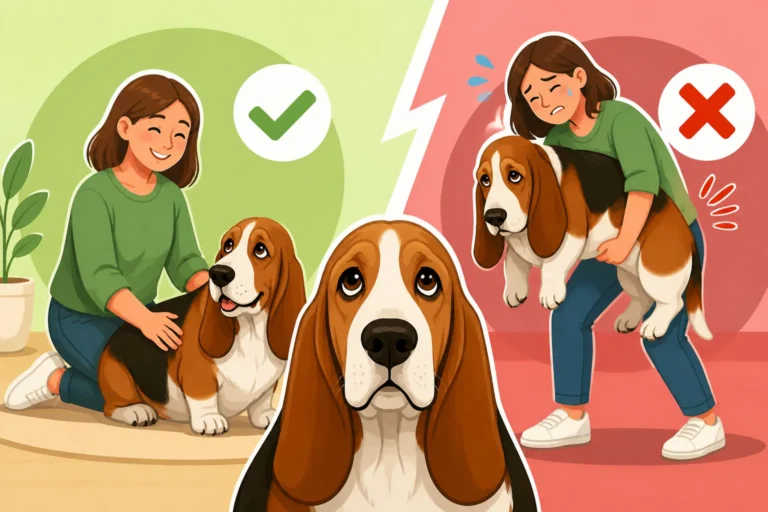
With children, either breed can be a good companion when introductions are thoughtful and adults supervise interactions. Teach children not to climb on, crowd, or disturb a sleeping dog, and give the dog a quiet place to retreat. A Basset’s long back and low body make careful handling especially important. A child should never try to lift one without adult help. For more on setting expectations, read A Basset Hound in a House With Children.
Size and handling
The two breeds may look similar in photographs, but they feel quite different to live with. Beagles are generally lighter and easier for many people to lift, though their compact size does not make them immune to pulling, bolting, or needing secure supervision. Basset Hounds are low to the ground but solidly built; their weight can surprise people who assume a short-legged dog must be easy to carry.
Think about ordinary household tasks, not just cuddles. Could you help your dog into a car if it were injured or aging? Can you manage a leash if the dog suddenly follows a smell? If your family has young children, older adults, or someone with limited strength, these practical questions deserve attention before choosing a breed. A well-fitted harness can make walks more manageable, but it won’t replace leash training.
| Family consideration | Basset Hound | Beagle |
|---|---|---|
| Typical home energy | Often calmer indoors, though still needs activity and company | Often more active and ready for games or exploration |
| Physical handling | Short but heavy; lifting may be challenging | Usually lighter, but still needs safe handling |
| Scent interest | Strong; may become absorbed in a trail | Strong; may follow a scent with enthusiasm |
| Vocal behavior | May bay or howl | May bark, bay, or howl |
| Exercise planning | Regular walks and enrichment, adjusted for body and age | Daily activity and enrichment to meet its higher energy |
| Main home-management concern | Protecting its back and managing body weight | Preventing escapes and keeping its nose-led adventures safe |
Exercise, training, and the home environment
Walks and enrichment
Neither breed should be chosen on the assumption that a short-legged dog needs little exercise. A Basset needs regular, suitable movement to support fitness and maintain a healthy weight. A Beagle often has more energy to burn and may need additional play, walks, and scent-based activities. The right routine depends on age, health, weather, and the individual dog.
For both breeds, a walk is not simply a march around the block. Letting a hound sniff safely can be rewarding and mentally tiring. You can also hide small portions of the dog’s daily food around a room, use a puzzle feeder, or set up simple scent games. Keep activities low-impact for a Basset, and ask your veterinarian how to adapt exercise if your dog has joint, weight, or back concerns. Giving a Basset Hound's Nose Something to Do has ideas for making scent a constructive part of daily life.
Beagles may be a better match for families who want a more active dog and can consistently provide outings and play. A Basset may fit better if your preferred routine is more moderate, but it still needs engagement and companionship. Either way, a dog that is bored or left alone too long may develop unwanted habits, and simply having a yard does not provide the same interaction as walks, training, and play.
Recall, barking, and secure spaces
Scent hounds can be intensely focused on what they smell. A reliable recall takes patience and practice, and even a trained dog may struggle to respond when a compelling trail appears. For safety, use a leash or long line outside a securely enclosed area rather than trusting off-leash obedience in open spaces. A fence should be checked for gaps and weak spots, since an interesting smell can make a hound surprisingly persistent.
Training works best when it is consistent, positive, and rewarding. Short practice sessions with appealing treats can help build skills such as coming when called, waiting at doors, and walking on a loose leash. Avoid turning every cue into a test of stubbornness: hounds may simply be more motivated by the scent in front of them than by a person calling from behind.
Noise is another consideration in shared-wall housing. Both breeds can be vocal, though the volume and frequency vary from dog to dog. Ask a breeder or rescue about the individual dog’s behavior when alone, around other dogs, and when excited. If noise is a concern, Whether a Basset Hound Suits an Apartment can help you think through the practical details of apartment life.
Health, grooming, and ongoing care
Breed-specific health needs
A Basset’s long body, short legs, and substantial build mean families should take joint and back care seriously. Keep the dog at an appropriate weight, provide stable footing, and limit repeated high jumps from furniture or vehicles. Ramps and careful lifting may be useful, particularly as a dog ages. That does not mean every Basset will develop a back problem, but prevention and early attention to changes in movement are sensible. See The Back Trouble a Basset Hound Is Built Into for more detail.
Beagles have their own care needs, including attention to weight, ears, and the risks of following their noses into unsafe places. Both breeds benefit from routine veterinary care, dental care, regular nail checks, and a feeding plan that suits their age and body condition. Ask a veterinarian about any signs of pain, recurring ear irritation, changes in appetite, or difficulty moving rather than trying to diagnose the cause at home.
A dog’s actual health history matters more than broad breed generalizations. When adopting, ask for veterinary records and details about any ongoing treatment. When buying from a breeder, ask what health screening is done for the parents and whether results and medical history can be discussed openly. The Health Tests a Basset Hound Breeder Should Run gives families a starting point for those questions.
Grooming and everyday maintenance
Neither breed needs elaborate coat styling, but both shed and need routine brushing. Their ears deserve regular attention, especially if they become dirty, damp, red, or unpleasant-smelling. A Basset’s long, low ears can drag near food and water, so some owners use a snood at mealtimes or keep a soft cloth nearby. Skin folds, paws, nails, and teeth also belong on the routine-care checklist.
Set up supplies before the dog comes home: a suitable leash and harness, food and water bowls, grooming tools, cleaning supplies, and a safe resting area. A retailer such as Chewy can be one convenient way to assemble ordinary pet-care supplies, but check that any item fits the dog and ask your veterinarian before using medicated ear or skin products. Chewy may also be useful for replacing routine consumables, while a veterinarian remains the right person to advise on symptoms or treatment.
For a Basset, keeping the ears and face folds clean and dry can help you notice irritation early. For a Beagle, regular ear checks and portion control are useful habits too. If you’re building a practical care routine, The Twice Weekly Ear Ritual a Basset Hound Owner Signs Up For and Feeding a Basset Hound That Would Eat Forever explain why consistency matters.
Which breed is the better fit for your family
Choose by your household routine
A Beagle may suit a family that wants a more energetic companion and can provide frequent activity, training, and secure outdoor time. A Basset may suit a household drawn to a calmer indoor dog and prepared for its heavier build, ear care, and back-conscious handling. Neither breed is automatically easy, and neither is a good match for a family expecting a dog to entertain itself in the yard all day.
Consider the least convenient parts of everyday ownership. If your family has stairs, think about how a Basset will use them as it grows older. If you live near busy roads, plan for secure leashing and fencing for either breed. If everyone is away for long stretches, think carefully about companionship, dog care during the day, and how the dog handles being alone.
For families comparing a Basset with a Beagle, it can help to meet adult dogs of both breeds rather than deciding from puppy photos. Spend time with a rescue or responsible breeder, ask about the dog’s behavior in a home, and talk through its medical and exercise needs. A puppy’s future temperament cannot be guaranteed by breed alone.
A simple decision checklist
Before you decide, discuss these questions together:
- Can we provide daily walks, training, and scent-based enrichment?
- Are we comfortable with a dog that may bark, bay, or howl?
- Can we safely manage the dog’s size and strength on leash?
- Do we have a plan for secure fencing and preventing escapes?
- Are we prepared for regular ear, nail, dental, and weight care?
- Can we make the home safer for a long-backed Basset if we choose one?
- Do our schedules allow enough companionship and supervision?
If you’re leaning toward a Basset, remember that a calm appearance does not mean the dog has no needs. If you’re leaning toward a Beagle, remember that a smaller frame does not make a scent hound’s exercise and escape-prevention needs disappear. Chewy can help with basic supplies once you know what your dog needs, but selection should come down to the individual dog and the routine your family can maintain.
The best family dog is not necessarily the quieter or more popular choice. It is the dog whose needs your household can meet consistently, including on rainy mornings, busy weekdays, and the days when a walk takes longer because a fascinating smell has stopped everyone in their tracks.
Disclaimer
This article is for general informational purposes only and does not constitute professional advice. Laws, prices and regulations vary by location and change over time. Consult a qualified professional for guidance on your specific situation.