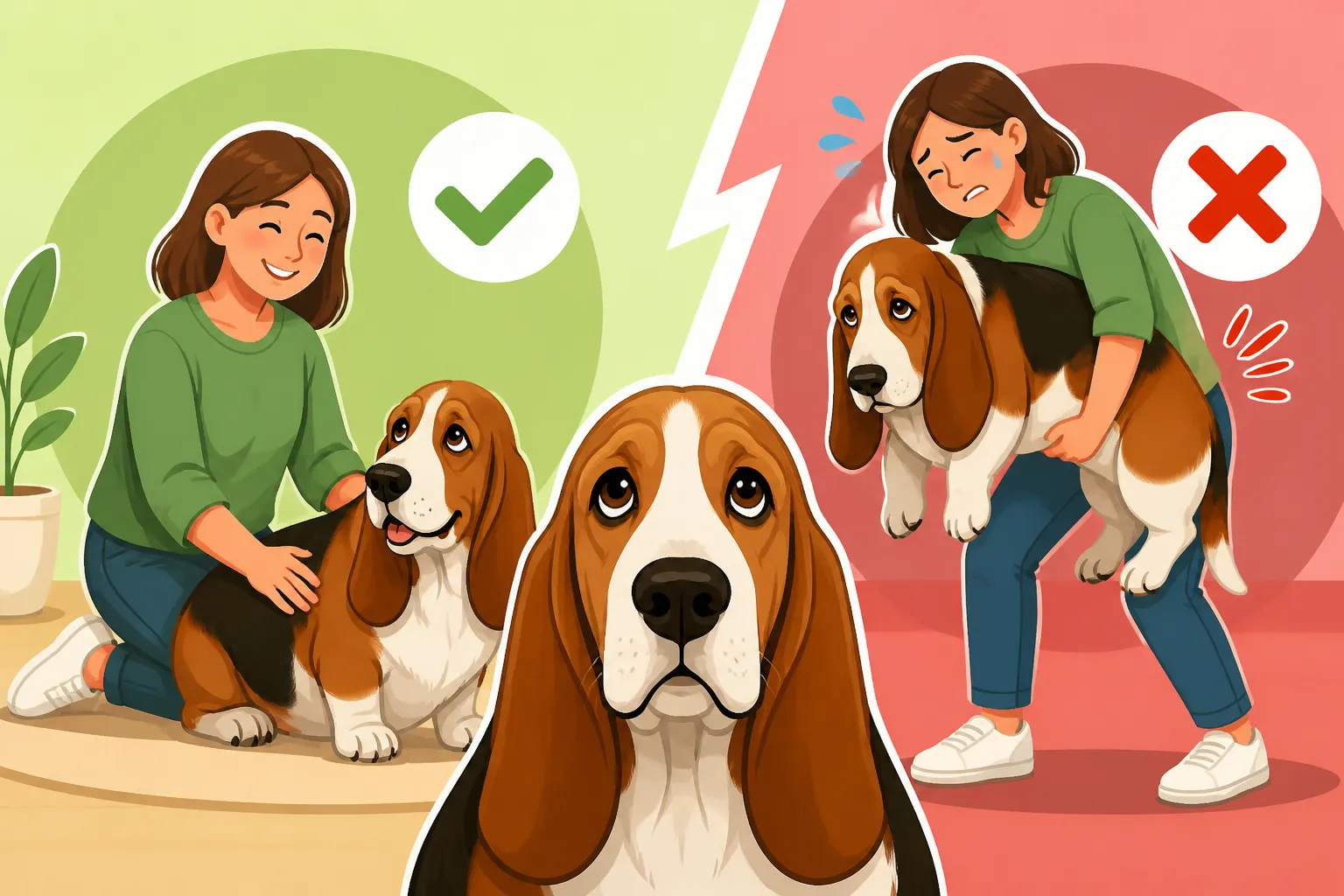
Whether a Basset Hound Suits Someone Who Cannot Lift
A Basset Hound may look close to the ground, but that does not make one easy to pick up. Adults can be heavy, long-bodied dogs, and there may be moments when they need help into a car, off a slippery floor, or during an injury. This guide explains when lifting matters and how to decide whether a Basset Hound fits your home and abilities.
Can you care for a Basset Hound if you cannot lift one?
Low to the ground does not mean lightweight
A Basset Hound’s short legs can create a misleading impression: the dog may be low enough to reach comfortably, but its solid body can still be difficult to lift. The long back and substantial frame also make handling awkward, especially if the dog is frightened, wiggly, sore, or reluctant to be moved. Even a healthy dog that is happy to cuddle may be too heavy for one person to lift safely.
The important question is not simply whether you can pick up a puppy today. It is whether you could manage an adult dog’s care if it could not climb into the car, slipped on the floor, or needed help getting to a veterinarian. A puppy’s size changes quickly, so do not assume that lifting one now means you will be able to lift it throughout its life.
You also do not need to lift a dog routinely to be a capable owner. Many Basset Hounds live comfortably with people who cannot pick them up, provided the home and daily routines are set up to limit avoidable lifting. But you should plan for situations when the dog might need assistance, rather than discovering the problem when it is already injured or distressed.
When lifting may become necessary
The car is a common pinch point. A Basset Hound that happily walks around the house may still struggle to get into a tall vehicle, particularly as it ages or develops joint or back pain. If your dog cannot get in and out safely on its own, you will need a reliable alternative to lifting. A ramp can help, but the dog must be taught to use it and the ramp has to be stable enough for its weight.
Stairs and furniture create similar decisions. A dog that repeatedly jumps down from a sofa or navigates steep stairs may put extra strain on its body. A ramp, sturdy pet steps, a gate, or rearranged living spaces may reduce the need for you to carry it. For more on these choices, see Whether a Basset Hound Should Use a Ramp and Whether a Basset Hound Should Be Carried Down Stairs.
The most difficult situations are unexpected ones. A dog can become temporarily unable to walk because of an injury, sudden weakness, or pain. That does not mean you must be able to lift the dog alone, but you should know whom you could call and how you would get veterinary help. If your Basset Hound suddenly cannot stand or walk, contact a veterinarian promptly and ask how to move it safely.
Make the home work without routine lifting
Ramps, steps, and safer routes
A well-chosen ramp can make everyday life easier for both dog and owner. Look for a design that is stable, wide enough for your dog to walk comfortably, and covered with a surface that provides traction. A steep or wobbly ramp can frighten a dog or cause it to slip, so the right product is not automatically useful unless your Basset Hound will actually use it.
Introduce a ramp gradually while your dog is calm. Start with it laid flat, let the dog investigate, and reward voluntary steps. Then raise it a little at a time. Pulling or pushing a nervous dog up a ramp can make the dog avoid it later. If you are comparing car ramps or home ramps, check the manufacturer’s weight guidance and dimensions; retailers such as Chewy can be one place to compare product descriptions, but fit and stability matter more than the listing.
A ramp is not the only adaptation. A low-entry vehicle, a dog bed on the main floor, a barrier at the stairs, or moving food and water away from a difficult route can prevent awkward lifting. Think about the whole route your dog takes: from bed to door, across the hallway, through the yard, and into the car. A single slippery doorway or step may be where help is needed most.
Traction and equipment that helps you guide, not carry
Slippery flooring can make a dog struggle to stand or turn. Runners and nonslip mats can provide better footing on frequently used routes, especially near the bed, food station, and exit. Check that mats do not slide themselves. If you are shopping for floor grips or walking equipment, Chewy may help you compare styles, but measure the area and consider whether the material will stay put on your floor.
A well-fitted harness can give you a more secure way to guide or steady your dog during a walk or on a ramp. It does not make a heavy dog weightless, and it should not be used to hoist the dog by its chest or belly unless a veterinarian has specifically shown you an appropriate support method. Harnesses differ in fit, so look for one that does not rub behind the front legs or restrict normal movement.
For questions about supporting a Basset Hound’s body during handling, Whether a Basset Hound Should Be Lifted Under the Chest and How to Lift a Basset Hound Safely offer related guidance. If you cannot lift the dog, those topics are still useful because another person may need to help at some point. You can learn what careful handling involves and make sure anyone assisting you understands that the dog’s long back needs support.
| Situation | Possible alternative to lifting | What to plan for |
|---|---|---|
| Getting into a car | A stable car ramp or a vehicle with a lower entry | Train the dog to use the ramp before it is needed urgently |
| Stairs at home | A gate, ramp where practical, or a main-floor setup | Prevent unsupervised stair use if it is unsafe for your dog |
| Slippery floors | Secure runners or nonslip mats | Check regularly that mats have not shifted |
| A tired dog on a walk | A shorter route, rest breaks, or another person who can assist | Avoid relying on carrying as the only way home |
| Sudden injury or inability to walk | Call a veterinarian and arrange help moving the dog | Ask about safe transport before attempting to move a painful dog |
Plan for the times an ordinary routine fails
A Basset Hound that is tired, sore, or injured
A Basset Hound that stops walking is not always being stubborn. It may be tired, frightened, overheated, or uncomfortable. Watch for limping, a hunched posture, yelping, trembling, weakness, or a sudden change in willingness to move. If the behavior is new or the dog seems painful, do not try to force it onward or test whether you can lift it. Contact your veterinary clinic for advice.
For everyday walks, build a route that you and your dog can finish comfortably. Choose a loop close to home at first, and avoid going farther than you can manage if your dog pauses. This is especially sensible in hot weather, on rough ground, or with an older dog whose stamina may vary. The article Whether a Basset Hound Sits Down Mid Walk explores that familiar moment when a hound decides the walk is over.
If a dog is injured, moving it can worsen pain or make handling unsafe for both of you. Call a veterinary clinic or emergency service and explain that you cannot lift the dog. Ask what to do while help is arranged. If another adult is available, follow professional instructions rather than improvising a carry. For suspected back or neck trouble, avoid twisting or bending the dog and get veterinary guidance promptly.
Build a backup plan before you need one
Write down the practical details that would matter in a stressful moment: your veterinary clinic’s number, the nearest emergency clinic, and the names of people who could help with transport. Ask a friend, family member, neighbor, or dog walker in advance whether they would be willing to assist if your dog could not get into a car. A backup plan is not an admission that you cannot manage; it is sensible preparation for any dog owner.
If you live alone, consider what happens when you are ill or away from home. Could someone reach the dog, take it outside, or help transport it? If you have mobility limitations, look for a veterinarian whose entrance and exam setup are accessible to you, and discuss handling needs before an urgent visit. You can also ask your veterinary team to demonstrate equipment or techniques that suit your circumstances.
When comparing ramps, harnesses, and other handling aids, keep the dog’s actual measurements and weight in mind. Chewy can be a convenient place to review product details, but a product label cannot assess your dog’s mobility or your physical comfort using it. If you are unsure whether a ramp or support harness is appropriate, ask your veterinarian or a qualified canine rehabilitation professional before relying on it.
Decide whether the match is right for you
Questions to ask before bringing a Basset Hound home
Be honest about your home and support network. Can the dog reach its sleeping area and outdoor route without navigating a setup that requires you to lift it? Is there a safe way to get the dog into your vehicle? If you cannot use a ramp, is there another person who can help with occasional transport? These questions matter for puppies as well as adult rescues, because the dog will eventually grow beyond an easy-to-carry size.
Consider the dog’s likely needs over its lifetime, not just its current condition. A healthy, active adult may manage stairs and car entry now but need changes later. An older dog or one with mobility problems may need more frequent help. If adopting, ask the rescue or previous caregiver how the dog handles stairs, ramps, car rides, and being touched or supported. A trial or foster arrangement, where available, can reveal practical needs that are difficult to judge from a short meeting.
A Basset Hound may be a reasonable choice for someone who cannot lift if the dog can move safely through the home, equipment can replace carrying where appropriate, and dependable help is available for emergencies. It may be a poor fit if the only way to meet the dog’s foreseeable needs would be lifting that you cannot do and there is no backup person or accessible transport option.
A practical fit check
Use this checklist to make the decision concrete:
- Test the daily routes. Picture the dog moving between its bed, food, outdoor area, and car. Identify every step, steep stair, or slippery surface.
- Choose the transport plan. Decide whether the dog can use a ramp, whether your vehicle is suitable, or whether someone else can help.
- Ask about physical support. Talk with a veterinarian about safe ways to assist a Basset Hound and what to do if it cannot walk.
- Arrange backup help. Confirm at least one person or service you could contact when you need assistance.
- Reassess as the dog changes. A puppy, a fit adult, and a senior dog may all have different mobility needs.
If you are uncertain, talk through your specific limitations with a veterinarian, reputable rescue, or experienced breed organization before committing. Be candid about what you can and cannot do. A responsible placement should take the dog’s care needs seriously without assuming that every owner can lift a heavy dog.
You can also read Whether a Basset Hound Should Jump Off Furniture and Whether a Car Ramp Suits a Basset Hound while planning your home and transport setup. The goal is not to make a Basset Hound completely independent of human help. It is to build a routine that does not depend on you lifting the dog when you are unable to do so.
Disclaimer
This article is for general informational purposes only and does not constitute professional advice. Laws, prices and regulations vary by location and change over time. Consult a qualified professional for guidance on your specific situation.