Whether a Basset Hound Needs a Second Hound
A Basset Hound does not automatically need another dog. Some are happiest sharing their home with a canine companion; others prefer being the only pet, especially if they value quiet, personal space, or uninterrupted access to their people. This guide explains how to judge your dog’s needs, choose a compatible companion, and make introductions without assuming a second hound will solve loneliness.
Does a Basset Hound need another dog?
Breed instincts are not a guarantee
Basset Hounds were developed as scent hounds that could work alongside other dogs, and many enjoy canine company. That history helps explain why some Bassets settle comfortably into a multi-dog household. It does not mean every individual dog wants a live-in companion. Temperament, early experiences, health, age, and the way dogs are introduced all matter.
A Basset who likes greeting familiar dogs on walks may still dislike sharing a bed, food bowl, or favorite person at home. Look beyond the breed label: Does your dog relax around other dogs after the excitement of greeting passes? Can they share space without guarding toys or seeking constant distance? Those quieter moments tell you more than a brief, enthusiastic sniff.
For a closer look at social tendencies, see Whether a Basset Hound Prefers a Pack. If you are weighing the benefits and trade-offs of having one Basset or two, Whether Two Basset Hounds Are Better Than One explores that decision from another angle.
A companion is not a cure for every problem
A second dog can provide play, company, and shared routines, but it cannot reliably fix separation distress, boredom, or a lack of training. If your Basset howls, chews doorframes, or paces whenever you leave, another dog may simply be present while the distress continues. Some dogs do settle with a companion; others remain upset because the problem is being separated from their person, not being alone without another animal.
Before looking for a second hound, notice what happens when your dog is home alone. A camera can help reveal whether they sleep after you leave, vocalize for a while, or stay distressed for most of the absence. If separation is the concern, Whether a Basset Hound Can Be Left Alone and Whether a Basset Hound Gets Separation Anxiety can help you think through the difference between ordinary adjustment and more serious difficulty.
A companion also does not replace daily walks, sniffing opportunities, training, and time with you. Two dogs may keep each other occupied for a spell, but they still need individual care and attention. A second dog is best considered an additional family member, not a stand-in for the first dog’s routine.
Is your Basset Hound ready to share a home?
Read your dog’s behavior around other dogs
Think about your Basset’s history with dogs of different sizes, ages, and energy levels. A dog who has calmly lived with another pet before may adapt more easily than one whose only experience is a quick encounter at a busy park. Even then, previous success is not a promise: a new dog brings different habits, boundaries, and competition for household resources.
Notice how your Basset behaves after the initial greeting. A relaxed dog may sniff, disengage, and settle nearby. A dog who repeatedly freezes, hides, stiffens, snaps, or tries to escape is communicating discomfort. These signals deserve attention rather than being brushed aside as stubbornness or “just how Bassets are.”
If your Basset has pain, mobility trouble, or a history of guarding food or resting spots, talk with your veterinarian or a qualified behavior professional before adopting. Pain can make a dog less tolerant of sudden contact, while shared spaces can increase tension around valued things. Whether a Basset Hound Gets Along With Other Dogs offers further context for assessing canine compatibility.
Consider age, energy, and household needs
A playful puppy may be too much for a senior Basset who wants long naps and gentle interaction. On the other hand, a young, sociable Basset may enjoy a companion who can match their play style. Age alone does not determine compatibility, but a mismatch in energy can leave one dog overwhelmed and the other frustrated.
Consider the practical realities too. Can you provide separate feeding areas, individual beds, and quiet places where each dog can retreat? Can you manage two dogs on walks, arrange care when you travel, and cover routine veterinary needs for both? Food, grooming, equipment, training, and health care all become a two-dog responsibility. A second dog may add joy, but it also adds time and expense.
| Household factor | Signs a second dog may fit | Signs to pause and reassess |
|---|---|---|
| Social behavior | Your Basset relaxes around familiar dogs and can share space calmly | Your dog often hides, stiffens, guards resources, or escalates conflicts |
| Age and energy | The dogs’ activity levels and play styles are reasonably compatible | A puppy’s energy may overwhelm an older or sore Basset |
| Home setup | You can provide separate resting, feeding, and retreat areas | There is no practical way to separate the dogs when needed |
| Owner capacity | You have time for individual walks, training, and attention | You are hoping a second dog will remove the need for daily care |
| Reason for adding a dog | You genuinely want and can care for another individual dog | The main goal is to stop howling or distress when you leave |
If your Basset will be sharing a home with a dog you already own, prepare for the relationship to take time. A Basset Hound Meeting the Dog You Already Have can help you plan that first introduction.
How to introduce a second hound safely
Start with a thoughtful match and a neutral meeting
Whenever possible, choose a dog based on temperament and compatibility rather than appearance or breed alone. A calm adult with a known history around other dogs may be a more predictable match than a very young puppy, though an individual dog’s behavior matters more than age by itself. Rescue organizations, breeders, or foster caregivers may be able to share useful observations about how a dog behaves with canine housemates.
Arrange the first meeting on neutral ground, such as a quiet outdoor area neither dog considers their territory. Begin with space between them and walk in the same direction, allowing them to notice one another without forcing a face-to-face greeting. Keep the leads loose when it is safe to do so, and give both dogs room to move away. Short, low-pressure encounters are more useful than trying to make them play immediately.
Watch for relaxed, flexible body language and for signs that either dog needs more distance. If one dog repeatedly avoids the other, becomes rigid, or cannot settle, end the meeting calmly and try again later with more space or professional guidance. A successful introduction is not necessarily a lively play session; calmly sharing space is a very good start.
Make the home easy to navigate
For the first days at home, use gates or separate rooms so the dogs can rest apart and become accustomed to one another gradually. Keep food bowls, chews, and special toys separate at first. Feed each dog in a different area, and supervise shared time closely rather than expecting them to sort out every disagreement themselves.
Give each dog a bed and a place where they can be left undisturbed. Bassets may be friendly, but they still need personal space, especially when tired or sore. Make sure a newcomer cannot crowd the resident dog in narrow hallways, at doorways, or around favorite resting spots. When the dogs are together, reward calm behavior and allow breaks before either becomes overwhelmed.
Keep routines as steady as possible. Your resident Basset should still get familiar walks, one-to-one attention, and predictable mealtimes. If you use food puzzles or enrichment toys to keep each dog occupied separately, retailers such as Chewy may be one place to look for suitable options; choose items that fit each dog’s size and chewing habits, and supervise new toys. The goal is not to make the dogs compete over exciting treats, but to help them settle comfortably in their own spaces.
When one Basset Hound may be the better choice
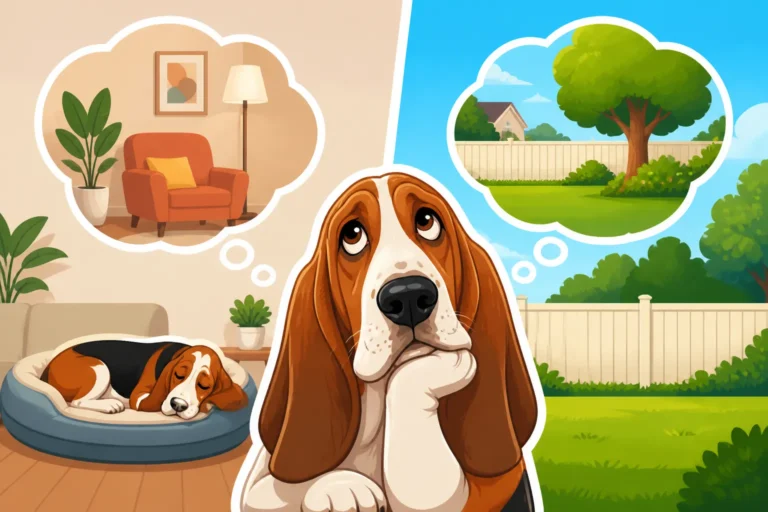
Your dog may prefer being an only pet
Some Bassets are content as the only dog in the household. They may enjoy meeting other dogs outside but show little interest in sharing their home. Others have health or behavior needs that make a peaceful, predictable environment especially valuable. Choosing not to add another dog is not depriving your Basset if their social, exercise, and companionship needs are already being met.
Look at the whole picture: Does your dog seem relaxed at home? Do they enjoy walks, sniffing games, training, and calm time with you? Are they able to rest when you are present and cope appropriately with your usual absences? If so, there may be no reason to change a stable household just because Basset Hounds have a history of working in groups. For more on this choice, read Whether a Basset Hound Should Be an Only Dog.
If your Basset seems under-stimulated, try enriching their routine before assuming another dog is the answer. Hide small portions of their regular food around a safe room, practice short scent games, rotate toys, or take a slower walk that allows plenty of sniffing. If you shop for puzzle feeders or toys through Chewy, choose an activity appropriate for your dog’s ability and supervise the first few sessions.
Try support before making a permanent decision
If your concern is that your Basset seems lonely, consider whether they need more company from people, more engaging activities, or a different daily schedule. A trusted dog walker, a familiar sitter, or carefully chosen playdates may offer social contact without permanently changing your household. These options will not suit every dog, but they can help you learn what kind of interaction your Basset actually enjoys.
You can also test compatibility through gradual, supervised visits with a dog your Basset already knows, where that is practical and safe. Watch how both dogs behave before, during, and after the visit. If your Basset seems tense or needs a long time to settle afterward, that is useful information. If they relax and enjoy the company, it may support the case for a companion, but a short visit still cannot guarantee a smooth shared life.
When considering adoption or rehoming, ask detailed questions about the prospective dog’s history with other dogs, resource guarding, energy level, and comfort being separated from canine companions. If possible, discuss a gradual introduction plan with the rescue or a behavior professional. Chewy may also be useful for comparing everyday supplies for a multi-dog home, but equipment cannot replace careful matching, supervision, and a realistic plan for each dog.
Disclaimer
This article is for general informational purposes only and does not constitute professional advice. Laws, prices and regulations vary by location and change over time. Consult a qualified professional for guidance on your specific situation.