Whether a Basset Hound Ever Comes When Called
It’s a scenario every Basset Hound owner knows all too well: you’re at the park, maybe you let them off-leash in a seemingly secure area, or perhaps a squirrel darts across your path on a walk, and suddenly, your beloved hound transforms from a docile companion into a furry, four-legged scent-tracking missile. You call their name, you whistle, you might even resort to your best "cookie voice," but it's like you're speaking a foreign language. The truth is, whether a Basset Hound ever truly comes when called is a deep dive into understanding their unique genetic blueprint and what makes them tick. This guide is here to shed light on why recall is such a challenge for our long-eared friends and how you can work with, rather than against, their incredible instincts to keep them safe.
The Basset Hound's Nose: A Distraction You Can't Compete With
Let's be brutally honest: your Basset Hound's nose is their superpower, and it's practically impossible to compete with. These dogs were bred for centuries to follow a scent trail, often for miles, without deviation or distraction. Their entire physical makeup, from their long, low-slung bodies to their magnificent, scent-sweeping ears, is designed for this singular purpose. When they lock onto a scent, the rest of the world, including your voice, simply fades into the background.
Why Their Scent Drive Overrides Everything
Imagine being so utterly engrossed in a task that you literally don't hear anything else. That's a Basset Hound on a scent. Their olfactory system isn't just good; it's legendary. They possess an astounding number of scent receptors, often compared to the much larger Bloodhound, which means they are processing a world of smells we can't even begin to comprehend. For a Basset, a fresh rabbit trail isn't just a faint odor; it's a vibrant, captivating story unfolding right beneath their nose, demanding their full and undivided attention. This isn't stubbornness, though it can feel like it; it's pure, unadulterated instinct.
This incredible drive means that even the most tantalizing treat or the most enthusiastic call from their favorite human often stands no chance against the thrill of the chase, even if that chase is just following an invisible scent. It’s why you’ll read stories and even laugh about how your Basset Hound Stops Hearing You When It Smells Something. This deep-seated instinct means that "come" isn't just a command for them; it's an invitation to abandon their life's purpose in that moment, and that’s a tough sell.
The Real-World Challenge of Calling Them Back
So, what does this mean for your everyday life with a Basset Hound? It means that reliable recall, the kind where they spin on a dime and sprint back to you no matter what, is often a pipe dream for this breed in an open, unfenced environment. You might achieve it in your living room, or even in a quiet, familiar yard, but introduce novel scents – a discarded fast-food wrapper, the lingering presence of a cat, or a fresh deer track – and your Basset's priorities shift instantly.
The challenge isn't just about their nose, either. It’s also about their speed, or lack thereof. While they might be slow on the uptake for your recall, they can cover ground surprisingly quickly when their nose leads the way. And because they're so low to the ground, they can slip under fences or through gaps that other dogs might not. This makes the thought of a lost Basset Hound a genuinely terrifying prospect, highlighting why that perfect recall is so crucial, yet so elusive. It’s why you might wonder The Recall a Basset Hound Will Never Reliably Give You.
Training a Basset Hound for "Come": Managing Expectations and Building Consistency
While it might feel disheartening, achieving some level of recall is absolutely possible and vitally important for your Basset's safety. The key is managing your expectations and understanding that your definition of "reliable" might need a slight adjustment compared to owners of other breeds. Forget Hollywood movie dog recall; think real-world, highly motivated, and consistent training.
Positive Reinforcement is Your Best Friend
For a Basset Hound, bribery isn't a dirty word; it's good training. These hounds are often food-motivated to an almost comical degree, which is a fantastic tool in your training arsenal. High-value treats – think small pieces of cooked chicken, cheese, or hot dogs – are far more likely to capture their attention and break their scent trance than a simple pat on the head. Every time they respond to "come," even if it’s just taking a step in your direction, reward them enthusiastically and immediately. This builds a strong positive association.
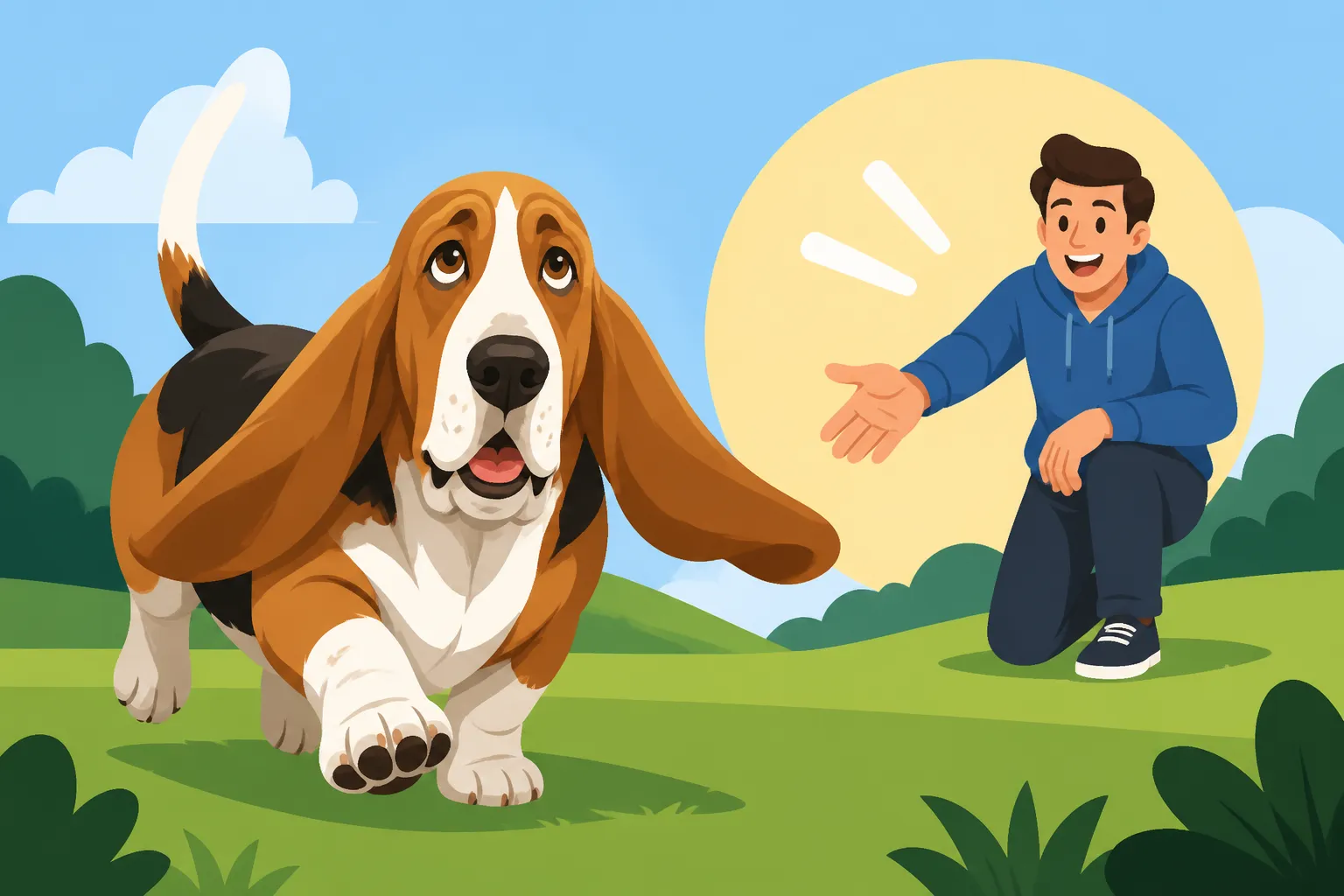
Start recall training in a low-distraction environment, like your home or a securely fenced yard. Make it a fun game! Call their name, use your "come" command, and as they approach, squat down to make yourself less intimidating and more inviting. Once they reach you, lavish them with praise and that amazing treat. Gradually introduce more distractions as they become more consistent, but always set them up for success. Remember that Basset Hounds can learn, but they often require short, engaging sessions because they tend to get bored quickly. If you're looking for structured guidance, platforms like BAXTER & Bella offer comprehensive online training programs that focus on positive reinforcement techniques, which can be invaluable for working with a Basset's unique personality. It’s all about figuring out What Actually Motivates a Basset Hound.
The Importance of a Long Line and a Safe Space
Given their powerful nose and selective hearing, a long line (a leash that's 15-30 feet long) is perhaps the most crucial training tool for a Basset Hound when you're working on recall outside a fully enclosed area. It allows them to explore scents safely while still giving you control. You can practice "come" command while they are on the long line, gently reeling them in if they get too distracted, and then rewarding them when they reach you. This teaches them that coming to you is always rewarding, even if they initially resisted. You'll likely discover Whether a Long Line Is Enough for a Basset Hound for most outdoor adventures.
Always choose your training locations wisely. A local baseball diamond that's completely fenced and nobody else is using might be a great spot for practicing. Avoid open fields or public parks where deer or rabbits roam freely until you have a rock-solid, incredibly consistent recall, and even then, exercise extreme caution. Remember, one mistake could lead to your Basset following a scent trail right into danger.
When "Come" Isn't Enough: Safety Measures for the Wandering Basset
Even with the best training, there will be times when your Basset's nose simply takes over. This isn't a reflection of your training ability but rather the strength of their instinct. Because of this, responsible Basset ownership involves robust safety measures to protect them from their own incredible sense of smell.
Fencing and Secure Environments
A secure fence is non-negotiable for most Basset Hounds. They are experts at finding vulnerabilities, so your fence needs to be solid and, ideally, at least 4-5 feet high. Don't underestimate their ability to squeeze through small gaps or dig under weak spots. Regularly check your fence line for any signs of escape attempts. A Basset who wants to follow a scent will test every boundary. For some, even a chain-link fence can become a climbing apparatus if the motivation is high enough.
If you don't have a physical fence, or if your property is large and open, reconsider allowing your Basset off-leash outside of a controlled, secure environment. Invisible fences, while an appealing concept, often fail with Basset Hounds. Their desire to follow a scent is often stronger than the deterrent of a shock, and they may "bolt through" the boundary, then be too scared to come back. Always prioritize physical barriers. You might find more insight on How High a Fence a Basset Hound Needs to truly contain a determined Basset.
Technology as a Backup: GPS Trackers and ID
In a world where accidents happen, technology can provide an extra layer of reassurance. A GPS tracker is an excellent investment for a Basset Hound, especially if you live near busy roads or in an area with wildlife. These devices, often available on platforms like Amazon, attach to their collar and allow you to track their location in real-time via a smartphone app. While not a substitute for training or physical containment, they can be a lifesaver if your hound does manage to slip away.
Beyond trackers, always ensure your Basset wears a sturdy collar with up-to-date ID tags, including your phone number. Microchipping is also essential and provides permanent identification if their collar ever comes off. These simple steps significantly increase the chances of a safe return if your Basset’s nose leads them on an unexpected adventure. Consider Whether a Basset Hound Should Wear a Tracker as a vital part of their safety plan.
Realistic Outcomes: Accepting the Basset Hound's Nature
After all the training, all the high-value treats, and all the long-line practice, it's crucial to settle into a realistic understanding of your Basset Hound's recall capabilities. Loving a Basset means embracing their unique quirks, and their unparalleled nose is certainly one of them.
The 'Never Off-Leash' Reality for Many
For the vast majority of Basset Hounds, the safest and most responsible approach is to accept that they will likely never be reliable off-leash in an unfenced area. This might sound restrictive, but it's a small price to pay for their safety and well-being. A walk on a long line in a field, allowing them to follow scents at their leisure while you maintain control, can be just as enriching for them as being "free." It allows them to engage their incredible nose, which is truly what makes them happy, without putting them in harm's way.
This acceptance also extends to understanding that a Basset Hound on a scent can genuinely appear to be deaf. It's not personal; it's physiological. Their brains are simply wired differently when that scent-tracking mode kicks in. Instead of getting frustrated, marvel at the incredible creature you share your life with and adapt your routines to suit their natural inclinations.
Finding Joy in Controlled Freedom
Instead of focusing on what your Basset can't do (like reliably come when called in the face of a fascinating scent), celebrate what they can do! Engage their nose in controlled environments. Scent work games, like hiding treats around the house or in the yard, using snuffle mats, or participating in organized nose work classes, can be incredibly fulfilling for a Basset. These activities tap into their core drive, provide mental stimulation, and build a stronger bond between you. You can find many interactive puzzle toys and scent games on Amazon to keep their minds busy.
By providing plenty of "controlled freedom" – whether it's a secure yard, a long line walk, or engaging scent games – you can ensure your Basset Hound leads a happy, stimulated, and safe life. Their inability to reliably come when called outside of these parameters isn't a failure on your part, nor a flaw in them; it's simply a fundamental aspect of their delightful, scent-obsessed nature.
Disclaimer
This article is for general informational purposes only and does not constitute professional advice. Laws, prices and regulations vary by location and change over time. Consult a qualified professional for guidance on your specific situation.