Whether a Basset Hound Is Stolen Easily
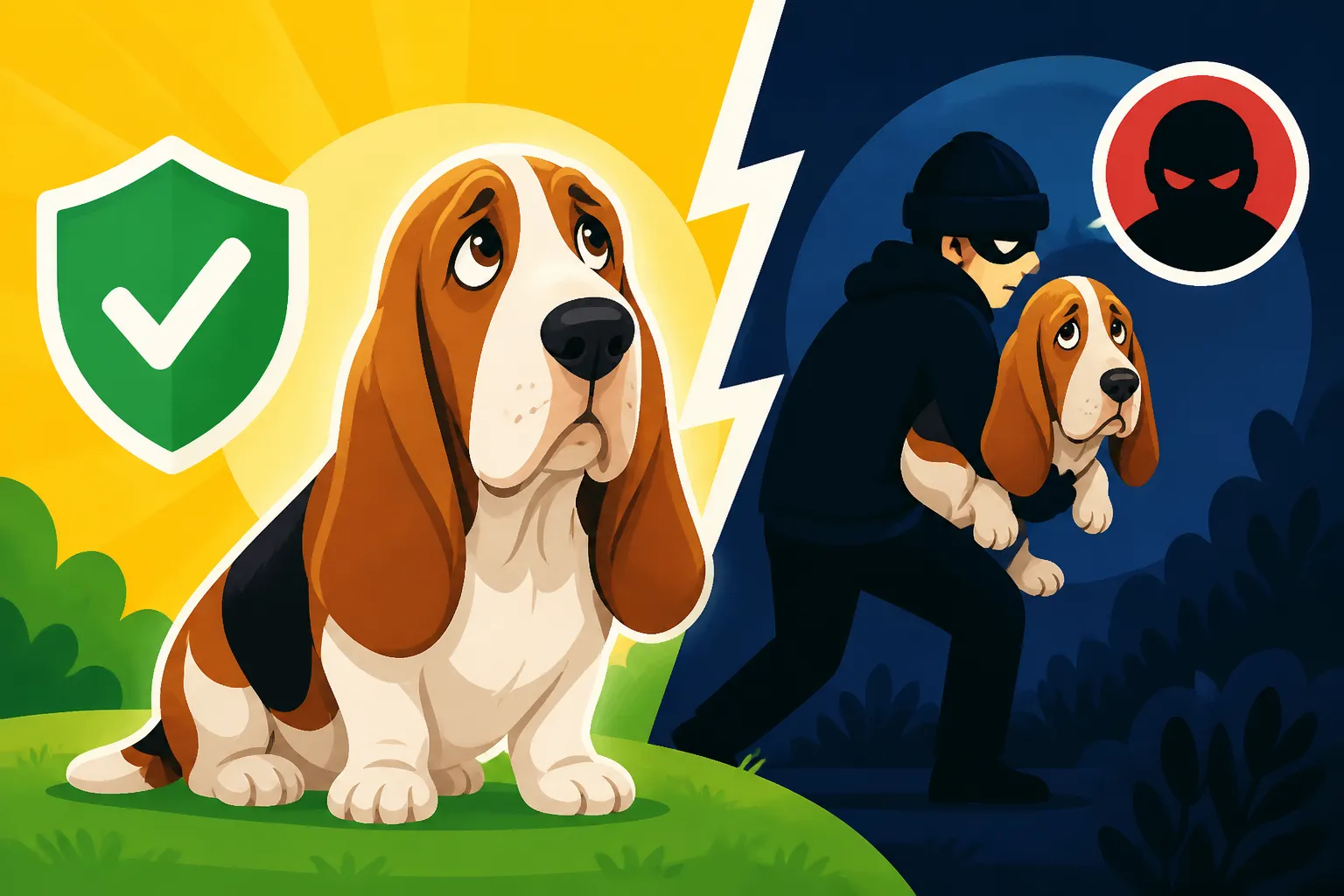
The thought of your beloved Basset Hound going missing or, even worse, being stolen, is enough to send a chill down any devoted owner's spine. It's a terrifying scenario, and sadly, it's a very real concern for many. This guide is here to honestly discuss the unique vulnerabilities Basset Hounds face and provide you with actionable, realistic strategies to help protect your distinctive companion from theft or wandering off into harm's way.
Why Basset Hounds Can Be a Target for Theft
Let's face it, Basset Hounds are eye-catching. Their long, velvety ears, soulful eyes, and distinctive low-slung build make them instantly recognizable and incredibly endearing. While we adore these traits, they also, unfortunately, make them stand out to individuals with less-than-honorable intentions. Understanding why someone might target a Basset is the first step in prevention.
Their Recognizable Look and Value
A Basset Hound isn't just a dog; it's a purebred dog with a specific look that commands attention. This distinct appearance, while charming, can make them a target for theft for several reasons. Firstly, purebred dogs generally hold a higher monetary value than mixed breeds, making them attractive to thieves looking for a quick profit through resale. Secondly, their unique conformation can make them desirable for unscrupulous backyard breeders aiming to profit from their puppies, often without regard for the dogs' health or welfare.
It’s a sad reality that some people see our beloved pets as commodities. The Basset's iconic silhouette, often featured in popular media and advertisements, means they are widely recognized, which can make them easier to sell or rehome discreetly, even with their unique traits. If someone is looking to quickly re-sell a dog, a Basset Hound's recognizable breed characteristics can work against them by making them a more marketable target. You might be surprised What a Basset Hound Costs a Year to Keep, which speaks to their perceived value.
Their Gentle and Approachable Nature
One of the most beloved qualities of a Basset Hound is their incredibly docile, friendly, and laid-back temperament. They’re generally not known for aggression or being overly suspicious of strangers. While this makes them wonderful family pets, it also means they often greet unfamiliar people with a wagging tail rather than a wary bark. This inherent friendliness, unfortunately, makes them incredibly easy targets for someone looking to snatch a dog.
A Basset is far less likely to put up a fight or attempt to run away from a person trying to lead them off. They're often so caught up in investigating a new smell or simply enjoying a scratch behind the ears that they might not perceive a threat until it's too late. This lack of natural wariness is a double-edged sword: it contributes to their lovable personalities but also leaves them exposed in situations where a more aloof or protective breed might deter a potential thief. Their deep connection to scent also means The Nose That Puts a Basset Hound Second to a Bloodhound can lead them astray, making them oblivious to their surroundings and easier to approach.
Common Scenarios Where Basset Hounds Are Most Vulnerable
Pet theft isn't always a dramatic, cloak-and-dagger operation. Often, it happens in everyday situations where owners, with good intentions, might unknowingly leave their Basset Hound vulnerable. It's crucial to be aware of these common scenarios so you can adjust your habits and minimize risk.
Unattended in Public Spaces
We've all seen it: a sweet dog tied to a lamppost outside a coffee shop, or patiently waiting in a car while their owner runs a quick errand. For a Basset Hound, these situations are extremely risky. Their appealing nature and distinctive look can draw unwanted attention, and a thief can snatch a dog in mere seconds. Leaving your Basset in a car, even with the windows slightly cracked, is an open invitation, especially if the car is unlocked or the dog is easily accessible.
Even if you think you'll "just be a minute," that's all the time a determined individual needs. Public places like grocery store entrances, post offices, or even parks where your dog might be temporarily out of sight while you're distracted, present prime opportunities. Furthermore, leaving them in a vehicle means they are vulnerable not only to theft but also to extreme temperatures, which can quickly become dangerous for any dog.
Unsecured Yards and Outdoor Areas
Many Basset Hounds love to potter around in the garden, sniffing every blade of grass and exploring every corner. While a fenced yard feels secure, it can still pose a risk, especially if the fencing isn't robust or the gates are left unlocked. A Basset's persistent nose and determination mean that Whether a Basset Hound Wanders if the Gate Opens is a very real possibility, and once they're out, they're vulnerable. Thieves can easily walk into an open gate or lure a friendly Basset away with food or attention.
Consider how high your fence truly is and how easily someone could reach over or even climb it. Small gaps or loose latches can also be exploited. Even within your own yard, a Basset left unsupervised for long periods is at risk. While you might be inside doing chores, someone could quickly enter your property and take your dog. This is especially true if your yard is visible from a street or public path. It's also worth noting that some Basset Hounds are surprisingly adept at digging, making even a seemingly secure fence less effective if not properly reinforced at the bottom.
Practical Steps to Protect Your Basset Hound
The good news is that with awareness and a few proactive measures, you can significantly reduce the risk of your Basset Hound being stolen or going missing. It's about combining common sense with specific actions tailored to your Basset's unique traits.
Identification and Traceability
This is your absolute first line of defense. Every Basset Hound should have multiple forms of identification, and you need to ensure they are always current.
- Microchipping: This small, permanent chip inserted under the skin is perhaps the most reliable form of identification. If your Basset is ever lost and found by a shelter or vet, a quick scan will reveal your contact information. Make absolutely certain your microchip registration is up to date with your current phone number and address. It's easy to forget to update it after a move or a phone change, but it's critical.
- ID Tags and Collars: While less permanent than a microchip, a sturdy collar with an engraved ID tag is instantly visible and often the quickest way for a finder to contact you. Include your name and phone number. Consider adding a secondary tag with your Basset's name and maybe a medical alert if applicable. There are many durable options available on platforms like Amazon.
- GPS Trackers: For Bassets who are notorious for following their noses and maybe aren't always great at recall – and let's be honest, The Recall a Basset Hound Will Never Reliably Give You is a classic Basset trait – a GPS tracker can be a game-changer. These devices attach to their collar and allow you to monitor their location in real-time via a smartphone app. This isn't just about theft; it's invaluable if your Basset gets out of the yard or slips their leash. Many owners find peace of mind knowing Whether a Basset Hound Should Wear a Tracker.
Enhancing Home Security
Your home environment should be a fortress for your Basset. Don't underestimate a thief's boldness or a Basset's ability to explore.
- Secure Fencing: Inspect your fence regularly for weak spots, loose boards, or areas where your Basset could dig under. Ensure all gates have secure, sturdy latches that can't be easily opened by a curious paw or a passing opportunist. For Bassets, ensuring How High a Fence a Basset Hound Needs is also crucial, not just to keep them in, but to deter someone from reaching over. Double-latching mechanisms can add an extra layer of security.
- Supervision in the Yard: Never leave your Basset Hound unsupervised in the yard for extended periods, even if you have a high, secure fence. A friendly Basset can still be lured over if someone takes the time. Make outdoor time "together time" or at least be actively monitoring them from a window. Consider motion-activated lights or security cameras if your yard is particularly accessible.
- Home Habits: Be mindful of open doors or windows, especially if your Basset is known for darting out. Simple habits like always checking a gate is truly closed and locked after entering or exiting can prevent a quick escape or an opportunistic theft.
Smart Habits for Public Outings
Every time you and your Basset step outside your home, you're entering an environment with varying levels of risk. Developing smart habits can make a huge difference.
- Never Leave Unattended: This cannot be stressed enough. Whether it's tied outside a shop, left in a car (even locked), or in a dog park while you're engrossed in your phone, an unattended Basset is a vulnerable Basset. If you can't take your dog inside with you, it's best to leave them safely at home.
- Secure Leash and Harness: Always use a sturdy leash and a well-fitting harness rather than just a collar for walks. Bassets can be strong pullers when a scent catches their attention, and a harness distributes pressure better and makes it harder for them to slip out. Research Which Harness Suits a Basset Hound to find one that's comfortable and secure for their unique build. Ensure the leash is always firmly in your hand and not wrapped around a wrist where it could easily be tugged away.
- Situational Awareness: Be present and aware of your surroundings when out with your Basset. Avoid distractions like your phone. Pay attention to people who seem overly interested in your dog, or who linger suspiciously. Trust your gut feeling. If a situation feels off, it's better to be cautious and leave.
Training and Awareness
Training goes beyond basic obedience; it’s also a vital part of your Basset's safety net. While Bassets are famously independent, consistent training can build good habits.
- "Leave It" and "Come": Teaching a solid "leave it" command can prevent your Basset from picking up something dangerous on a walk, or from taking food from a stranger. While a Basset's "come" might never be competition-level, reinforcing it with high-value treats can improve responsiveness, especially if they're heading towards a risky situation. Remember What Actually Motivates a Basset Hound usually involves food, so use it wisely!
- Socialization vs. Over-Friendliness: It's great for your Basset to be well-socialized and friendly, but it's important to differentiate this from being overly trusting of every stranger. You want your Basset to be comfortable, but not naive. Online training platforms like BAXTER & Bella offer excellent resources and structured programs that can help you work on these commands and build confidence in both you and your Basset, often with live support from professional trainers. They focus on positive reinforcement, which works wonders with food-motivated Bassets.
- Emergency Contact Training: Practice having your Basset comfortable with being handled by others, so if they are found, they won't resist a kind stranger trying to check their tags or take them to safety.
What to Do If Your Basset Hound Goes Missing
The worst has happened – your Basset Hound is gone. It’s a moment of sheer panic, but acting quickly and systematically is crucial. Don't waste time blaming yourself; focus all your energy on recovery.
Activating Your Network Immediately
Time is of the essence when a pet goes missing, whether they've wandered off or been stolen. The faster you act, the higher the chances of a reunion.
- Immediate Local Search: Start searching your immediate area thoroughly. Call your Basset's name, carry a favorite squeaky toy, or a bag of their favorite treats. Bassets have an incredible sense of smell, and sometimes they're just nearby, engrossed in a scent trail. Don't forget to check under bushes, in sheds, or any small space they might squeeze into.
- Contact Local Shelters and Vets: Call every animal shelter, humane society, and veterinary clinic in your area, and expand your radius as time goes on. Provide a detailed description of your Basset, including their microchip number, and send a clear, recent photo. Visit them in person if possible; sometimes staff are overwhelmed, and a face-to-face visit ensures they've truly seen your dog's picture.
- Notify Microchip Company: If your Basset is microchipped, contact the microchip registry immediately to report them as missing. Confirm your contact information is up to date and ask them to flag your Basset's chip as lost/stolen.
Utilizing Community and Technology
Modern tools and community support can be incredibly powerful in the search for a lost Basset. Don't hesitate to leverage them.
- Social Media Blitz: Post clear photos and detailed descriptions of your Basset on local lost pet Facebook groups, neighborhood apps, and your own social media. Ask friends and family to share widely. Include their last known location, any distinguishing marks, and your contact information. Be wary of scams, though – never offer a reward publicly that reveals the exact amount, and always ask for proof of ownership (like specific photos or microchip details) before arranging to meet someone.
- Create "Lost Dog" Posters: Print flyers with a large, clear photo, "LOST DOG" in big letters, and your contact information. Post them in high-traffic areas where your Basset was last seen, at local parks, vet offices, pet supply stores, and community centers. Consider making them weatherproof.
- Leverage GPS Trackers: If your Basset was wearing a GPS tracker, this is its moment to shine. Use the app to pinpoint their last known location or current whereabouts. This can be invaluable information for search teams or local authorities. You can often find a wide range of pet recovery tools, including durable leashes and additional ID tags, on Amazon, which can be useful in preparing for such an event.
- Contact Local Police/Animal Control: If you suspect theft, file a police report immediately. This creates an official record and can be helpful for insurance purposes or if your Basset is later recovered. Animal control should also be notified, as they are often the first point of contact for stray animals.
| Action | Description | Urgency | Key Benefit |
|---|---|---|---|
| Microchip | Implant tiny chip under skin, register contact info. | Proactive | Permanent ID, proof of ownership. |
| ID Tag & Collar | Visible tag with name and phone on a secure collar. | Proactive | Immediate contact for finders. |
| GPS Tracker | Device on collar providing real-time location. | Proactive | Active tracking, rapid recovery if lost. |
| Secure Fencing | Inspect, repair, and lock gates in your yard. | Proactive | Prevents escape and easy access for thieves. |
| Supervision | Never leave Basset unattended, especially in public or yard. | Proactive | Reduces opportunities for theft or wandering. |
| "Leave It" Command | Teaches Basset to ignore tempting items/strangers. | Proactive | Prevents eating dangers, accepting lures. |
| Call Vets/Shelters | Contact all local animal facilities with description & microchip info. | Reactive | Most common way lost pets are reunited. |
| Social Media/Posters | Share widely online and physically in your community. | Reactive | Mobilizes community for sightings and help. |
| Police Report | File a report if theft is suspected. | Reactive | Official record, aid in theft investigation. |
Disclaimer
This article is for general informational purposes only and does not constitute professional advice. Laws, prices and regulations vary by location and change over time. Consult a qualified professional for guidance on your specific situation.