Which Harness Suits a Basset Hound
Oh, the quest for the perfect harness for your Basset Hound! It's a journey many of us Basset parents know all too well. You bring home that adorable, low-slung bundle of wrinkles, and then you realize that every standard dog accessory seems to have been designed for a completely different canine anatomy. Finding a harness that doesn't rub, restrict, or allow for an easy escape can feel like a genuine challenge, but this guide is here to help you navigate the options and find the ideal fit for your beloved hound.
Understanding the Basset Hound's Unique Anatomy and Its Impact on Harness Fit
Before we dive into specific harness types, let's really get into why our Basset Hounds are such a special case when it comes to walking gear. Their charming, distinctive build is what makes them so endearing, but it also presents a few engineering puzzles for manufacturers. Ignoring these unique physical traits can lead to discomfort for your dog, or even worse, an insecure fit that puts them at risk.
The Deep Chest and Short Legs Dilemma
One of the most defining features of a Basset Hound is that deep, broad chest coupled with those wonderfully short, stout legs. It’s a combination that’s fantastic for scent work, allowing them to stay low to the ground and really concentrate on a trail. However, for a harness, it means that many off-the-rack designs just don't sit right. A harness designed for a standard dog often has straps that either ride too high, pressing uncomfortably on the throat, or ride too low, interfering with the natural movement of their front legs.
When a harness is poorly fitted around the chest and armpits, it can cause friction, leading to chafing and painful sores, especially in those sensitive areas. Imagine wearing a backpack with straps that constantly rub your armpits – it would be miserable! Our Bassets deserve better. We need a harness that allows their shoulders and legs a full range of motion without any restriction or rubbing, especially considering that many Basset Hounds can suffer from Why One Basset Hound in Seven Has Bad Elbows or other joint issues, making unimpeded movement even more crucial. Their gait, while unique, should never be hampered by ill-fitting equipment.
The Loose Skin and Neck vs. Chest Pull
Another hallmark of the Basset Hound is their abundant, loose skin, particularly around the neck and shoulders. While it adds to their saggy, soulful charm, it can make a harness tricky to fit securely. A harness that isn't snug enough can easily shift, bunch up, or even allow a determined Basset to back right out of it, turning a pleasant walk into a frantic chase. This loose skin can also get caught and pinched if the straps aren't wide or soft enough, causing localized irritation.
Furthermore, a Basset Hound's neck isn't really built for the kind of pressure a collar can exert, especially if they’re prone to pulling, which many are when a compelling scent takes over. Whether a Basset Hound Pulls Hard for Its Size is a question many owners ponder, and the answer is usually a resounding yes! Relying solely on a collar can put undue strain on their trachea and neck, leading to coughing or even potential injury. This is precisely why a well-fitted harness is almost always recommended over a standard collar for Basset Hounds, as it distributes pressure across their strong chest and shoulders, rather than their delicate neck. It’s about protecting them while accommodating their powerful nose and instincts.
Types of Harnesses: Pros and Cons for Basset Hounds
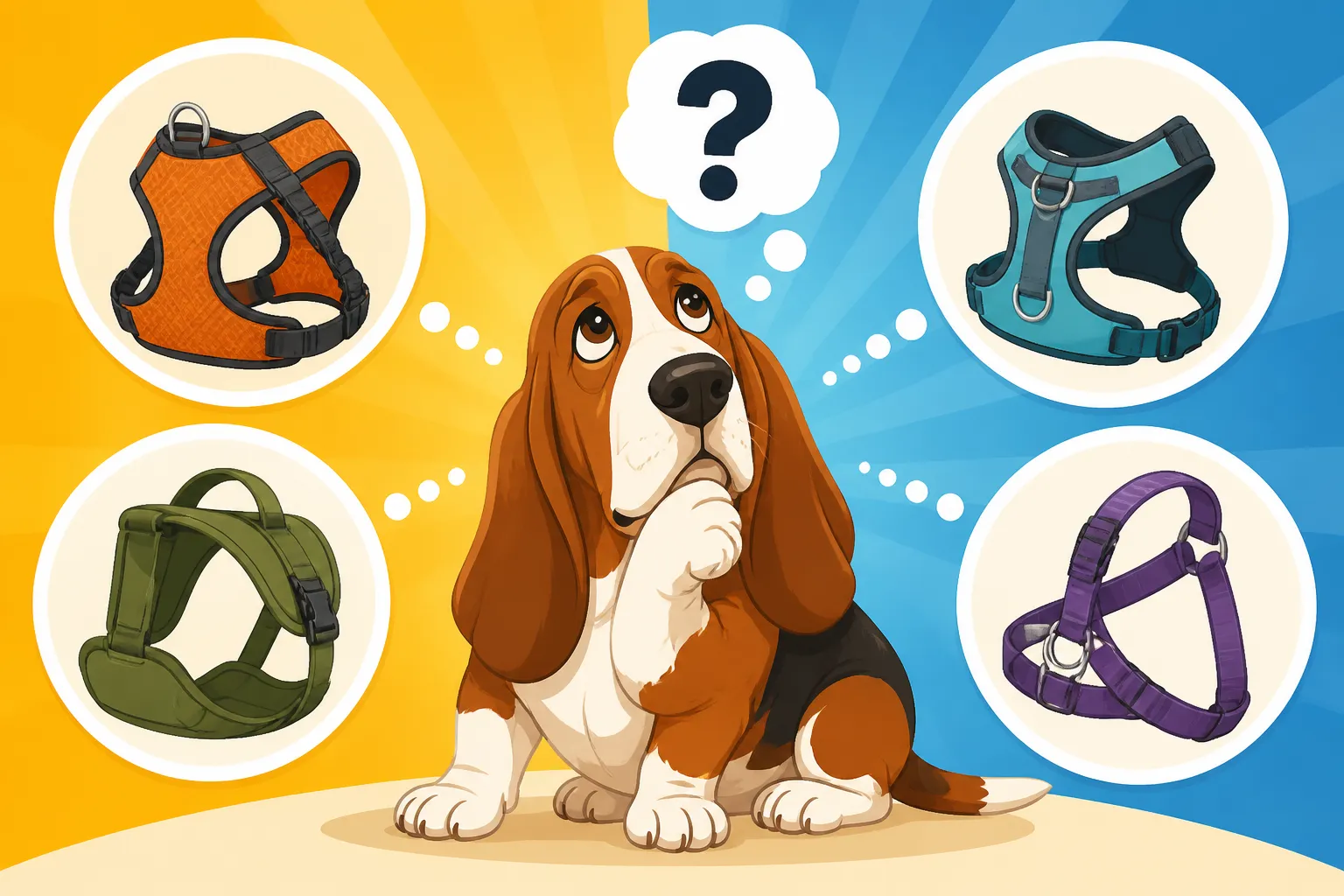
Alright, now that we've pinpointed why Bassets need special consideration, let's explore the different types of harnesses out there and how each might (or might not) suit your floppy-eared friend. There's no one-size-fits-all, but understanding the mechanics of each type will help you make an informed choice.
Front-Clip Harnesses
Front-clip harnesses, sometimes called "no-pull" harnesses, feature the leash attachment ring on the dog's chest, rather than on their back. The idea is that when your Basset tries to pull ahead, the leash pressure redirects them gently to the side, turning their body rather than allowing them to lean into the pull. For many owners dealing with a strong-willed Basset whose nose has taken over, these can be a game-changer. Why a Basset Hound Stops Hearing You When It Smells Something when on a scent is a very real challenge, and a front-clip harness can give you more control in those moments.
The upside for Basset Hounds is the redirecting action, which helps manage their often-powerful pulling. It also generally avoids putting pressure on their neck and throat, which is crucial for their unique anatomy. However, the fit is absolutely critical. If the chest strap is too low or not designed correctly, it can interfere with their short legs and broad gait, causing rubbing in the armpits or restricting their movement. You need to ensure the straps are well-padded and adjustable enough to clear their legs and not dig into their loose skin. Brands like Ruffwear or Easy Walk (available on platforms like Amazon) often have models with good adjustability.
Back-Clip Harnesses
Back-clip harnesses are perhaps the most common type you'll see. The leash attachment is on the dog's back, typically between the shoulder blades. They're generally easy to put on and take off, and for a dog that doesn't pull much, they can be perfectly comfortable. If your Basset Hound is one of the rare few who walks politely on a loose leash, a well-fitting back-clip harness could work for you.
However, for the vast majority of Basset Hounds, especially those who get tunnel vision when they catch a scent, a back-clip harness can actually encourage pulling. When the leash attaches to the back, it allows the dog to lean into their natural forward momentum, essentially giving them leverage to pull you along. This can put strain on their delicate backs, which are already prone to issues like The Back Trouble a Basset Hound Is Built Into. For a Basset that loves to pull, this type of harness doesn't offer much in the way of directional control, making walks more of a tug-of-war than a leisurely stroll. Always consider your Basset's individual pulling habits when looking at a back-clip option.
Dual-Clip (Front and Back) Harnesses
Many modern harness designs offer the best of both worlds: a leash attachment ring on both the chest and the back. These dual-clip harnesses are often considered the most versatile and, for many Basset Hound owners, the ideal compromise. You can choose to clip the leash to the front for more control during training or when encountering high-distraction environments, or to the back for more relaxed walks once your Basset has learned some leash manners. Some owners even use a double-ended leash, clipping one end to the front and one to the back, for ultimate control.
This versatility is a huge benefit for Basset Hounds. It allows you to adapt the harness use to different situations and training stages. For example, when you're working on The Recall a Basset Hound Will Never Reliably Give You, having that front-clip option can be invaluable for gaining their attention back. Just like with front-clip harnesses, the fit is paramount. Look for models that are highly adjustable, with soft, robust materials that won't chafe. Many good quality harnesses, easily found on Amazon, will offer this dual-clip functionality. This type of harness truly gives you the flexibility needed to handle a Basset Hound's strong personality and even stronger nose.
Step-In Harnesses
Step-in harnesses are known for their simplicity; your dog literally "steps into" two loops, and then the harness clips over their back. They don't have to go over the head, which can be a relief for some dogs who are head-shy. For smaller, less boisterous breeds, they're often a convenient choice.
However, for a Basset Hound, step-in harnesses often present more challenges than solutions. Their unique barrel-shaped chest and shorter legs mean that the strap configuration, which typically relies on a more "average" dog body, can sit poorly. The straps might rub the armpits more easily, or the overall fit might be too loose around their broad chest, increasing the risk of them wiggling out. The lack of extensive adjustability in some step-in designs also makes it difficult to get that perfect, secure fit for a Basset's distinctive proportions. While they might seem appealing for their ease of use, they're generally less recommended for Basset Hounds compared to other, more adjustable styles that can accommodate their build.
Key Features to Look For in a Basset Hound Harness
Now that we've considered the different types, let's zero in on the specific characteristics that make a harness truly suitable for your Basset Hound. It's not just about the clip location; it's about the overall design, construction, and adjustability.
Adjustable Straps and Proper Sizing
This is, without a doubt, the most critical factor for a Basset Hound harness. Their bodies are not generic; they have a long back, a deep chest, and those short legs. Therefore, a harness needs to be highly adjustable at multiple points: around the neck, behind the front legs, and across the ribcage. You should be able to cinch or loosen each section independently to achieve a custom-like fit. Many a frustrated Basset owner has purchased a harness only to find it either too tight around the neck, or too loose around the chest, or with straps that cut right into the delicate skin behind their front legs.
To measure your Basset Hound correctly, you'll need a flexible tape measure. First, measure around the deepest part of their chest, just behind their front legs. This is usually the largest measurement. Second, measure around their neck, where a collar would naturally sit. Compare these measurements to the harness manufacturer's sizing chart. Don't guess! A common mistake is buying a harness based solely on weight, which can be wildly inaccurate for a Basset's unusual dimensions. When in doubt, size up if your Basset is between sizes, but ensure the harness still offers enough adjustability to tighten where needed without becoming cumbersome. A good fit will make a world of difference in their comfort and your control.
Material and Padding
Given the Basset Hound's loose skin and propensity for chafing, the material and padding of the harness are incredibly important. Look for harnesses made from soft, breathable fabrics that won't irritate their skin, especially in friction-prone areas like the armpits and around the lower chest. Nylon webbing is common, but ensure it's high-quality and smooth, perhaps with neoprene or fleece padding on the inside of the straps. Some higher-end harnesses feature mesh or soft-shell materials that help prevent rubbing and distribute pressure more evenly.
Padding is essential, particularly on the chest plate and any straps that pass close to the armpits. A well-padded harness will feel much more comfortable to your Basset, reducing the likelihood of sores or hot spots, which can lead to skin infections, a common woe for our wrinkly friends. Beyond comfort, the material should also be durable. Basset Hounds, despite their laid-back reputation, can be surprisingly strong and determined when on a mission (usually involving a spectacular scent trail). The stitching and buckles need to be robust enough to withstand their enthusiasm and any sudden pulls.
Safety and Visibility Features
When you're out walking your Basset Hound, especially during dawn, dusk, or in areas with traffic, visibility is paramount. Many Basset Hounds are low to the ground and can be surprisingly difficult to spot in dim light. Look for harnesses that incorporate reflective stitching or panels. This simple feature can make your Basset much more visible to drivers and cyclists, adding a crucial layer of safety to your outings.
Beyond visibility, secure buckles and attachment points are non-negotiable. A Basset Hound, with its powerful nose and sometimes selective hearing, needs a harness that won't fail or come undone. Double-checking that all buckles click securely and that the D-rings for leash attachment are strong and well-sewn is essential. Some harnesses even offer an extra safety buckle or a redundant attachment point, which can be very reassuring. Remember, a Basset Hound can have a strong prey drive and an even stronger sense of smell; if a gate opens or a squirrel crosses their path, they can be off in a flash. A sturdy, secure harness is your primary tool for keeping them safely by your side, or at least safely at the end of their Whether a Basset Hound Needs a Long Line if you're working on recall in a safe, open space.
Fitting Your Basset Hound's Harness for Maximum Comfort and Security
You've chosen a great harness – maybe a dual-clip wonder from Amazon, or a highly-rated model that BAXTER & Bella recommended for their training programs. Now, the crucial step: getting it properly fitted. An ill-fitting harness, even a high-quality one, is useless. Or worse, it can be detrimental to your Basset's comfort and safety.
Step-by-Step Fitting Guide
Let’s walk through putting that harness on and ensuring it’s just right. Take your time, and make it a positive experience with treats and praise, especially if your Basset isn't used to wearing one.
- Introduce the Harness Calmly: Let your Basset sniff the harness. Give them a treat. Don't rush. This is part of Teaching a Basset Hound to Have Its Ears Handled or nail trims; making gear a positive experience sets you up for success.
- Orient the Harness: Most harnesses have a distinct top (where the back clip or handle might be) and bottom (the chest piece). Identify which part goes over the head and which straps go around the body.
- Place Over Head/Step In: Depending on the harness style, either slip the neck opening over your Basset's head, or guide their front legs into the loops if it’s a step-in type. Make sure any chest plate is centered on their chest.
- Fasten Buckles: Bring the straps around their chest/belly and fasten the buckles. You should hear a clear click.
- Adjust Neck Straps: Gently adjust the straps around the neck. You should be able to comfortably slide two fingers flat underneath the strap. It should be snug enough not to slip over their head, but not tight enough to restrict breathing or cause discomfort.
- Adjust Chest/Belly Straps: Adjust the straps that go around their rib cage, just behind the front legs. Again, use the two-finger rule. This is a common area for chafing, so ensure it’s snug but not digging in. The harness should sit a few inches behind the armpits, not directly in them.
- Check for Leg Movement: Ask your Basset to walk a few steps. Watch how the harness interacts with their front legs. Are the straps rubbing? Is their natural gait impeded? If so, adjust the straps or consider if the harness style is truly suitable. Their short legs need plenty of room!
- Test for "Backing Out": This is where many Basset Hounds excel. Stand in front of your Basset and gently pull backward on the harness while they are standing. A properly fitted harness should not allow them to easily pull their head or shoulders out. If they can, it’s too loose. Whether a Basset Hound Slips Its Collar is a real concern, and it applies to harnesses too.
Common Fitting Mistakes to Avoid
Even with the best intentions, it's easy to make a few errors that compromise your Basset's comfort or the harness's effectiveness.
- Harness Sitting Too Far Back: If the chest strap is too far back on the ribcage, it gives the Basset more leverage to pull and can cause the harness to shift or rub. It should sit snugly enough to prevent this, usually a few inches behind the front legs.
- Straps Cutting Into Armpits: This is a big one. Due to their deep chests and often loose skin, Bassets are prone to armpit chafing. Always ensure there's enough clearance and that the straps are not tight or narrow in this area. Look for harnesses with a Y-shaped chest piece or ample padding to avoid this.
- Looseness Allowing Escape: A harness that’s too loose is just an invitation for your Basset to perform their Houdini act. This is especially true for the neck strap. If your Basset can lower its head and pull its neck through the opening, it's too loose. This is why multi-point adjustability is so vital for their unique shape.
- Ignoring Growth: If you have a Basset puppy, remember they grow quickly! What fits perfectly at three months might be too tight by six. Regularly check and adjust the harness as your puppy grows, making sure it continues to provide a comfortable and secure fit. Keeping an eye on How Much a Basset Hound Should Weigh as they grow can also help in selecting the right size.
Finding the right harness is an investment in your Basset Hound’s comfort, safety, and your peace of mind during walks. Don't be afraid to try a few different styles and brands to find the one that truly works for their unique, wonderful body.
Harness Type Comparison for Basset Hounds
Here's a quick comparison of the main harness types and how they typically stack up for a Basset Hound.
| Harness Type | Pros for Basset Hounds | Cons for Basset Hounds | Best Use Case |
|---|---|---|---|
| Front-Clip | Excellent for managing pulling; redirects effectively. | Can interfere with leg movement if not well-fitted; requires careful adjustment. | Training a Basset not to pull; high-distraction environments. |
| Back-Clip | Easy to put on; good for non-pullers. | Can encourage pulling; puts strain on back; less control for strong scent drives. | Bassets with excellent leash manners; casual, low-distraction walks. |
| Dual-Clip | Versatile (front for control, back for relaxed walks). | Can be bulkier; proper adjustment of both clips is essential for optimal use. | All-around best option for most Basset Hounds; adaptability for various situations. |
| Step-In | Easy on/off (no head-over); generally lightweight. | Often poor fit for deep chests/short legs; can chafe armpits; easy to slip out of. | Generally not recommended for Basset Hounds due to fit issues. |
This article is for general informational purposes only and does not constitute professional advice. Laws, prices and regulations vary by location and change over time. Consult a qualified professional for guidance on your specific situation.