Whether an Intact Male Basset Hound Marks
It's a common scenario for many Basset Hound owners: you welcome a charming, floppy-eared male puppy into your home, and as he grows, you start to notice a particular behavior—marking. This isn't just about emptying his bladder; it's about depositing small amounts of urine to communicate, and for intact males, this instinct can be incredibly strong, often leading to frustration when it happens indoors. This guide will explore why intact male Basset Hounds mark, the factors that influence this behavior, and practical strategies you can implement to manage it effectively.
Understanding the Instinct: Why Intact Males Mark Their Territory
For an intact male Basset Hound, marking isn't a sign of malice or disrespect; it's a deeply ingrained, primal form of communication. It’s their way of leaving a message for the world, a canine social media post if you will, letting other dogs know they were there, who they are, and what their current status might be. Understanding this fundamental drive is the first step in addressing the behavior.
The Primal Urge of Scent Communication
Think of your Basset Hound's urine as a complex business card, rich with chemical information about him. When he marks, he's not just peeing; he's deliberately broadcasting his presence and status to any dog that might come along. This is particularly pronounced in intact males because their hormones are constantly telling them they have something important to say to potential mates and rivals. It’s a completely natural, albeit sometimes inconvenient, part of their biology.
This scent communication is critical in the canine world. Dogs rely heavily on olfaction, and a urine mark can convey a wealth of data: the dog's sex, whether they are intact or spayed/neutered, their approximate age, health status, and even their emotional state. For an intact male, every opportunity to mark outdoors is like adding a new pin to his personal map, reinforcing his presence in an area. It’s a crucial aspect of their social structure, whether we understand all the nuances or not.
The Role of Hormones in Marking Behavior
Testosterone is the primary driver behind much of an intact male dog's territorial marking behavior. This hormone fuels their instinct to compete for mates and establish dominance or presence within their perceived territory. Without the hormonal influence of testosterone, the incessant urge to broadcast one's presence through marking is often significantly reduced, though not always entirely eliminated, especially if the behavior has become a deeply ingrained habit.
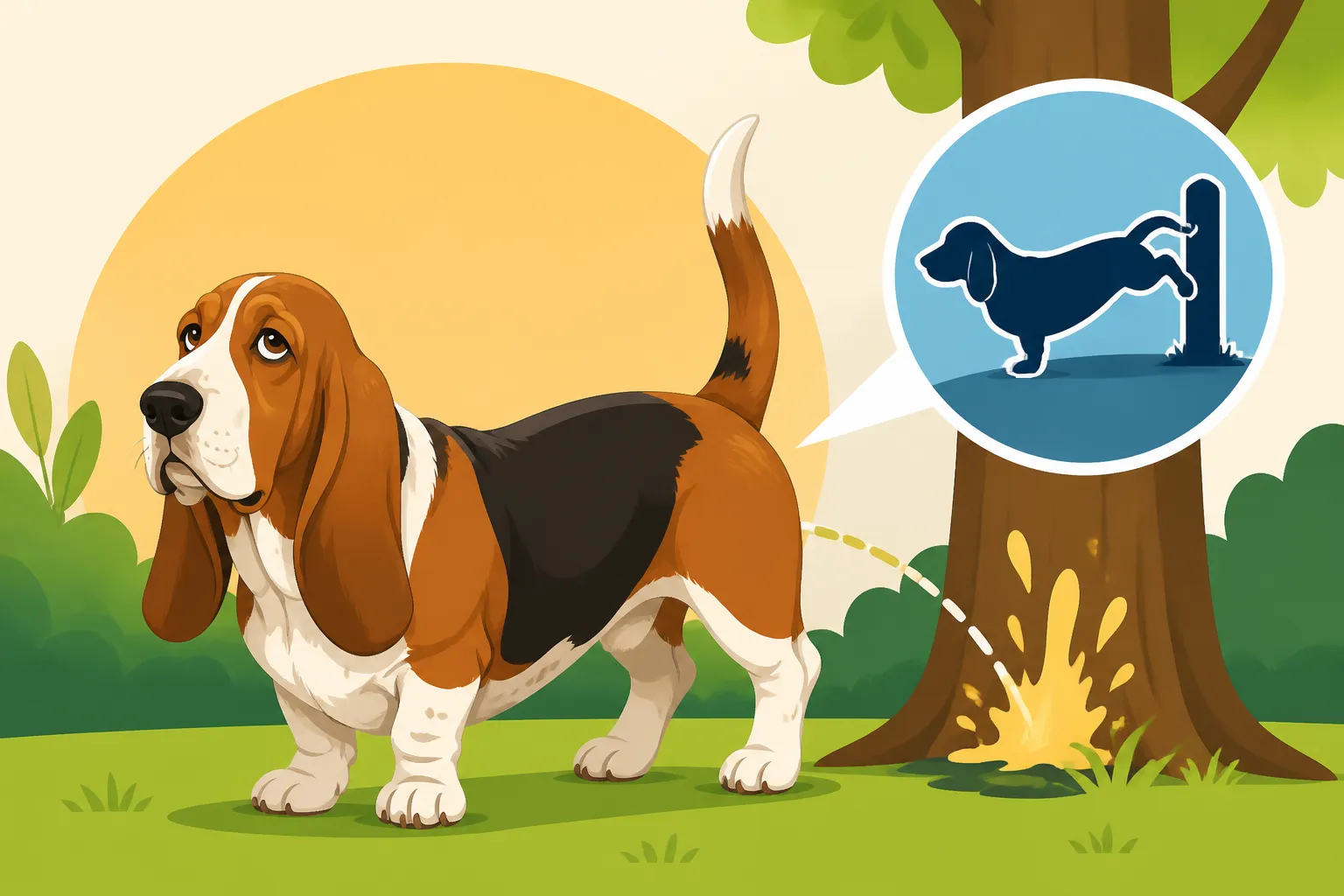
When an intact male Basset Hound lifts his leg, he’s doing more than just urinating; he’s strategically placing a scent message at nose height for other dogs. This behavior is distinct from simply emptying his bladder. You’ll often notice that these marks are small squirts of urine, left on vertical surfaces, indicating a clear intent to mark rather than relieve himself fully. This distinction is important for owners to recognize because it informs how we approach managing the behavior.
Common Scenarios and Factors Influencing Marking in Basset Hounds
While marking is an instinct, certain situations and environmental factors can escalate the behavior, especially in our low-slung, scent-driven Basset Hounds. It’s not always straightforward, and what triggers marking in one Basset might not affect another.
Indoor Marking: When and Why it Happens
Indoor marking is arguably the most frustrating aspect of having an intact male Basset Hound. It can feel like a direct affront to all your house-training efforts, but often, it's not a lapse in house-training at all. Instead, it's a territorial declaration or a reaction to stress, anxiety, or excitement. Picture this: you bring home a new piece of furniture, and suddenly, your Basset seems compelled to "claim" it. Or perhaps a new guest visits, bringing unfamiliar scents into your home, and your Basset feels the need to reinforce his ownership.
Other common indoor triggers can include the presence of other animals, even if they are just visiting or can be smelled through a window. A new cat in the neighborhood might walk past your house, leaving its scent, and your Basset’s incredibly powerful nose will pick up on it, prompting him to mark indoors to counteract the perceived intrusion. Stress, changes in routine, or even over-excitement can also lead to indoor marking. It's vital to remember that a Basset Hound’s nose is one of the most sophisticated in the canine world, making them exceptionally sensitive to environmental scents. This means they are often the first to pick up on new smells that might trigger a marking response.
Outdoor Marking: The Basset Hound's Scent Map
Outdoors, marking is a completely normal and expected behavior for any dog, but particularly for an intact male Basset. For them, every walk is an opportunity to read and write messages on the grand "scent bulletin board" of the neighborhood. Every lamppost, fire hydrant, tree trunk, and bush is a potential communication point. They are constantly processing a symphony of smells, each one a story left by another dog.
A Basset Hound's low-slung body and deep nose mean they operate close to the ground, where many scents linger longest. They might spend an inordinate amount of time sniffing before carefully selecting a spot to mark. This isn't just a quick pit stop; it's a deliberate act of adding their own scent to the tapestry. Because of their unique build and strong drive to scent, their walks naturally involve frequent stops for both sniffing and marking. If you've ever tried to hurry a Basset Hound on a walk, you know the struggle is real! This makes management outdoors all the more important, as we'll discuss later.
Environmental Triggers and Social Dynamics
Beyond the immediate territory of your home, broader environmental and social factors can significantly influence an intact Basset Hound's marking behavior. Consider a multi-dog household. Even if all dogs are Basset Hounds and get along, an intact male might feel a stronger urge to mark to establish or reinforce his place in the pack hierarchy, or simply to express his individual identity within the group. A new dog joining the family, or even regular playdates with other dogs, can shake up the established scent dynamics and lead to increased marking.
External factors, like a new dog moving into the house next door, or even a sudden increase in stray animals passing through your yard, can heighten an intact Basset's territorial instincts. He might feel a heightened need to assert his presence and protect his perceived boundaries. Think about how humans react to new neighbors or perceived threats; dogs, especially scent hounds, react to these changes primarily through their nose and the messages they leave. It’s a complex interplay of instinct, environment, and social cues.
Strategies for Managing Marking Behavior in Intact Basset Hounds
Living with an intact male Basset Hound means accepting that marking is part of his natural makeup, but it doesn't mean you have to tolerate indoor accidents or endless street-corner dousing. There are plenty of proactive strategies and training methods to help manage this behavior.
Proactive Management and Environmental Control
The cornerstone of managing marking, particularly indoors, is proactive management and strict environmental control. The first rule of thumb is consistent and frequent potty breaks. Take your Basset out immediately after waking up, after meals, after playing, and before bedtime. This routine helps reinforce that elimination is an outdoor activity. When outdoors, lavish praise and high-value treats when he relieves himself in an appropriate spot.
If indoor marking has already occurred, thorough cleaning is paramount. You absolutely must use an enzymatic cleaner. Regular household cleaners might remove the visible stain, but they won't eliminate the microscopic urine crystals that signal "potty spot!" to your Basset Hound's sensitive nose. Search on Amazon for "enzymatic pet odor eliminator" to find products specifically designed for this. Without fully neutralizing the scent, your Basset will be drawn back to the same spot repeatedly.
For times when you can't actively supervise your intact male indoors, a belly band can be a lifesaver. These washable wraps fit around his waist and cover his privates, catching any small marks he might attempt. They're not a solution to the underlying behavior, but they prevent damage and mess, giving you peace of mind. Again, you can easily find "dog belly bands" on Amazon. Crate training, used correctly, can also be a powerful tool, as most dogs are reluctant to soil their sleeping area.
Training and Behavioral Modification
Beyond management, targeted training can significantly help. Teaching your Basset Hound a "go potty" cue can be incredibly useful. When you take him out, use your chosen cue word (e.g., "potty time," "go busy") and reward him heavily the moment he performs. This helps him associate the cue with the act of elimination, giving you more control over where and when he marks. Interrupt any attempts to mark indoors with a firm "no" or "leave it," then immediately take him outside to an appropriate spot. Reward him for success outdoors.
For walks, instead of letting your Basset mark every single tree, try to guide him to specific "marking spots" and allow him a few strategic marks. This helps satisfy his instinct without turning every walk into a full-scale scent-mapping mission. Positive reinforcement is key – never punish him harshly for marking, as this can lead to anxiety and sneakier marking behaviors. Instead, focus on rewarding desirable conduct. Remember, The Recall a Basset Hound Will Never Reliably Give You might mean he needs to be on a leash or long line when outside, which gives you better control over his marking choices.
Considering Neutering and Its Impact
The question of neutering often comes up when discussing marking in intact males. For many owners, it's a significant consideration. Neutering involves the surgical removal of the testes, which produces testosterone. Without this primary hormonal driver, the strong instinct to mark territory often diminishes considerably. It’s not a guaranteed fix, especially if the behavior is deeply ingrained, but it can make a world of difference for many dogs.
If marking behavior is largely driven by hormonal urges, neutering can significantly reduce the frequency and intensity of both indoor and outdoor marking. It can also reduce other hormone-driven behaviors like roaming in search of females in season. However, if the marking is more habit-driven, anxiety-driven, or a learned behavior (e.g., he learned to mark indoors because he was never properly house-trained or his scent wasn't fully removed from previous accidents), neutering might not eliminate it entirely, but it often makes it much more manageable. Discussing this option with your veterinarian is essential to understand the potential benefits and any associated risks, as well as the best timing for the procedure if you choose to go that route.
Here's a quick overview of the potential effects of neutering on marking:
| Aspect | Intact Male Basset Hound | Neutered Male Basset Hound |
|---|---|---|
| Hormonal Drive | High testosterone, strong urge to broadcast presence. | Significantly reduced testosterone, less hormonal urge. |
| Indoor Marking | More prone, especially with new scents/stress. | Often reduced, but ingrained habit might persist. |
| Outdoor Marking | Frequent, deliberate small marks to claim territory. | Still marks, but usually less frequently and intensely. |
| Motivation | Primarily territorial and reproductive communication. | Can be habit, anxiety, or learned response if not fully gone. |
| Response to Training | Can be trained, but hormonal urges can override. | Often more receptive to training modifications for marking. |
| Roaming Tendency | Higher risk of wandering if a female in heat is nearby. | Reduced desire to roam in search of mates. |
Living with an Intact Basset Hound: Expectations and Realities
Choosing to keep your Basset Hound intact is a personal decision with various implications, and marking behavior is definitely one of them. It requires a specific commitment and understanding, but it can be a wonderfully rewarding experience.
The Commitment to Management
Living with an intact male Basset Hound who marks requires a higher level of vigilance and consistency from you, the owner. This isn't a "set it and forget it" situation. You'll need to commit to a consistent routine of potty breaks, constant supervision when he's indoors (especially during times of stress or new visitors), and prompt, thorough cleaning of any accidents. It's a bit like having a perpetually curious toddler who communicates with his bladder!
Regular, structured walks are not just for exercise but also for allowing him appropriate opportunities to mark and satisfy his natural instincts. By understanding that his marking is a natural behavior rather than a "bad" one, you can approach it with more patience and effective strategies. Belly bands can become your best friend for travel, visits to friends' houses, or even just during times you're busy and can't give him your undivided attention at home.
Health and Socialization Considerations
Beyond marking, keeping a Basset Hound intact involves other considerations. Intact males can sometimes face different social dynamics with other intact males, potentially leading to more posturing or disagreements in certain situations. It's crucial that your intact Basset Hound is well-socialized from a young age, exposed to a variety of dogs and environments in a positive way. Programs like those offered by BAXTER & Bella can provide excellent online resources for structured socialization and puppy training, which are invaluable for any dog, but especially for an intact male. A Basset Hound Meeting the Dog You Already Have is a key skill.
Another important aspect is the potential for roaming. If there's a female Basset Hound in season (or any female dog) within smelling distance, an intact male's drive to find her can be incredibly powerful, sometimes overriding all training. This means secure fencing and diligent leash handling are absolutely non-negotiable. Regular veterinary check-ups are also vital to monitor for any health issues associated with intact males, such as prostate problems, which can become more common as they age.
The Unique Charm of an Intact Basset Hound
Despite the management challenges, there's a profound joy in living with an intact Basset Hound. Their deep connection to scent is one of their most defining characteristics, and for many owners, it's part of their unique charm. Channeling this natural drive into positive outlets can be incredibly enriching for both you and your dog. Scent work, tracking, or even simple nose games are activities Basset Hounds excel at and thoroughly enjoy. Giving a Basset Hound's Nose Something to Do provides mental stimulation and a healthy outlet for their powerful olfactory abilities.
By understanding his instincts and working with them rather than against them, you can build an incredibly strong bond. It’s about providing him with appropriate ways to express his natural behaviors, whether it's through designated marking spots on walks or engaging scent games at home. An intact Basset Hound, managed thoughtfully, is a wonderful, characterful companion whose rich inner world of smells is a constant source of fascination.
Disclaimer
This article is for general informational purposes only and does not constitute professional advice. Laws, prices and regulations vary by location and change over time. Consult a qualified professional for guidance on your specific situation.