Whether a Basset Hound Ever Feels Full
Basset Hound hunger instincts, historical hunting traits, and practical strategies explain why these dogs always want food.

Basset Hound hunger instincts, historical hunting traits, and practical strategies explain why these dogs always want food.
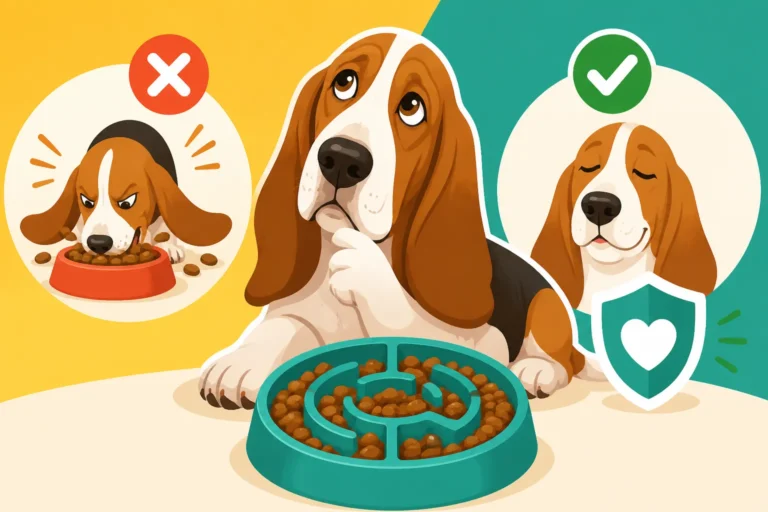
Slow feeder bowls and mats prevent bloat and poor digestion by extending a Basset Hound meal to fifteen minutes.
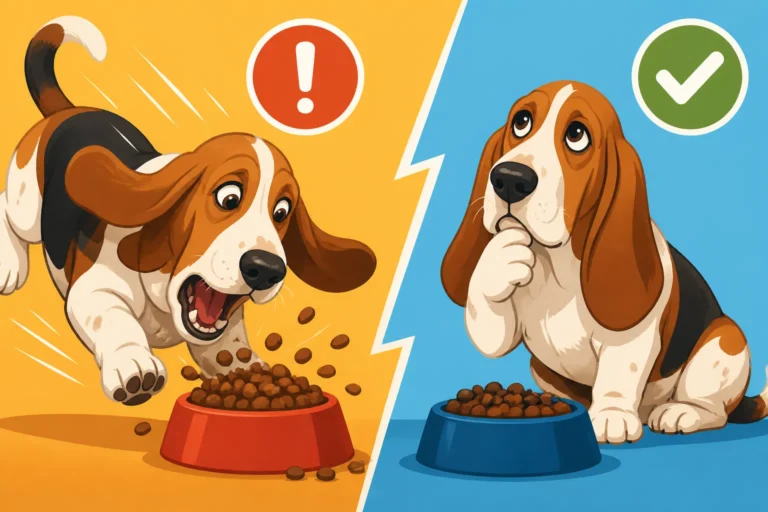
Basset Hound fast eating habits stem from ancient pack instincts, creating serious health risks like stomach bloat.
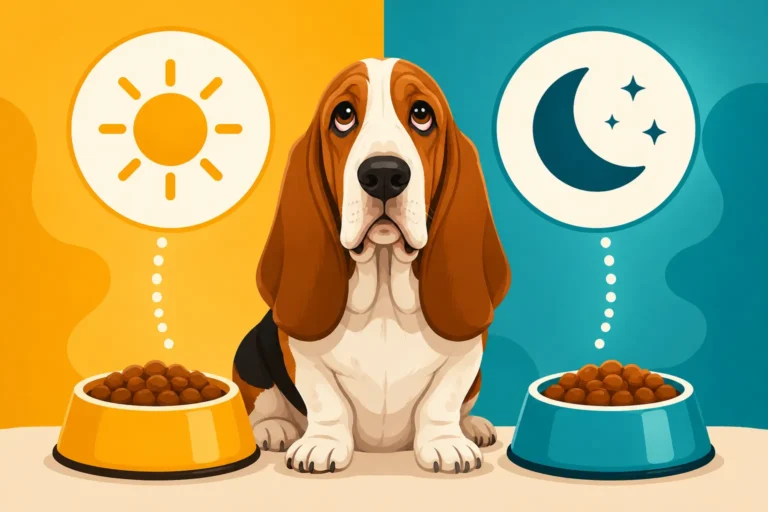
Basset Hound feeding schedules and twice-daily routines explain dietary needs across all life stages for health and happiness.

Basset Hound puppy nutrition needs and large breed puppy food safety explanations for 40 to 60 pound heavy-boned dog growth.

A slow growth rate prevents skeletal stress and protects joint health for Basset Hound puppies up to eighteen months old.
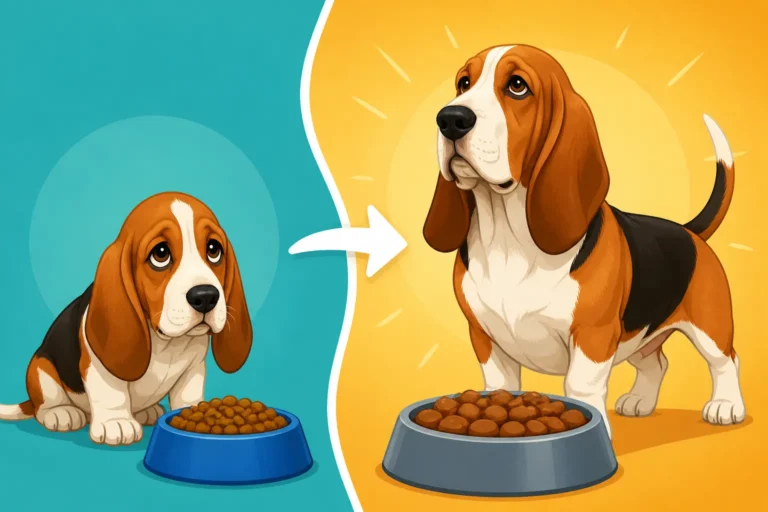
Basset Hound puppy food transition timing supports healthy skeletal development during growth phases from six to eighteen months.
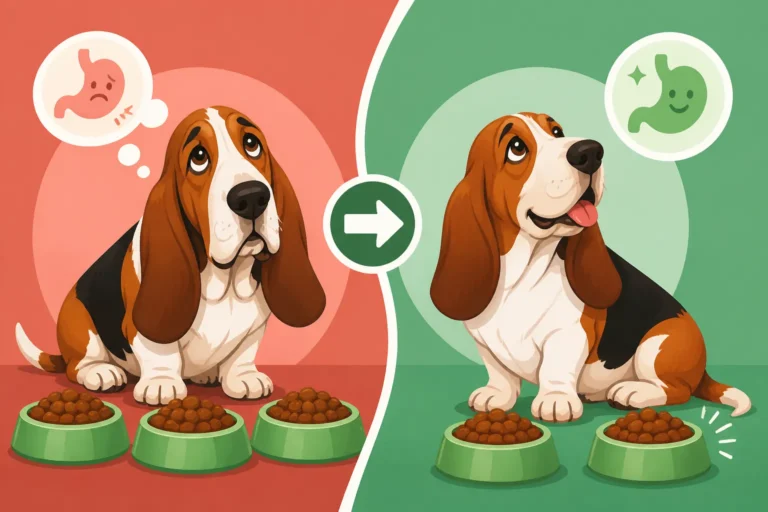
Shifting a Basset Hound puppy from three daily meals to two typically happens around six to nine months of age.
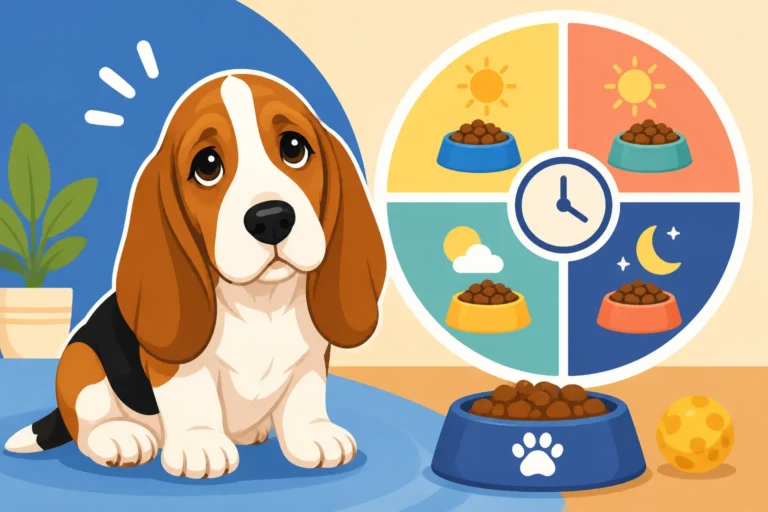
A structured feeding schedule for Basset Hound puppy health prevents obesity, supports bone growth, and aids potty training.
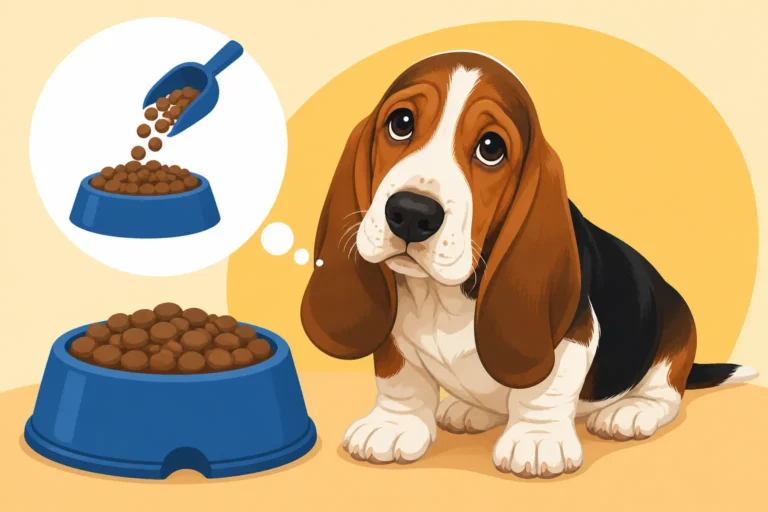
A four-month-old Basset Hound puppy weighing twenty-five to thirty pounds requires three meals daily totaling about three cups.