Whether a Basset Hound Needs Large Breed Puppy Food
It's a common dilemma when you bring home that adorable Basset Hound puppy: they're undeniably low to the ground, but boy, are they dense! You look at their long, heavy bodies and then at the shelves full of "small breed," "medium breed," and "large breed" puppy foods, and it's easy to feel utterly confused. This guide will cut through the uncertainty, explaining exactly why your Basset Hound puppy's unique build means you need to think carefully about their diet, and whether a large breed formula is the best choice for their healthy development.
Understanding Your Basset Hound's Unique Growth
When you picture a "large breed" dog, you probably think of towering Great Danes or broad German Shepherds. Your Basset Hound, with those comically short legs, doesn't quite fit that visual, does it? But when it comes to puppy nutrition, height can be incredibly deceiving. A Basset Hound's growth isn't about getting tall; it's about developing a robust, heavy-boned body, and that requires a specific kind of support.
More Than Just "Short"
Your Basset Hound puppy might be short, but they are far from a small dog in terms of bone density and overall body mass. They are a chondrodystrophic breed, which means they have a genetic condition affecting cartilage and bone growth, resulting in their characteristic short legs and elongated body. This isn't just an aesthetic trait; it fundamentally impacts their growth plates and how their skeletal system develops. Pushing for rapid growth in such a breed can put immense strain on these developing structures, exacerbating any underlying predispositions to joint issues.
Think of it this way: while a Chihuahua puppy's skeleton is lightweight and designed for quick, nimble movements, your Basset's skeleton is built for endurance and power, meant to carry a substantial frame through dense underbrush. This means their bones and joints need to develop slowly and steadily, giving them time to solidify and mature without being overloaded. A sudden surge in growth, fueled by overly rich food, can be detrimental to those developing joints.
The Weight vs. Height Conundrum
When veterinarians and nutritionists talk about "large breed" puppy food, they're not just looking at how tall a dog will be as an adult. A huge part of that classification is based on anticipated adult weight. While your Basset Hound will never be as tall as a Golden Retriever, they can easily reach 40 to 60 pounds, sometimes even more. That puts them squarely in the medium-to-large category by weight. This weight, combined with their unique skeletal structure, means they face many of the same challenges as truly large breeds during their growth phase.
The risk here lies in the acceleration of growth. Standard puppy foods are often formulated to support faster growth rates in smaller breeds, or breeds that will mature quicker and more uniformly. For a Basset Hound, this can be problematic. If your Basset puppy gains weight too quickly or grows too fast, it can put undue stress on their still-soft bones and developing joints. This can increase the likelihood of orthopedic problems, which Basset Hounds are already prone to, even before they reach their full The Age a Basset Hound Reaches Full Size. It's about nurturing their distinct physical development, not just feeding them until they're big.
Why Large Breed Puppy Food Formulations Matter
It might seem counterintuitive to feed a short-legged dog a "large breed" formula, but the key isn't in the external appearance; it's in the internal mechanics of growth and the nutrient profile of the food. These specialized formulas are designed to mitigate the specific risks associated with rapid development in heavy-boned or large-framed breeds.
The Critical Calcium and Phosphorus Balance
One of the most crucial differences in large breed puppy food is the carefully controlled balance of calcium and phosphorus. Growing puppies need these minerals for strong bones, but for larger, heavier breeds like your Basset, too much calcium can be incredibly dangerous. Excessive calcium can interfere with proper bone and cartilage development, leading to skeletal abnormalities and conditions such as osteochondrosis or contributing to the severity of Elbow Dysplasia in a Basset Hound.
Standard puppy foods often have higher calcium levels because smaller, faster-growing breeds can tolerate and even benefit from them. However, for a Basset Hound, this could be detrimental. Large breed formulas maintain a lower, more precise calcium-to-phosphorus ratio, usually within a narrower range (e.g., 1.1:1 to 1.5:1 calcium-to-phosphorus ratio, with calcium typically not exceeding 1.5% on a dry matter basis). This meticulous balance supports slow, steady bone mineralization, which is exactly what a Basset Hound's unique skeletal structure requires to develop optimally.
Controlled Growth for Healthy Joints
Beyond minerals, large breed puppy foods also typically feature a lower caloric density and a reduced fat content compared to standard puppy formulas. This isn't about starving your puppy; it's about promoting a controlled, moderate growth rate. When a puppy grows too quickly, their bones and joints simply don't have enough time to mature and strengthen adequately to support the rapidly increasing body weight. This puts them at a higher risk for developing painful orthopedic issues later in life.
For Basset Hounds, who are already predisposed to joint problems due to their build, managing growth rate is paramount. A slower growth curve helps ensure that their skeletal system matures correctly, reducing the strain on their hips, elbows, and spine. This approach can potentially help prevent or lessen the severity of conditions that many Bassets face, like Why One Basset Hound in Seven Has Bad Elbows or The Back Trouble a Basset Hound Is Built Into. It's a proactive step in caring for their long-term structural health.
Making the Right Choice for Your Basset Hound Puppy
Choosing the right food for your Basset Hound puppy isn't a decision to take lightly. It's about setting them up for a lifetime of comfort and health, especially given their specific breed characteristics. Don't just grab the first cute puppy bag you see; take a moment to understand what your Basset truly needs.
Consulting Your Veterinarian Is Key
While this guide provides general advice, nothing replaces the tailored expertise of your veterinarian. They know your specific puppy, their individual growth rate, and any particular health predispositions. Your vet can assess your Basset's body condition, monitor their weight gain, and guide you on the best nutritional strategy. Every Basset can be a little different; some might be naturally lankier, others might be incredibly robust from a young age. Your vet can help you navigate these nuances.
Make sure to discuss your puppy's diet at every check-up, especially during those crucial first few months. They can help you interpret food labels, recommend specific brands, and adjust feeding amounts as your puppy grows. It's a partnership to ensure your Basset grows strong and healthy. They might even provide a growth chart to track your puppy's progress, ensuring they're on a healthy trajectory rather than growing too fast or carrying What Extra Weight Does to a Basset Hound.
What to Look For in a Puppy Food
When you're staring at the rows of dog food at your local pet store or browsing online retailers like Chewy or Amazon, it can be overwhelming. Here's what to keep an eye out for when selecting a food for your Basset Hound puppy:
- "Large Breed Puppy Formula": This is the most straightforward indicator. These foods are specifically formulated with the controlled calcium and phosphorus levels, and appropriate calorie content, that breeds like Basset Hounds need.
- AAFCO Statement: Look for an AAFCO (Association of American Feed Control Officials) statement on the label that confirms the food is "formulated to meet the nutritional levels established by the AAFCO Dog Food Nutrient Profiles for growth of large size dogs (70 lbs or more as an adult)" or similar wording.
- Controlled Calcium Levels: While you won't always find exact percentages prominently displayed on the front, aim for a calcium level between 1.0% and 1.5% on a dry matter basis, with a calcium-to-phosphorus ratio of 1.1:1 to 1.5:1. You might need to check the guaranteed analysis or the manufacturer's website for this detail.
- Moderate Calorie Content: Avoid extremely high-calorie foods, as they can encourage rapid growth. The caloric content should be appropriate for a growing, moderately active large-breed puppy.
- Quality Ingredients: Beyond the macro-nutrients, look for high-quality, digestible protein sources (like chicken, lamb, or fish) as primary ingredients. While specific brands like Ollie focus on fresh ingredients, many reputable kibble brands also offer excellent large-breed puppy formulas. Always prioritize quality over clever marketing.
It really comes down to doing your homework and not just assuming that "puppy food" is a one-size-fits-all solution. Your Basset's unique conformation demands a little extra consideration in their diet.
Potential Downsides of Standard Puppy Food
Feeding a standard puppy food to your Basset Hound puppy might seem harmless, but it carries distinct risks. As we've discussed, these formulas are often higher in calories and, critically, higher in calcium than is ideal for a growing Basset. The primary concern is accelerating growth beyond a healthy pace for their particular skeletal development.
Rapid growth, especially in a breed prone to specific orthopedic challenges, can put immense pressure on developing bones and joints. This can lead to or worsen conditions like developmental bone diseases, affecting their elbows, shoulders, and even their unique The Crooked Front a Basset Hound Is Built On. Imagine trying to build a complex structure too quickly; the foundations might not have time to set properly, leading to instability down the line. For your Basset, this instability can manifest as pain, lameness, and chronic orthopedic issues that require ongoing veterinary care. It’s an easy mistake to make, but one that can have lasting consequences for your beloved hound.
Beyond the Food Bowl: Comprehensive Puppy Care
While diet plays a monumental role, it's just one piece of the puzzle when it comes to raising a healthy Basset Hound puppy. Their unique build and predispositions mean that a holistic approach to care is essential, encompassing exercise, environment, and regular health monitoring.
Managing Weight and Exercise
Proper nutrition goes hand-in-hand with appropriate weight management and controlled exercise. Even with the best large breed puppy food, overfeeding can lead to unwanted weight gain, which is detrimental to a Basset Hound's developing joints and spine. Keeping a Basset Hound at Its Correct Weight from puppyhood is crucial to mitigate future health issues. Those short legs are not designed to carry excess poundage, especially during the formative months.
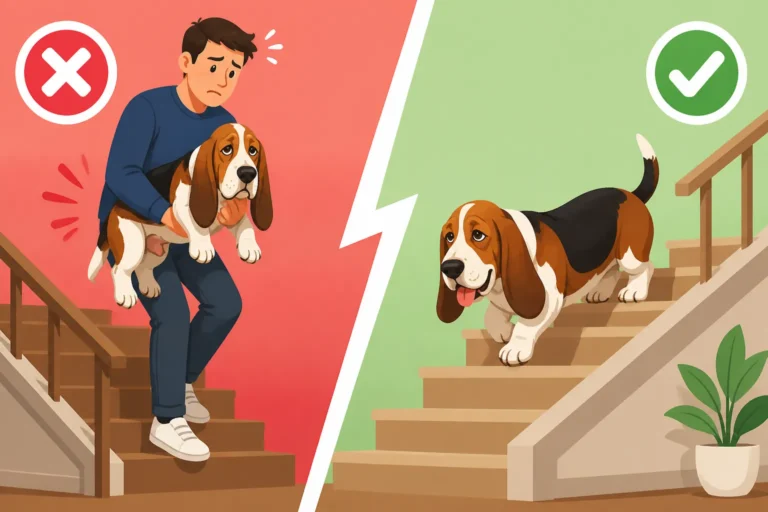
Exercise for a Basset puppy should be moderate and carefully supervised. They aren't built for strenuous activities or long-distance running in their youth. Gentle, consistent walks on soft surfaces are ideal. Avoid excessive jumping, rough play, or long periods on hard surfaces that can stress their still-developing growth plates and joints. Think about preventing situations where they might jump off furniture or tackle stairs repeatedly; for instance, Whether a Basset Hound Puppy Should Be Kept From Stairs is a valid concern for their long back and developing front end. Short, frequent play sessions that engage their powerful nose, like hide-and-seek with treats, are far more beneficial than forced long walks.
Regular Vet Check-ups and Monitoring Growth
Consistent veterinary care is your best ally in ensuring your Basset Hound puppy thrives. Regular check-ups allow your vet to monitor their growth curve, assess their body condition, and catch any potential issues early. They'll be able to tell you if your puppy is growing too fast or too slow and adjust dietary recommendations accordingly. This personalized oversight is invaluable.
Your vet can also screen for any early signs of orthopedic concerns, giving you the opportunity for early intervention if needed. Remember, a Basset Hound puppy's first year is a period of rapid development, and careful management during this time can significantly impact their long-term health and mobility. Discuss The First Year With a Basset Hound Puppy with your vet to create a comprehensive wellness plan that includes diet, exercise, and preventative care.
Puppy Food Comparison: Standard vs. Large Breed for Basset Hounds
To help visualize the nutritional differences, here's a general comparison between standard puppy food and large breed puppy food, highlighting why the latter is often more suitable for a Basset Hound.
| Feature | Standard Puppy Food (Typical) | Large Breed Puppy Food (Recommended for Basset Hounds) | Why it Matters for a Basset Hound |
|---|---|---|---|
| Calorie Content | Higher, designed for rapid growth in smaller/medium breeds | Moderate, designed for slower, controlled growth | Prevents rapid weight gain and excessive strain on developing joints. |
| Calcium Levels | Higher (often 1.5% – 2.5% dry matter) | Lower, controlled (typically 1.0% – 1.5% dry matter) | Essential for preventing skeletal abnormalities and joint issues in chondrodystrophic breeds. |
| Phosphorus Levels | Higher, in proportion to calcium | Lower, in balance with calcium | Works with calcium for proper bone development; avoids imbalances. |
| Calcium:Phosphorus Ratio | Can be wider or higher for fast growers | Narrower, precise (e.g., 1.1:1 to 1.5:1) | Critical for healthy bone mineralization and preventing developmental orthopedic diseases. |
| Protein Content | Often higher, for rapid muscle development | High quality, but balanced to support muscle without over-accelerating growth | Supports healthy muscle growth without stressing the skeleton. |
| Fat Content | Higher, for energy in fast-growing, high-metabolism puppies | Lower, contributing to controlled caloric intake | Helps maintain a lean body condition and slow, steady growth. |
| Target Growth Rate | Faster, for breeds maturing quickly | Slower, for breeds with longer growth periods and heavy bones | Reduces the risk of joint problems and supports proper formation of their unique skeletal structure. |
This table clearly illustrates the key nutritional distinctions. While your Basset Hound might look like a medium-sized dog in terms of height, their heavy bone structure and adult weight put them firmly in the category that benefits from a large breed puppy formula. By choosing wisely, you're investing in their health and comfort for years to come.
Disclaimer
This article is for general informational purposes only and does not constitute professional advice. Laws, prices and regulations vary by location and change over time. Consult a qualified professional for guidance on your specific situation.