Whether a Basset Hound Is Trainable at All
Basset Hound trainability and scent-driven focus explained through breed psychology, helping owners build an obedient bond.

Basset Hound trainability and scent-driven focus explained through breed psychology, helping owners build an obedient bond.
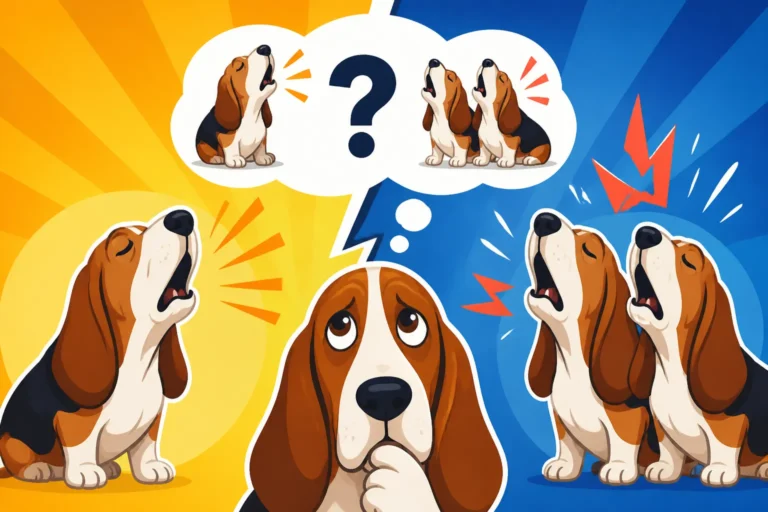
Adding a second dog to a household with a Basset Hound can increase vocalization or potentially bring peace, depending on triggers.
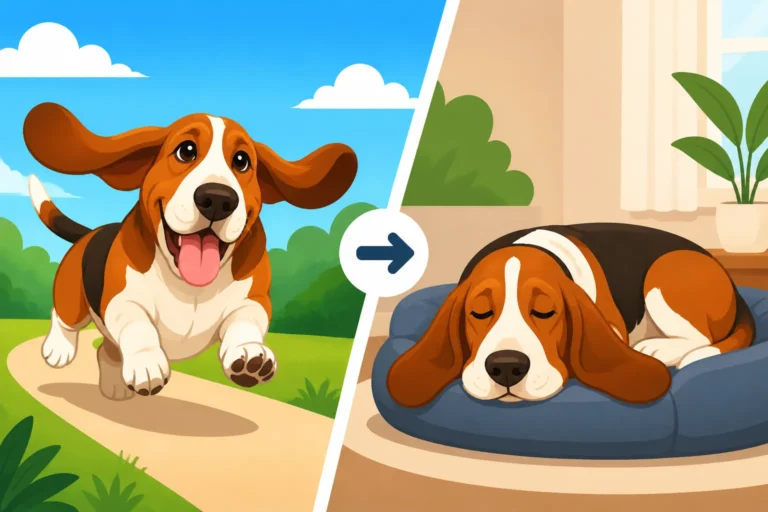
Physical exercise for a Basset Hound manages vocalization by combining a two-mile endurance walk with mental scent tracking.

Basset Hound vocalizations and talking back behavior, explaining bays, grumbles, and how to interpret dog communication sounds.

Basset Hound food whining stems from learned behavior, positive reinforcement, and strong scent motivation from pack hunting heritage.
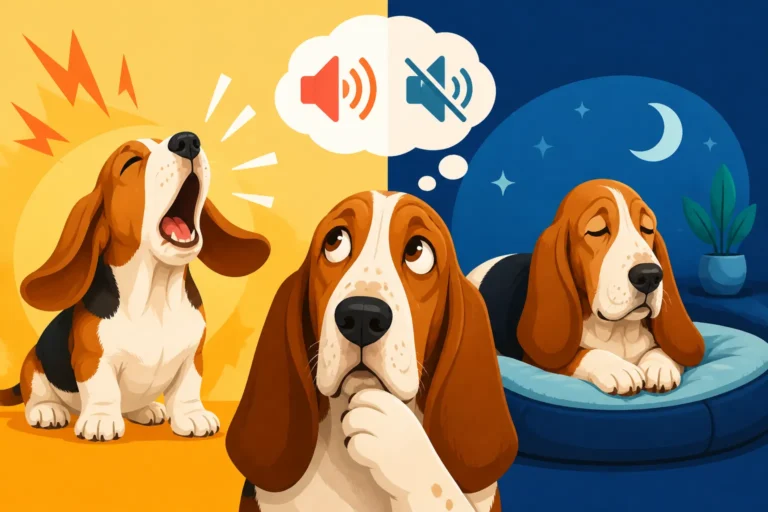
Basset Hound vocalization changes through life, explaining if six month to two year adolescents bay more and seniors grow quieter.

Basset Hound vocalizations and various bark collar types are explained with humane management approaches for barking and baying.
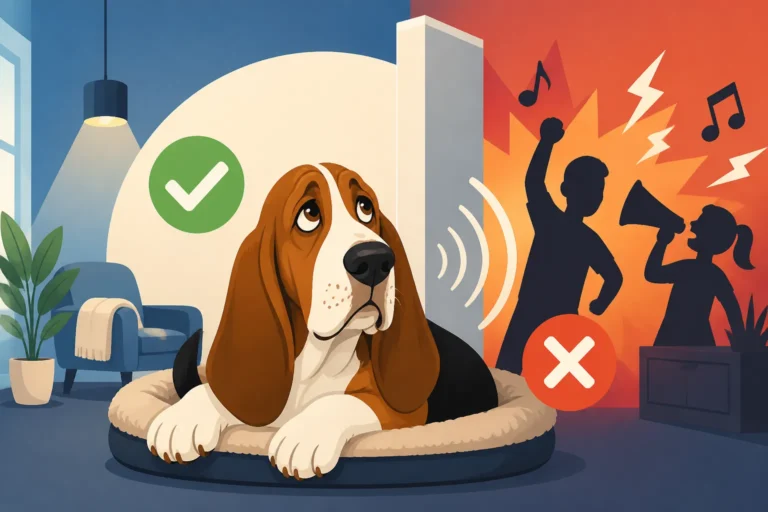
Basset Hound vocalizations, including deep bays, howls, and barks, create noise challenges for residents living in shared walls.
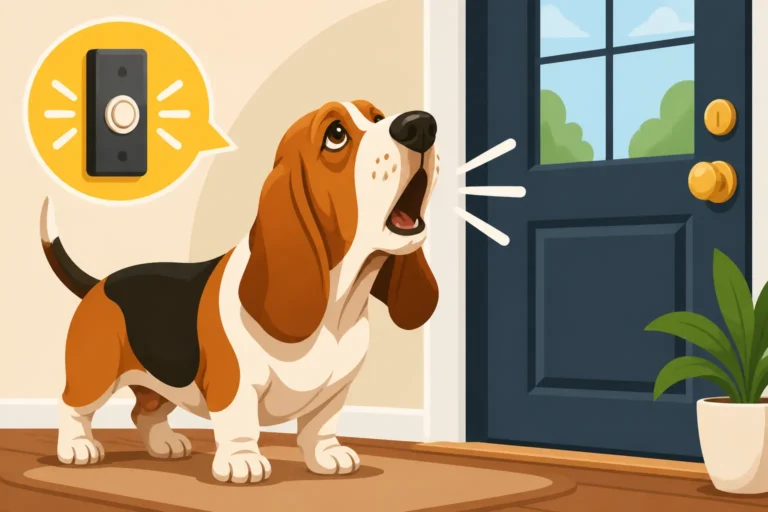
Basset Hound door barking stems from natural hunting instincts, scent tracking, and ancestral pack communication traits.

Basset Hound baying behavior explains why these dogs vocalize loudly and communicate with owners upon finding scent trails.