Whether a Basset Hound Follows Its Nose Into Traffic
It's a familiar scenario for many of us Basset Hound owners: one moment, your beloved hound is strolling along, seemingly oblivious, and the next, their nose hits a scent, their head goes down, and they become a furry, low-slung bulldozer, utterly deaf to your pleas. This single-minded pursuit of an interesting odor can be endearing, yes, but when that scent trail leads toward a busy road, it transforms into a terrifying liability. This guide is here to walk you through understanding why your Basset's nose is such a powerful, sometimes dangerous, guide, and how you can manage this deeply ingrained instinct to keep them safe, especially from the perils of traffic.
The Irresistible Call of the Scent Trail
Owning a Basset Hound means living with a nose of extraordinary power. These dogs were bred for centuries to follow scent trails, and they are incredibly good at it – so good, in fact, that it often overrides every other command or instinct. It's not stubbornness in the human sense; it's a deep, genetic imperative.
The Basset Hound's Nose: A Superpower and a Peril
Imagine having a sense of smell so acute that you can reconstruct the entire recent history of a patch of ground just by sniffing it. That's what your Basset Hound experiences. Their long, pendulous ears, their heavy dewlap, and their low stature all work in concert to funnel scent particles directly to their incredibly sensitive noses. They have far more olfactory receptors than we do, and their brains are wired to prioritize and process scent information above almost all else. For a Basset, a scent trail isn't just a smell; it's a rich, unfolding narrative, a captivating mystery novel that demands to be followed to its conclusion.
This superpower, while fascinating, is also their Achilles' heel when it comes to safety. They aren't trying to be disobedient when they take off after a scent; they are simply fulfilling their deepest genetic programming. It's like asking a human not to breathe – an almost impossible request. Understanding this fundamental aspect of their being is the first step toward managing their behavior safely. You can read more about just how powerful their nose is in How Good a Basset Hound's Nose Actually Is.
Why Other Stimuli Fade Away
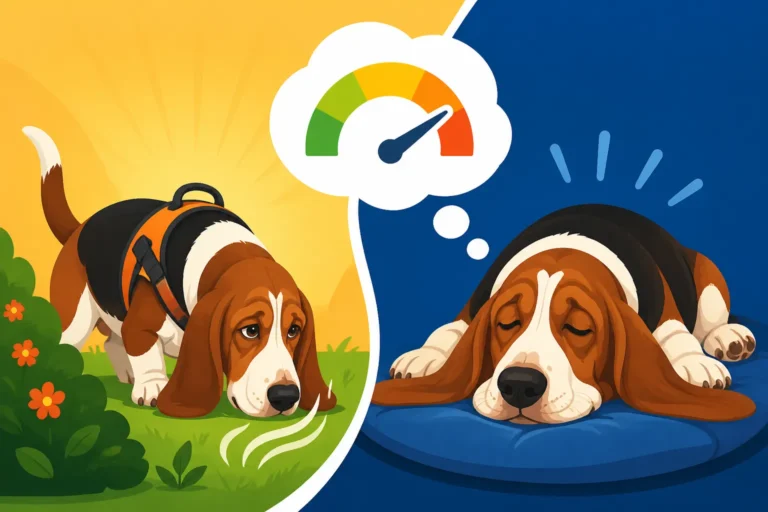
When a Basset Hound locks onto a compelling scent, it's as if the rest of the world mutes. The sound of your voice, the sight of an approaching car, even the sensation of their leash tightening – these all become secondary, almost imperceptible. Their focus becomes so intense, so singular, that it's difficult for anything else to break through. It's not a choice to ignore you; it's a neurological hijacking where the scent processing centers of their brain take over, effectively turning down the volume on everything else.
This is why recall training, while crucial, can feel so frustrating with a Basset. You might have a perfect recall in a distraction-free backyard, but the moment a rabbit or a deer has passed through, leaving its invisible calling card, your perfectly trained hound can suddenly appear deaf. It's a common complaint among Basset owners, and it's less about their intelligence and more about their profound dedication to their nose work. It means we, as their guardians, have to be proactive and understand that their primary drive isn't always pleasing us; it's often following that fascinating scent.
The Very Real Dangers of Unchecked Scent Following
The world outside our homes is full of exciting scents, but it's also fraught with peril for a dog so singularly focused on their nose. For a Basset Hound, whose head is often down, following an invisible trail, these dangers are amplified.
The Pavement Problem: Roads and Busy Streets
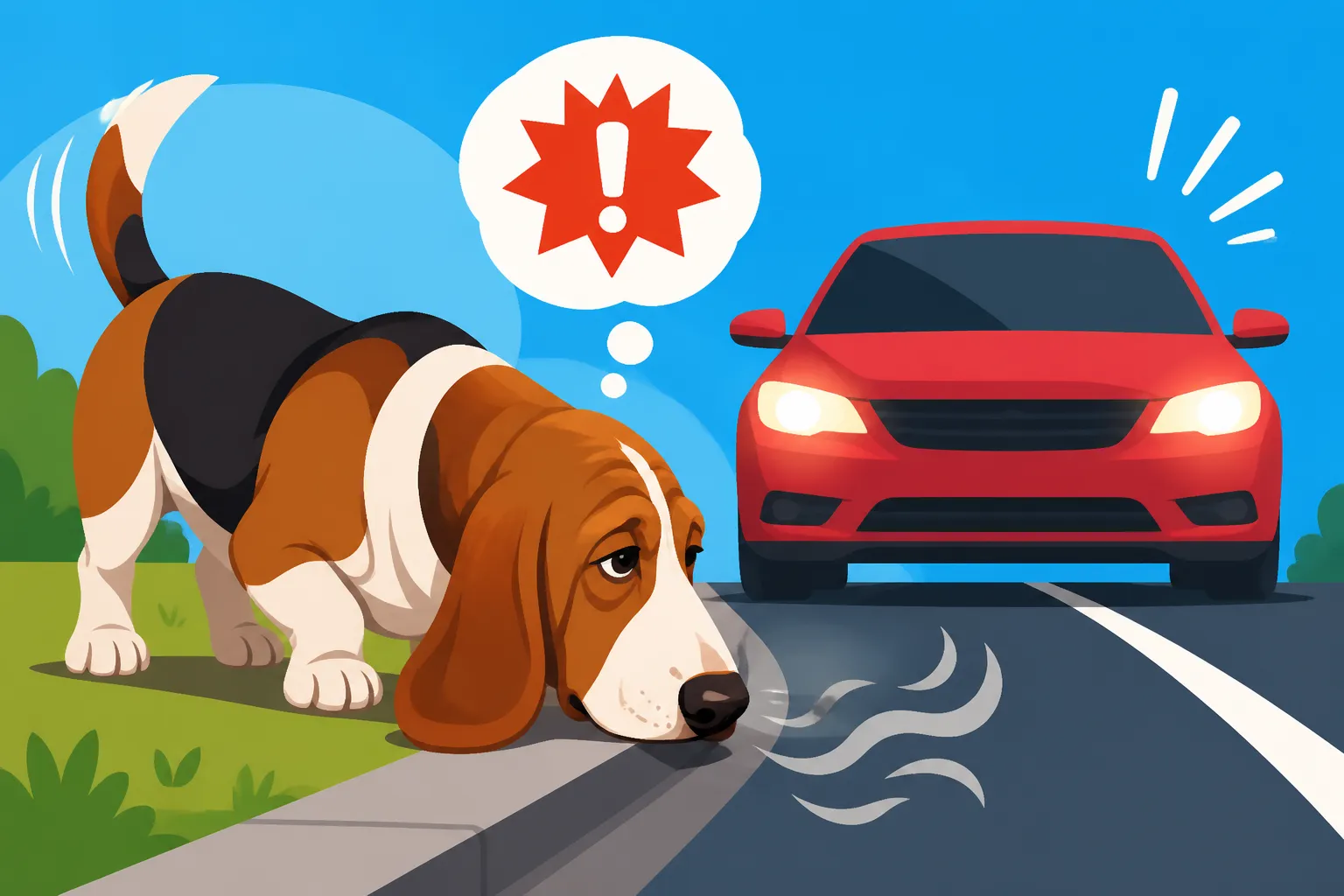
The most immediate and terrifying danger when a Basset Hound follows its nose is traffic. Their low center of gravity and short legs, which are so effective at keeping their nose to the ground, also make them incredibly vulnerable on roads. They are harder for drivers to see, especially in low light or in vehicles with larger blind spots. Imagine a large truck driver trying to spot a low-slung, often dark-colored dog whose attention is entirely consumed by a scent near the curb. The odds are not in the Basset's favor.
Furthermore, a Basset's tracking instinct often leads them in unpredictable patterns. They might cross and recross a road, follow a scent along the shoulder, or even dart into the street without warning as the trail dictates. A dog that is trotting along, making eye contact, is one thing; a dog with its nose glued to the ground, oblivious to its surroundings, is an entirely different, and far more dangerous, proposition near traffic. The heartache of losing a pet to a road accident is something no owner wants to experience, and for Bassets, the risk is acutely high.
Beyond Traffic: Other Environmental Hazards
While traffic is a major concern, the dangers don't stop there. A Basset Hound following a scent can become lost very quickly, even in familiar territory. Their focus is on the ground, not on landmarks or their human companion. This can lead them far from home, increasing their chances of being stolen, becoming disoriented, or encountering aggressive animals.
Consider other urban and rural hazards:
- Toxic Substances: Following a scent might lead them through spilled antifreeze, rodenticides, or other chemicals that they could ingest or absorb through their paws.
- Aggressive Wildlife or Dogs: A scent trail might lead them directly into the territory of an aggressive dog, a coyote, or other wildlife. Their single-mindedness means they might not notice the threat until it's too late.
- Getting Trapped: They might follow a scent into an open garage, a construction site, or a tangled patch of undergrowth, becoming trapped or injured.
- Weather Exposure: If lost, a Basset is vulnerable to extreme temperatures, especially with their low-slung bodies in deep snow or scorching pavement.
These scenarios highlight why managing a Basset Hound's powerful drive is not just about obedience, but about fundamental safety and welfare.
Strategies to Keep Your Scent-Driven Basset Safe
Given their profound instinct, simply wishing your Basset Hound would "listen" more isn't a viable safety plan. Instead, we need practical, realistic strategies that work with their nature, rather than against it.
Leash Management and Secure Containment
This is, without a doubt, the most critical strategy for a Basset Hound. They simply cannot be trusted off-leash in any unenclosed or unsecured area. Ever. It's a hard truth, but accepting it is key to their safety.
- The Right Leash and Harness: A sturdy, comfortable harness is almost always preferable to a collar for a Basset. Their strong necks and loose skin mean they can often slip out of a traditional collar, or a collar can cause damage to their trachea if they pull hard. Look for a well-fitting harness that secures around the chest and behind the front legs, making escape difficult. Many excellent options are available on platforms like Amazon, offering different designs that prevent pulling or slipping. Whether a Basset Hound Should Wear a Collar or Harness delves into this more.
- The Long Line: For areas where you want to give them more freedom to explore scents safely, a long line (a 15-30 foot lightweight leash) is invaluable. This allows them to range further while still being tethered to you. Always use it with a harness, not a collar, to prevent neck injury if they hit the end of the line at speed.
- Secure Fencing: Your yard needs to be truly Basset-proof. This means fences that are at least four to five feet high, with no gaps underneath that they can squeeze through or dig under. Bassets are surprisingly adept at wriggling through small spaces if a scent beckons on the other side. Regularly check your fence lines for weak spots or new digging projects. How High a Fence a Basset Hound Needs provides more detail on this.
- Double Gating: If you have a gate that leads directly to a street, consider a double-gate system or always ensure another barrier is in place. It only takes one moment of distraction for a Basset to bolt through an open gate.
Training for the Real World (and Realistic Expectations)
While we've established that a Basset's nose can often override training, it doesn't mean training is useless. It means our training approach needs to be tailored to their specific drives.
- Positive Reinforcement is Key: Bassets are not typically motivated by harsh corrections. They respond best to high-value treats and praise. Make training fun and rewarding.
- Emergency Recall: Practice an emergency recall cue ("Come!" or a whistle) in controlled environments with escalating distractions. Use their absolute favorite treats as rewards – we're talking cheese, cooked chicken, or hot dogs, not just dry kibble. The goal is to make "coming to you" the most rewarding thing on the planet, even when a fascinating scent is present. Understand that even with the best training, a Basset might still choose the scent over the call, especially if it's a fresh, high-value trail. This isn't a failure of training, but a testament to their powerful instinct. Whether a Basset Hound Ever Comes When Called explains more about this challenge.
- Scent Work as an Outlet: Instead of fighting their nose, embrace it! Engage them in scent work games, either formally (like K9 Nose Work or Barn Hunt) or informally at home with snuffle mats and puzzle toys. This gives them a legitimate, safe outlet for their natural talents. You can find many interactive toys on Amazon that encourage sniffing and problem-solving, like those from KONG or Trixie. This fulfills their instinct without putting them in danger. Consider online training programs like BAXTER & Bella, which often provide resources for engaging dogs in mentally stimulating activities safely, including scent games.
- Leash Manners: Teach them to walk nicely on a leash, but also accept that there will be moments they pull when they catch a strong scent. A front-clip harness can help manage pulling without putting pressure on their neck.
Enriching Their Lives Safely
A Basset Hound needs mental stimulation just as much as physical exercise, and much of that mental work revolves around their nose.
- "Sniffari" Walks: Dedicate portions of your walks to letting them sniff to their heart's content. Let them meander and explore scent trails in safe, leashed areas like parks or nature trails away from traffic. This is incredibly fulfilling for them and helps to satisfy their natural instincts.
- Puzzle Toys and Treat-Dispensing Toys: These are fantastic for keeping their minds engaged indoors. Stuff them with healthy treats or a portion of their meal. This offers a safe and controlled way for them to use their nose and problem-solving skills.
- Controlled Scent Games: Hide treats around the house or yard and let them "hunt" for them. This is a safe way to replicate their natural hunting behavior. You can even create simple scent trails for them to follow in a secure area. Giving a Basset Hound's Nose Something to Do explores this concept further.
Planning for the "What If": Preventing Escapes and Recovery
Despite our best efforts, accidents can happen. Gates can be left ajar, or a determined Basset might find a weakness in a fence. Having a plan for these "what if" scenarios is crucial.
Microchipping and ID Tags
These are non-negotiable for any dog, but especially for a Basset Hound prone to wandering if a scent takes hold.
- Microchip Your Basset: A microchip is a permanent form of identification. If your Basset is found and taken to a vet clinic or shelter, they will scan for a chip, and you can be reunited. Always make sure your contact information associated with the chip is up-to-date!
- Wearable ID Tags: Your Basset should always wear a collar with an up-to-date ID tag, even indoors. This tag should include your current phone number and address. A secondary tag with "I am microchipped!" is also a good idea. This is the fastest way for a good Samaritan to contact you. Many collars also have embroidered contact details, adding another layer of security.
Secure Fencing and Gates
Re-emphasizing this point because it's paramount. A Basset's determination when a good scent is involved should never be underestimated.
- Regular Inspections: Walk your fence line regularly, looking for loose boards, holes, or areas where the ground has eroded, creating a gap. Pay special attention after heavy rains or snowmelt.
- Hardware and Latches: Ensure all gate latches are robust and secure. Consider adding secondary locks or carabiners to prevent accidental opening or clever dog manipulation.
- Invisible Fences (with Caution): While invisible fences can act as a deterrent for some dogs, they are often ineffective for Basset Hounds driven by scent. The compulsion to follow a trail can easily override the momentary discomfort of a static correction. If you do use one, it should always be in conjunction with a physical fence, not as a standalone solution, and never near a busy road where a breakthrough could be fatal.
Here's a quick comparison of safety strategies for your scent-driven Basset:
| Strategy | Description | Why it's Important for Bassets |
|---|---|---|
| Secure Leash/Harness | Sturdy, well-fitting harness (front-clip often helpful) and a strong leash. | Prevents slips from collars, manages pulling, ensures physical control when scent-driven. |
| Long Line | 15-30 ft lead for supervised outdoor exploration. | Allows scent work freedom in safe areas while maintaining a connection to the owner. |
| Physical Fencing | 4-5 ft high, no gaps, regularly inspected, dug-under prevention. | Bassets will follow a scent through/under anything. Physical barriers are essential. |
| Emergency Recall | High-value, consistent training in controlled environments. | Crucial for the rare moments it works; always reinforce it, but manage expectations near strong scents. |
| Scent Work Activities | Snuffle mats, puzzle toys, hidden treats, formal nose work. | Fulfills their deep-seated instinct in a safe, controlled manner, reducing desire to roam. |
| Microchip & ID Tags | Permanent microchip with up-to-date info, collar tags with current phone number. | Essential for reunification if an escape occurs, as Bassets can wander far and become disoriented. |
| Gate Security | Robust latches, secondary locks, double-gating if possible. | Prevents accidental escapes through inadvertently opened or weakly secured gates. |
| Supervised Outdoors | Never leave a Basset unattended in an unfenced yard, even for "just a minute." | A brief moment is all it takes for a determined Basset to find a weakness or a compelling scent. |
Living with a Basset Hound is an incredible joy, full of snuffles, cuddles, and their wonderfully quirky personalities. But it also means acknowledging and respecting their unique drive to follow their nose, even when that nose leads them into harm's way. By implementing these safety strategies and understanding their intrinsic motivations, you can ensure your beloved Basset enjoys a life full of rich scents and, more importantly, a life that is safe and secure.
Disclaimer
This article is for general informational purposes only and does not constitute professional advice. Laws, prices and regulations vary by location and change over time. Consult a qualified professional for guidance on your specific situation.