Whether Nose Work Tires a Basset Hound Out
It's a common misconception that because Basset Hounds aren't sprinting marathons, they don't really get tired. Many an owner has found their Basset snoozing on the couch an hour after a walk, only to have them up and sniffing out kitchen crumbs with renewed vigor moments later. The truth is, while physical exercise is important, what truly exhausts a Basset Hound, in the best possible way, is engaging that incredible nose and working their brains. This guide will explore exactly how nose work can provide unparalleled mental and physical fatigue for your Basset, leading to a calmer, more satisfied companion.
The Basset Hound's Natural Talent for Scent
Let's be real, your Basset Hound isn't built for agility courses or long-distance running. Their low-slung bodies, heavy bone, and short legs are designed for one thing: trailing a scent with unwavering dedication. This isn't just a cute quirk; it's their entire evolutionary purpose. Tapping into this instinct isn't just fun; it's fulfilling for them, and profoundly tiring.
The Power of Their Nose
If you've ever watched your Basset lock onto a scent trail, seemingly oblivious to the world around them, you've witnessed their superpower in action. A Basset Hound's nose is truly a marvel. They possess an astounding number of olfactory receptors, far more than most breeds, second only perhaps to the Bloodhound. Their long, pendulous ears don't just look charming; they actually help funnel scent particles towards their nose, enhancing their ability to pick up and analyze even the faintest odors. This isn't just about smelling; it's about processing, interpreting, and following a complex tapestry of information. When they're using that nose, every part of their brain is firing on all cylinders. You might be interested to read about How Good a Basset Hound's Nose Actually Is.
Imagine trying to piece together a complex puzzle with thousands of tiny, invisible pieces, all while discerning minute differences in texture and shade. That's what a Basset Hound's nose does with scent. They aren't just smelling "rabbit"; they're smelling which direction the rabbit went, how long ago, if it was injured, and what it ate for breakfast. This intense sensory input, combined with the cognitive effort of tracking, is incredibly demanding. It's why they can be so oblivious to your calls once they've found a trail – their entire being is consumed by the scent. It's a full-body, full-mind experience that few other activities can replicate.
Born to Trail
The Basset Hound wasn't just given a good nose; they were bred for it. Their ancestors were the ancient Abbey Hounds, specifically developed by monks in the Ardennes region for hunting small game like rabbits and hare. The idea wasn't to chase prey at high speeds, which would leave human hunters on foot struggling to keep up. Instead, they needed a dog that could meticulously follow a cold trail, slowly but surely, allowing the hunters to walk alongside them. This meant selecting for dogs with exceptional scenting abilities, patience, and a methodical approach.
This deep-seated instinct to trail, to follow a scent wherever it leads, is still very much alive in our modern Basset Hounds. It's not a switch you can easily turn off, and honestly, why would you want to? When a Basset is truly engaged in scent work, they are fulfilling their deepest, most ancient drive. It's not just a game for them; it's a profound connection to their heritage. Denying them this outlet can lead to frustration and boredom, manifesting in other behaviors we might find less desirable. Instead, we can harness this incredible natural talent. The article Why a Basset Hound Stops Hearing You When It Smells Something delves deeper into this fascinating behavior.
How Nose Work Engages a Basset Hound's Mind
You might think a tired dog needs a long run, but for a Basset Hound, mental exercise is often far more effective at achieving true, deep fatigue than purely physical exertion. Their bodies aren't designed for sustained, high-impact movement, and pushing them too hard physically can even be detrimental to their unique structure.
Mental Stimulation vs. Physical Exertion
Think of it this way: a vigorous walk around the block, while good for their joints and bowels, might not truly challenge your Basset's brain. They'll enjoy the sniffs, sure, but it's often a passive activity. Mental stimulation, on the other hand, demands active problem-solving, decision-making, and intense focus. It's like the difference between casually strolling through a park and being engrossed in a complex crossword puzzle. One is relaxing, the other is mentally draining.
For a Basset Hound, nose work provides that crossword puzzle. It forces them to concentrate, to discriminate between scents, to remember patterns, and to work through distractions. This kind of cognitive effort burns a surprising amount of mental energy. It engages their higher brain functions, leading to a more profound sense of "tiredness" that goes beyond simply having worn out their legs. A Basset Hound with a truly tired brain is a much calmer, happier, and less mischievous Basset Hound around the house. They're less likely to seek out their own "work" (like counter-surfing or digging in the garden) when their innate drives have been satisfied through constructive activities.
The Focus and Concentration Required
When a Basset Hound is doing nose work, they are in a highly focused state. They are using their primary sense in a directed, purposeful manner. This isn't just sniffing randomly; it's actively searching for a target scent, ignoring other interesting smells, and signaling when they've found it. This level of concentration requires significant mental stamina. They have to process sensory information, recall training cues, and inhibit other impulses.
Imagine trying to solve a complex mathematical equation in a crowded, noisy room. That's a bit like what a Basset experiences when trying to locate a specific scent amidst the myriad of other odors in the environment. This sustained mental effort can be incredibly exhausting. It's why even a short, well-structured nose work session can leave a Basset Hound snoozing more soundly than an hour of trotting around the park. It's a wonderful way to satisfy their natural curiosity and drive without putting undue stress on their unique physical conformation. You can also explore What Actually Motivates a Basset Hound to understand how to best engage them.
The Ways Nose Work Can Exhaust Your Basset Hound
So, yes, nose work absolutely can tire a Basset Hound out. But it's not the same kind of tired you'd see after a sprint. It's a deep, satisfying exhaustion that comes from having their core instincts fulfilled and their powerful brain truly worked. This is the good kind of tired, the kind that leads to a peaceful nap rather than restless pacing.
The "Scent Work Hangover"
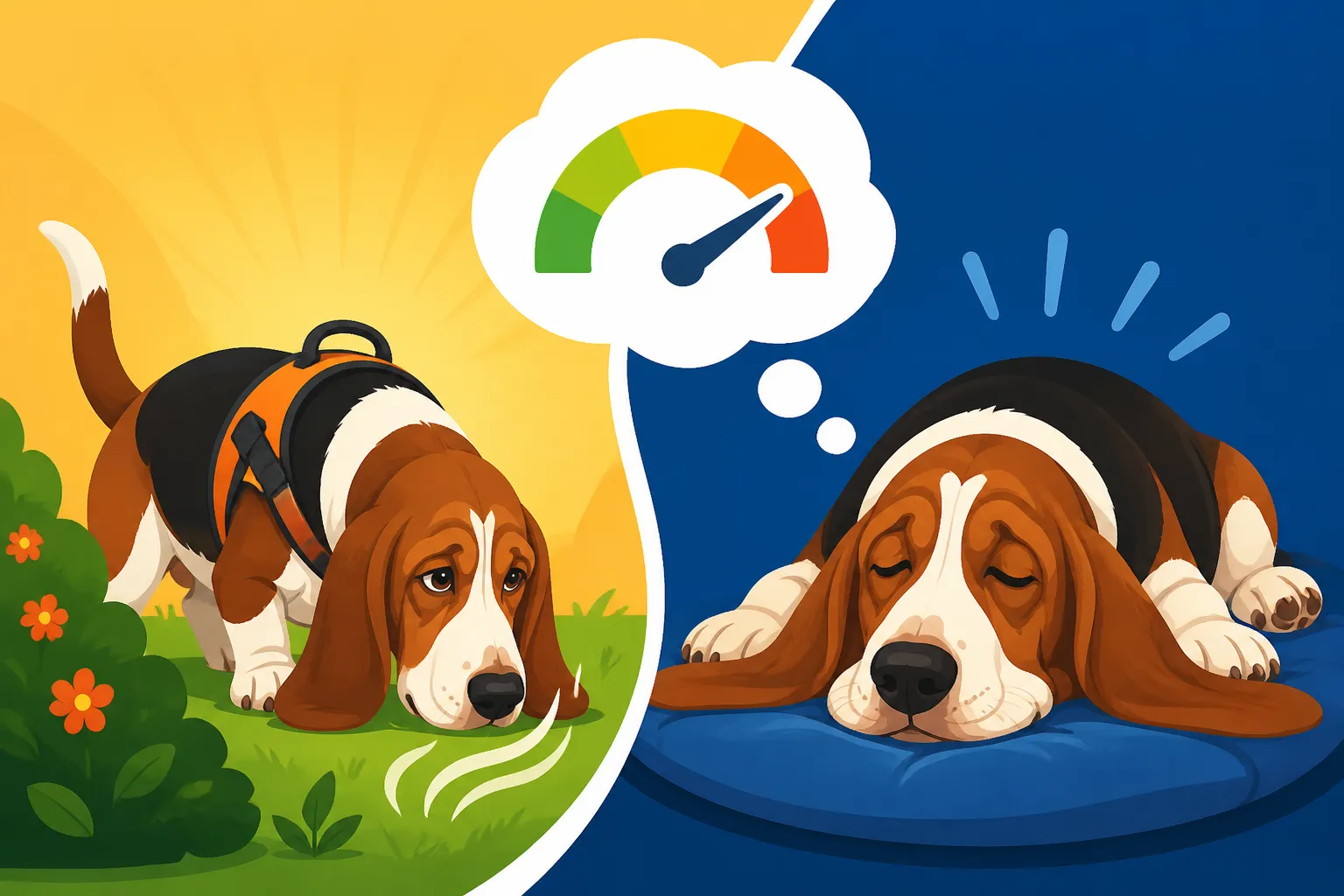
After an intense nose work session, many Basset Hound owners observe what I like to call the "scent work hangover." Your Basset might not collapse immediately, but within a relatively short period, you'll likely find them curled up in a deep sleep. This isn't just a casual nap; it's a profound rest that indicates their brain has been thoroughly exercised. Their ears are often twitching, and their paws might paddle as they continue to "hunt" in their dreams.
This deep sleep is a testament to the mental energy expended. It's a sign that their innate desire to track and find has been satisfied. Unlike physical exhaustion, which might make them sore or stiff, mental exhaustion from nose work leaves them calm and content. It addresses the intellectual and instinctual needs of the breed, which are often overlooked in favor of purely physical exercise. This satisfaction reduces their tendency to engage in destructive behaviors or constant "pestering" for attention, as their inner hound has been given its due.
Managing Session Length and Intensity
While nose work is fantastic for Bassets, like any good thing, moderation is key. You don't want to overdo it, especially when starting out. Think of it like a new gym routine for yourself; you wouldn't do an intense two-hour session on day one. For a Basset Hound, even 10-15 minutes of focused nose work can be incredibly impactful. The goal isn't to make them collapse from exhaustion, but to engage their minds sufficiently to achieve a state of contented fatigue.
Start with short, frequent sessions. Pay attention to your Basset's cues. Are they still enthusiastically searching, or are they starting to lose focus, wander, or lie down disinterestedly? These are signs they might be mentally fatigued and ready for a break. Over time, as their stamina and focus improve, you can gradually increase the duration or complexity of the exercises. The quality of the engagement is far more important than the quantity of time spent. A well-designed 15-minute session will be more effective than a rambling 45-minute one where they've lost interest. Consistency is also valuable here; a few short sessions throughout the week are often better than one long, infrequent one. For advice on teaching them to tolerate specific types of handling, see Teaching a Basset Hound to Have Its Ears Handled.
Practical Tips for Incorporating Nose Work
Bringing nose work into your Basset's life doesn't have to be complicated or expensive. There are many ways to start, from simple home games to more structured training. The key is to make it fun and accessible, leaning into their natural inclinations.
Starting Simple with a Snuffle Mat or Scattered Treats
You don't need fancy equipment or a trained professional to begin tapping into your Basset's olfactory talents. One of the easiest and most effective ways to start is with a snuffle mat. These fabric mats have various pockets and flaps where you can hide treats or kibble, forcing your Basset to use their nose to "hunt" for their meal or a delicious snack. They have to snuffle, nudge, and dig, mimicking natural foraging behaviors. You can find excellent snuffle mats on sites like Amazon, offering a range of sizes and complexities.
Another super simple method is scattering their kibble or small treats across a designated area of your yard or a room. Instead of just eating from a bowl, they have to put their nose to the ground and methodically search for each piece. This transforms mealtime into a mental exercise. Start in an easy area, like a small section of a rug or a short patch of grass, and gradually increase the difficulty by scattering in more complex environments or hiding treats under objects. This low-impact activity is perfect for all Bassets, including those who are The Old Basset Hound That Cannot Get Off the Floor.
Moving to More Structured Activities
Once your Basset has grasped the concept of finding hidden treats, you can move on to more structured and challenging nose work activities. This could involve "hide and seek" games where you hide treats in boxes, under cups, or behind furniture, and your Basset has to sniff them out. You can designate a specific "search" word or hand signal to cue them into the game, helping them understand what's expected.
For those who want to take it a step further, consider formal scent work classes. Many dog training facilities offer classes that introduce your dog to specific target odors (like birch, anise, or clove) and teach them to search for these odors in various environments, mimicking professional detection dog work. These classes provide excellent mental stimulation, build confidence, and strengthen the bond between you and your Basset. Online training platforms like BAXTER & Bella also offer resources and structured programs for teaching nose work at home, providing guidance and progression for different skill levels. Remember, giving A Basset Hound's Nose Something to Do is crucial for their well-being.
Comparing Mental and Physical Exercise for Basset Hounds
To really drive home the difference, let's look at how mental and physical exercise impact our Basset Hounds.
| Feature | Physical Exercise (e.g., Leashed Walk) | Mental Exercise (e.g., Nose Work) |
|---|---|---|
| Primary Impact | Cardiovascular health, muscle tone, joint mobility | Cognitive function, problem-solving, instinct fulfillment |
| Energy Burned | Calories, muscle glycogen | Brainpower, sensory processing, focus |
| Type of Fatigue | Physical tiredness, potentially muscle soreness | Mental satisfaction, deep relaxation, contented sleep |
| Risk of Injury | Higher for joints/back if overdone or high-impact | Very low, non-impact |
| Behavioral Outcome | Calmer due to physical release, but mental energy may remain | Calmer due to instinct fulfillment and cognitive drain |
| Adaptability | Limited by weather, physical condition, owner mobility | Highly adaptable, can be done indoors, in small spaces, varied complexity |
| Instinct Fulfillment | Moderate sniffing opportunities, but not directed | High, directly taps into natural tracking/hunting drive |
Embracing Nose Work for a Happy Basset
Ultimately, incorporating nose work into your Basset Hound's routine is one of the most enriching things you can do for them. It acknowledges and celebrates their incredible natural abilities, providing an outlet for instincts that have been honed over centuries. It's not about making them physically run until they drop, but about giving their brilliant noses and keen minds a job to do.
The deep, contented sleep that follows a good nose work session is truly a sight to behold. It tells you your Basset Hound is not just physically tired, but deeply satisfied, having spent their energy in a way that truly matters to them. Whether it's a simple scatter feed, a snuffle mat, or advanced scent detection games, you'll be giving your Basset Hound a gift that honors their heritage and enriches their daily life. They truly thrive when their noses are busy and their brains are engaged. You might find that once you start, you'll both wonder how you ever managed without it!
Disclaimer
This article is for general informational purposes only and does not constitute professional advice. Laws, prices and regulations vary by location and change over time. Consult a qualified professional for guidance on your specific situation.