Whether a Basset Hound Should Wear a Collar or Harness
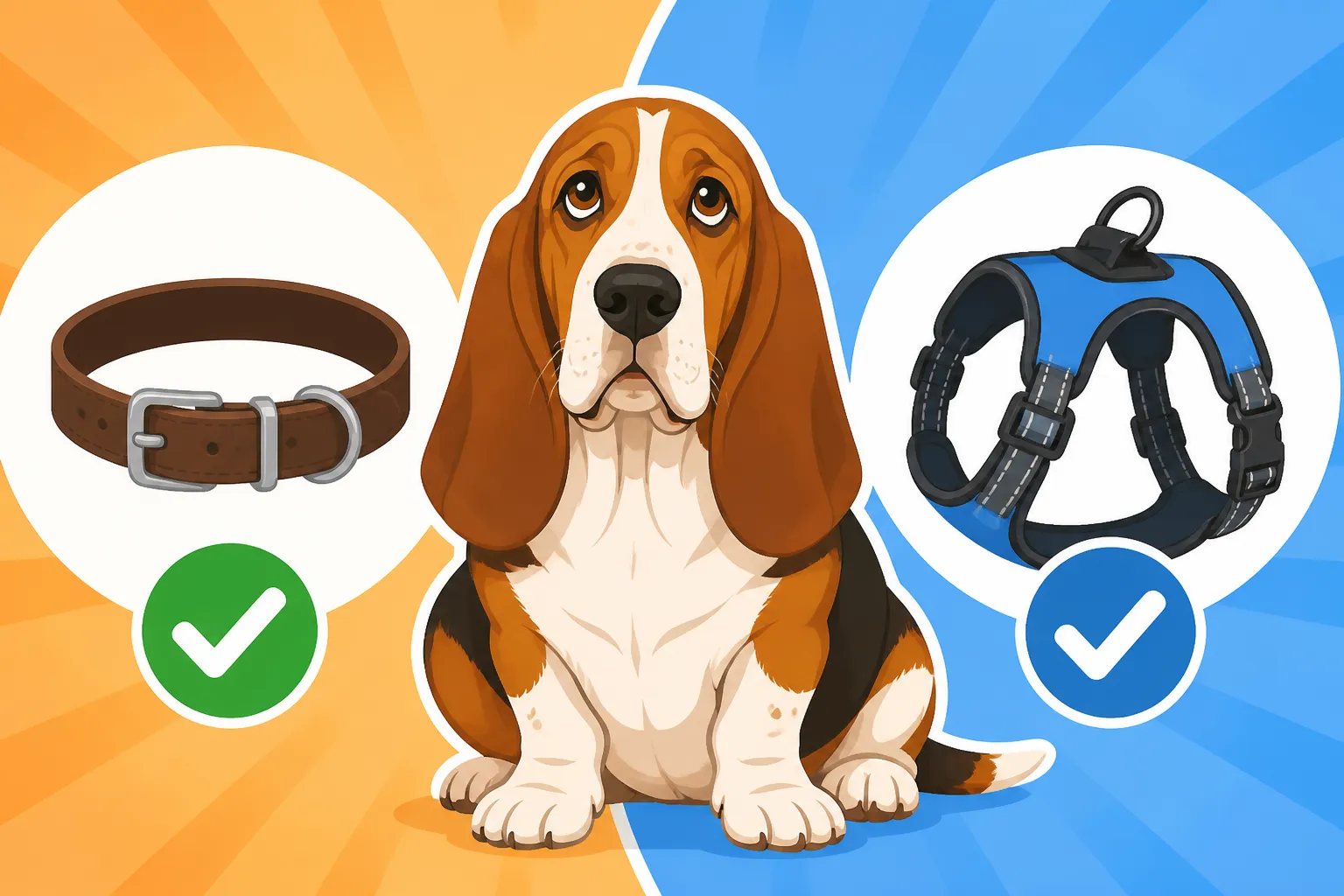
It's a question that plagues many a Basset Hound owner: "Do I really need a harness, or is a good old collar fine?" You might feel like you're constantly fighting a losing battle with your Basset on walks, feeling their powerful pull against your hand, or perhaps worrying about the strain on their unique neck and spine. It's a valid concern, and navigating the world of canine walking gear for a dog with such a distinct build can feel overwhelming. This guide is here to untangle that dilemma, exploring the pros and cons of collars versus harnesses specifically for our low-slung, big-hearted Basset Hounds, and helping you make the most informed decision for your beloved companion's comfort and safety.
The Distinctive Basset Hound Anatomy and Its Implications for Walking Gear
Our Basset Hounds are truly one-of-a-kind, aren't they? That long, heavy body, those short, crooked legs, and that deep chest—it's all part of their undeniable charm. But what makes them so endearing also dictates how we need to approach their physical care, especially when it comes to something as fundamental as walking equipment. Their unique structure isn't just for looks; it has profound implications for how they move, how they balance, and how they react to pressure around their neck and chest. Understanding this is the first step in deciding between a collar and a harness.
The Risks of a Traditional Collar on a Basset Hound's Neck
Let's be honest, a traditional flat collar seems simple enough. Slip it on, attach the leash, and off you go. But for a Basset Hound, that simplicity can hide some serious potential issues. Their neck, while sturdy, isn't designed to withstand constant, sudden pressure. When a Basset Hound, with their incredible nose leading the way, suddenly lunges or pulls hard, all that force is concentrated on a small area of their throat. This isn't just uncomfortable; it can lead to health concerns.
Think about it: beneath that loose skin and thick neck, they have a delicate trachea (windpipe). Repeated jerking or sustained pulling against a collar can cause damage over time, potentially leading to a collapsed trachea, a condition where the windpipe flattens, making breathing difficult and often resulting in a chronic cough. Beyond the trachea, the delicate structures of their larynx and cervical spine are also vulnerable. We know our Bassets have a propensity for The Back Trouble a Basset Hound Is Built Into, and while a collar's direct impact is on the neck, jarring movements can transmit stress further down the spinal column. Even if the pulling isn't severe enough to cause acute injury, chronic strain can contribute to muscle pain and discomfort, making walks, which should be a joy, a source of stress. And let's not forget the sheer ingenuity of a Basset Hound to slip a poorly fitted collar when a particularly interesting scent demands their full, unbridled attention!
How a Basset Hound's Low Center of Gravity Affects Leash Pressure
One of the most defining characteristics of a Basset Hound is their low-slung build and heavy bone structure. They carry a lot of weight close to the ground, which gives them incredible stability when tracking a scent but makes them formidable opponents on a leash. When a Basset decides to pull, it's not just a little tug; it's a full-body commitment. Their low center of gravity means they can really lean into that pull, digging in their short, sturdy legs and using their entire body mass to achieve their objective.
This anatomical advantage for scent work becomes a disadvantage when all that force is directed to a collar around their neck. Instead of effectively redirecting their momentum, a collar can often just make them gag or cough, without truly discouraging the pulling behavior. It's like trying to stop a small, determined bulldozer by pulling on a string around its exhaust pipe – ineffective and potentially damaging. This is why many owners struggle so much with Whether a Basset Hound Pulls Hard for Its Size, and why the right equipment becomes paramount for both safety and successful training.
The Harness Solution: Benefits and Types for Basset Hounds
Given the challenges presented by a Basset Hound's unique physique and their powerful drive, harnesses often emerge as a superior choice for walking and training. They offer a way to manage your Basset's enthusiasm without putting undue strain on their neck and throat, distributing pressure more evenly across their chest and shoulders. This can make walks more comfortable for your dog and more manageable for you, transforming a battle of wills into a pleasant stroll.
Front-Clip Harnesses: Redirecting the Pulling Instinct
For many Basset Hound owners, the front-clip harness is a game-changer. These harnesses feature a leash attachment ring located on your dog's chest, rather than on their back. The genius of this design lies in its ability to naturally redirect your dog's momentum. When your Basset pulls while wearing a front-clip harness, the leash connection point pulls them gently to the side, turning their body back towards you. This makes it incredibly difficult for them to continue pulling forward in a straight line, as their body is constantly being reoriented.
This redirection isn't about causing discomfort; it's about making pulling less efficient and less rewarding. Over time, your Basset learns that pulling doesn't get them where they want to go, and they often choose to walk beside you with a looser leash. These harnesses are particularly effective for Basset Hounds because they leverage their sturdy chest without putting any pressure on their delicate neck. Brands like those found on Amazon offer a wide variety of front-clip harnesses, so you can find one that fits your Basset's deep chest and unique body shape. Look for designs that allow for ample shoulder movement, preventing chafing and ensuring comfort during those long, scent-filled explorations.
Back-Clip Harnesses: Comfort and Security for Steady Walkers
While front-clip harnesses excel at curbing pulling, back-clip harnesses also have their place, especially for Basset Hounds who are already reliable walkers or for those moments when you prioritize comfort and freedom of movement. A back-clip harness has the leash attachment situated on your dog's back, typically between their shoulder blades. This design is fantastic for distributing pressure across a wider area of the dog's body, making it very comfortable for everyday wear.
For a Basset Hound that doesn't pull much, or once you've successfully trained them with a front-clip harness and they've learned good leash manners, a back-clip harness can be an excellent choice. It allows for a more natural gait and less interference with their front leg movement. It also often provides a slightly more secure fit around the body, reducing the chance of a determined Basset wiggling out. However, if your Basset is a strong puller, a back-clip harness can sometimes inadvertently encourage more pulling, as it allows them to lean into their weight and pull with their entire body, much like a sled dog. So, while comfortable, it might not be the primary solution for teaching a Basset to walk nicely on a leash. This type of harness is great for those leisurely strolls where your Basset is just enjoying the smells, like exploring new areas or taking shorter jaunts that don't require intense training focus.
No-Pull Harnesses: A Gentle Approach to Training
Beyond the standard front-clip and back-clip designs, there's a broader category often referred to as "no-pull" harnesses. These harnesses typically incorporate features designed specifically to discourage pulling without causing pain or discomfort. Many front-clip harnesses fall under this umbrella, but some unique designs might use different mechanisms. For example, some have gentle tightening actions that engage when a dog pulls, providing a subtle reminder to ease up, while others might have multiple adjustment points to achieve a snug, escape-proof fit that prevents a Basset from leveraging their body against the leash.
The key with any no-pull harness is that it works by making pulling uncomfortable or ineffective, rather than painful. It allows for positive reinforcement training, where you reward your Basset for walking nicely, and the harness provides immediate feedback when they start to pull. This gentle approach is crucial for a breed as sensitive and intelligent as the Basset Hound. Integrating a good no-pull harness with training advice from resources like BAXTER & Bella can really set you and your Basset up for success on walks. The goal isn't to force compliance but to teach a more comfortable and cooperative way of walking together.
Practical Considerations When Choosing Walking Gear
Deciding on a harness is a great step, but the journey doesn't end there. There are practical details that can make all the difference in your Basset Hound's comfort, safety, and your peace of mind. Getting the fit right, choosing durable materials, and considering what your Basset experiences while wearing the gear are paramount. After all, even the best harness won't work if it's uncomfortable or incorrectly used.
Getting the Right Fit: A Crucial Step for Comfort and Safety
This might sound obvious, but getting the right fit for a Basset Hound can be trickier than it seems. Their deep chest, short legs, and sometimes surprisingly slender neck compared to their body mass mean that many off-the-rack harnesses might not sit perfectly. A harness that's too loose can allow your Houdini-hound to back out of it, especially when spooked by something like a loud noise or an enticing rabbit trail. A harness that's too tight, on the other hand, can chafe under the armpits, restrict shoulder movement, or dig into their skin, causing discomfort and potentially skin irritation in their delicate folds.
You'll need to measure your Basset carefully: around the deepest part of their chest, just behind the front legs, and sometimes around their neck or the base of their neck, depending on the harness style. Always check that you can comfortably slide two fingers under all straps of the harness. Watch your Basset move in the harness: does it rub? Does it impede their characteristic lumbering gait? Does it shift significantly when they walk or turn? A proper fit ensures both security and comfort, making walks a positive experience. This attention to detail is essential for their overall well-being, especially considering issues like The Skin Under a Basset Hound's Folds can be exacerbated by ill-fitting gear.
Materials and Durability: What to Look For
Basset Hounds are robust dogs, and their walking gear needs to stand up to their strength and their adventurous spirit. When choosing a harness, think about the materials it's made from. Look for strong, durable webbing that won't fray easily. The buckles and D-rings should be sturdy metal or high-quality, reinforced plastic that can withstand a determined pull.
Beyond strength, consider comfort and breathability. While Bassets have short coats, they can still overheat, especially in warmer weather or if they are What Extra Weight Does to a Basset Hound. Look for harnesses with padded sections or breathable mesh where the material makes contact with their body, particularly under the chest and around the shoulders. Neoprene or soft nylon can be good choices that are both strong and relatively comfortable against the skin. Easy cleaning is another bonus – Bassets love to explore, and their harness will undoubtedly pick up dirt and interesting scents. Being able to toss it in the wash or easily wipe it down is a real time-saver. Think about brands that focus on outdoor gear or those designed for active dogs; they often prioritize these qualities.
Here's a quick comparison of collars vs. harnesses for Basset Hounds:
| Feature/Benefit | Traditional Collar | Harness (General) | Front-Clip Harness | Back-Clip Harness |
|---|---|---|---|---|
| Primary Function | ID tags, light control | Walking control, safety | No-pull training, redirection | Comfort, general walking for non-pullers |
| Pressure Distribution | Concentrated on neck/throat | Distributed across chest/shoulders | Distributed across chest/shoulders | Distributed across back/shoulders |
| Pulling Control | Can exacerbate pulling, risk of tracheal damage | Generally better, reduces neck strain | Excellent, redirects dog's forward momentum | Less effective for pulling, can encourage it |
| Escape Risk | Higher, especially for determined Bassets | Lower if properly fitted | Low | Low |
| Comfort | Can be uncomfortable with pulling | Generally comfortable, less neck strain | Comfortable when fitted well | Very comfortable for steady walkers |
| Anatomical Suitability | Poor for deep-chested, short-necked breeds | Good, accommodates unique Basset build | Excellent for Basset physique | Good for Basset physique, if not pulling heavily |
| Training Aid | Limited beyond basic commands (sit, stay) | Aids in loose-leash training | Highly effective for teaching loose-leash walking | Better for maintenance once loose-leash is learned |
When a Collar Might Still Be Useful (and How to Use It Safely)
Despite the clear advantages of a harness for walking a Basset Hound, it's not to say that collars are entirely without purpose. They still have a vital role to play in your dog's life, just perhaps not as the primary means of leash attachment during walks. Understanding when and how to use a collar safely can provide an extra layer of security and fulfill other important functions for your beloved companion.
Identification and Tags: The Primary Role of a Collar
First and foremost, a collar serves as the perfect home for your Basset Hound's identification tags. This is absolutely critical, even if your dog is microchipped. A collar with a clearly legible ID tag, displaying your phone number and perhaps your address, provides immediate identification if your Basset ever gets lost. Think about it: a Good Samaritan who finds your wandering Basset (perhaps after they followed a particularly compelling scent trail) can instantly call you, rather than needing to take them to a vet or shelter to be scanned for a microchip. This immediate contact can make all the difference in a stressful situation, especially for a breed like the Basset that might be prone to following its nose.
While it might seem redundant if you also use a harness, a collar with tags should be considered standard practice. It's on your dog virtually all the time, providing that constant, visible link back to you. For this purpose, a lightweight, comfortable flat collar that fits snugly enough not to slip off but loose enough not to restrict movement is ideal. It's not for pulling, it's for identifying.
Combining Collar and Harness for Added Security
For those Basset Hounds who are true escape artists, or for owners who simply want maximum security, using both a collar and a harness simultaneously can be a brilliant strategy. This isn't about attaching two leashes, but about having a backup plan. You can attach your leash to the harness (ideally a front-clip or well-fitted no-pull harness) as your primary point of control. Meanwhile, your Basset wears a flat collar with their ID tags.
For an extra layer of security, especially if you're concerned about them slipping the harness, some owners use a coupler or even a carabiner to connect the leash attachment point on the harness to the D-ring on the collar. This means if your Basset somehow backs out of their harness, they're still attached to you via their collar. This method gives you peace of mind, particularly in busy areas or when introducing your Basset to new environments where their scent drive might be particularly strong. It's a pragmatic approach that acknowledges the Basset Hound's independent spirit and powerful nose, ensuring that even if they get a little too focused on a trail, they remain safely by your side. Remember, for a breed known for its ability to go deaf on a scent, this dual-attachment method can be a real lifesaver. Whether a Basset Hound Should Wear a Tracker is another consideration for the really determined explorer!
Disclaimer
This article is for general informational purposes only and does not constitute professional advice. Laws, prices and regulations vary by location and change over time. Consult a qualified professional for guidance on your specific situation.