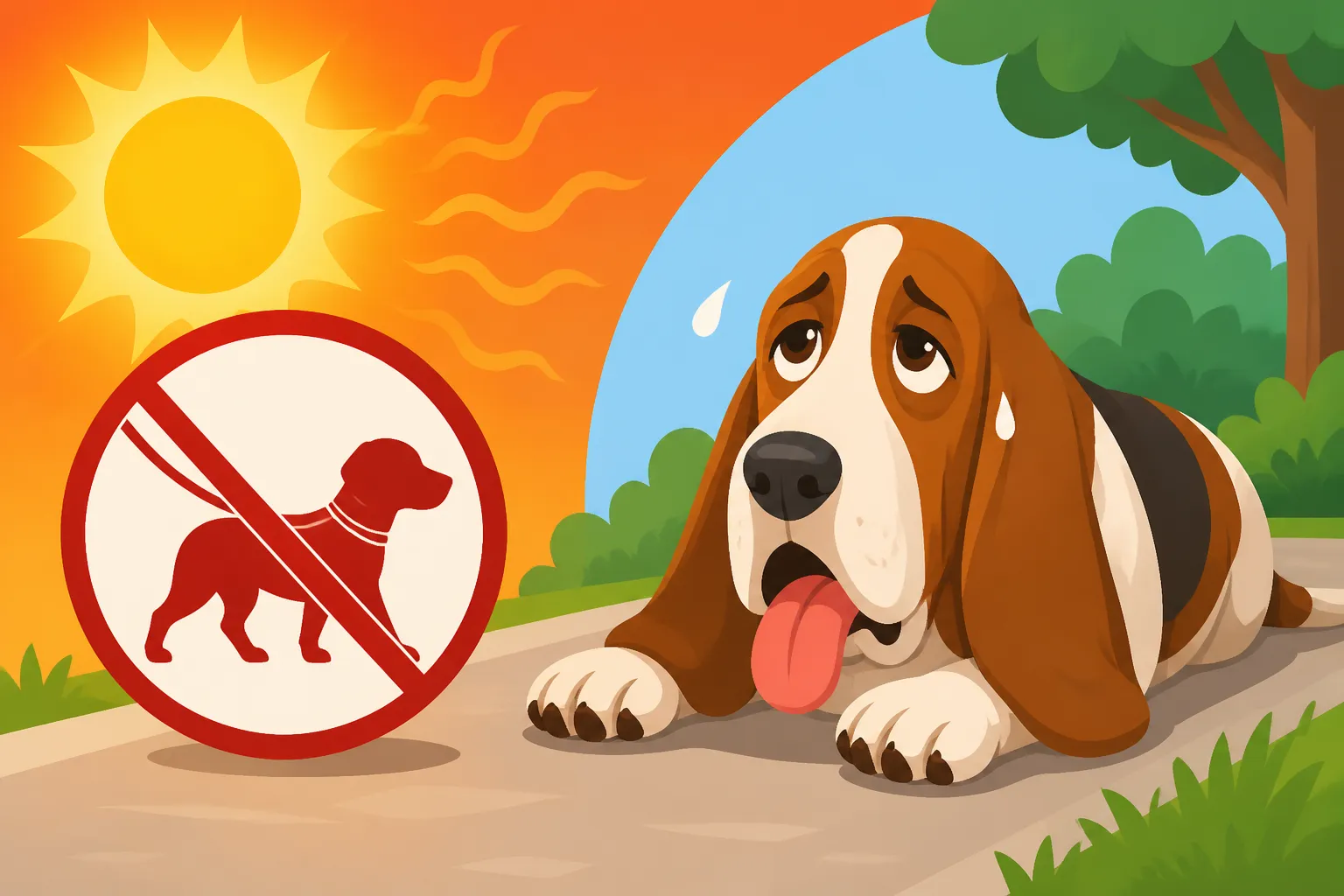
Whether a Basset Hound Should Walk in the Heat
Oh, the quintessential summer dilemma for us Basset Hound parents! It's scorching outside, your loyal, low-slung companion gives you that soulful, expectant look, and you wonder: should we actually go for a walk in this heat? It's not just a casual question; for our beloved Bassets, a walk on a warm day can quickly turn from a pleasant sniff-a-thon into a serious health risk. This guide will walk you through understanding why heat is such a concern for Basset Hounds, how to recognize the danger signs, and crucially, how to keep them safe and comfortable when the temperatures rise.
Understanding Your Basset Hound's Unique Vulnerabilities to Heat
Let's be real, Basset Hounds aren't exactly built for speed or endurance in the sweltering sun. Their unique conformation, while charming and iconic, unfortunately predisposes them to overheating much faster than many other breeds. It’s not just about how hot you feel; it’s about their specific biology working against them when the mercury climbs.
The Heavy Coat and Loose Skin Challenge
Many people look at a Basset Hound's short, smooth coat and think, "Oh, they must be fine in the heat!" But that's a common misconception. While it's not a thick, double coat like a Husky, their dense, short hair still traps heat close to their body. Think of it like wearing a dense, though thin, wool sweater in summer – it might not be bulky, but it's still warm. Beyond the coat, consider all that glorious, loose skin. Those wonderful folds, especially around their neck and face, are fantastic for trapping scent and giving them that adorable, mournful expression, but they also trap heat and moisture. This creates little pockets where air circulation is minimal, making it harder for their body to cool down. It’s like carrying a personal blanket everywhere you go.
Short Stature and Ground Heat Absorption
This is a huge one that often gets overlooked. Our Basset Hounds are, well, basset – low to the ground. While this is perfect for tracking scents, it means their entire body is much closer to the hot pavement, asphalt, or even sun-baked grass. These surfaces absorb and radiate heat at a much higher temperature than the ambient air. Imagine walking barefoot on black asphalt on a sunny afternoon; that's essentially what your Basset Hound's paw pads and chest are contending with. A ground temperature that feels merely warm to your hand can be scalding hot to their sensitive paws, and the radiating heat significantly increases their overall body temperature. Their short legs simply don't offer much clearance from this intense ground heat, making them susceptible to heatstroke from the ground up, not just from the air. This is a big part of why The Crooked Front a Basset Hound Is Built On can be a double-edged sword when it comes to summer walks.
Respiratory Considerations
While Basset Hounds aren't typically classified as brachycephalic (short-nosed) in the same extreme way as, say, a Bulldog or a Pug, they do have a unique facial structure and respiratory system that can make heat regulation tricky. Their jowls and relatively short muzzle can sometimes contribute to less efficient panting compared to breeds with longer snouts. Dogs primarily cool themselves by panting, which allows moisture to evaporate from their tongue and respiratory tract. If this process is less efficient due to their anatomy, or if the air they're trying to breathe is already hot and humid, they struggle to dissipate heat effectively. Furthermore, the loose skin around their necks and chests can sometimes compress their airways slightly, further impeding efficient breathing when they're working hard to cool down. This is an important distinction to make, as even if they aren't 'smushed-faced,' their breathing can still be compromised in challenging conditions.
Recognizing the Warning Signs of Overheating
As responsible Basset Hound parents, it’s absolutely critical to be vigilant and recognize the signs of overheating early. Our pups can’t tell us they’re feeling unwell, and by the time obvious symptoms appear, they might already be in distress. Knowing what to look for can make all the difference between a quick cool-down and a trip to the emergency vet.
Early Indicators of Discomfort
Before full-blown heatstroke sets in, your Basset Hound will likely give you some subtle clues that they're getting too warm. The very first thing you'll notice is excessive panting. This isn't just the normal heavy breathing after a good run; it's panting that seems more labored, faster, and shallower than usual. Their tongue might appear wider or longer than normal. You might also observe increased drooling, often thicker and stickier than their usual Basset dribble – and trust me, we know their usual drool volume! Their gums might appear a brighter red than their healthy pink, indicating increased blood flow to the surface to try and cool down. They might also become lethargic or reluctant to move, slowing their pace dramatically or even trying to lie down and refuse to continue the walk. Don't mistake this for stubbornness; it's a genuine plea for a break. If you notice these signs, it’s time to stop, seek shade, and offer water immediately. This is also where your vigilance about Keeping a Basset Hound at Its Correct Weight really pays off, as overweight dogs are at even higher risk.
Advanced Symptoms and Emergency Situations
If the early signs are missed or ignored, the situation can escalate rapidly into a dangerous, life-threatening emergency. Advanced symptoms of heatstroke in a Basset Hound include staggering or disorientation, as if they can't coordinate their movements properly. They might appear confused or unresponsive. Their gums could change from bright red to a dusky, pale, or even bluish color, indicating poor circulation and oxygen deprivation. Vomiting or diarrhea, sometimes bloody, can occur as their internal organs start to suffer. In very severe cases, they might experience seizures or collapse. Their body temperature can soar well above the normal range (which is typically around 101.5°F or 38.6°C). At this point, every second counts. If you see any of these advanced symptoms, your dog is in a critical condition and needs immediate veterinary attention. Do not delay.
Safe Walking Strategies for Warm Weather
Given their susceptibility, walking your Basset Hound in warm weather requires a bit more thought and planning than simply grabbing the leash and heading out the door. It's all about proactive measures to ensure their safety and comfort.
Timing Your Outdoor Adventures
This is arguably the most important strategy. During warmer months, you simply cannot walk your Basset Hound in the middle of the day. The ideal times for walks are early morning – think sunrise – and late evening, after the sun has fully set and the ground has had a chance to cool down. Even on seemingly mild days, remember that pavement and asphalt retain heat for hours. I always recommend the "five-second rule": place the back of your hand on the pavement. If you can't hold it there comfortably for five seconds, it's too hot for your Basset's paws. This simple test can save their paw pads from severe burns. On truly scorching days, you might even need to skip traditional walks entirely and opt for indoor enrichment or very short potty breaks in the shade.
Choosing the Right Terrain and Hydration
When you do venture out, stick to grassy areas or shaded trails. These surfaces don't absorb and radiate heat in the same way pavement does. Avoid sidewalks, roads, and especially blacktop paths. Always carry water – and plenty of it! A collapsible bowl that you can easily attach to your belt or leash is invaluable. Offer water frequently, even if your Basset doesn't seem to be panting excessively. Staying hydrated is crucial for their body's ability to regulate temperature. A great tip I picked up is to keep a water bottle and bowl ready by the door, so you never forget it on a walk. You can find excellent travel bowls on sites like Chewy or Amazon.
Essential Gear and Cooling Aids
Sometimes, we need a little help from our friends, and by friends, I mean handy cooling products!
Here's a quick table of helpful gear:
| Item | Purpose | How it Helps Basset Hounds |
|---|---|---|
| Cooling Vest | Absorbs and dissipates body heat through evaporation. | Keeps core body temperature down, especially across their broad chest and back, without adding bulk. Look for lightweight, breathable options. |
| Cooling Bandana | Worn around the neck, often soaked in water or containing gel inserts. | Cools the blood flowing to the brain and body. Important as Bassets have substantial neck folds where heat can get trapped. |
| Paw Protectors | Boots or wax to shield paw pads from hot surfaces. | Crucial for preventing burns on their sensitive paw pads, especially given their low stature and direct contact with hot ground. |
| Travel Water Bottle | Ensures fresh water is always available on the go. | Essential for constant hydration, aiding their natural cooling mechanism (panting). Some even have attached bowls. |
| Shade Canopy/Tent | Provides portable shade for outdoor breaks or events. | Offers immediate relief from direct sun, preventing rapid heat gain during rest stops or if you're attending an outdoor event with your Basset. |
A cooling vest, often found on Amazon or Chewy, can make a huge difference, especially if you live somewhere with high humidity. These vests typically work by evaporating water, drawing heat away from your dog's core. Cooling bandanas, which you soak in cold water, can also help by cooling the blood flow around their neck. Don't forget paw protection – special dog boots or even paw wax can protect their pads from scorching pavement. If your Basset will tolerate them, these are excellent for very short, unavoidable walks on warm surfaces. Whether a Basset Hound's Ears Should Be Dried After Swimming also hints at the importance of keeping them dry and aired out to prevent issues beyond just heat.
When to Stay Home: Assessing Risk Factors
There will be days when, despite your best intentions and all the gear in the world, the safest option for your Basset Hound is to simply stay home. Knowing when to make this call is crucial for their well-being.
Humidity and Temperature Combinations
It's not just the temperature reading on your thermometer that matters; humidity plays a massive role in how well a dog can cool itself. Dogs primarily pant to release heat through evaporation. When the air is already saturated with moisture (high humidity), this evaporation process becomes much less efficient. Think about how much harder it is for us humans to cool down on a humid day versus a dry one, even if the temperature is the same. For a Basset Hound, whose panting might already be less efficient than a more streamlined breed, high humidity can quickly push them into dangerous territory.
A combination of even moderate temperature (e.g., 75-80°F or 24-27°C) with high humidity (above 60-70%) can be far more dangerous than a dry 90°F (32°C) day. Always check the heat index or "feels like" temperature, not just the raw number. If the air feels thick and heavy to you, imagine how it feels for a dog covered in fur trying to pant their way to coolness. On such days, indoor activities, puzzle toys, or a romp in a shaded, air-conditioned room are much better alternatives to any outdoor excursion.
Individual Dog Factors (Age, Health, Weight)
Every Basset Hound is an individual, and their tolerance for heat can vary significantly based on their personal circumstances.
- Age: Both very young puppies and senior Basset Hounds are more susceptible to heatstroke. Puppies haven't fully developed their thermoregulation systems, and senior dogs might have underlying health conditions that make them less able to cope with stress. An old Basset Hound might also struggle with mobility, and forcing them to walk on hot surfaces when their joints already ache is simply unkind. You can read more about The Old Basset Hound That Cannot Get Off the Floor in related articles.
- Health Conditions: Any existing health issues can increase the risk. Dogs with heart conditions, respiratory problems, or those on certain medications may struggle more in the heat. Even something like The Ear Infections That Never Really Leave a Basset Hound can make them more uncomfortable, which adds to overall stress. If your Basset has a chronic condition, always consult your vet for specific advice on warm weather exercise.
- Weight: This is a big one. What Extra Weight Does to a Basset Hound cannot be overstated, especially when it comes to heat. Overweight Basset Hounds have an insulating layer of fat that makes it much harder for them to dissipate heat. They also have to work harder to move, generating more body heat in the process. Keeping your Basset at a healthy weight is one of the best preventative measures against heat-related illness. You can explore healthy dog food options from brands like Ollie, which can help with weight management.
By considering all these factors, you can make an informed decision that prioritizes your beloved Basset's safety over sticking to a rigid walking schedule.
Immediate Action: What to Do if Your Basset Hound Overheats
Despite our best efforts, sometimes accidents happen, or a situation escalates quicker than anticipated. If you suspect your Basset Hound is overheating, quick and correct action is paramount. Don't panic, but act swiftly.
First Aid Steps
Your immediate goal is to lower their body temperature safely and quickly.
- Get to Shade or Indoors Immediately: The very first thing is to remove them from the heat source. Get them into a shaded area, an air-conditioned car, or inside your home.
- Apply Cool (Not Cold) Water: Gently wet your Basset Hound with cool water. Focus on areas where blood vessels are close to the surface, like their ears (especially the flaps, but avoid getting water directly into the ear canal), paw pads, armpits, and groin. You can use wet towels or cloths. Do NOT use ice-cold water, as this can cause blood vessels to constrict, trapping heat inside, and can also lead to dangerous shock.
- Use a Fan: If possible, direct a fan onto their wet body. The evaporative cooling effect is highly effective. Even fanning them with a piece of cardboard is better than nothing.
- Offer Small Amounts of Water: If they are conscious and willing, offer small amounts of cool (not cold) water to drink. Don't force them to drink, especially if they are weak or vomiting, as they could aspirate it.
- Monitor Temperature: If you have a rectal thermometer, take their temperature. Anything above 104°F (40°C) is a serious concern, and even lower temperatures with severe symptoms warrant action. Stop cooling efforts once their temperature drops to about 103°F (39.4°C) to prevent overcooling.
Remember, these are first aid steps to stabilize your dog. They are not a substitute for professional veterinary care.
When to Seek Veterinary Help
Always treat suspected heatstroke as an emergency. Even if your Basset Hound seems to recover after your initial cooling efforts, internal damage to organs can still occur, and complications can arise hours later.
Seek immediate veterinary attention if:
- Your Basset Hound's temperature was very high (104°F/40°C or above).
- They showed any advanced symptoms like staggering, disorientation, vomiting, diarrhea, seizures, or collapse.
- They don't seem to be recovering quickly or are still lethargic and unwell after cooling down.
- You are at all unsure about their condition.
Call your vet or the nearest emergency veterinary clinic while you are performing first aid so they can prepare for your arrival. Be prepared to tell them what happened, the symptoms you observed, and what first aid measures you've taken. It’s always better to be safe than sorry when it comes to heatstroke; an emergency visit could save your beloved Basset Hound's life.
Disclaimer
This article is for general informational purposes only and does not constitute professional advice. Laws, prices and regulations vary by location and change over time. Consult a qualified professional for guidance on your specific situation.