Whether Pavement Burns a Basset Hound’s Pads
It's a common worry for us Basset Hound parents, isn't it? That beautiful, short-legged waddle might be adorable, but it brings their precious paws so much closer to the ground, especially on scorching summer days. The thought of them treading on blisteringly hot pavement or asphalt is enough to make any of us pause before heading out for a walk. This guide is all about understanding just how vulnerable a Basset Hound's paw pads are to hot surfaces, how to spot trouble, and most importantly, how to keep those paws safe and comfortable so your furry friend can enjoy their sniffing adventures without pain.
The Delicate Nature of Basset Hound Paws
We adore our Bassets for their distinctive looks, their long, luxurious ears, and those wonderfully wrinkly faces. But beneath all that charm lies a unique physical structure that makes their paws particularly susceptible to hot surfaces. It’s not just about them being low to the ground; there’s a whole host of factors that contribute to their vulnerability.
Why Basset Hound Pads Are More Vulnerable
Unlike some breeds that are built for long, strenuous runs over varied terrain, Basset Hounds tend to be more laid-back. While they certainly need their regular exercise to stay healthy and manage their weight, their activity levels don't typically involve miles of pounding pavement. This means their paw pads, while still tough, might not build up the same extreme calloused resilience as those of, say, a working retriever or a high-endurance sled dog. Their pads are designed for comfort and scent tracking, not necessarily for extreme heat resistance.
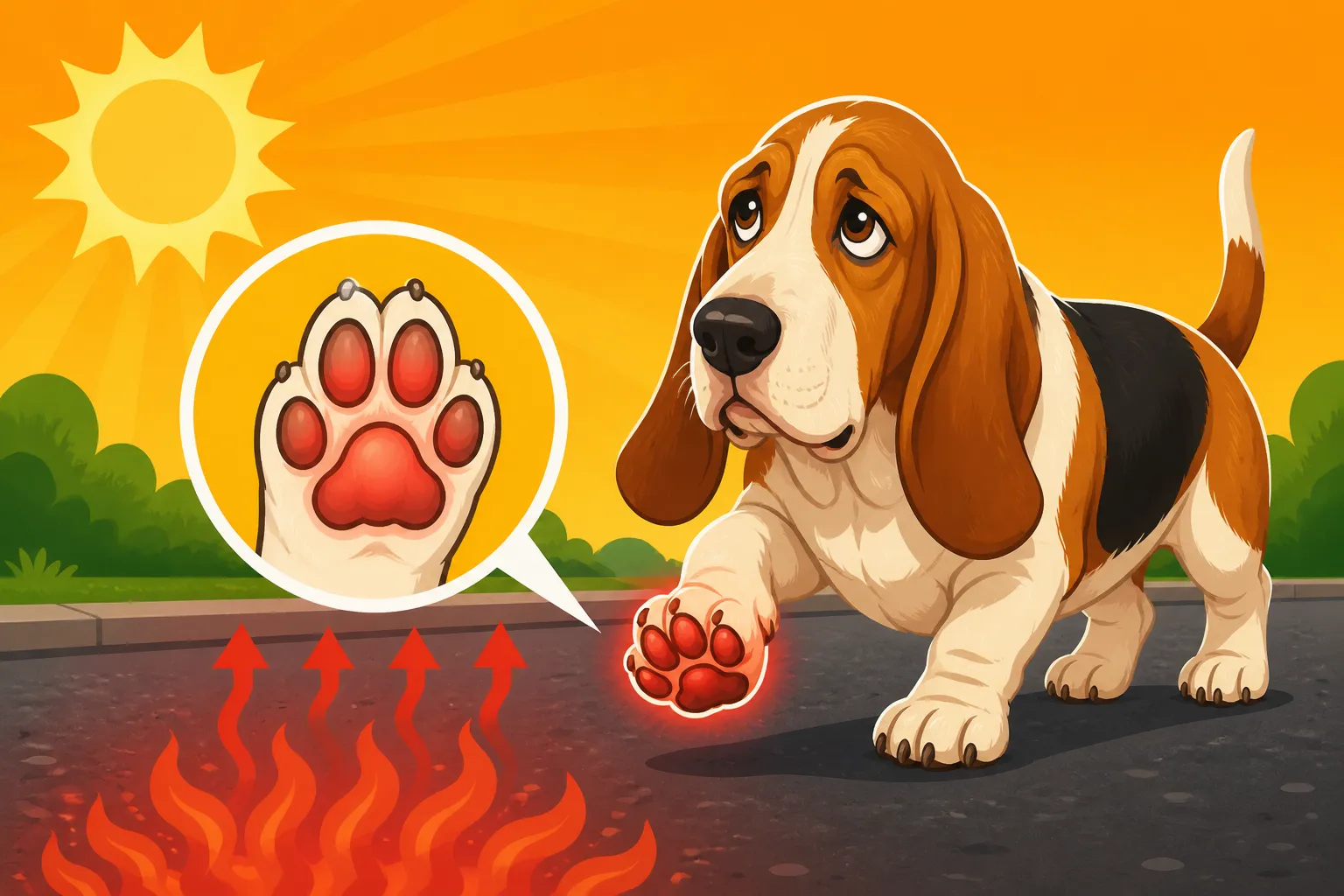
Furthermore, their low-slung body, which is fantastic for keeping that powerful nose to the ground on a trail, also means their entire undersides, including their paws, are much closer to the radiant heat coming off hot pavement. Think of it like walking with your hands just inches above a hot stove – the closer you are, the more intense the heat. This physical proximity is a significant factor in why a Basset can suffer burns more readily than a taller dog whose pads are further from the superheated ground. It's a design feature that serves their hunting instincts but requires extra vigilance from us as owners. You might also notice how their general skin can be sensitive, so it's not just the pads; their unique build requires all-around mindful care, similar to how we pay attention to The Skin Under a Basset Hound's Folds.
Recognizing the Signs of Pad Damage
Knowing what to look for is half the battle. If your Basset Hound has walked on hot pavement, the signs of discomfort or actual burns can range from subtle to painfully obvious. Immediately after a walk, you might notice them limping or trying to lift their paws off the ground more frequently. They might start licking or chewing excessively at their paws, indicating irritation or pain. Upon closer inspection, you could see redness, swelling, or even blisters on their paw pads. In severe cases, the pads might appear discolored, peeling, or cracked, revealing raw skin underneath.
A Basset Hound might also be reluctant to put weight on a particular paw, or they might outright refuse to walk at all. Sometimes, they'll sit down abruptly during a walk, despite their usual stubborn charm. If you notice any of these signs, don't delay. Gently inspect their paws, and if you suspect a burn, immediate first aid is crucial before heading to the vet. Remember, our Bassets are incredibly stoic and often try to "push through" discomfort, especially if they're on an interesting scent. It's up to us to be their advocates and recognize when something is truly wrong. They often mask their pain until it becomes unbearable, so always err on the side of caution.
Assessing Pavement Temperatures and Risks
It’s not just the air temperature that matters; it’s the surface temperature. That's the key distinction many of us overlook, and it can make all the difference in keeping our Bassets safe on walks.
The "Five-Second Rule" and Its Importance
This rule is a simple, yet incredibly effective, guideline to assess pavement safety. Before you step out with your Basset Hound, place the back of your hand or your bare foot flat on the pavement for at least five seconds. If it's too hot for you to hold it there comfortably, then it's definitely too hot for your Basset's paws. It’s a direct and immediate indicator of the surface temperature, which can be dramatically different from the ambient air temperature reported by your weather app.
Even on a day where the air temperature feels pleasant, asphalt or concrete in direct sunlight can absorb and retain heat, reaching temperatures that are literally scalding to paw pads. Imagine walking barefoot on a blacktop parking lot in the middle of a summer afternoon – it's an experience we wouldn't wish on our worst enemy, let alone our beloved Bassets. This rule empowers you to make an informed decision right before you leave the house, potentially preventing painful burns and unnecessary vet visits. Make it a habit, especially during warmer months, to always check the ground before embarking on any pavement adventures. This quick check can save your Basset a lot of distress and keep their paws healthy, which is a vital part of Looking After a Basset Hound's Feet and Nails.
Factors Influencing Pavement Heat
Several factors contribute to how hot a surface can get, and understanding these can help you plan your walks strategically.
Firstly, the time of day is paramount. The sun's rays are most direct and intense between 10 AM and 4 PM. Even if the morning or evening is cooler, pavement that has been baking in the sun all day will retain that heat for hours. Scheduling walks outside these peak sun hours is a non-negotiable for paw safety in warm weather.
Secondly, the type of surface plays a huge role. Dark asphalt, for example, absorbs and retains significantly more heat than lighter concrete, dirt paths, or grassy areas. A patch of grass next to a sidewalk might feel perfectly cool, while the sidewalk itself is radiating intense heat. Always prioritize walking on natural, unpaved surfaces whenever possible. Even sandy beaches can get surprisingly hot, so don't assume every natural surface is safe.
Finally, direct sun exposure versus shade is critical. Pavement in direct sunlight will be much hotter than a shaded section. Even short bursts of direct sun on an otherwise shady walk can be enough to cause discomfort or burns. Always seek out shady routes, or consider indoor activities during periods of extreme heat. Living in an area with hot summers, I’ve learned that sometimes the best walk is no walk on pavement at all, opting instead for a quick potty break on the lawn or a fun indoor game. Whether a Basset Hound Should Walk in the Heat is a serious consideration, and these factors dictate the answer.
Practical Solutions for Protecting Those Precious Paws
Prevention is always better than cure, especially when it comes to something as fundamental as your Basset Hound's ability to walk comfortably. There are several proactive steps we can take to keep their pads safe.
Adjusting Your Walking Schedule
The simplest and most effective way to protect your Basset's paws is to adjust when you take them for walks. During warmer months, especially in regions prone to high temperatures, prioritize early morning and late evening strolls. These are the times when the sun is less intense, and the ground has had a chance to cool down. A sunrise walk can be a beautiful experience for both of you, offering cooler air and pavement, as well as fewer distractions. Similarly, a walk after the sun has set allows for heat dissipation from the day.
On days when the heat is unrelenting, even morning and evening walks might not be enough. In these situations, limit outdoor excursions to quick potty breaks on a grassy patch and focus on indoor enrichment. Utilize puzzle toys, training sessions, or gentle play inside your air-conditioned home to keep your Basset mentally and physically stimulated. Remember, their well-being comes first, even if it means altering their routine. It's also a good idea to consider the overall physical strain on their unique body, as conditions that impact their paws can also contribute to The Back Trouble a Basset Hound Is Built Into.
Protective Gear for Pavement Walks
For those unavoidable pavement walks, or when natural surfaces simply aren't an option, protective gear can be a real lifesaver for your Basset's paws.
Dog boots are the most robust form of protection. They come in various styles and materials, designed to shield paws from heat, cold, sharp objects, and rough terrain. Getting your Basset to accept wearing boots can be a process, often requiring patient, positive reinforcement and gradual introduction. Start with short periods indoors, associating the boots with treats and praise, and slowly increase the duration. When choosing boots, look for ones that are comfortable, breathable, and have non-slip soles. You can find a huge variety of paw balms and protective boots on sites like Chewy or Amazon, offering different materials and designs to suit your Basset's specific needs. Just be sure to measure your Basset's paws carefully for the best fit.
While not a direct heat shield, paw balms and waxes can also play a crucial role in overall paw health. Products like Musher's Secret or other quality paw balms (again, readily available on platforms like Chewy) create a protective barrier that helps prevent dryness and cracking. Healthy, moisturized pads are more resilient and less prone to injury, whether from minor abrasions or the cumulative stress of walking on various surfaces. Think of it as preventative skincare for their paws – keeping them supple makes them less vulnerable to damage.
Creating a Safe Walking Environment
Beyond adjusting timings and using gear, actively seeking out safer walking environments is key. Always opt for grassy parks, shaded trails, or soft dirt paths whenever possible. These natural surfaces not only stay cooler than pavement but are also generally softer on their joints. When you're out, scan ahead for shaded areas and try to stick to them, even if it means zig-zagging a bit across the sidewalk.
If you live in an urban environment where green spaces are limited, explore alternatives. Some pet-friendly indoor malls or stores allow dogs, offering a climate-controlled environment for a change of scenery. Even a short car ride to a cooler, more natural area can be a worthwhile trip. Consider the larger picture of your Basset's well-being and what they need daily. This kind of thoughtful planning is part of What a Basset Hound Needs Every Day for a happy, healthy life. And remember, sometimes the best solution is simply to enrich their environment indoors rather than risk their paws outdoors.
First Aid and Long-Term Paw Care
Despite our best efforts, sometimes accidents happen. Knowing how to react to a potential paw burn and maintaining overall paw health is crucial for a Basset Hound owner.
Immediate Steps for Burnt Pads
If you suspect your Basset Hound has burnt their paw pads, acting quickly can make a significant difference. Your immediate priority is to cool the affected paws. Gently rinse their paws with cool (not ice cold) water for several minutes. A cool, damp cloth can also work if running water isn't available. The goal is to bring down the temperature of the pads without shocking them.
After cooling, gently clean the paws to remove any dirt or debris, which could lead to infection. Pat them dry thoroughly, making sure there's no moisture left between the pads or toes, as this can encourage bacterial or fungal growth. To prevent your Basset from licking or chewing at the injured area, which can worsen the burn or introduce infection, you might need to use an E-collar (cone of shame) or bandage the paw lightly. However, if there are blisters or raw skin, it’s best to avoid bandaging yourself and head straight to the vet. Any burn beyond mild redness should be examined by a veterinarian promptly. They can assess the severity, clean the wound properly, prescribe pain relief, and determine if antibiotics are needed to prevent infection. Remember, severe burns can be incredibly painful and are a serious veterinary emergency.
Regular Paw Health Maintenance
Beyond immediate first aid, incorporating regular paw care into your Basset Hound's routine is essential for long-term health. Make it a habit to check their paw pads daily or at least several times a week. Look for any cuts, scrapes, cracks, foreign objects (like thorns or tiny pebbles), or signs of irritation. Early detection of minor issues can prevent them from escalating into more serious problems.
Keeping your Basset's nails trimmed is also vital. Overly long nails can splay their toes, affect their gait, and even cause pain. They can also make the paw less stable and more prone to injury. If you're not comfortable trimming nails yourself, your vet or a professional groomer can help. How Often a Basset Hound's Nails Need Cutting often depends on their activity level, but regular checks are always a good idea. Consider using moisturizing paw balms regularly, especially if your Basset walks on rough or varied terrain. These balms help keep the pads supple and prevent dryness and cracking, making them more resilient. A healthy Basset is less likely to suffer from issues like this, and a high-quality diet, perhaps from a brand like Ollie, which focuses on fresh, nutritious ingredients, can contribute to overall skin and paw health.
Why a Basset Hound’s Unique Build Matters for Pavement Safety
The Basset Hound’s iconic build, while endearing, unfortunately makes them particularly susceptible to the dangers of hot pavement. Their famously short legs mean their bodies are incredibly close to the ground, increasing their exposure to radiant heat. While a taller dog might experience the heat as a general discomfort, a Basset is almost "immersed" in it, with their entire underside absorbing heat from below.
Their strong scent drive also plays a role. When a Basset Hound is on an interesting trail, their focus is absolute. Why a Basset Hound Stops Hearing You When It Smells Something isn't just an adorable quirk; it means they might ignore discomfort or pain in their paws because their nose is leading the way. This single-mindedness can lead them to continue walking on surfaces that are too hot, potentially causing more severe burns before they finally give a clear signal of distress. Because of this, owners must be extra vigilant, proactive, and always assume the pavement is too hot until proven otherwise. We need to be the ones paying attention to the ground temperature, as our Bassets are often too engrossed in their olfactory world to realize the danger.
Here's a quick guide to different walking surfaces:
| Surface Type | Heat Absorption | Comfort Level | Recommended for Bassets |
|---|---|---|---|
| Asphalt (blacktop) | Very High | Very Low / Painful | Avoid (especially sunny) |
| Concrete (sidewalk) | High | Low / Uncomfortable | Use with extreme caution |
| Dirt Paths | Medium | Moderate | Good, but check for debris |
| Grass | Low | High | Excellent |
| Sand (beach) | High (can vary) | Moderate / Hot | Test carefully, can burn |
| Indoor (carpet/tile) | Very Low | High | Excellent alternative |
Disclaimer
This article is for general informational purposes only and does not constitute professional advice. Laws, prices and regulations vary by location and change over time. Consult a qualified professional for guidance on your specific situation.