Whether a Basset Hound’s Tail Is Ever Docked
A Basset Hound’s tail is normally left long, so finding a puppy with a very short tail—or hearing that a breeder docked it—can be unsettling. This guide explains what is typical, why a tail might be shortened, how to tell docking from a natural variation, and what to ask a breeder or veterinarian before deciding what to do.
What a Basset Hound’s tail normally looks like
The usual tail is long and tapered
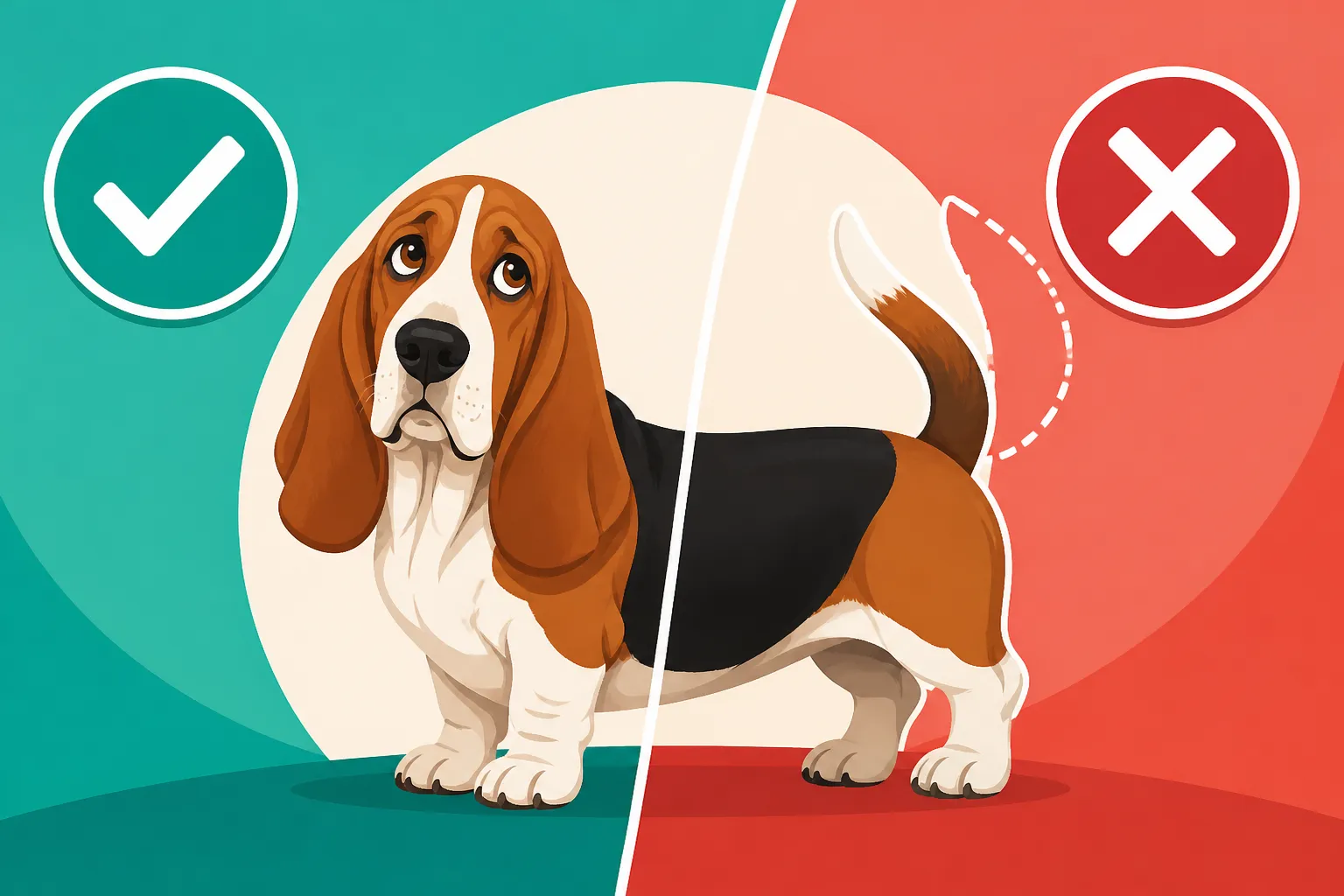
A typical Basset Hound has a long, tapering tail, often with a white tip. When the dog is moving or alert, the tail may be carried up in a gentle curve; it may hang lower when the dog is relaxed. Tail shape and carriage vary, so a single photograph is not enough to judge whether a dog is healthy or well bred.
The white tip is a familiar feature, but its appearance can vary. It can make the tail easier to spot when a dog is moving through grass or brush, though it is not a sign that the tail has been docked. For more on that detail, see Whether a Basset Hound's Tail Should Have a White Tip. Coat color and markings can also change how the tail looks; The Colors a Basset Hound Comes In and Whether a Basset Hound's Markings Change With Age offer related background.
A short tail is not the usual Basset Hound look. That does not automatically mean a dog has been docked, injured, or bred improperly, but it is a good reason to ask for a clear explanation and any relevant veterinary records.
A raised tail is not the same as a docked tail
Owners sometimes worry that a tail carried high has been shortened or altered. Tail carriage alone does not establish that. A Basset Hound may lift its tail while walking, sniffing, or responding to something in its surroundings. The tail’s length is a separate question from the position in which the dog carries it.
If you are comparing a dog’s appearance with breed descriptions, Whether a Basset Hound Carries Its Tail Up may help clarify what tail carriage can look like. Avoid treating one posture as a diagnosis: pain, fear, excitement, and the individual dog’s habits can all affect how it holds its tail.
A tail that suddenly hangs differently, appears swollen, or causes the dog to flinch deserves more attention than a tail that has always looked a little different. A change can follow an injury or signal discomfort, so describe what you have noticed to a veterinarian rather than trying to assess the tail by appearance alone.
Why a Basset Hound’s tail might be shortened
Docking is not the usual appearance for the breed
Tail docking means shortening a tail by removing part of it. It is not a routine feature of the typical Basset Hound appearance: the breed is generally expected to have a long tail. If a puppy is presented with a noticeably short tail, ask directly whether it was docked, whether there was an injury or medical reason, and who performed or recommended the procedure.
Do not assume that a short tail was docked just because it looks that way. A dog may have been born with a naturally shorter tail, or its tail may have been injured before you met it. A breeder or rescue should be able to explain what they know, and veterinary notes can help distinguish a documented medical history from a guess.
It is reasonable to request records and ask for the explanation in writing, especially if you are considering a puppy from a breeder. Questions about appearance and breed characteristics may also lead you to Whether Any Color Is a Fault on a Basset Hound or Whether Kennel Clubs Have Changed the Basset Hound Standard, but appearance should never replace a health assessment.
Medical treatment is different from cosmetic docking
A veterinarian may recommend removing part or all of a tail when a serious injury or disease makes it necessary. That is a medical decision made for the individual dog, not a routine cosmetic choice. The veterinarian can explain why treatment is being considered, what alternatives may be appropriate, and what recovery and aftercare involve.
A tail wound can be awkward to protect. Dogs may wag against furniture, reopen a wound, or lick at the area, and an injury may need prompt attention. If a veterinarian has prescribed rest or wound care, follow those instructions rather than wrapping the tail or applying products on your own. A poorly fitted wrap can cause additional problems, and some wounds require care that cannot be safely managed at home.
For ordinary recovery needs, your veterinarian can tell you what supplies are appropriate. If washable bedding or other basic household items would make rest easier, Chewy is one retailer where owners may compare general pet-care supplies. Do not use a tail cover, wrap, or topical product simply because it is available there; check with the veterinarian first.
How to tell docking from a natural short tail
Start with the dog’s history, not a guess
A very short tail can have several explanations, and its appearance alone may not tell you which one applies. Ask the breeder, shelter, or previous owner whether the dog was born with that tail length, whether it was shortened, or whether it was injured. If a procedure was performed, ask when and why, and request the veterinary records.
A clear history is especially helpful when you are bringing a puppy home. For example, if a breeder says a litter has naturally short tails, ask whether a veterinarian has examined the puppies and whether the breeder has documentation that supports that explanation. If the answer is vague or changes from one conversation to the next, pause and get an independent veterinary opinion before making assumptions.
Photos from early puppyhood may provide context, but they are not a substitute for records or an examination. A veterinarian can assess the tail and surrounding tissue, discuss whether there is evidence of an old procedure or injury, and advise whether any follow-up is needed.
Watch for signs of current pain or injury
A short tail that has been that way for years may not be an urgent problem, but a painful or newly injured tail is different. Contact a veterinarian promptly if the dog has bleeding, an open wound, marked swelling, discharge, an unpleasant odor, sudden tenderness, or a change in how it carries the tail. Seek urgent care for severe bleeding, a significant wound, or obvious distress.
Try not to pull, bend, or repeatedly handle a tail to “check” it. If the dog reacts, stop. A Basset Hound may also be uncomfortable for reasons that are not obvious at first, so note when the problem began and whether it followed a fall, a door closing on the tail, rough play, or another event.
If you need to transport an injured dog, keep the tail from being bumped as much as possible and call the clinic for instructions. Chewy may be useful for routine supplies once a veterinarian has advised what is safe, but online products do not replace an examination when a tail is injured or painful.
What to ask a breeder or veterinarian
Questions to ask before bringing a puppy home
If a Basset Hound puppy has a short tail, ask calm, specific questions. You are not being difficult by wanting to understand a visible difference; a responsible breeder or rescue should be willing to explain what they know and share relevant documentation.
- Ask whether the puppy was born with a short tail or whether it was shortened later.
- If a procedure was performed, ask who recommended it and for what medical reason.
- Request veterinary records and details about any follow-up care.
- Ask whether the puppy has shown pain, infection, or difficulty moving its tail.
- Arrange an independent veterinary examination if the history is unclear or the tail appears abnormal.
The answers may help you distinguish a documented medical treatment from an unexplained alteration. They can also help your own veterinarian plan an initial checkup and decide whether the puppy needs further assessment.
Questions to ask if you already own the dog
If your Basset Hound has always had a short tail and seems comfortable, mention it during a routine veterinary visit and bring any records you have. If the dog is newly adopted, ask the rescue or previous owner for medical history, but understand that older records may be incomplete. The veterinarian can help decide whether the tail needs examination beyond the usual physical check.
If you are caring for a dog after surgery or injury, ask the veterinarian how to keep the area clean, whether the dog needs a protective collar, how to prevent licking, and what changes should prompt a call. Follow the prescribed plan rather than adding a home remedy or using a wrap without approval. Owners who need washable bedding or basic recovery-related supplies can compare options at Chewy after confirming what is suitable for their dog.
A third-party retailer can help with routine shopping, but it cannot establish why a tail is short or whether a wound is healing properly. Keep the focus on the dog’s comfort, the medical history, and advice from a veterinarian who has examined the animal.
| What you notice | What it may mean | A sensible next step |
|---|---|---|
| A long, tapered tail, sometimes with a white tip | Typical Basset Hound appearance | Note normal changes in comfort or carriage |
| A short tail that has looked the same for a long time | Could be natural, previously docked, or linked to an old injury | Ask for the dog’s history and mention it at a veterinary visit |
| A short tail with records of a veterinary procedure | A documented medical intervention may explain the appearance | Ask the veterinarian about any ongoing care |
| Sudden pain, swelling, bleeding, or a new change in tail position | Possible injury or another problem needing assessment | Contact a veterinarian promptly |
| No clear explanation from the breeder or previous owner | The cause is uncertain | Request records and arrange an independent examination |
A Basset Hound’s tail is normally long, and routine docking is not part of the breed’s usual appearance. A short tail may have a natural or medical explanation, so ask for the dog’s history and have a veterinarian assess any uncertainty, pain, or injury. The goal is not to judge a dog by its tail, but to understand its health and care needs.
Disclaimer
This article is for general informational purposes only and does not constitute professional advice. Laws, prices and regulations vary by location and change over time. Consult a qualified professional for guidance on your specific situation.