Whether a Basset Hound Carries Its Tail Up
A Basset Hound’s tail can look low when the dog is resting, then rise into a gentle curve the moment a scent, person, or meal catches its attention. That change is normal, but it can leave owners wondering what “correct” tail carriage looks like and whether a low, tucked, or stiff tail means something is wrong. Here’s how to read the posture in context.
What a Basset Hound’s Tail Normally Looks Like
The typical tail carriage
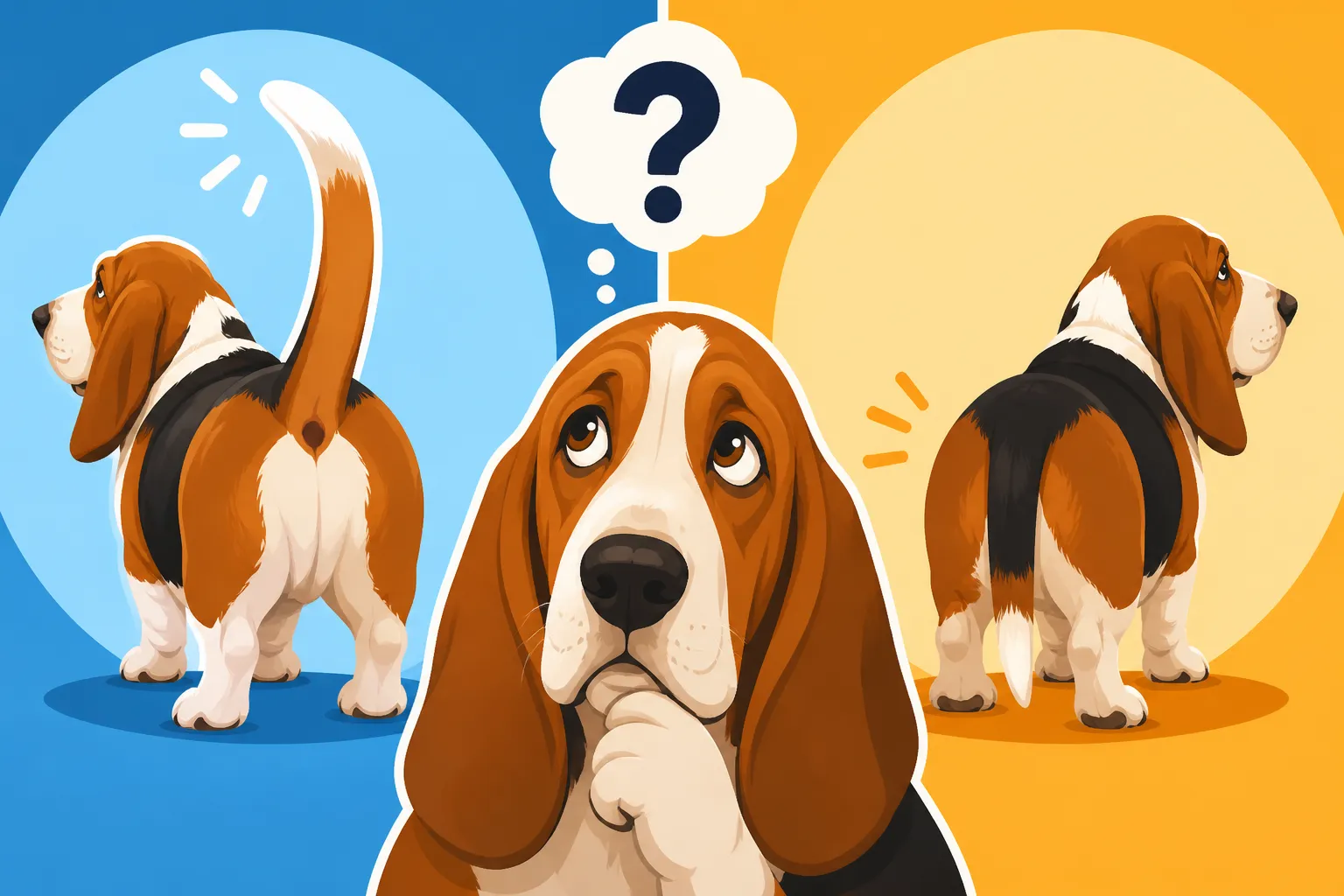
A Basset Hound’s tail is generally carried up when the dog is moving or alert, with a modest curve rather than a tight curl over the back. It should look like a natural extension of the dog’s body, not a flag held bolt upright at all times. Breed descriptions emphasize an upward carriage with a slight curve, but the exact position changes with mood, activity, and the individual dog.
At home, a Basset may let its tail hang lower while dozing on a rug or standing quietly in the kitchen. Then the tail may lift as the dog gets up to follow a smell, greets a familiar person, or hears the cupboard door open. That variation is ordinary. Tail carriage is a moment-by-moment clue, not a pose a dog must maintain from morning to night.
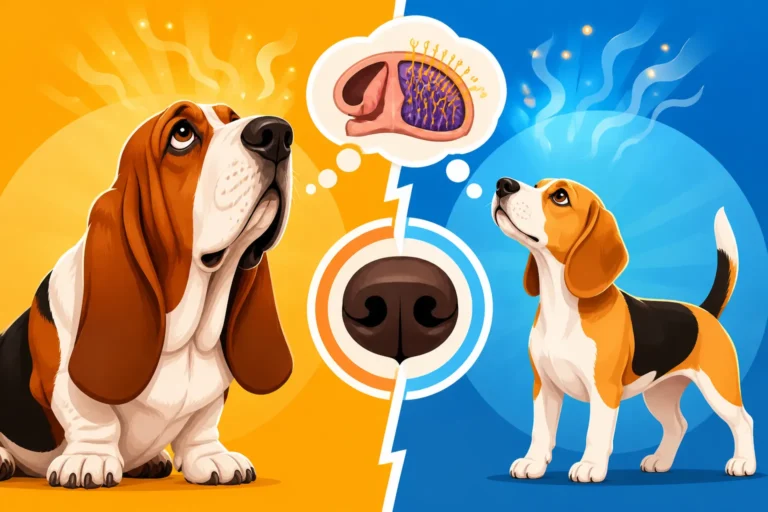
You may also notice the tail looks more prominent when the dog walks with its nose down. Bassets were developed as scent hounds, and following an interesting trail can change their whole posture: head lowered, ears swinging, body focused, and tail raised or moving. Their long ears are part of that distinctive scent-hound look too; Why a Basset Hound's Ears Help It Smell explores that feature in more detail.
Shape, curve, and the white tip
A Basset Hound’s tail is long and tapers toward the tip. A gentle curve is common when it is carried up, but a tight curl over the back is not the typical appearance. The tail’s shape can be easier to judge when the dog is standing naturally than when it is excitedly wagging, twisting, or turning to look behind itself.
Many Basset Hounds have a white tail tip. It can make the tail easier to spot against grass or undergrowth, a useful visual feature when a hound is following a trail. Not every tail looks equally bright or sharply marked, though, and coat patterns vary. If you are curious about how the tip fits into the breed’s broader appearance, see Whether a Basset Hound's Tail Has a White Tip and The Colors a Basset Hound Comes In.
A tail that looks different from a photograph or show-ring example is not automatically a health problem. Age, posture, coat markings, excitement, and the angle you are viewing the dog from can all affect what you notice. The more useful question is whether the tail moves comfortably and whether its position has changed suddenly.
Why a Basset Hound Carries Its Tail Up
Scenting, walking, and alertness
A raised tail often appears when a Basset Hound is engaged with its surroundings. The dog may have caught a scent on a walk, heard a sound beyond the fence, or noticed someone coming through the door. That does not mean the dog is deliberately signaling one precise message. It means the tail is part of a larger picture of attention and arousal.
Watch what the rest of the dog is doing. A Basset who is sniffing steadily, moving forward, and carrying the tail in a relaxed curve may simply be absorbed in a trail. A dog who has stopped, stiffened, and fixed its gaze on something may be more intensely alert. The tail position alone cannot tell you whether the dog is friendly, worried, or about to move.
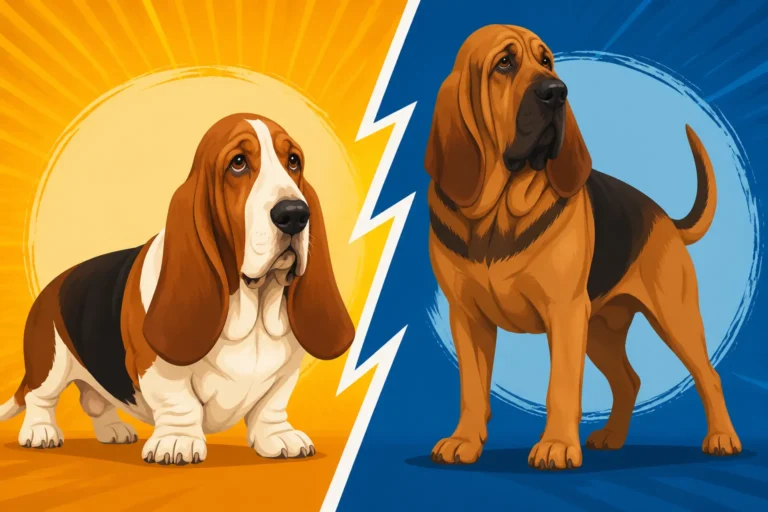
This is one reason Basset owners often find walks both charming and mildly exasperating. You may be ready to head home, while your dog has paused at a patch of verge and is investigating every leaf. The tail may lift during that concentrated sniffing, but it is the nose that is leading the expedition. The Nose That Puts a Basset Hound Second to a Bloodhound explains why following scent can become such a powerful focus for the breed.
If a Basset is trailing, keep it attached to a secure leash or long line. A raised tail is not a recall cue, and even a dog who usually responds can become deeply absorbed by a scent. For practical leash and safety considerations, read Whether a Basset Hound Should Ever Be Off Leash.
Tail carriage is not a happiness meter
A wagging tail is often read as “happy,” but it is not a complete emotional translation. Dogs wag when they are excited, socially engaged, uncertain, or highly stimulated. The speed, height, stiffness, and direction of the wag may offer clues, but owners should interpret those details alongside the dog’s face, posture, movement, and situation.
For example, a loose, easy wag paired with a soft body and relaxed expression often looks different from a fast, stiff wag paired with a tense body. A Basset who is being approached by an unfamiliar dog may hold its tail differently from one greeting a family member at the door. Give the dogs space and avoid assuming that a wag alone means an invitation to touch or approach.
A tail held high can also simply reflect alertness or excitement. It does not automatically indicate dominance or aggression. Likewise, a lower tail is not always a sign of illness: the dog may be resting, tired, or unsure about something nearby. Look for a cluster of signals rather than assigning a firm meaning to one posture.
| Tail position or movement | What it may reflect | What else to observe |
|---|---|---|
| Gently raised with a soft curve | Attention, walking, or interest | Loose body, relaxed face, steady movement |
| Wagging loosely | Social excitement or engagement | Whether the dog’s muscles and expression also look relaxed |
| Held low while resting | A comfortable resting posture | Normal movement and willingness to get up |
| Tucked close to the body | Fear, discomfort, or uncertainty | Ears, crouching, avoidance, trembling, or hiding |
| Suddenly drooping or held unusually still | Possible pain or injury, among other causes | Sensitivity, swelling, a wound, or reluctance to move |
These are broad observations, not a diagnosis. A dog’s usual behavior is an important baseline. If your Basset normally carries its tail up on walks but begins holding it low and seems sore, that change matters more than whether the position matches a general description.
When a Low or Unusual Tail Needs Attention
A change from your dog’s normal posture
A Basset Hound who has always carried its tail lower than another dog may simply have an individual variation. What deserves closer attention is a sudden change: a tail that was moving normally yesterday but now hangs limp, a dog who stops wagging and guards the tail, or a tail that appears painful when touched.
Look for accompanying clues. Is your dog reluctant to sit, turn, climb a step, or go for a walk? Does it flinch when the area near the tail base is handled? Is there redness, swelling, a cut, or an unusual odor? Changes in appetite or energy can also matter, especially when they occur alongside apparent pain.
Do not try to force the tail into a different position or repeatedly bend it to “test” whether it hurts. If your dog seems uncomfortable, arrange veterinary advice. A veterinarian can examine the tail and nearby areas and help determine whether the issue involves an injury, skin problem, or another cause. Prompt attention is particularly sensible after a fall, rough play, a door or gate accident, or any other event that may have injured the tail.
When to contact a veterinarian
Contact a veterinarian if the tail suddenly becomes limp, stays tucked for an unusual length of time, is painful to touch, has visible swelling or a wound, or stops moving normally. Seek urgent veterinary help when a tail problem appears alongside severe pain, weakness, trouble walking, loss of bladder or bowel control, or a significant injury.
A low tail by itself is not enough to identify a specific condition. The dog may be anxious, tired, or uncomfortable for a reason unrelated to the tail. It is the combination of a new posture, physical symptoms, and the circumstances around the change that helps a veterinary professional assess what is happening.
For a video appointment or in-person visit, it can help to note when the change began and what happened shortly beforehand. A short phone video of your dog walking naturally may show a posture that disappears once you arrive at the clinic. If the dog is comfortable, record from the side and behind without making it perform or repeatedly handling the tail.
Tail Care and Everyday Safety
Keep the tail comfortable and easy to see
A Basset’s tail usually needs no special grooming beyond ordinary coat care. Check the skin and coat as you would elsewhere on the body, especially after a walk through brush or a muddy yard. If you find a thorn, cut, or tender spot, avoid tugging at it and ask your veterinarian how to proceed if removal seems painful or difficult.
The tail can also be overlooked in a crowded household. Watch for it near closing doors, gates, car doors, and the feet of people moving around the dog. Bassets are low to the ground, and their tails can be at a convenient height for an accidental bump. This is particularly worth remembering when children are playing nearby: teach them not to pull, grab, or chase the tail.
If you use reflective walking gear for evening outings, choose equipment that fits securely without restricting movement. When browsing a pet retailer such as Chewy, compare the product’s measurements and fastening style with your dog’s actual size rather than guessing from breed labels. Reflective details can improve visibility, but a leash and close supervision remain important.
Docking and appearance questions
Basset Hounds are normally seen with their natural tails. A naturally carried tail should not be confused with a docked tail, which has been shortened. The distinction may come up when comparing photographs, discussing breed history, or trying to understand why one dog’s tail appears shorter than another’s. Whether a Basset Hound's Tail Is Ever Docked covers that question specifically.
Do not assume a short or oddly shaped tail is simply a cosmetic variation if the dog has discomfort, a fresh injury, or a sudden change in movement. A veterinarian can assess whether the appearance is longstanding or associated with a current problem. For everyday care, there is no need to position, bind, or train a healthy tail to sit in a particular way.
If you are choosing walking accessories, prioritize comfort and fit over making the tail look more visible or more upright. Chewy and other pet retailers may offer different styles of leads and reflective gear; check that the item does not rub the tail base or interfere with your dog’s natural movement. A Basset’s tail carriage is best understood as part of the dog’s own posture, not something to be corrected with equipment.
The practical takeaway is simple: a Basset Hound commonly carries its tail up in a gentle curve when alert or moving, while the position may drop during rest. A white tip is common, and tail movement can accompany scenting, excitement, or attention. Focus on your dog’s normal pattern and the whole-body picture. A sudden change, pain, swelling, or a limp tail is a reason to seek veterinary guidance rather than trying to interpret posture alone.
Disclaimer
This article is for general informational purposes only and does not constitute professional advice. Laws, prices and regulations vary by location and change over time. Consult a qualified professional for guidance on your specific situation.