Whether Road Salt Hurts a Basset Hound’s Pads
Oh, the joys of winter, right? Crisp air, maybe a dusting of snow… until you realize that seemingly innocent white stuff on the sidewalks and streets isn't just snow; it's road salt, and it poses a real threat to your beloved Basset Hound's sensitive paws. This guide is all about navigating those chilly months without your furry friend suffering from painful, damaged paw pads, offering practical advice and preventative measures to keep those precious feet protected.
The Unique Vulnerability of Basset Hound Paws to Winter Hazards
When winter rolls around, and municipalities start laying down road salt and de-icers, it creates a minefield for our low-slung, sensitive Basset Hounds. It’s not just an inconvenience; it's a genuine health concern that can lead to real discomfort and even injury for your dog. Their particular build and nature make them especially susceptible to these common cold-weather hazards.
Why Basset Hound Pads Are Prone to Damage
You see, a Basset Hound's paw pads, while seemingly tough, are actually quite sensitive. They're designed for sensing the ground, providing traction, and absorbing impact, but they aren't built to withstand harsh chemical irritants. Imagine walking barefoot on a salted driveway – that's essentially what your Basset is doing. The skin on their pads can become dry, cracked, and irritated, much like our own skin exposed to harsh elements. Because they are so close to the ground, their short legs and long bodies mean their pads are in direct, prolonged contact with any substances on the ground, whether it's cold ice or abrasive salt granules.
Beyond the physical contact, their innate Basset curiosity plays a role too. These dogs are driven by their incredible noses, constantly sniffing out interesting trails. This means they're often intently focused on the ground, oblivious to the icy, salty pavement they're trotting across. They aren't going to lift their paws delicately around patches of salt; they're going to follow that intriguing scent straight through it. This makes it even more critical for us, their human companions, to be vigilant about protecting their paws. Their desire to follow a scent can override their natural instinct to avoid pain, especially if the discomfort builds gradually. We often talk about Whether a Basset Hound's Nose Is Second Only to a Bloodhound, and that powerful drive means they're not looking up at the world, but down into it, directly into potential hazards.
The Specific Dangers of Road Salt and De-Icers
"Road salt" isn't a single entity; it's often a mix of chemicals, primarily sodium chloride (like table salt, but coarser and industrial strength), but also calcium chloride, magnesium chloride, and potassium chloride. While they all aim to melt ice, they do so by lowering the freezing point of water, and in the process, they become incredibly irritating and even caustic to soft tissue. These chemicals actively pull moisture from the skin, leading to severe dehydration of the paw pads. This dryness quickly escalates to cracking, tenderness, and sometimes painful open sores.
Beyond the direct contact, there’s the ingestion risk. After a walk, your Basset will naturally lick their paws to clean them, especially if they're feeling irritated. When they do this, they're ingesting whatever chemicals are left on their pads. This can lead to digestive upset, vomiting, diarrhea, and in more severe cases, electrolyte imbalances or even kidney damage, depending on the type and quantity of de-icer ingested. Even relatively mild irritation from regular road salt can lead to obsessive licking and chewing, which prevents the paws from healing and can introduce bacteria, leading to secondary infections. It's a vicious cycle that can be incredibly distressing for both you and your furry friend.
Recognizing the Signs of Road Salt Damage on Your Basset's Paws
It's heartbreaking to see your Basset in discomfort, and often, by the time they're showing obvious signs of paw irritation, the damage might already be significant. Knowing what to look for can help you intervene early and prevent further suffering. Our Bassets are often stoic, but their actions can speak volumes about their discomfort.
Immediate Symptoms to Watch For
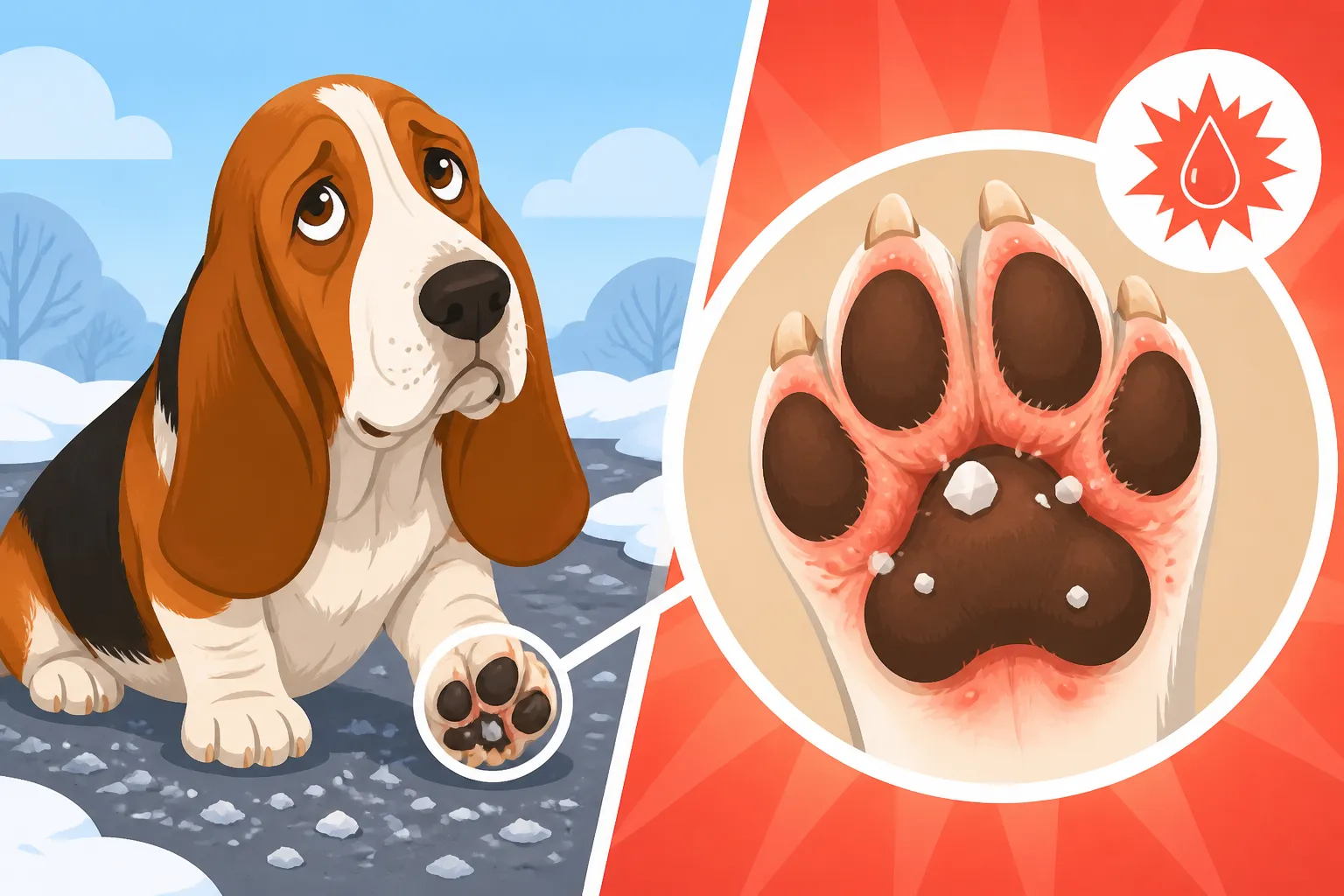
The most common and immediate sign of road salt irritation is limping or a hesitant gait during or after a walk. You might notice your Basset lifting one or more paws off the ground, shaking them, or trying to walk on the "safe" parts of the sidewalk, avoiding the salty patches. Once back inside, excessive licking or chewing of their paws is a huge red flag. They might even try to rub their paws on the carpet or furniture to alleviate the discomfort. Upon visual inspection, look for redness between the toes and on the pads, swelling, or even small abrasions. The pads might feel dry, rough, or hot to the touch. In more severe cases, you could see visible cracks, blisters, or bleeding, particularly if the exposure was prolonged or the de-icer was particularly harsh.
Remember, Basset Hounds are often good at hiding discomfort until it becomes undeniable. Their generally laid-back nature doesn't mean they don't feel pain; it just means they might not vocalize it with yelps or frantic behavior. Instead, watch for subtle changes in their walking pattern or their post-walk routine. A Basset who usually flops down for a nap but instead starts meticulously grooming their paws repeatedly is telling you something is wrong. Early recognition of these signs is crucial to preventing the situation from escalating into more serious issues, such as infections or prolonged lameness. When you're thinking about The Basset Hound That Will Not Walk Any Further, sometimes it's not just stubbornness; it could be painful feet.
Long-Term Consequences of Repeated Exposure
If not addressed, repeated exposure to road salt can lead to chronic paw problems. The constant drying and cracking can weaken the protective barrier of their paw pads, making them more susceptible to infections. Bacteria can easily enter through small cuts and fissures, leading to painful conditions that require veterinary attention, antibiotics, and prolonged healing. Think about it: once the natural resilience of the paw pad is compromised, it struggles to recover. This constant cycle of damage and attempted healing can leave your Basset with perpetually sore feet.
Beyond infections, chronic dryness and discomfort can affect your Basset’s willingness to walk and explore. A dog whose paws hurt might become more reluctant to go outside, leading to reduced exercise and potential weight gain. What Extra Weight Does to a Basset Hound is something we constantly worry about, and sore paws are certainly a contributor to a more sedentary lifestyle. This impacts not just their physical health but their mental well-being too, as Bassets thrive on sniffing and moderate activity. Over time, neglected paw pad health can lead to a general decline in their quality of life, making even simple movements painful. This is why a proactive approach to paw protection is so essential throughout the colder months.
Practical Strategies for Protecting Your Basset Hound's Paws
Protecting your Basset's paws from road salt isn't about avoiding winter walks entirely – though sometimes that's the best option! It's about implementing a routine that creates a barrier against the elements and soothes any irritation that might occur. A little preparation goes a long way in ensuring happy, healthy paws.
Pre-Walk Prevention: Barriers and Balms
Before you even step out the door, you can apply a protective layer to your Basset's paw pads. Paw balms or waxes create a breathable, yet effective, barrier against harsh chemicals, ice, and snow. Products like Musher's Secret (a popular choice among many dog owners) or other paw protection waxes work by forming a wax-based shield that moisturizes and protects. You simply rub a generous amount into each paw pad and between the toes. Make sure to get into all the crevices where salt might otherwise get trapped. This not only protects against irritants but also helps prevent ice balls from forming between their toes, which can be another source of discomfort in snowy conditions.
For maximum protection, especially if you live in an area with heavy salting or prolonged exposure to snow and ice, dog booties are an excellent solution. I know, I know, getting a Basset to wear booties can be a hilarious and often frustrating endeavor, but it’s worth the effort! Look for booties designed for winter, with good traction and a secure fastening mechanism that won't slip off those low-set legs. Start by introducing them gradually, perhaps just one at a time, with lots of praise and treats. Many owners find success with soft, pliable rubber booties or those with tough, waterproof fabric. Finding the right fit is key – too tight and they'll be uncomfortable, too loose and they'll fall off. You can often find a good selection of various styles and sizes on Amazon or specialized pet supply stores. Remember, practice makes perfect when it comes to booties!
Post-Walk Care: Cleaning and Soothing
The moment you get back inside, making paw cleaning a ritual is paramount. Don't wait for your Basset to start licking their paws – assume they've walked through something irritating. Have a warm, damp cloth or a shallow basin of warm water ready by the door. Gently wash each paw, paying close attention to the pads and the spaces between the toes. You can use plain warm water or a very mild, dog-safe soap if there's visible grime or if you suspect heavy salt exposure. The goal is to rinse away all traces of salt, de-icers, and any other street debris.
After washing, thoroughly dry their paws with a soft towel. Moisture left between the toes can lead to skin irritation or yeast infections. Once clean and dry, you can apply a soothing paw balm or a dog-safe moisturizer to help rehydrate the pads and prevent cracking. Products containing ingredients like shea butter, coconut oil, or aloe vera (specifically formulated for dogs) can be very beneficial. Regularly checking their paws during this process also allows you to spot any developing issues, like redness, tenderness, or tiny cuts. It's an important part of Looking After a Basset Hound's Feet and Nails year-round, not just in winter. You can find a good range of paw care products, from balms to gentle soaps, at reputable online retailers like Chewy.
| Prevention Method | Pros | Cons | Best For |
|---|---|---|---|
| Paw Balms/Waxes | Easy to apply, natural feel, moisturizes. | Needs reapplication, can be messy, less complete barrier. | Light-to-moderate salt exposure, general protection. |
| Dog Booties | Full physical barrier, protects against ice & snow. | Can be difficult to fit/train for, may be uncomfortable for some dogs. | Heavy salt, deep snow, long walks, severe weather. |
| Post-Walk Rinsing | Removes irritants immediately, simple, effective. | Requires consistency, pads still exposed during walk. | All winter walks, essential follow-up. |
Alternative Winter Walking Solutions for Your Basset
Sometimes, despite our best efforts, the winter conditions are just too harsh, or your Basset's paws are particularly sensitive. In these instances, adjusting your routine and finding alternative ways to keep your Basset happy and healthy can be a lifesaver for their paws.
Adjusting Your Walking Routine
On days when the sidewalks are heavily salted, or there's a fresh layer of de-icer down, consider adjusting your usual walking routes. Opt for parks, grassy areas, or trails that are less likely to be treated with harsh chemicals. While these might still have cold, wet conditions, they generally pose less of a chemical burn risk than urban pavements. You might also want to schedule walks during warmer parts of the day if possible, when some of the ice and salt may have melted or dissipated. Shorter, more frequent walks can also reduce prolonged exposure, allowing you to clean their paws more often.
On those truly terrible days – think ice storms, heavy snowfall, or when the salt trucks have just been through – it might be best to limit outdoor time to quick potty breaks and focus on indoor enrichment. Basset Hounds, with their incredible noses, absolutely love scent work. A snuffle mat with scattered kibble or treats, puzzle toys, or even a game of "find it" where you hide treats around the house can provide mental stimulation and burn energy without ever stepping foot on a hazardous sidewalk. This ensures your Basset still gets the engagement they need, even when outdoor walks are risky.
Creating a Safe Home Environment
Beyond outdoor protection, it's also important to consider the indoor environment. Road salt and de-icers can be tracked into your home on shoes or clothing. Regularly wiping down floors, especially near entryways, can prevent your Basset from encountering residual chemicals once inside. Having a designated "paw cleaning station" right by the door, complete with towels and a paw washer or basin, makes the post-walk routine quick and efficient. This also helps you maintain a clean home, preventing those gritty salt particles from scratching your floors or irritating human feet!
Finally, remember that overall paw health isn't just a winter concern; it's a year-round commitment. Keeping your Basset's nails trimmed short, inspecting their pads regularly for any cuts or foreign objects, and ensuring they have a balanced diet contributes to their overall resilience. A healthy diet, perhaps incorporating foods rich in Omega-3 fatty acids, can help support skin and paw pad health from the inside out. While I can't recommend specific brands for your dog without knowing their individual needs, general whole food options can be great for skin and coat health. For example, some pet parents explore fresh food options from providers like Ollie for their Bassets, believing it contributes to better overall skin condition. Good nutrition and regular care mean their paws are better equipped to handle whatever challenges come their way, whether it's summer asphalt or winter salt.
Disclaimer
This article is for general informational purposes only and does not constitute professional advice. Laws, prices and regulations vary by location and change over time. Consult a qualified professional for guidance on your specific situation.