Whether the Saint Hubert Hound Still Exists
It's completely understandable to wonder about the deep roots of our beloved Basset Hounds, especially when you hear whispers of ancient ancestors like the "Saint Hubert Hound." You might be picturing some majestic, long-lost breed, or perhaps wondering if a modern dog by that name is still roaming the earth. This guide will take a journey back in time, unraveling the historical threads that connect today's Basset Hound to its famed forebears, and definitively answer whether the enigmatic Saint Hubert Hound still exists in its original form.
Tracing the Basset Hound's Ancient Roots: The Legend of Saint Hubert
When you look at your Basset Hound, with those soulful eyes, impossibly long ears, and that powerful nose constantly sniffing out new adventures, it’s easy to feel a connection to something ancient and profound. These dogs weren't just invented yesterday; their lineage stretches back centuries, deeply entwined with the history of hunting and nobility in Europe. Many breed enthusiasts, myself included, often find themselves drawn to these historical connections, trying to understand the very essence of what makes our Bassets who they are.
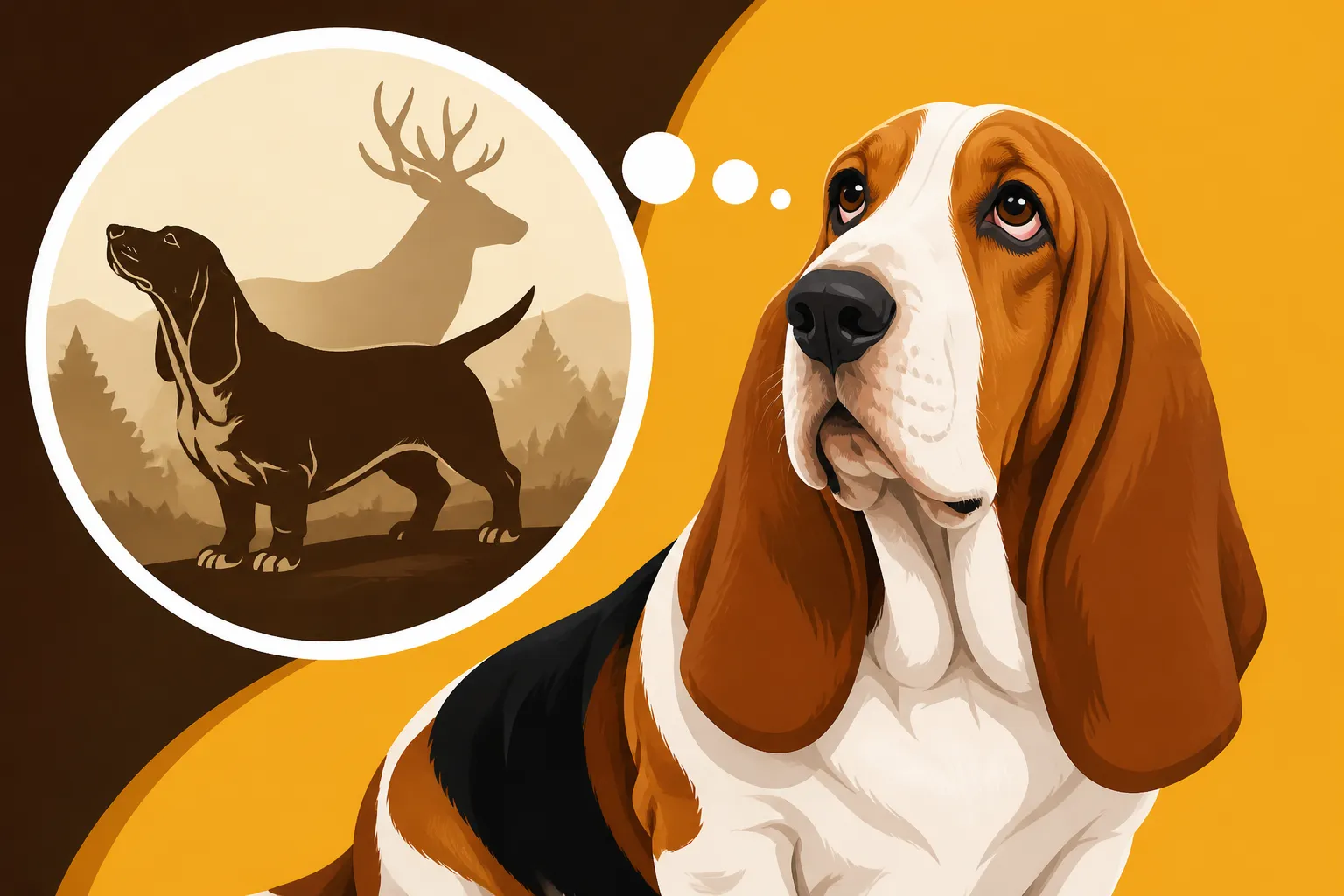
The story often begins with Saint Hubert, a figure revered in hunting lore. He was a nobleman from the 7th and 8th centuries, the patron saint of hunters, mathematicians, opticians, and metallurgists, but most famously, hunters. Legend has it that he experienced a religious conversion while hunting a stag with a crucifix between its antlers, leading him to abandon his secular life and become a bishop. His dedication to a humane approach to hunting and his association with magnificent hounds cemented his legacy. You can read more about Who Saint Hubert Was and his impact on hunting traditions and dog breeding.
It was in the monasteries associated with Saint Hubert, particularly the Abbey of Saint-Hubert in the Ardennes region of Belgium, that a distinct type of hound began to be developed and refined. These were not just any dogs; they were exceptional scent hounds, carefully bred for their unparalleled tracking abilities and endurance. They were so renowned that they became known as the "Hounds of Saint Hubert" or simply "Saint Hubert Hounds." These majestic animals were highly prized and gifted to royalty and nobility across Europe, spreading their influence far and wide. This lineage forms the very foundation of many European scent hounds, including our Basset Hounds. For those curious about the earliest days, discovering Where the First Basset Hounds Came From offers a fascinating dive into the origins.
What Exactly Was the Saint Hubert Hound? Defining a Historical Breed
So, what did this legendary Saint Hubert Hound actually look like, and what was its purpose? It's important to understand that "Saint Hubert Hound" wasn't a breed in the modern sense, with a strict written standard and kennel club registration. Instead, it was more of a type of dog, highly consistent in its characteristics due to generations of focused breeding within the abbey. Imagine a specialized line of working dogs, known for specific traits rather than a rigid appearance.
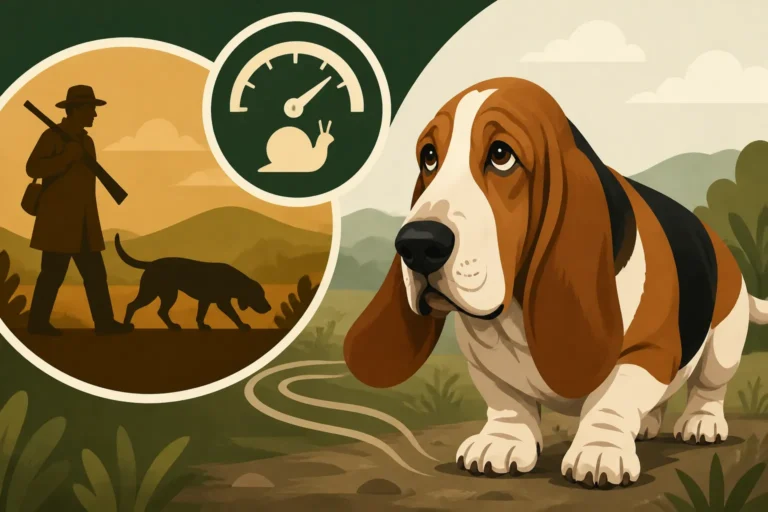
These hounds were impressive animals, considerably larger and heavier than today's Basset Hounds. They possessed an immense physical presence, often described as powerful and imposing. Their primary characteristic, however, was their extraordinary nose, which was second to none. They were bred for a specific kind of hunting: slow, methodical trailing of game, often deer or boar, allowing hunters on foot or horseback to keep pace. Their deep, resonant bay was another hallmark, designed to communicate clearly to the hunting party, even over long distances and through dense forests. Many people ask Whether the Basset Hound's Nose Is Second Only to a Bloodhound, and the answer lies in this shared ancestry.
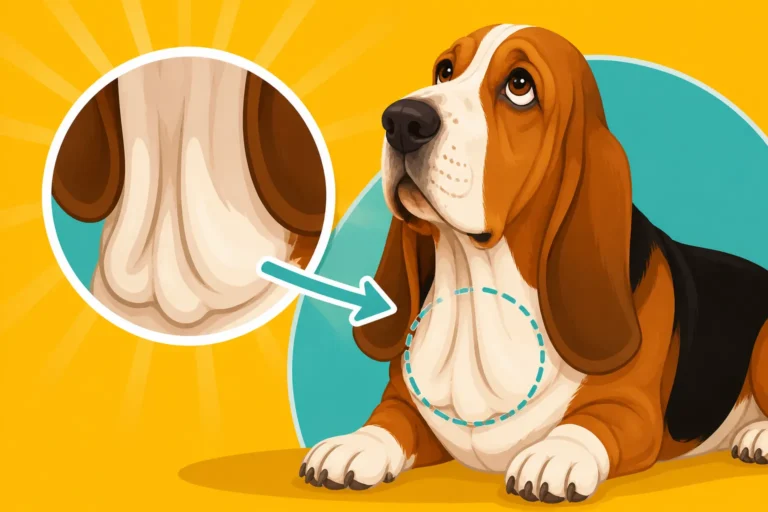
The Saint Hubert Hounds were characterized by loose, wrinkled skin, particularly around their face and neck, which was thought to help trap scent particles, guiding their powerful noses. They had long, pendulous ears that swept the ground, further aiding in scent collection. Their overall demeanor was one of dignified determination, relentless on a trail but generally calm and good-natured when not working. They were not fast dogs; speed was not desired. Instead, their value lay in their unwavering commitment to a scent trail, no matter how cold or faint. This dedication to scent work and their unique physical attributes made them the ultimate tracking specialists of their era.
From Saint Hubert to Basset: The Evolution of Scent Hounds
The direct answer to "Whether the Saint Hubert Hound Still Exists" as a distinct breed is, no, not in its original, pure form as recognized back in the abbey's heyday. What happened instead was a gradual evolution and diversification. As these esteemed hounds spread across Europe, particularly to France, they became the foundation stock for numerous regional variations. Local breeders and hunters began to adapt the Saint Hubert type to suit their specific needs, terrain, and desired game. This is where the concept of "Basset" comes in. The word "basset" simply means "low" in French, and it was used to describe any hound that was low-slung, essentially a short-legged version of a larger hound. This adaptation was often to allow hunters to follow on foot through dense undergrowth, or to pursue smaller game like rabbits and hares. For more on this, check out Why the Word Basset Just Means Low.
Over centuries, various "basset" types emerged, each with slightly different characteristics, but all retaining that incredible scenting ability inherited from their Saint Hubert ancestors. Think of it as specialized branches growing from a very strong tree trunk. While the original large Saint Hubert Hound might have faded as a distinct entity, its genetic material and defining traits were meticulously preserved and selectively bred into these new, shorter-legged hounds. Our modern Basset Hound is a prime example of this deliberate breeding, favoring those short, sturdy legs, an even more exaggerated scenting apparatus (those famously long ears and dewlap!), and a temperament suited for a more manageable hunting pace. This evolution wasn't an accident, but rather a purposeful refinement to create specific hunting tools. You might be interested in Whether the Basset Hound Was an Accident to understand this selective breeding process.
This process of refinement meant that while the spirit and key traits of the Saint Hubert Hound lived on, the physical form shifted dramatically. The majestic, tall hound became the compact, powerful Basset we know and love. These short-legged versions proved incredibly effective for tracking in difficult terrain, providing hunters with a tireless, methodical partner. Many of these traits, from their deep bay to their relentless focus on scent, are direct echoes of their ancient lineage. If you’ve ever seen a Basset ignore your calls to follow a fascinating scent, you’re witnessing centuries of selective breeding at work! Providing engaging activities that stimulate their natural instincts, like scent work with treats or puzzle toys available from retailers like Chewy, can be a great way to honor their heritage.
The Enduring Legacy of the Saint Hubert Hound in Modern Breeds
Even though the Saint Hubert Hound doesn't exist today as a formally recognized, distinct breed, its legacy is undeniable and lives on in several modern breeds. The most direct descendant, and perhaps the closest living relative to the original Saint Hubert Hound in terms of size, build, and profound scenting ability, is the Bloodhound. The Bloodhound carries many of the physical traits attributed to the Saint Hubert Hound: the large size, the extensive loose skin, the deeply wrinkled face, and those incredibly long, velvety ears. In fact, many people often confuse the historical "Saint Hubert Hound" with what we now call the Bloodhound. The Bloodhound has truly inherited the crown as the ultimate scent tracker, capable of following a trail for days. You can delve deeper into this comparison by reading The Basset Hound Against the Bloodhound and Whether the Bloodhound Came From the Same Abbey.
Beyond the Bloodhound, the Saint Hubert Hound's influence is woven into the genetic tapestry of many other European scent hounds, especially those originating from France. The various French Basset breeds, such as the Basset Fauve de Bretagne, the Grand Basset Griffon Vendéen, and the Petit Basset Griffon Vendéen, all owe a debt to this ancient lineage. And, of course, our Basset Hound, with its unmistakable appearance and world-class nose, is a testament to the enduring power of those initial breeding efforts. While its legs are shorter and its form more exaggerated, the core purpose—to follow a scent with unwavering dedication—remains the same.
The traits we cherish in our Basset Hounds today – their incredible sense of smell, their deep, melodious bay, their gentle disposition, and their seemingly endless curiosity for the world of scent – are direct inheritances from those original Abbey Hounds. So, while you won't find a dog registered specifically as a "Saint Hubert Hound" at a dog show or in a modern breeder's kennel, you can certainly see its spirit, its nose, and its enduring determination in the Basset Hounds (and Bloodhounds!) that share our homes today. Ensuring your Basset Hound has appropriate food and accessories, perhaps even special slow feeders or snuffle mats, which can easily be found on Chewy, helps cater to these deeply ingrained instincts. Even their tendency to sometimes ignore you when a scent hits them, which is discussed in The Recall a Basset Hound Will Never Reliably Give You, is a direct link to that powerful, ancient heritage. Sometimes, a Basset Hound simply must follow its nose, and that's a trait passed down through generations. Keeping up with a Basset Hound's needs, from their unique ears to their long backs, can feel like a full-time job, which is why considering What a Basset Hound Costs a Year to Keep is always a good idea, and ordering supplies like ear cleaner or orthopedic beds from Chewy can certainly help manage those costs and practicalities. Even simple things like Whether a Basset Hound Needs a Snood at Dinner can be traced back to their long ears developed for scenting.
| Ancestral Hound Type | Key Characteristics | Modern Descendant(s) Closest to Original Type | Shared Traits in Basset Hounds |
|---|---|---|---|
| Saint Hubert Hound | Large, powerful, deep bay, immense scenting ability, loose skin, long ears, methodical tracking. | Bloodhound | Exceptional nose, long ears, loose skin, deep bay, endurance on scent. |
| Early Basset Types | Shorter legs, often bred from Saint Hubert stock, adapted for foot-hunting smaller game. | Basset Hound, other French Bassets | Short legs, scent focus, droopy ears, stubborn independence. |
The history of our Basset Hounds is a rich tapestry, woven with threads stretching back to medieval monasteries and the dedicated efforts of monks and hunters. The Saint Hubert Hound may no longer exist as a distinct breed, but its influence is profoundly etched into the DNA and characteristics of the Basset Hounds we adore today. They are living testaments to an ancient lineage, carrying forward the spirit of the hunt and the unmatched power of their incredible noses.
Disclaimer
This article is for general informational purposes only and does not constitute professional advice. Laws, prices and regulations vary by location and change over time. Consult a qualified professional for guidance on your specific situation.