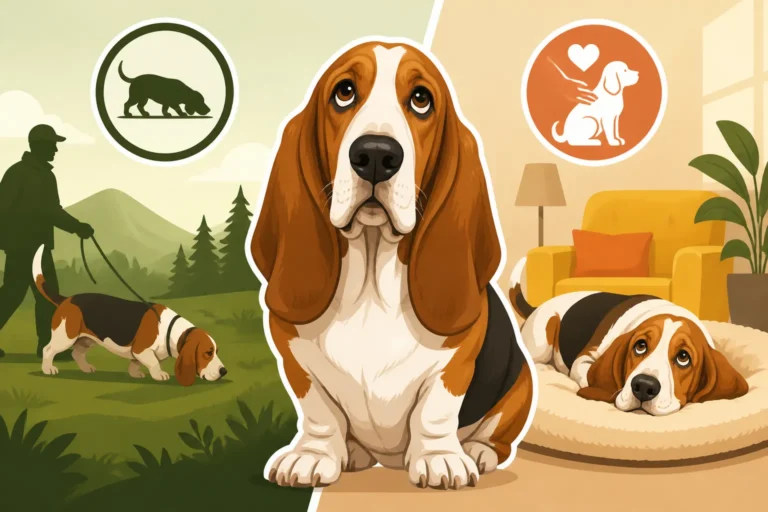
Whether a Basset Hound Is More Work Than It Looks
A Basset Hound can look like an easygoing dog who spends the day snoozing, but the low-slung body and relaxed expression can hide a steady list of care needs. This guide explains what daily life really asks of an owner, from ears and skin folds to exercise, training, and home setup, so you can judge whether the breed fits your routine.
Why a Basset Hound Can Be More Work Than It Looks
A relaxed dog still needs daily attention
Basset Hounds are often calm at home, and many are content to nap after a walk and a sniff around the yard. That can make them seem easier to care for than a busy working breed. But “not constantly demanding exercise” is different from “low maintenance.” They still need regular walks, companionship, grooming, training, and health checks.
Their nose can make an ordinary walk take longer than expected. A Basset may stop to investigate one patch of grass, then another, and appear to forget you are waiting. A practical walk is less about covering a certain distance quickly and more about offering safe movement and time to sniff. Since a Basset can follow an interesting scent with determination, secure fencing and a leash or long line matter. The breed’s tracking instincts are explored in The Nose That Puts a Basset Hound Second to a Bloodhound.
Owners should also expect a dog who may not respond immediately when something smells more interesting than the cue they have just heard. That is not a reason to give up on training, but it does mean that consistency and realistic expectations help. A Basset may learn a behavior and still need practice using it when distracted. For more on that familiar tug-of-war between a dog’s nose and an owner’s voice, see Why a Basset Hound Stops Hearing You When It Smells Something.
Their body shape affects everyday handling
A Basset Hound’s short legs and long, substantial body create practical considerations around stairs, furniture, and getting in and out of a vehicle. A dog who happily launches off the sofa may seem fine in the moment, but repeated jumping can be an unnecessary strain. Some homes benefit from blocking access to high furniture or using a stable ramp, particularly when a dog is young, aging, or already uncomfortable.
Lifting also takes more thought than it might with a small dog. Support the chest and hindquarters rather than picking a Basset up under the front legs alone. If the dog is too heavy for you to lift safely, set up the home so lifting is less necessary: use a ramp where appropriate, keep essentials on one level, and ask your veterinarian whether your dog’s movement or weight calls for extra precautions. The related guides Whether a Basset Hound Should Use a Ramp and How to Lift a Basset Hound Safely cover these choices in more detail.
Weight management is another routine responsibility. Many Bassets are enthusiastic about food, and their sturdy build can make weight gain easy to overlook. A dog who is carrying extra weight has more load on its joints and back, so it is useful to monitor body condition rather than relying only on appearance. What Extra Weight Does to a Basset Hound explains why this matters beyond fitting into a harness.
The Care Routine Behind Those Famous Ears and Folds
Ears need regular checking, not just occasional cleaning
Long, floppy ears are part of the Basset Hound’s familiar look, but they can also hold warmth and moisture. That makes regular ear checks a sensible habit. Look for a change in odor, redness, discharge, sensitivity, or repeated head shaking. A dog who suddenly resists having an ear touched may be uncomfortable, not “being difficult.”
Cleaning frequency should suit the individual dog. Some Bassets need more help than others, and cleaning irritated or painful ears without veterinary guidance can make the situation worse. Use an ear product recommended for your dog, follow its directions, and avoid pushing cotton swabs down the canal. If the ear seems painful or has a strong new smell, a veterinary exam is more useful than repeated home cleaning. For a step-by-step overview, see How to Clean a Basset Hound's Ears Properly and What to Look For Inside a Basset Hound's Ear.
This routine is easy to underestimate before bringing a dog home. A quick weekly check may take only a moment when the ears are healthy, but it is still something you need to remember. Keeping cleaner and cotton pads in the same place can make the task easier to fit into a regular grooming routine. If you buy basic supplies along with food or other household items, retailers such as Chewy may be one option; choose products based on your veterinarian’s advice and your dog’s needs rather than assuming every cleaner is interchangeable.
Folds, drool, and shedding add small jobs to the week
Basset Hounds can have facial and body folds that need to be checked for trapped moisture, food, or debris. If a fold stays damp or becomes irritated, it may need attention from a veterinarian. When cleaning a healthy fold, be gentle and dry the area carefully afterward. Avoid perfumed household wipes or harsh products, which may irritate sensitive skin. The guide Cleaning a Basset Hound's Face Wrinkles offers more detail on making this part of care manageable.
Drool is another matter of preference and housekeeping. Some dogs drool more after drinking, eating, or getting excited, and a towel near the water bowl can help keep floors and furniture cleaner. Basset Hounds also shed despite having a short coat. A quick brushing can collect loose hair before it settles on clothing and upholstery, but it will not eliminate shedding altogether.
A simple weekly routine can prevent these tasks from feeling like a constant stream of surprises:
| Care task | What to check or do | Why it helps |
|---|---|---|
| Ears | Look for odor, redness, discharge, or discomfort | Makes it easier to notice a change early |
| Skin folds | Check for dampness, debris, and irritation | Helps keep skin clean and dry |
| Coat | Brush to remove loose hair | Reduces loose hair around the home |
| Nails and feet | Check nail length, pads, and between toes | Helps catch discomfort or debris |
| Body condition | Notice changes in waist, ribs, and movement | Supports healthy weight management |
If you are comparing grooming supplies, Chewy is one place an owner might look for routine items such as brushes or cleaning pads, but the important part is choosing safe products and making the checks part of a predictable habit. For more on the coat itself, see How Much a Basset Hound Sheds.
Training and Exercise Take Patience
Walks are about safe movement and sniffing
A Basset Hound generally needs regular activity, but that does not mean every walk should be a forced march. Letting the dog sniff is mentally enriching and plays to the breed’s strengths. Choose a route and pace that suit your dog’s age, fitness, and health, and watch for signs that the dog is tiring, sore, or struggling in heat.
Because a Basset may lock onto a scent, off-leash exercise can be risky in open or unsecured areas. A fenced space or a long line gives the dog room to explore while keeping you in control. This can be especially helpful during training, when you are building attention around distractions. The articles Whether a Basset Hound Should Ever Be Off Leash and How Far a Basset Hound Should Walk explore those decisions from different angles.
Some Bassets stop mid-walk, refuse to move, or pull toward a smell. It is worth considering whether the dog is distracted, anxious, tired, overheated, or uncomfortable before assuming it is simply stubborn. A change in willingness to walk can be a clue that something has changed physically. If reluctance is new or comes with limping, unusual posture, or signs of pain, contact your veterinarian.
Food motivation helps, but training still needs repetition
Many Basset Hounds are motivated by food, which can make rewards useful during training. Keep treats small and account for them as part of the dog’s overall food intake. Otherwise, an owner can accidentally add a surprising amount of extra food over the course of a day, especially when several family members are handing out rewards.
Short, repeatable practice is often easier to maintain than long sessions. Work on one behavior at a time, reward the response you want, and practice first in a quiet setting before trying it around stronger distractions. A Basset who responds in the kitchen may need extra practice outdoors where scent is everywhere. Patience matters: repeating a cue louder or more often is not always more effective.
Food puzzles and scent games can give a dog something constructive to do indoors, especially on a day when a longer walk is not practical. Scatter feeding, simple hide-and-seek games, or a snuffle mat can make meals more engaging. The key is to supervise new activities and make sure the dog is not eating unsuitable objects or swallowing parts of a toy. For ideas that use the breed’s natural interests, see Giving a Basset Hound's Nose Something to Do.
What to Consider Before Bringing One Home
The breed may fit your home but not every routine
A Basset Hound does not necessarily need a huge house or a large yard. What matters more is whether you can provide safe daily walks, companionship, training, and a home layout that works for a long-bodied dog. A fenced yard can be useful, but it does not replace walks or supervision. Apartment living may be possible for some owners, provided barking, bathroom breaks, exercise, and building rules are considered.
Think about your schedule honestly. A Basset may not suit someone who wants a dog that is reliably off leash, responds instantly around distractions, or needs very little grooming and cleaning. It may suit a household that enjoys unhurried walks, can tolerate some drool and shedding, and is willing to keep up with routine care. If you are away for long stretches, consider how the dog will get bathroom breaks and company.
Noise is worth considering, too. Basset Hounds can bay or howl, and sound travels differently in a detached home than in a building with shared walls. Training and enrichment can help address boredom or distress, but they do not turn every dog into a quiet one. Before committing, consider whether your household and neighbors can live comfortably with a vocal hound. The Bay a Basset Hound Uses and the Neighbors Hear offers a fuller look at this part of breed ownership.
Plan for recurring care and changing needs
The easiest way to manage the work is to turn it into a routine rather than waiting for a problem. Keep a regular place for the leash, grooming tools, towels, and ear supplies. Put a recurring reminder on your calendar for checks, and make vet appointments when you notice changes instead of trying to solve every issue at home.
It also helps to budget for ordinary care as well as unexpected veterinary needs. Food, grooming supplies, routine exams, and medications can all be part of ownership. Costs vary by location, provider, and the individual dog’s health, so check current figures directly with local veterinary practices and retailers. Chewy may be a convenient place for some owners to compare common pet supplies, but medication choices and treatment decisions belong with a veterinarian.
Finally, remember that an older Basset may need a different setup than a young adult. A dog who once managed stairs may become stiff, and a favorite walk may need to be shortened or divided into gentler outings. Maintaining a healthy weight, making floors easier to grip, and providing a comfortable resting place can make daily life more manageable. The long-term picture is covered in The Household a Basset Hound Actually Fits and The Ten to Twelve Years a Basset Hound Lives.
A Basset Hound is not necessarily more work than every other breed; the work is simply easy to miss when you are focused on the charming face and relaxed temperament. The daily care is manageable for many people when they plan for ear and skin checks, steady exercise, scent-driven training, and practical support around the home. The most useful question is not whether a Basset is “easy,” but whether its particular needs fit the time, patience, and setup you can offer.
Disclaimer
This article is for general informational purposes only and does not constitute professional advice. Laws, prices and regulations vary by location and change over time. Consult a qualified professional for guidance on your specific situation.