Whether a Blue Basset Hound Has Skin Trouble
A blue-gray Basset Hound coat can prompt understandable worry when you notice thinning hair, flaky skin, or recurring irritation. But “blue” can describe different coat appearances, and color alone does not mean a dog has a skin disorder. This guide explains what might be behind the color, which symptoms deserve attention, and how a veterinarian can help identify the actual cause.
What “blue” means in a Basset Hound
Blue-gray coat color is not the same as a skin diagnosis
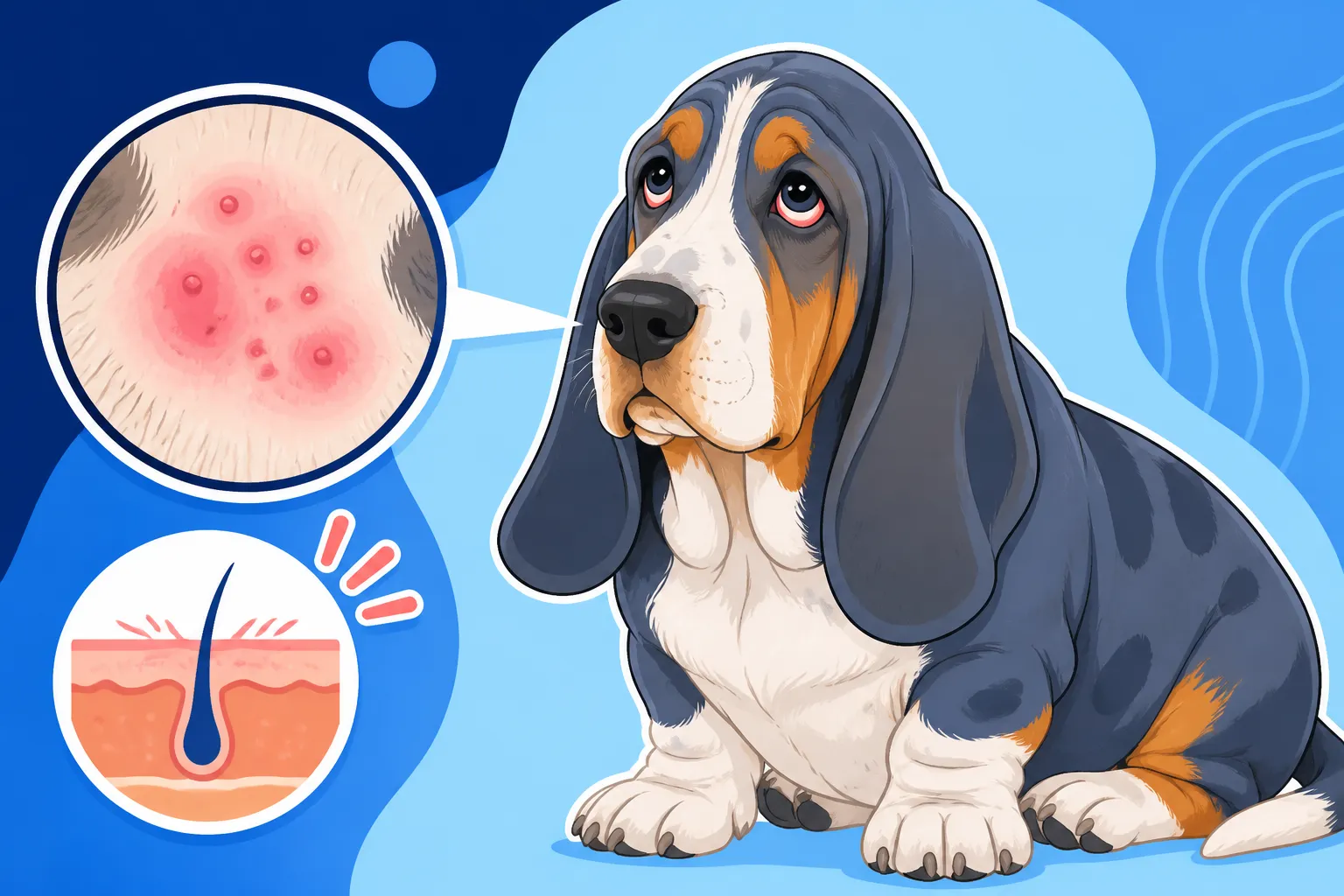
“Blue” is often used to describe a grayish or slate-colored coat. In some dogs, that appearance comes from a genetic dilution of dark pigment; in others, people may use the word informally to describe a coat pattern or mottling. A photo or a color label from a seller cannot establish which explanation applies.
Basset Hounds are commonly seen in combinations such as black, white, and tan or lemon and white. A blue-looking coat is unusual, so it is sensible to ask how the color is being described and what the dog’s parents look like. For a broader look at accepted coat patterns and color terms, see Whether a Basset Hound Can Be Any Color and Whether Any Color Is a Fault on a Basset Hound.
Most importantly, color is not a diagnosis. A blue-gray dog may have healthy skin and a full coat, while a Basset Hound of a more familiar color may develop allergies, parasites, or an infection. Look at the skin and coat itself: Is hair missing? Is the skin itchy, inflamed, scabby, or smelly? Those details are more useful to a veterinarian than the color label.
What color dilution alopecia can look like
Color dilution alopecia, often shortened to CDA, is a hair-coat disorder associated with diluted pigment in some dogs. It can cause a brittle coat, hair breakage, thinning, or patches of hair loss. The skin beneath affected areas may become dry or scaly, and some dogs develop recurring inflammation or bacterial infection around hair follicles.
CDA is not inevitable in every dog with a dilute-looking coat, and a gray or blue appearance by itself does not confirm it. The pattern and severity can vary. Some dogs have little noticeable trouble, while others develop more obvious hair loss or secondary skin problems. Signs may appear as a dog matures, rather than being obvious when the puppy first comes home.
If a dog has a blue-looking coat and hair loss, keep the possibilities open rather than assuming the cause is CDA. Fleas, mites, allergies, hormonal conditions, friction, and infections can all affect the skin or coat. A vet can examine the pattern, ask when it began, and recommend tests if needed. The key question is not simply “Is this dog blue?” but “What is causing these skin changes?”
Signs that call for a closer look
Watch for changes in the coat and skin
A coat that looks thin in one small area after rubbing against a harness is different from progressive thinning across several areas. Take note of whether hair comes out easily, breaks off, or seems to be missing from the same places on both sides of the body. Also watch for flaky patches, redness, bumps, scabs, darkened skin, or an unpleasant smell.
Itching is useful information, but it does not point to one specific cause. A dog that scratches, chews its feet, rubs its face, or repeatedly licks one area could have allergies, parasites, irritation, or infection. Even a dog that does not scratch much may still have a coat disorder, so a lack of itching does not rule out a problem.
A simple phone photo can help you track whether an area is changing. Take pictures in similar lighting and from the same angle, and jot down when you first noticed the change. Avoid repeatedly bathing or applying new products while you wait for advice; frequent product changes can irritate skin and make it harder to work out what is happening.
Tell a veterinarian about the full picture
When you book an appointment, describe the timeline: when the coat first changed, whether the problem is spreading, and whether the dog seems uncomfortable. Mention any recent changes in food, shampoo, flea prevention, bedding, grooming, or walking gear. If other pets in the home are itchy, say so, because that may help the vet consider parasites or contagious causes.
A veterinarian may examine the coat and skin, check for parasites, and recommend tests such as skin samples or other diagnostic work depending on what they find. If hair loss is persistent or the pattern suggests a deeper coat problem, further evaluation may be appropriate. It is often not possible to distinguish a genetic coat condition from other causes by appearance alone.
Seek prompt veterinary care for severe discomfort, rapidly spreading redness, open or weeping sores, swelling, or a dog that seems unwell. If the problem is mild and stable, arrange a regular appointment rather than trying to diagnose it at home. For an overview of common allergy concerns in the breed, see Whether a Basset Hound Gets Allergies. For skin problems around the characteristic folds, Skin Fold Infections on a Basset Hound and The Skin Under a Basset Hound's Folds cover related issues.
| What you notice | What it may suggest | Helpful next step |
|---|---|---|
| Blue-gray coat with no skin changes | Coat color or pattern alone; not necessarily a disorder | Monitor the skin and ask about the dog’s coat history |
| Brittle hair or gradual thinning | A coat disorder, friction, or another cause of hair loss | Photograph the area and arrange a veterinary examination |
| Itching, redness, or small bumps | Allergies, parasites, irritation, or infection among other causes | Ask your vet before applying medication or changing treatments |
| Flakes, scabs, or recurring sores | Inflammation or secondary infection may be present | Book an exam, especially if the area is spreading |
| Irritation inside face or neck folds | Moisture and rubbing may contribute to skin trouble | Keep the folds gently clean and dry, and seek care for persistent redness or odor |
How diagnosis and care usually work
Expect the vet to investigate more than coat color
A vet will usually consider the dog’s age, the distribution of hair loss, how the skin looks, and whether itching or infection is present. They may ask about the dog’s relatives or whether similar coat changes have occurred before. That history can be useful, but it does not replace an examination.
Different conditions can look alike at first. A patch of thinning hair might be related to breakage, mites, infection, allergies, or a coat disorder. A vet may recommend sampling the skin or hair, checking for parasites, or running other tests based on the examination. If a first treatment does not help, follow up rather than assuming the condition is permanent or continuing the same approach indefinitely.
If CDA is suspected or diagnosed, ask what signs would indicate a secondary infection and when the dog should be rechecked. There is no need to panic over the label, but recurring skin irritation can be uncomfortable and may need ongoing management. A veterinary plan can focus on keeping the skin comfortable, addressing infection if present, and avoiding unnecessary products that worsen irritation.
Keep skin care simple and consistent
Use only products your veterinarian recommends for your dog’s specific problem. A shampoo that helps one skin condition may be unsuitable for another, and human skin products can be too harsh or have ingredients that are unsafe if licked. If your vet recommends a particular type of shampoo, follow the directions they provide, including how long it should remain on the coat and how thoroughly to rinse.
If you are comparing supplies online, retailer listings such as Chewy can help you read product labels, but the label should not replace veterinary guidance. Ask your vet whether a product is appropriate before ordering it, especially if the skin is raw, infected, or very itchy. Chewy may be one place to locate a vet-recommended item, but avoid choosing medicated shampoos or supplements just because the packaging mentions coat or skin support.
Basset Hounds also need attention to areas where skin folds can hold moisture or collect debris. Clean and dry folds gently, and do not scrub irritated skin. If you are shopping for basic cleaning supplies through Chewy or another retailer, choose plain, dog-safe items that your vet says are suitable; stop using anything that appears to cause more redness or discomfort. See Whether a Basset Hound's Skin Folds Need Cleaning for fold-care details, and Whether a Basset Hound Gets Seborrhea for another possible source of flaky or greasy skin.
Choosing and caring for a blue-looking Basset Hound
Ask specific questions before bringing a puppy home
If a breeder describes a puppy as blue, ask what they mean by that term and whether a veterinarian has examined the puppy’s skin and coat. Ask about the parents’ coat condition, any history of hair loss or recurring skin infections in the family, and what health records are available. Clear, specific answers are more useful than a promise that a rare color is “healthy” or “special.”
A puppy can look well when young and still develop coat or skin changes later, so no appearance guarantees a trouble-free future. On the other hand, an unusual color does not prove that a dog will become ill. It is reasonable to make a decision based on the dog’s health, temperament, breeding practices, and the seller’s transparency rather than color alone.
If you already own a blue-looking Basset Hound, you do not need to treat the dog as sick simply because of its coat. Keep routine veterinary appointments, check the skin while grooming, and bring up any new thinning or irritation early. A short note about when changes started can save time during the examination.
Focus on comfort, not cosmetic fixes
Avoid trying to darken, dye, or otherwise alter the coat to make it look more typical. Products used for cosmetic coloring can irritate skin, and they do nothing to address the cause of hair loss. Likewise, shaving a coat or adding supplements without veterinary advice may not help and could complicate assessment.
Keep the dog comfortable while you follow up on symptoms. Use a well-fitting harness that does not rub over affected areas, wash bedding regularly with a mild fragrance-free detergent if your vet agrees, and keep the dog’s skin dry after bathing or getting wet. If you suspect a product or piece of equipment is causing friction, stop using it and ask your vet what alternatives are appropriate.
The most useful approach is steady observation and sensible veterinary care. A blue-gray coat may be unusual, but the health question depends on what is happening to the hair and skin. Persistent hair loss, scaling, itching, or recurring sores deserve an examination—whether the dog is blue, tricolor, lemon and white, or any other color.
Disclaimer
This article is for general informational purposes only and does not constitute professional advice. Laws, prices and regulations vary by location and change over time. Consult a qualified professional for guidance on your specific situation.