Whether a Field Bred Basset Hound Is Taller
A field-bred Basset Hound can look taller than a show-bred dog, but “field-bred” does not automatically mean longer legs or greater height. The difference may come from build, weight, posture, or the particular family line. This guide explains how to measure a Basset accurately, what field and show breeding can—and cannot—tell you, and how to compare dogs without mistaking a leaner outline for extra height.
Are field-bred Basset Hounds actually taller
Field-bred describes purpose, not a separate height class
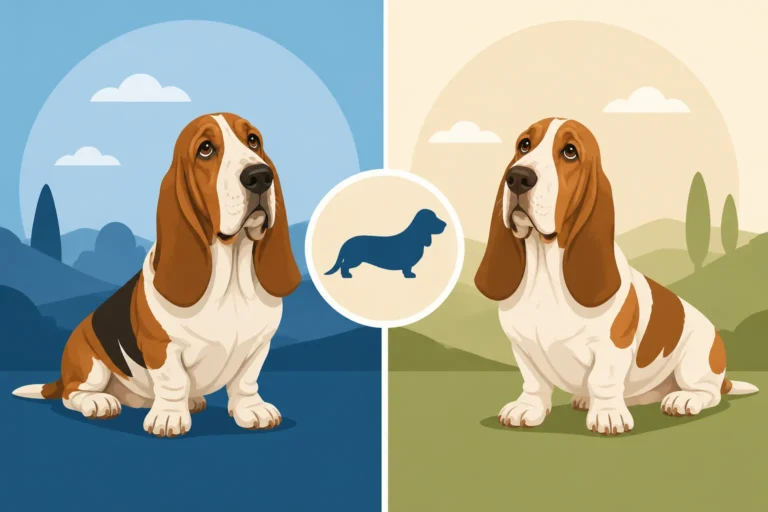
“Field-bred” generally refers to dogs whose breeding emphasizes hunting ability and working traits. It is not a separate, universally defined size category with its own height requirement. A field-bred Basset Hound may be taller than a particular show-bred dog, but that doesn’t establish a rule that field-bred dogs are taller overall.
The term can also mean different things to different breeders. One person may use it for dogs from lines regularly worked in the field; another may mean dogs selected for a lighter, more athletic build. Because there is no single definition applied consistently everywhere, it’s worth asking what a breeder means by “field-bred” and what the dogs in that line are actually like.
Breed standards provide useful context, but they don’t describe every individual dog. In the United States, the Basset Hound standard sets a maximum height at the shoulder rather than defining field-bred and show-bred dogs as separate types. If you’re trying to understand how height relates to the breed overall, How Tall a Basset Hound Stands at the Shoulder offers a helpful comparison point.
Why a field-bred dog may look taller
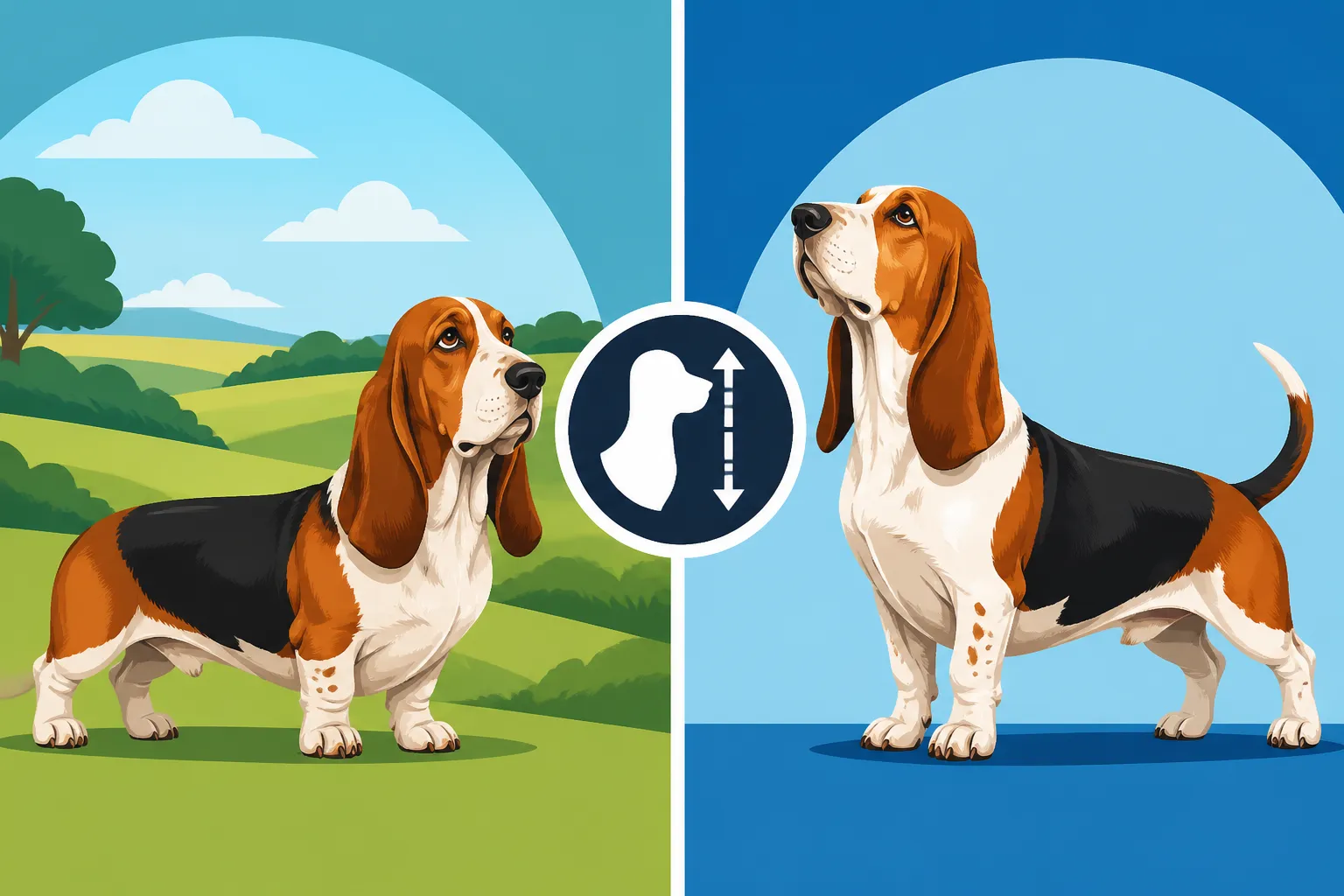
A leaner dog can appear taller even when its shoulder height is similar to that of a heavier dog. A substantial chest, loose skin, and a low-set body contribute to the classic Basset outline. A lighter dog may show more leg beneath its body, making those legs seem longer at a glance.
Posture matters, too. A dog standing squarely with its head and back in a natural position can look different from one leaning forward, standing unevenly, or sinking into a soft surface. Coat, body condition, and the angle of a photograph can further change the impression. A photo taken from below, for instance, can make a dog’s legs and body proportions difficult to judge.
That’s why descriptions such as “taller,” “leggier,” or “more athletic” are worth checking against an actual measurement. Whether Show and Field Basset Hounds Differ explores the broader differences people may notice between lines, while The Split Between Show and Hunting Basset Hounds gives more context on what those labels can imply.
How to measure a Basset Hound’s height accurately
Measure at the shoulder, not the head
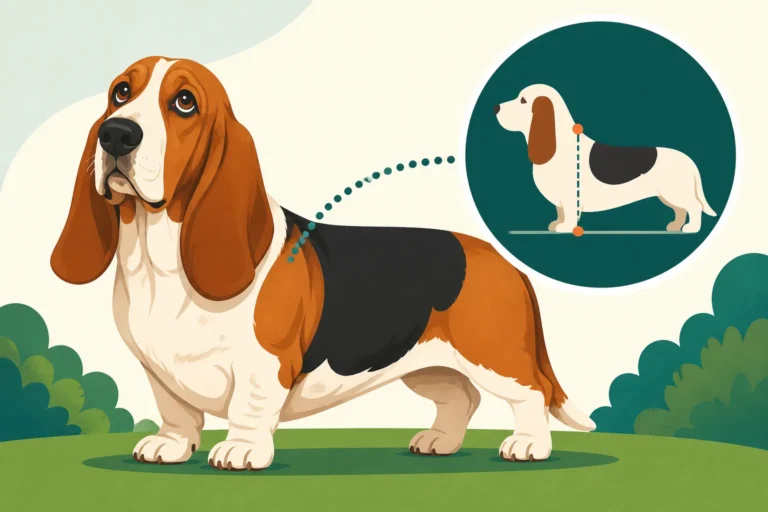
A dog’s height is measured from the ground to the highest point of the shoulder blades, usually called the withers. It is not measured to the top of the head, ears, or tail. Basset ears can hang well below the head, so including them would make the result meaningless for a height comparison.
For a practical home measurement, stand your dog on a firm, level surface. If the floor is slippery, a stable mat can help your dog feel more secure and stand naturally. Use a flat object, such as a book or a small level, to identify the highest point of the shoulders, then measure vertically from the floor to that point. A soft measuring tape can help, but keep it straight rather than following the curve of the dog’s back.
If you’re shopping for basic measuring or walking gear, Chewy is one retailer where you can compare product descriptions and sizing guidance. Whatever you choose, focus on a tool that lets you measure vertically and safely; the measuring method matters more than the brand.
Repeat the measurement before drawing a conclusion
A single measurement can be off if your dog is sitting, shifting weight, standing on uneven ground, or tensing against the measuring tool. Try again when your dog is relaxed. It can help to have a second person gently encourage the dog to stand still without pulling its head or pushing its back into position.
Take two or three measurements and see whether they are close. If they differ, check the surface and the dog’s stance before deciding which number to use. For a puppy, remember that its body is still developing; a measurement taken early in life won’t predict its adult proportions with certainty.
When comparing two dogs, use the same method for both. Measure each on level ground, in a natural standing posture, and at the withers. This helps avoid comparing a careful measurement of one dog with a rough visual guess of another. For more on the relationship between height and overall build, What an Adult Basset Hound Weighs is a useful companion topic—but weight alone cannot tell you how tall a dog is.
What field and show lines may look like
Build can change the impression without changing height
People often describe hunting-oriented Bassets as lighter or more athletic than some show-oriented dogs. That may be true for particular lines, but it should not be treated as a guarantee about every dog. Breeding choices, individual inheritance, conditioning, and age all affect how a Basset looks.
A dog with a leaner body may have a more visible outline around the legs and chest. A heavier or more substantial dog can look lower to the ground even if its shoulder height is similar. This is one reason a height comparison is more useful when it includes a proper measurement rather than relying on phrases such as “shorter,” “higher,” or “leggier.”
When you speak with a breeder, ask about adult relatives in the line, not just the puppy in front of you. Photos of parents and mature siblings can help, but measurements are more useful if height is a deciding factor. You can also ask what the breeder means by “field-bred” and whether the dogs are selected for work, conformation, temperament, or a mix of traits.
A taller outline is not automatically a healthier one
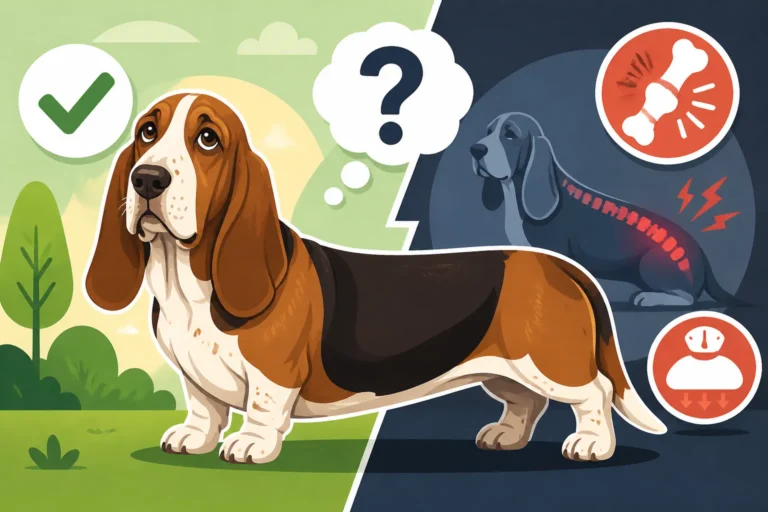
It’s understandable to wonder whether a taller-looking Basset is better built, especially if you’re concerned about movement or comfort. But height by itself doesn’t establish that a dog is healthier, more athletic, or less prone to orthopedic problems. Overall structure, sound movement, body condition, and veterinary care matter as well.
Nor does a shorter appearance automatically mean that a dog is poorly built. Basset Hounds are a short-legged breed, and individual proportions vary. What matters is whether the dog can move comfortably and whether its structure supports its everyday life. If you’re researching the breed’s characteristic proportions, Whether a Basset Hound Can Be Bred With Longer Legs and Whether the Basset Hound Has Been Bred Too Low provide further background on leg length and breed type.
If you’re evaluating an adult dog, watch it walk on a level surface at a comfortable pace. Look for relaxed, even movement rather than trying to diagnose its structure from a still photo. If you notice limping, stiffness, reluctance to move, or a sudden change in gait, talk with a veterinarian instead of assuming the issue is simply related to height.
Choosing a field-bred Basset without relying on labels
Questions to ask a breeder or rescue
A label alone won’t tell you how tall a particular dog will be. Ask for the adult heights of the parents, if known, and whether the breeder has measured mature dogs in the line. For a rescue, ask whether staff or the previous owner has an estimate of the dog’s adult size. Records and direct observations are more useful than a broad claim that a dog is “field-bred” or “tall.”
It’s also sensible to ask what the dog was bred or selected to do. A breeder should be able to explain the line’s working or show background and describe the dogs’ everyday temperament and physical characteristics. If the answer is vague, ask for examples: how the dogs move, what they are like at home, and whether the adults tend to be lighter, heavier, or more leggy than other Bassets they know.
A simple comparison can keep the conversation grounded:
| What you’re comparing | What to check | What it can tell you |
|---|---|---|
| Height | Measurement from the floor to the withers | The dog’s actual shoulder height |
| Build | Chest, body, and visible leg proportions | Whether the dog appears lighter or more substantial |
| Weight | Current weight and body condition | Context for the dog’s frame, but not height by itself |
| Movement | Comfortable walking and turning | How the dog moves in ordinary conditions |
| Line description | Breeder’s explanation of “field-bred” | What the label means in that particular breeding program |
Put daily fit ahead of a height preference
If you’re choosing a Basset for your home, consider the practical fit alongside appearance. Think about whether you can lift the dog safely when needed, whether it can comfortably get in and out of your vehicle, and whether the home has slippery floors or high furniture it may try to jump from. Those questions matter regardless of whether a dog is a little taller or shorter than another Basset.
For equipment such as a harness, compare the dog’s actual measurements with the maker’s sizing directions rather than assuming height will predict fit. Chewy or another pet retailer can be a place to review different gear options, but a correctly measured chest and neck are usually more relevant to harness sizing than shoulder height. If you need help thinking through safe movement at home, Whether a Basset Hound Should Use a Ramp and Whether a Basset Hound Should Be Lifted Under the Chest cover practical care considerations.
The useful takeaway is simple: some field-bred Basset Hounds may look taller or leggier, but the label itself doesn’t guarantee extra height. Measure at the shoulder, compare dogs using the same method, and ask specific questions about the individual line. If you’re planning to buy walking gear or a stable floor mat, Chewy can be one option to compare, but the dog’s comfort and well-fitting equipment should guide the choice—not a label alone.
Disclaimer
This article is for general informational purposes only and does not constitute professional advice. Laws, prices and regulations vary by location and change over time. Consult a qualified professional for guidance on your specific situation.