Whether a Basset Hound Should Be an Only Dog
A Basset Hound can be perfectly content as the only dog in a home, but that depends more on the individual dog and its daily routine than on breed stereotypes. If you’re worried your hound is lonely, or wondering whether a second dog would make life easier, this guide explains what companionship can and cannot solve—and how to decide what suits your household.
Can a Basset Hound Be Happy as an Only Dog
Breed sociability does not mean every dog needs a canine housemate
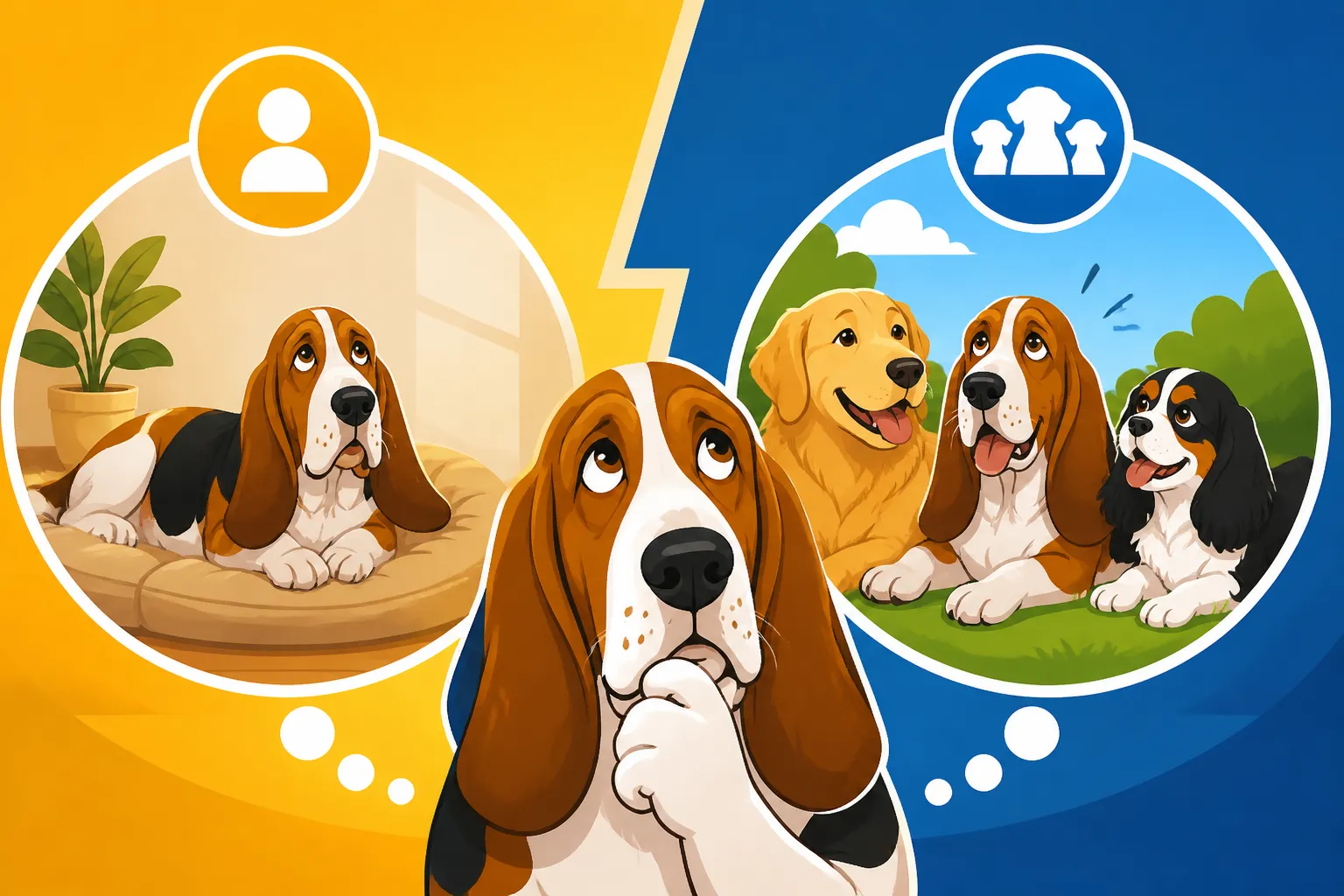
Basset Hounds are often described as sociable, and many enjoy the company of people and other dogs. Their history as pack hounds helps explain why some settle happily around canine companions. But “sociable” does not mean “unable to cope alone.” Plenty of Basset Hounds thrive as the sole dog, especially when they have predictable company, sniffing opportunities, and a comfortable place to rest.
Individual temperament matters. One Basset may actively seek out other dogs at the park, while another prefers a quiet greeting and then returns to its person. Past experiences, socialization, age, health, and the way introductions are handled all affect how a dog feels about sharing its home. A puppy raised around friendly dogs may be more comfortable with canine company than an adult who has lived alone for years, but neither situation determines the outcome on its own.
If you’re weighing whether your dog needs a canine companion, consider its whole day rather than its breed label. Does it relax when you’re home? Can it rest while you work in another room? Does it enjoy walks and training, or does it seem persistently distressed when left? A second dog may provide company, but it is not a universal fix for boredom or anxiety. For a closer look at breed tendencies, see Whether a Basset Hound Prefers a Pack.
What an only dog needs from its people
Being the only dog does not mean your Basset Hound needs constant attention. It does mean that you are the main source of its social interaction, routine, and enrichment. A dog who gets a walk, a chance to sniff, a little training, and relaxed time with its people may be more settled than a dog who has another dog in the house but little meaningful interaction.
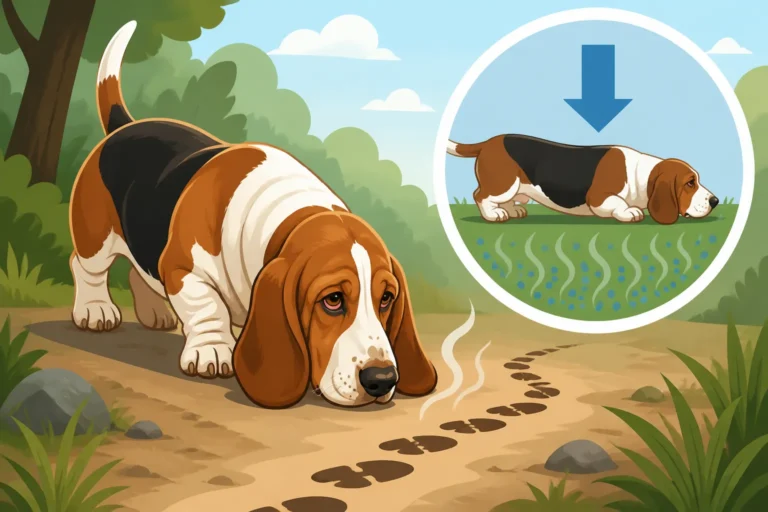
Basset Hounds can be content doing ordinary things with you: strolling around the neighborhood, following a scent trail on a long line, or resting nearby while you read. Short, enjoyable activities often fit better than trying to tire your hound out with strenuous exercise. Food puzzles, scent games, and simple training can give the nose and brain something to do. If you’re looking for ideas, Giving a Basset Hound's Nose Something to Do covers ways to make enrichment part of a normal day.
Some owners browse retailers such as Chewy for puzzle feeders, snuffle mats, and other enrichment supplies. The item matters less than whether your individual dog enjoys it and can use it safely. Supervise a new toy at first, and do not leave a dog alone with anything it might chew apart or swallow.
How to tell whether your dog is coping
A Basset Hound who is comfortable as an only dog will usually be able to relax during ordinary stretches of the day. It may nap, chew an appropriate toy, or move between resting places without constantly seeking reassurance. It can still be excited when you come home; enthusiasm at the door alone does not prove that a dog has been distressed while you were away.
Pay more attention to patterns. Repeated pacing, prolonged barking or howling, destructive behavior near exits, house-soiling in a previously housetrained dog, or an inability to settle when left can signal that something is wrong. These behaviors can have several causes, including unmet needs, a change in routine, a medical issue, or separation-related distress. They don’t automatically mean the dog needs another dog. You may find it useful to read Whether a Basset Hound Can Be Left Alone and Whether a Basset Hound Gets Separation Anxiety.
If possible, use a camera to observe what happens after you leave. A dog who howls briefly and then settles is in a different situation from one who remains distressed for a long stretch. If the behavior is intense, persistent, or new, talk with your veterinarian or a qualified behavior professional before deciding that a second dog is the answer.
When a Second Dog May Help—and When It May Not
Signs a canine companion could suit your household
A second dog may be a good fit when your Basset Hound enjoys spending time with other dogs and your household genuinely wants another pet. Look for relaxed, reciprocal interactions: both dogs choose to approach, they can take breaks, and neither is repeatedly cornered or overwhelmed. A shared walk with a compatible dog can offer an early clue, though it cannot guarantee that the dogs will enjoy living together.
A second dog can bring companionship and play, but the relationship is not always a constant cuddle-fest. Some dogs mostly share the same room or nap at opposite ends of the sofa. That can still be a comfortable arrangement. The important question is not whether the dogs look inseparable, but whether they can coexist without ongoing stress and whether you can meet each dog’s needs separately as well as together.
Before adopting, consider the practical side. You will need time for individual walks or training when needed, separate feeding arrangements, and enough space for each dog to rest undisturbed. There will also be additional care responsibilities, including routine veterinary visits and planning for emergencies. For a balanced comparison, see Whether Two Basset Hounds Are Better Than One.
Situations where adding a dog may create more stress
A second dog is not a reliable treatment for separation anxiety. If your Basset Hound panics when you leave, it may remain distressed even with another dog nearby. The new dog may not soothe it, and in some households the newcomer may learn to bark, pace, or become unsettled too. Identify the cause of the behavior and work on it directly rather than expecting another pet to resolve it.
Think carefully about adding a dog if your current Basset Hound has pain, guarding behavior, or a history of tense interactions with other dogs. A dog who is sore may have less patience for a housemate, and sharing beds, toys, food, or human attention can create pressure. That does not always rule out a companion, but it calls for professional guidance and a deliberate introduction plan.
Your own capacity matters just as much. If you already feel stretched by walks, grooming, medical care, or the demands of a busy household, another dog may increase the strain rather than relieve it. It is completely reasonable to decide that one dog is the right number. A Basset Hound does not need a canine sibling to have a full life.
| What you’re noticing | What it may suggest | A sensible next step |
|---|---|---|
| Your dog enjoys familiar dogs but settles well alone | It may be content as an only dog | Keep up regular social opportunities if it enjoys them |
| Your dog is distressed when left | Separation-related distress or another unmet need may be involved | Observe the behavior and ask a veterinarian or behavior professional for help |
| Your dog plays comfortably with a particular dog | A compatible housemate might be possible | Arrange careful, gradual introductions before making a commitment |
| Your dog guards food, beds, or toys | Sharing the home may create conflict | Get professional advice and plan for separate resources |
| Your household wants another dog and has time for both | A second dog may suit the family | Choose for temperament and compatibility, not just breed or appearance |
Consider your dog’s age, health, and preferred pace
A playful younger dog may enjoy a companion with a similar energy level, while an older Basset Hound may prefer quiet company and predictable routines. Age alone is not a rule: some seniors welcome a calm newcomer, and some young dogs would rather have their people to themselves. Watch how your hound responds to other dogs when it has room to move away and take breaks.
Health can change a dog’s social preferences. Joint discomfort, ear pain, or other problems may make close play less appealing. If your dog has become less tolerant or more withdrawn, arrange a veterinary check before interpreting the change as loneliness. A second dog cannot replace treatment, and extra activity in the home could make rest harder.
If you’re choosing a companion, look at the other dog’s behavior and needs, not just its breed. A calm, socially skilled adult may be a better match for your Basset than a boisterous puppy. Read Whether a Basset Hound Gets Along With Other Dogs for more on compatibility, and remember that the best match is the one your household can care for well.
How to Introduce a Second Dog Safely
Start with a neutral, low-pressure meeting
If you have the option, introduce the dogs somewhere neither considers its home territory, such as a quiet outdoor area. Have one handler for each dog, use secure equipment, and begin with enough distance for both to stay relaxed. A parallel walk lets them notice each other without being pushed into a face-to-face greeting.
Look for loose bodies, easy movement, and the ability to turn away or sniff the surroundings. Stiff posture, repeated attempts to escape, hard staring, or persistent growling are reasons to create more space and slow down. Don’t force a greeting just because the dogs are on leads or because one seems eager. A short, calm first meeting is more useful than a long encounter that becomes overwhelming.
Afterward, consider how both dogs recover. Do they return to normal behavior, or does one remain tense and watchful? Arrange another meeting only if the first went reasonably well. A Basset Hound Meeting the Dog You Already Have offers additional guidance on reading early interactions.
Set up the home to reduce competition
When the dogs first come home together, give each one a separate resting area and feed them apart. Put away high-value chews and toys during the early adjustment period, and make sure neither dog has to pass the other to reach water or a safe place to rest. Baby gates can create comfortable breaks without making the dogs feel shut away from the household.
Supervise shared time, even if the first few meetings seemed friendly. A dog may behave differently when it is tired, when people are nearby, or when a familiar bed or toy is involved. Keep interactions short enough that both dogs can disengage. Praise calm behavior and give each dog attention without making every greeting a competition.
At first, it can help to keep the dogs’ routines steady: usual meal times, familiar walks, and predictable rest. If one dog starts to guard, avoid scolding or grabbing items in a tense moment. Separate the dogs calmly and seek professional guidance about managing resources. A retailer such as Chewy may offer gates, separate bowls, or enrichment toys, but equipment is only part of the plan; careful supervision and suitable behavior support matter more.
Give the relationship time to develop
Some dogs become comfortable quickly; others need a gradual transition. Don’t judge the relationship by whether the dogs play together. Peaceful coexistence, with each dog able to rest and move around comfortably, is a perfectly reasonable goal. Keep making time for one-on-one walks and attention so your original dog does not have to compete for every familiar routine.
Notice small changes over the first weeks: whether each dog can settle, whether greetings become more relaxed, and whether both can eat and rest without tension. If either dog shows escalating fear, aggression, or persistent stress, separate them safely and consult a qualified professional. Continuing to hope they will “work it out” can allow an avoidable problem to grow.
A second dog can be a lovely addition, but it is a commitment to two individuals—not a guaranteed cure for a Basset Hound’s loneliness. For some households, arranging playdates, neighborhood walks, or supervised visits with a familiar dog gives the hound social contact without adding another full-time responsibility. Chewy also carries various enrichment products, but a simple sniff walk or a few minutes of reward-based training may be just as valuable for an only dog.
A Practical Way to Decide
Ask what problem you are trying to solve
Before bringing home another dog, write down what concerns you. Is your Basset Hound restless, destructive, vocal, or simply interested in other dogs during walks? Each situation calls for a different response. A dog who wants more activity may benefit from structured sniffing games; a dog who struggles when alone may need a gradual behavior plan; a dog who enjoys canine company may benefit from carefully chosen social outings.
Try a few changes first and observe the result. Add a predictable walk, a food-search game, or a calm visit with a dog your Basset already knows. If you shop for food puzzles or treat-dispensing toys, Chewy is one place owners may look, but choose an item based on your dog’s size, chewing habits, and ability to use it safely. The goal is enrichment, not buying more gear.
If your dog’s behavior is new or getting worse, discuss it with your veterinarian. Pain and illness can affect activity, sleep, and tolerance of other animals. Getting a clearer picture of the cause helps prevent a major household decision from being made in response to a problem that needs a different kind of help.
Make the decision around the whole household
A useful decision is one that works for both dogs, the people caring for them, and the practical realities of the home. Consider whether you can separate the dogs when necessary, provide individual attention, manage walks safely, and cover the added time and care. Think, too, about what would happen if the dogs did not become close friends. Could you still give each a good life while maintaining separate routines?
If the answer is yes—and your Basset enjoys canine company—a carefully selected second dog may be worth exploring. If not, being an only dog is not a shortcoming. A secure routine, kind handling, exercise suited to the dog, and social contact it actually enjoys can make a single-dog home a very good fit.
Disclaimer
This article is for general informational purposes only and does not constitute professional advice. Laws, prices and regulations vary by location and change over time. Consult a qualified professional for guidance on your specific situation.