Whether a Basset Hound Gets Yeast Between Its Folds
It's incredibly frustrating when you notice your beloved Basset Hound constantly scratching or that distinct, slightly sweet and sour smell coming from their adorable, wrinkly face. Many Basset Hound owners find themselves asking if their furry friend has yeast between its folds, a common and often recurring issue that can leave both pet and owner feeling quite miserable. This comprehensive guide is here to shed light on why these infections happen, how to spot them, and most importantly, how to manage and prevent them, so your Basset can live a more comfortable life.
Understanding Yeast Infections in Basset Hound Folds
Basset Hounds are famous for their luxurious, floppy ears and those wonderfully expressive, loose folds of skin, especially around their face and neck. While these features contribute to their undeniable charm, they also create a unique environment that, unfortunately, is a perfect breeding ground for various skin issues, including yeast infections. It’s a challenge many of us Basset parents face, and it’s certainly not a reflection of your care.
Why Basset Hounds Are Prone to Skin Fold Issues
Imagine living in a perpetually warm, moist, and dark microclimate. That's essentially what a Basset Hound's skin folds provide for microscopic organisms. These deep wrinkles, particularly around their muzzle, neck, and sometimes even their armpits and groin, restrict airflow. When moisture, whether from drool, water bowls, tears, or even just humidity in the air, gets trapped in these areas, it creates an ideal incubator for yeast and bacteria to thrive. This constant moisture and lack of ventilation mean that what might be a minor irritation for another breed can quickly escalate into a full-blown infection for a Basset. We often talk about The Skin Under a Basset Hound's Folds as a sensitive area, and these folds are a prime example of that sensitivity.
The skin within these folds is also often rubbed and irritated by movement, making it more susceptible to microscopic abrasions. These tiny breaks in the skin barrier then become easy entry points for opportunistic organisms like yeast, leading to inflammation and discomfort. It's a frustrating cycle for both the dog and the owner, as consistent daily care is truly the only way to stay ahead of the game.
The Difference Between Yeast and Bacterial Infections
It's common for Basset Hounds to develop both yeast and bacterial infections in their skin folds, sometimes even at the same time. Knowing the difference can help you communicate more effectively with your vet, although a definitive diagnosis always requires a professional examination.
Yeast infections, often caused by Malassezia pachydermatis, typically manifest with a distinct "yeasty" or "corn chip" smell. The skin might appear reddish, greasy, and often takes on a darker, almost leathery texture over time, sometimes with dark brown or black discoloration. Your Basset might be intensely itchy in the affected areas.
Bacterial infections, on the other hand, might present with more pustules, scabs, oozing, or a more pungent, foul odor. The skin might be red and inflamed, and hair loss is common. They tend to be more painful to the touch. It's important to remember that yeast and bacteria often live symbiotically, so a dog with a yeast infection might also develop a secondary bacterial infection dueishing them. This is why when you notice Skin Fold Infections on a Basset Hound, it's always best to get a vet's opinion.
Here’s a quick comparison to help you visualize the differences:
| Symptom / Sign | Yeast Infection (Malassezia) | Bacterial Infection (Pyoderma) |
|---|---|---|
| Odor | "Yeasty," "Fruity," "Corn Chips" | Pungent, foul, often cheesy |
| Skin Appearance | Red, greasy, dark/leathery, hyperpigmented | Red, inflamed, pustules, scabs, crusting |
| Texture | Greasy, thickened | Moist, sometimes sticky, scabby |
| Discharge | Dark, reddish-brown, waxy | Pus, yellow, green, bloody |
| Hair Loss | Common | Common |
| Itchiness | Often intense | Present, can be painful |
| Primary Cause | Fungal overgrowth (often secondary to allergies or moisture) | Bacterial overgrowth (often secondary to trauma, allergies, or moisture) |
Recognizing the Signs of Yeast Between Your Basset Hound's Folds
As Basset Hound owners, we become experts at noticing the subtle changes in our dogs. When it comes to skin fold yeast infections, early detection is key to preventing discomfort and more extensive treatment. It’s not just about looking, it’s about smelling and observing their behavior too.
Visual Clues and Odor
The most obvious signs of a yeast infection often hit your senses before you even get a good look. That distinctive, somewhat sweet, somewhat musty smell – often described as akin to "corn chips" or even old bread – is a hallmark of Malassezia yeast overgrowth. Many owners find themselves thinking, "Whether a Basset Hound Smells Because of Its Skin" and often, this yeasty odor is the culprit.
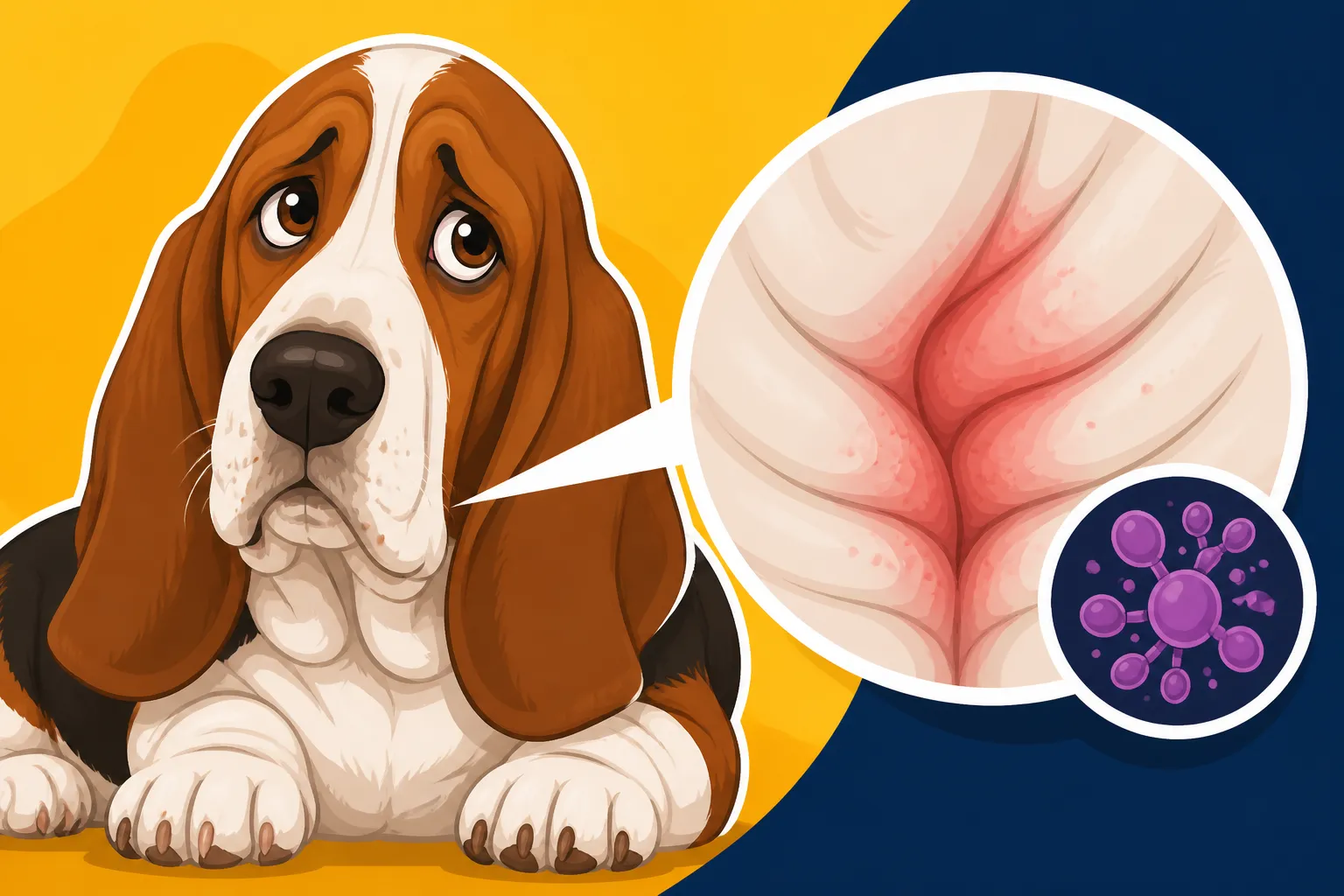
Visually, you might notice the skin within the folds, or even just beneath them, starting to turn red or inflamed. As the infection progresses, the skin can become hyperpigmented, meaning it darkens to a brownish or even blackish color, and might take on a leathery, thickened texture. It can also appear greasy or waxy due to the yeast's metabolic byproducts. Hair loss in the affected areas is also common, exposing the irritated skin beneath. Check areas like the lip folds, neck wrinkles, armpit folds, and even the skin around their vulva or prepuce.
Behavioral Indicators and Discomfort
Beyond what you see and smell, your Basset Hound's behavior will often be the clearest indicator that something is amiss. They'll be uncomfortable, and they'll try to relieve that discomfort. Constant scratching, rubbing their face against furniture or the carpet, or persistently licking at affected areas are all strong signs of irritation. You might see them doing "the rug scoot" with their face, trying to get some relief.
This constant itching and irritation can lead to broken skin, which in turn can lead to secondary bacterial infections, making the problem even worse and more painful. Their normally placid demeanor might change, becoming more restless or irritable due to the constant discomfort. It's heartbreaking to see your usually happy-go-lucky Basset in distress, and these behavioral cues are their way of telling you they need help. Don't dismiss persistent scratching as just "normal dog behavior" – for a Basset, it often points to a specific issue like a yeast infection.
Effective Strategies for Managing and Preventing Yeast in Folds
Managing yeast infections in your Basset Hound's folds is truly a commitment, but it’s one that pays off in a happier, more comfortable pup. It requires a multi-pronged approach that combines consistent hygiene, potentially dietary adjustments, and prompt veterinary intervention when needed.
Daily Cleaning and Drying Routines
The cornerstone of preventing and managing yeast infections in Basset Hound folds is a meticulous and consistent cleaning and drying routine. You can't just wipe them down once in a while; it needs to be a daily ritual, or even twice daily if the problem is severe.
First, gently pull back the folds of skin to expose the underlying area. Use soft, non-irritating wipes specifically formulated for pets. Many vets recommend wipes containing ingredients like chlorhexidine or ketoconazole, which have antiseptic and antifungal properties. Brands like Dechra MalAcetic Wipes or Douxo S3 Pyo Pads are often recommended. Wipe thoroughly, making sure to get deep into the creases without scrubbing too hard. Remember, Whether a Basset Hound's Skin Folds Need Cleaning isn't a question of if, but how often and how thoroughly.
After cleaning, and this is crucial, you must ensure the area is completely dry. Leaving any moisture behind simply re-creates the perfect environment for yeast. A soft, clean cloth or even a cool setting on a hairdryer can be used. Just be very careful not to burn their delicate skin. If you’re consistent with this daily care, you’ll likely reduce the need for more intensive veterinary treatments later on, helping you save on potential vet bills, which is where pet insurance providers like Healthy Paws can really shine if a recurring issue does require costly medication or diagnostics. This proactive approach supports your dog's health and can make those regular checks simpler to manage.
For Bassets with very deep or problematic folds, a medicated wash during baths might also be beneficial. Cleaning a Basset Hound's Face Wrinkles specifically might require a gentle foaming cleanser applied and rinsed carefully, followed by thorough drying.
Dietary Considerations and Supplements
While hygiene is paramount, what goes into your Basset Hound's body can also play a significant role in their skin health and susceptibility to yeast infections. Some Bassets may have underlying allergies, often to certain food ingredients or environmental allergens, which can manifest as skin inflammation, making them more prone to yeast overgrowth. This is why sometimes, exploring Whether a Basset Hound Gets Allergies can be a crucial step.
Consider discussing a limited ingredient diet or a novel protein diet with your veterinarian to rule out food allergies. Sometimes, simply removing common allergens like chicken, beef, or certain grains can make a noticeable difference in skin inflammation. Foods rich in omega-3 fatty acids, like fish oil supplements, can also help reduce inflammation and improve skin barrier function. Look for high-quality supplements and always consult your vet for appropriate dosages. Probiotics can also be beneficial in supporting a healthy gut microbiome, which in turn can positively impact skin immunity. Brands like Purina Pro Plan Veterinary Diets FortiFlora or Proviable can be excellent choices.
Remember, diet isn't a quick fix for an active infection, but it can be a powerful tool in long-term prevention and overall skin health support.
When to Seek Veterinary Care and Treatment Options
Even with the most diligent cleaning routine, sometimes yeast infections can take hold and require professional intervention. Don't hesitate to contact your vet if you notice signs of infection worsening, if the smell becomes overpowering, or if your Basset Hound is clearly in pain despite your home care efforts.
Your veterinarian will likely perform a cytology (skin scrape) to confirm the presence of yeast and/or bacteria. This simple, non-invasive test helps determine the specific organisms involved and guides the most effective treatment plan.
Treatment typically involves a combination of topical and sometimes oral medications. Topical antifungal creams, ointments, or medicated shampoos and wipes (often stronger concentrations than over-the-counter options) are commonly prescribed. In more severe or widespread cases, oral antifungal medications like ketoconazole, fluconazole, or itraconazole might be necessary. These usually need to be given for several weeks to completely clear the infection. It's important to follow your vet's instructions precisely, even if the symptoms seem to improve quickly, to prevent recurrence.
Managing these chronic or recurring issues can sometimes lead to unexpected vet bills. This is where investing in pet insurance, like a comprehensive plan from Healthy Paws, can provide immense peace of mind. Healthy Paws often covers diagnostics, prescribed medications, and even specialist visits for chronic conditions like skin fold dermatitis, making it easier for you to provide the best care without financial strain.
Long-Term Management and Lifestyle Adjustments
Successfully managing yeast infections in your Basset Hound's folds isn't a one-time fix; it's a marathon, not a sprint. It requires ongoing vigilance and adjusting certain aspects of their daily life to minimize risk and maintain skin health.
Environmental Control and Grooming Habits
Beyond direct fold cleaning, maintaining a clean and dry environment for your Basset Hound is crucial. Ensure their bedding is washed regularly and kept dry. If your Basset loves to splash in the water bowl or is particularly messy when drinking, consider a raised bowl or a "snood" to keep their ears and chin folds out of the water. For more tips on this, you might find Whether a Basset Hound Needs a Snood at Dinner helpful.
Regular bathing with appropriate shampoo is also an important part of overall skin hygiene. While you don't want to over-bathe, a good regimen for How Often a Basset Hound Should Be Bathed can help manage yeast and other skin issues. Always make sure to thoroughly dry their entire coat, paying extra attention to all skin folds, especially after baths or if they get wet from rain or swimming. Moisture is the enemy when it comes to yeast.
If your Basset Hound has incredibly deep, problematic folds that are constantly getting infected despite diligent care, your vet might even discuss surgical options to remove the problematic folds. This is a last resort, but it can be life-changing for some dogs experiencing severe, intractable issues.
Weight Management and Overall Health
Did you know that your Basset Hound's weight can significantly impact their skin fold health? When a Basset Hound carries What Extra Weight Does to a Basset Hound, those skin folds can become even deeper and more pronounced, creating more areas for moisture and yeast to hide. Overweight dogs often have more extensive and tighter skin folds, making them harder to clean and ventilate, thus exacerbating existing problems or leading to new ones. Keeping your Basset at a healthy weight is one of the best preventative measures you can take for their overall health, including their skin.
Furthermore, underlying health conditions can weaken the immune system and make your Basset more susceptible to recurrent infections. Regular veterinary check-ups are essential to catch any systemic issues early. Conditions like hypothyroidism can sometimes lead to skin problems, including yeast infections, so routine blood work for older Bassets is a good idea. A healthy immune system is better equipped to keep opportunistic organisms like yeast in check.
By combining meticulous daily care, thoughtful dietary choices, prompt veterinary attention when needed, and a focus on overall health and ideal weight, you can significantly reduce the incidence and severity of yeast infections in your Basset Hound's folds. It's a commitment, but your comfortable, happy Basset is absolutely worth it.
Disclaimer
The information provided in this guide is for general informational purposes only and is not intended as a substitute for professional veterinary advice. Always consult with a qualified veterinarian regarding any medical condition or health concerns your Basset Hound may have.