Whether a Basset Hound Gets Cushing’s
It’s a scary moment when you start noticing changes in your beloved Basset Hound. They might be drinking more, panting a lot, or their once-sleek coat is starting to look patchy and thin. These subtle shifts can leave you scratching your head, wondering if it's just old age creeping in, or something more serious. One of those more serious conditions that often flies under the radar until it's quite advanced is Cushing's disease, a complex hormonal disorder that can significantly impact your Basset's quality of life. This guide is here to shed light on what Cushing's disease is, why Basset Hounds are often affected, and how you can navigate diagnosis and treatment to keep your floppy-eared friend as happy and comfortable as possible.
Understanding Cushing's Disease in Basset Hounds
Cushing’s disease, medically known as hyperadrenocorticism, sounds complicated, and in some ways, it is. But at its core, it means your dog's body is producing too much of a hormone called cortisol. Cortisol is vital for many bodily functions – it helps manage stress, control blood sugar, and reduce inflammation. However, when there's an excess of it over a long period, it can wreak havoc on nearly every system in your Basset Hound's body, leading to a cascade of unwelcome symptoms. It’s not just a minor imbalance; it's a chronic condition that requires careful management to prevent serious health complications.
What is Cushing's Disease?
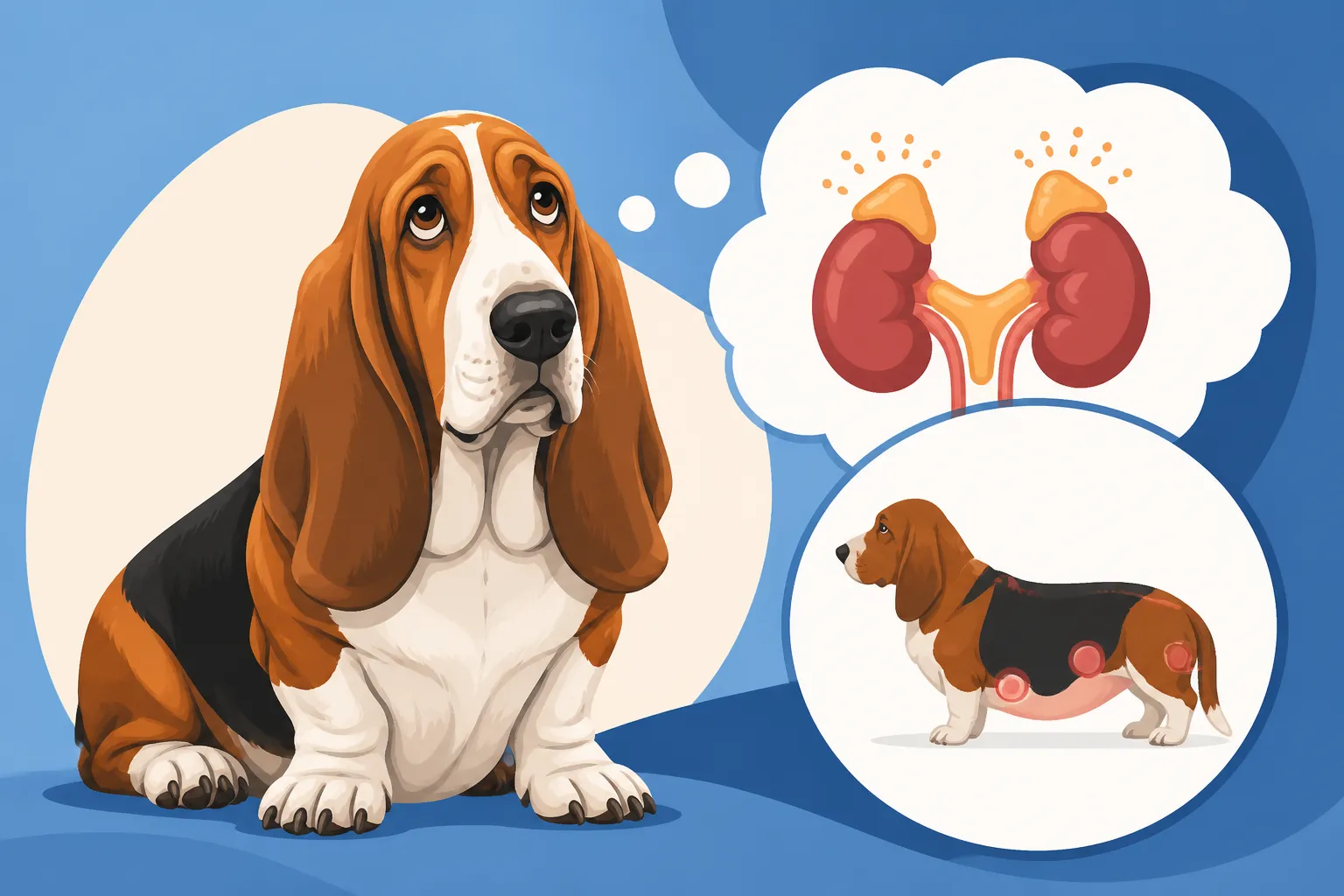
Imagine your Basset Hound’s body having a constant "fight or flight" response, even when they’re just snoozing on the couch. That’s a bit like what happens with Cushing’s. The adrenal glands, located near the kidneys, are responsible for producing cortisol. In Cushing's, these glands go into overdrive, pumping out too much of the hormone. This excessive cortisol then circulates through the body, affecting metabolism, immune response, and even skin health. The long-term effects are what cause the visible signs we often associate with the disease, from changes in appetite to serious internal issues. It's a slow burn, not an acute crisis, which is why symptoms can be easy to miss initially.
Why Basset Hounds Are Susceptible
While any dog breed can develop Cushing's, certain breeds, including Basset Hounds, seem to have a higher predisposition. This isn't just anecdotal; studies have shown a higher incidence in breeds like Poodles, Dachshunds, Boxers, and yes, our beloved Bassets. The exact genetic link isn't fully understood, but it's believed there might be an inherited component that makes their systems more prone to adrenal or pituitary dysfunction. Basset Hounds are already predisposed to a host of unique health challenges, from their long ears and the chronic infections they can harbor, to their distinctive short, heavy build that can lead to problems like The Back Trouble a Basset Hound Is Built Into This genetic predisposition means that if you own a Basset, it's particularly important to be vigilant for the signs of Cushing's, especially as they enter their middle to senior years. It typically manifests in dogs aged 6 and older, which aligns with when a Basset Hound counts as senior.
The Two Main Types of Cushing's
Cushing's disease isn't a one-size-fits-all diagnosis; there are two primary types, and understanding the difference is crucial for effective treatment.
Firstly, and most commonly, there's Pituitary-Dependent Hyperadrenocorticism (PDH). This accounts for about 80-85% of all Cushing's cases. In PDH, a benign tumor (adenoma) develops on the pituitary gland, which is located at the base of the brain. This tumor produces an excessive amount of Adrenocorticotropic Hormone (ACTH), which then signals the adrenal glands to pump out more cortisol. The adrenal glands themselves are typically healthy, but they're just responding to an overzealous command from the pituitary. Because the tumor is usually small and slow-growing, it often doesn't cause neurological signs itself, but rather the downstream effects of too much cortisol.
The second type, and less common, is Adrenal-Dependent Hyperadrenocorticism (ADH), making up about 15-20% of cases. Here, the problem originates directly in one of the adrenal glands. A tumor, which can be either benign or malignant, forms on one of the adrenal glands and starts overproducing cortisol independently. In these cases, the pituitary gland is often trying to reduce ACTH production to compensate, but the rogue adrenal tumor ignores these signals. Distinguishing between these two types is vital because their treatment approaches can differ significantly. Your vet will conduct specific tests to pinpoint the origin of the problem.
Recognizing the Signs and Symptoms
The insidious nature of Cushing's disease means that symptoms often develop slowly and can mimic other age-related conditions, making them easy to dismiss at first. As a Basset Hound owner, you’re already attuned to your dog’s quirks and habits, but recognizing these subtle shifts is key to early detection. Many owners notice a general "slowing down" or "getting old" before realizing it's a specific illness at play.
Common Behavioral Changes
One of the most frequently observed and often frustrating signs of Cushing's is a noticeable increase in your Basset Hound's thirst and urination. You might find yourself refilling the water bowl multiple times a day, and your Basset will be asking to go outside far more frequently than usual. This "polyuria" (increased urination) and "polydipsia" (increased thirst) can also lead to accidents in the house, even in a previously perfectly house-trained dog. It's not because they've forgotten their training; it's a physiological symptom they can't control.
Alongside this, many Basset Hounds with Cushing's develop a ravenous appetite, or "polyphagia." They might act constantly hungry, begging for food more often, or even becoming food-aggressive. This can be particularly challenging given that Basset Hounds already have a reputation for being perpetually hungry and prone to weight gain. This increased appetite can exacerbate issues like What Extra Weight Does to a Basset Hound. Another common behavioral change is panting, even when they haven't exerted themselves or when it's not particularly warm. This excessive panting is a direct result of the elevated cortisol levels affecting their respiratory and metabolic systems. Your dog might also seem less energetic, more lethargic, and generally less enthusiastic about walks or playtime, which could mistakenly be attributed to them simply getting old or being their naturally lazy Basset self.
Physical Manifestations
Beyond behavioral shifts, Cushing's disease also presents with several distinct physical changes that can be quite telling. A classic sign is a "pot-bellied" appearance. Even if your Basset isn't overweight (though many with Cushing's do gain weight due to increased appetite and metabolic changes), their abdomen will look distended and saggy. This isn't fat alone; it's due to muscle weakness in the abdominal wall and the redistribution of fat, along with liver enlargement. Their skin often becomes thin and fragile, sometimes bruising easily, and hair loss (alopecia) is very common, especially on the flanks, back, and belly, while the head and legs might retain their fur. The hair that does remain might appear dull and sparse.
You might also notice the development of "calcinosis cutis," which are hard, chalky deposits under the skin, often accompanied by secondary skin infections because the elevated cortisol suppresses the immune system. This can lead to issues similar to The Skin Under a Basset Hound's Folds, where moisture and bacteria get trapped, leading to inflammation and discomfort. Muscle weakness is another key symptom, which can make it difficult for your Basset to jump, climb stairs, or even get up from a lying position, mirroring some of the challenges faced by The Old Basset Hound That Cannot Get Off the Floor.
A table summarizing common symptoms can be helpful:
| Symptom Category | Common Manifestations in Basset Hounds |
|---|---|
| Behavioral | Increased thirst (polydipsia) |
| Increased urination (polyuria) | |
| Accidents in the house | |
| Increased appetite (polyphagia) | |
| Excessive panting | |
| Lethargy, decreased activity | |
| Physical | "Pot-bellied" appearance |
| Hair loss (alopecia), especially on flanks/belly | |
| Thin, fragile skin | |
| Poor wound healing | |
| Muscle weakness (difficulty jumping/rising) | |
| Recurrent skin infections | |
| Calcinosis cutis (hard skin deposits) | |
| Enlarged liver (hepatomegaly) |
When to Consult Your Vet
If you start observing a combination of these signs in your Basset Hound, it's absolutely crucial to schedule a visit to your veterinarian. Don't wait until the symptoms become severe or debilitating. Early diagnosis and intervention can make a significant difference in managing the disease and improving your dog's quality of life. Be prepared to discuss all the changes you've noticed, even if they seem minor or unrelated. Your vet will take a detailed history, perform a thorough physical examination, and likely recommend a series of diagnostic tests. Remember, many of these symptoms can overlap with other conditions, so a definitive diagnosis is paramount. Don't fall into the trap of thinking "it's just old age" if your Basset is showing multiple concerning signs; advocate for further investigation.
Diagnosis and Treatment Options
Getting a definitive diagnosis for Cushing's disease can sometimes feel like a bit of a maze, but it's a critical step. There isn't one single "magic bullet" test, and your vet will likely need to perform a combination of tests to confirm the condition and determine its type. Once diagnosed, the good news is that Cushing's is often manageable, though it does require a lifelong commitment to medication and monitoring.
The Diagnostic Journey
The diagnostic process usually begins with routine blood work and a urinalysis. These tests might show elevated liver enzymes (especially alkaline phosphatase, or ALP), high cholesterol, high blood sugar, and diluted urine with a high urine cortisol-to-creatinine ratio. While these findings can be suggestive of Cushing's, they're not conclusive, as many other conditions can cause similar abnormalities.
To confirm Cushing's and differentiate between pituitary-dependent and adrenal-dependent forms, your vet will likely recommend more specific endocrine tests. The two most common are the ACTH stimulation test and the low-dose dexamethasone suppression test (LDDST).
- ACTH Stimulation Test: This test measures how well your Basset's adrenal glands respond to a synthetic form of ACTH. A blood sample is taken, then ACTH is administered, and another blood sample is taken an hour later. Dogs with Cushing's will typically have an exaggerated cortisol response.
- Low-Dose Dexamethasone Suppression Test (LDDST): This test assesses the body's ability to suppress cortisol production. A baseline blood sample is taken, then a small dose of dexamethasone (a synthetic steroid) is given, and further blood samples are taken at specific intervals (e.g., 4 and 8 hours later). In healthy dogs, cortisol levels should significantly decrease. In Bassets with Cushing's, this suppression is often absent or insufficient. This test can also sometimes help differentiate between PDH and ADH.
In some cases, especially if an adrenal tumor is suspected, imaging techniques like abdominal ultrasound or MRI might be used to visualize the adrenal glands. An ultrasound can help determine the size and appearance of the adrenal glands, which can give clues about the type of Cushing's and rule out other issues. Remember, this diagnostic journey can be lengthy and involve multiple vet visits, but it's essential for getting an accurate picture. It’s also important to consider the financial aspect of these tests. While many focus on What a Basset Hound's Emergency Surgeries Cost, diagnostic tests for chronic conditions can also add up, making pet insurance a valuable consideration.
Medical Management
For the vast majority of Basset Hounds with pituitary-dependent Cushing's, medical management is the cornerstone of treatment. The goal isn't to cure the disease, but to control the excessive cortisol production and alleviate symptoms, thereby improving their quality of life. The most commonly prescribed medication is Trilostane (brand name Vetoryl). This drug works by inhibiting an enzyme involved in cortisol synthesis in the adrenal glands, effectively reducing the amount of cortisol produced. It's usually given once or twice daily, and the dosage is carefully adjusted based on regular monitoring of your Basset's symptoms and ACTH stimulation test results.
Another older medication, Mitotane (brand name Lysodren), is also used, though less frequently today. Mitotane works by selectively destroying cells in the adrenal cortex that produce cortisol. This drug requires very careful dosing and monitoring due to potential side effects and the risk of over-suppressing cortisol, which can lead to Addisonian crisis (too little cortisol).
Regardless of the medication chosen, consistent administration and regular follow-up appointments with your vet are absolutely critical. Initially, monitoring will be frequent (every few weeks), then typically every 3-6 months once stable. These check-ups are vital to ensure the medication is working effectively, that the dosage is correct, and that your Basset isn't experiencing any adverse side effects.
Surgical Considerations
While medical management is standard for PDH, surgery is the primary treatment option for adrenal-dependent Cushing's (ADH), assuming the tumor is benign and localized, and your Basset Hound is a good surgical candidate. The surgical procedure, called adrenalectomy, involves removing the affected adrenal gland. This can be a complex and delicate surgery due to the location of the adrenal glands near major blood vessels.
If the adrenal tumor is malignant (cancerous) or has metastasized (spread), the prognosis is generally poorer, and surgical removal might be combined with other therapies, or medical management might be the only feasible option to manage symptoms. Deciding on surgery is a big decision, and your vet will discuss the risks, benefits, and expected outcomes with you thoroughly. Post-surgical care can also be intensive, often requiring hormone supplementation as the remaining adrenal gland adjusts.
Managing Your Basset Hound's Quality of Life
Beyond medication, there are several things you can do at home to help manage your Basset Hound's quality of life while living with Cushing's. Providing a consistent schedule for feeding and potty breaks can help with the increased urination and appetite. Ensuring fresh water is always available is also important. You might need to adjust their diet to a lower-fat, higher-fiber option, especially since weight gain is a concern and Cushing's can sometimes lead to Whether a Basset Hound Gets Pancreatitis. Consult your vet for specific dietary recommendations.
Addressing skin issues is also key. Regular, gentle grooming can help manage hair loss and keep their skin clean. If secondary skin infections or calcinosis cutis occur, your vet will prescribe appropriate medicated shampoos or topical treatments. Because of their fragile skin and compromised immune system, it’s important to be extra vigilant about any cuts or sores. Providing soft, comfortable bedding can help prevent pressure sores, particularly for Bassets who spend more time lying down due to muscle weakness. Also, consider ways to reduce stress, as stress can naturally increase cortisol levels. A calm, predictable environment is always beneficial for Bassets, but especially so for those managing a chronic condition.
Living with a Basset Hound with Cushing's
Discovering your Basset Hound has Cushing's can feel overwhelming, but it's important to remember that with proper management, many dogs can live comfortably for years after diagnosis. It’s a journey that requires patience, vigilance, and a close partnership with your veterinary team.
Long-Term Outlook and Prognosis
The prognosis for Basset Hounds with Cushing's disease largely depends on the type of Cushing's, the presence of any other concurrent health issues, and how consistently the condition is managed. For dogs with pituitary-dependent Cushing's (PDH) that are well-controlled with medication like Trilostane, the prognosis is generally good. Many Bassets can live an additional 2-3 years, and sometimes longer, with a good quality of life. The medication effectively manages symptoms, slowing the progression of the disease and preventing severe complications. However, it's not a cure, and regular monitoring is essential to adjust dosages as needed.
For adrenal-dependent Cushing's (ADH), if the tumor is benign and successfully removed, the prognosis can be excellent. However, if the tumor is malignant or has metastasized, the outlook is more guarded. It's also important to note that Basset Hounds, like many breeds, are already prone to other age-related conditions, so managing Cushing's alongside something like Arthritis in a Basset Hound at Seven, or heart disease, can add complexity to their care. The key is consistent, proactive veterinary care throughout their remaining years, allowing them to truly experience The Ten to Twelve Years a Basset Hound Lives.
Financial Implications and Support
Let's be realistic: managing a chronic condition like Cushing's disease is an ongoing financial commitment. The diagnostic tests themselves can be costly, often running into several hundred dollars. Once diagnosed, the medication (like Vetoryl) can be expensive, ranging from $50 to $200 or more per month, depending on your Basset Hound's size and dosage. Add to that the cost of regular follow-up ACTH stimulation tests and blood work, which might be required every 3-6 months, and you're looking at significant yearly expenses.
This is where pet insurance can truly be a lifesaver. Companies like Healthy Paws offer comprehensive plans that can cover a substantial portion of diagnostic tests, medication, and ongoing veterinary care for chronic conditions like Cushing's. While pre-existing conditions are typically excluded, if your Basset Hound was insured before showing symptoms, a good policy can significantly ease the financial burden. For many owners, it's the difference between being able to afford optimal care and having to make difficult choices. It's worth looking into plans early in your Basset's life to ensure coverage for unexpected health issues down the line. Managing a Basset Hound's health is often more expensive than people expect, and unexpected diagnoses contribute significantly to What a Basset Hound Costs a Year to Keep.
The Emotional Toll on Owners
It’s perfectly normal to feel a range of emotions when your beloved Basset Hound is diagnosed with a chronic illness. Frustration with the slow onset of symptoms, fear about the future, and guilt that you didn't notice sooner are all common. Seeing your once-energetic companion become lethargic, lose hair, or have accidents in the house can be heartbreaking.
Remember, you are not alone in this. Many Basset Hound owners, and pet owners in general, navigate similar challenges. It's a testament to your love and commitment that you're seeking to understand and manage this condition for your dog. Lean on your veterinary team for support and advice, and consider connecting with online forums or support groups for owners of dogs with Cushing's. Sharing experiences and tips can be incredibly validating and helpful. Celebrate the good days, manage the challenging ones, and focus on providing the best possible quality of life for your floppy-eared family member.
Disclaimer
This article is intended for informational purposes only and does not constitute medical advice. Always consult with a qualified veterinarian for any health concerns or before making any decisions about your Basset Hound's medical care.