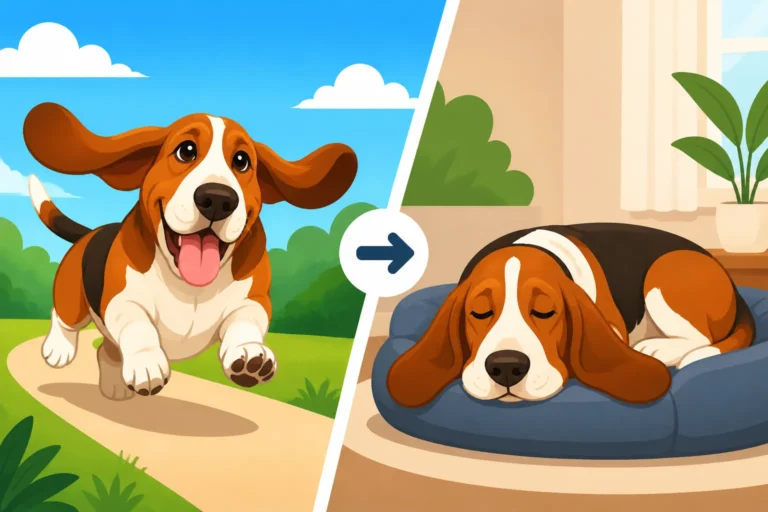
Whether a Basset Hound Is Loud
One of the biggest worries new Basset Hound owners, or even seasoned dog lovers considering this wonderful breed, often have is about noise. You've heard the stories, perhaps seen the cartoons, and you're left wondering: just how loud is a Basset Hound, really? It's a valid concern, especially if you live in an apartment, have close neighbors, or simply prefer a quieter home. This guide will dive deep into the unique vocalizations of the Basset Hound, what makes them "loud," what triggers their sounds, and practical strategies for managing their distinctive voice so you can enjoy a harmonious life together.
The Basset Hound's Signature Sound: What Does "Loud" Really Mean?
Let's be honest, Basset Hounds are not known for being silent observers. They have a voice, and they're not afraid to use it. But understanding what "loud" truly means in the context of a Basset Hound is crucial. It's not always incessant barking like some smaller breeds, nor is it typically aggressive growling. Their vocal repertoire is varied and deeply rooted in their history as scent hounds.
The Deep, Resonant Bay: A Hunter's Legacy
The most iconic sound of a Basset Hound is undeniably its bay. This isn't a sharp, yappy bark; it's a deep, mournful, and incredibly resonant sound that seems to vibrate through your very bones. Imagine the sound of a foghorn mixed with a mournful cry, and you're getting close. This bay was specifically developed over centuries to serve a vital purpose in hunting. When a Basset Hound, with its incredible nose, picked up a scent trail, it would bay to alert hunters to its discovery and to mark the path it was following. This allowed hunters, often on foot, to keep track of their slow, methodical hounds through dense underbrush.
Because this bay was bred for distance and to cut through the sounds of the forest, it carries. Oh, how it carries! If you're out walking with your Basset and they catch a particularly enticing whiff of something, they might let out a series of bays that could easily be heard by your neighbors down the street, or even a street or two away. It’s a sound that evokes images of ancient hunts, not necessarily a quiet afternoon stroll. This deep, echoing vocalization is often the primary reason people associate Bassets with being "loud." It's a sound they are biologically programmed to make, and it's a powerful expression of their hound nature. For more on this, you might find The Bay a Basset Hound Uses and the Neighbors Hear interesting.
Beyond the Bay: Barks, Howls, and Whines
While the bay is their trademark, Basset Hounds certainly have other vocalizations in their arsenal. They do bark, though often not with the same frequency or intensity as some other breeds. Their barks tend to be deeper and more deliberate. A Basset might bark to alert you to someone at the door, or perhaps to express frustration if they can't reach a dropped treat. It's usually not a continuous, nagging bark, but more of a communication tool.
Howling is another common Basset trait, and it's often a close cousin to their bay. They might howl at sirens, other distant dogs, or even when left alone, a sound that can feel incredibly lonely and mournful to a human ear. This type of vocalization is often a sign of distress or boredom. Then there's the whine. Basset Hounds are masters of the plaintive whine, used to solicit attention, beg for food, or express a need they can't quite articulate. This can range from a soft murmur to a persistent, escalating plea that’s hard to ignore. They can also make a variety of grunts and groans, particularly when settling down for a nap or trying to get comfortable, which are more charming than genuinely "loud."
Understanding this spectrum of sounds is the first step to truly understanding "whether a Basset Hound is loud." It's not a simple yes or no, but a nuanced exploration of their communication style.
Common Triggers for Basset Hound Vocalization
Knowing what sounds your Basset makes is one thing, but understanding why they make them is key to managing their volume. Basset Hounds don't just randomly decide to be loud; there's usually a specific trigger that sets them off.
The Irresistible Call of Scent
This is, hands down, the biggest reason your Basset Hound will become vocal. Their noses are paramount. With perhaps the second-best sense of smell in the canine world (only trailing the Bloodhound), a Basset Hound lives through its nose. When they catch an interesting scent, their world narrows to that invisible trail. Every fiber of their being focuses on tracking it, and often, that intense focus comes with a vocal announcement: the bay.
Imagine your Basset on a walk, nose to the ground, diligently following a trail only they can perceive. Suddenly, they hit a particularly strong scent—maybe a rabbit that passed by hours ago, or another dog's fresh tracks. Their instincts kick in, and they let out that deep, resonating bay to say, "Eureka! I found it!" This is not them being disobedient; it's them fulfilling their ancient purpose. It's a primal response that's incredibly difficult to interrupt, no matter how well-trained your dog is in other areas. This is why a Basset Hound should rarely, if ever, be trusted off-leash in an unfenced area; their nose will lead them, and their voice will accompany them, often straight into trouble. You can read more about how their unique anatomy aids their scenting ability in articles like Whether a Basset Hound's Ears Sweep Scent Upward and How Good a Basset Hound's Nose Actually Is.
Boredom, Loneliness, and Attention-Seeking
Like any intelligent dog, Basset Hounds need mental and physical stimulation. A bored Basset Hound is often a loud Basset Hound. If they are left alone for long periods without adequate exercise, interactive toys, or mental challenges, they might resort to howling or persistent whining to express their dissatisfaction. This is particularly true if they develop separation anxiety, where the anxiety of being alone manifests in sustained vocalizations. Whether a Basset Hound Howls When Left is a common concern among owners for this very reason.
Similarly, Bassets are masters of using their voice to get your attention. A quiet whine might start when you're busy, escalating to a louder whine or even a bark if you don't respond. They know their voice is an effective tool to get what they want, whether it's a walk, a treat, or just some cuddles on the couch. Sometimes, even though it can be annoying, their vocalization is simply a plea for interaction. They are social creatures, and if they feel ignored or under-stimulated, they will find a way to communicate that. Providing them with puzzle toys from brands found on platforms like Amazon can sometimes help redirect this energy.
Reacting to the World Around Them
Basset Hounds can also be reactive to external stimuli. While not typically guarding dogs, they will bark at perceived intruders or unusual noises. A knock at the door, the mail carrier, another dog walking by, or even a sudden loud noise in the neighborhood can trigger a series of barks or bays. Their large, floppy ears don't mean they don't hear well; in fact, they can be quite attuned to sounds, especially those that might indicate something new or interesting in their environment.
Some Bassets might also be "conversationalists," baying or howling in response to other dogs in the distance. It's as if they're joining a chorus of canine communication that only they can fully understand. This can be especially frustrating if your neighbors have dogs that regularly bark, creating a chain reaction of vocalizations. Understanding these triggers is the first step in formulating a plan to manage their "loudness."
Managing a Vocal Basset Hound: Practical Strategies
While you can't completely silence a Basset Hound – nor would you want to, as their voice is part of their charm – you can certainly manage their vocalizations to ensure a more peaceful household. It's about redirection, training, and meeting their fundamental needs.
Training for a Quieter Life
One of the most effective ways to manage vocalization is through consistent training. Start with a "Quiet" cue from puppyhood, if possible. This involves rewarding your Basset when they are quiet, and then gradually teaching them to be quiet on command. When they start to bark or bay, calmly say "Quiet," and when they pause, even for a second, reward them immediately. The BAXTER & Bella online puppy school, for example, emphasizes positive reinforcement techniques that can be very effective for teaching cues like "Quiet" or "Enough." The key is consistency and patience; Bassets can be "stubborn" (or perhaps just highly focused on their own agenda!), but they are intelligent and respond well to positive motivation, especially food rewards. You might find guidance in Teaching a Basset Hound a Quiet Cue.
It's also important to manage triggers through training. If your Basset barks at the mail carrier, work on desensitization and counter-conditioning. Have treats ready and reward calm behavior before the mail carrier arrives, associating their presence with positive reinforcement rather than an alarm. For scent-driven bays, while you can't erase their instincts, you can work on recall training diligently, even if it's never 100% reliable when a strong scent hits. Practicing recall in less stimulating environments, using a long line, and making yourself more interesting than the scent can help. Consider training them with a tracking collar for safety, as discussed in Whether a Basset Hound Needs a Tracking Collar, should they wander off on a scent.
Environmental Adjustments and Enrichment
Creating an environment that minimizes triggers and maximizes appropriate outlets for their energy is crucial. If your Basset barks excessively at things outside the window, consider using privacy film or curtains during times when distractions are high. If howling occurs when you're away, a solid crate training routine can help them feel more secure. A comfortable, orthopedic bed within their crate, perhaps one found on Amazon, can make this space a true haven.
Enrichment is vital for a Basset Hound. Their powerful noses need a job! Engage them in scent-work games, hide-and-seek with treats, or provide puzzle toys that challenge them to figure out how to get a reward. A snuffle mat can keep them happily occupied for a good stretch, channeling their natural desire to sniff and forage in a constructive way. Regular, moderate exercise is also important to burn off physical and mental energy. While they aren't marathon runners, daily walks where they can sniff and explore (on-leash, of course!) can significantly reduce boredom-induced vocalizations. Remember, a tired Basset is often a quiet Basset. Exploring topics like Whether a Basset Hound Needs Any Real Exercise can help you tailor their activity.
Here's a quick comparison of common Basset Hound vocalizations and their potential causes:
| Vocalization Type | Common Sound | Primary Triggers | Potential Solutions |
|---|---|---|---|
| Bay | Deep, mournful, resonant | Strong scent trail, excitement, distant hounds | Leash control, scent work training, distraction |
| Howl | Long, sustained, melodic | Loneliness, separation anxiety, sirens, other dogs | Enrichment, training for alone time, desensitization |
| Bark | Deeper, often abrupt | Doorbell, strangers, perceived threats, frustration | "Quiet" cue, desensitization, positive redirection |
| Whine | High-pitched, pleading | Attention-seeking, hunger, discomfort, desire for something | Ignore until quiet, reward calm behavior, meet needs |
| Grunt/Groan | Low, guttural | Comfort, stretching, settling down, dreaming | Generally benign, no action needed |
Living Peacefully with a Basset Hound's Voice
Ultimately, living with a Basset Hound means accepting their vocal nature to some degree. Their sounds are part of their breed identity, deeply ingrained in their history. The goal isn't to create a silent statue, but to foster a well-adjusted, confident dog whose vocalizations are managed and understood, rather than a source of constant frustration.
Neighborly Relations and Apartment Living
If you live in an apartment or have close neighbors, managing your Basset's volume is even more critical. Proactive communication with your neighbors can go a long way. Let them know you're working on training, and appreciate their understanding. If your Basset is particularly vocal when left alone, it might be worth investigating Whether a Basset Hound Suits Shared Walls more deeply before bringing one home, or investing in soundproofing solutions for shared walls. Crate training, as mentioned, can provide security, and playing calming music or white noise can help mask external sounds that might trigger vocalization.
Regular check-ins with your Basset's needs are paramount. Are they getting enough mental stimulation? Are their walks fulfilling their scent drive? A tired and engaged Basset is much less likely to resort to nuisance barking or howling. Consider doggy daycare or a dog walker (if they're suitable for your Basset's temperament) to break up long periods of solitude and provide extra outlets for their energy.
Embracing the Basset's Unique Communication
While some of their vocalizations can be challenging, many Basset owners grow to love and even anticipate their dog's unique sounds. The grunts of satisfaction as they settle, the happy bay when you return home, or the conversational whine for a belly rub become endearing quirks. It's about distinguishing between genuine communication or an expression of their breed instinct, and a problematic, attention-seeking, or anxiety-driven vocalization.
Embrace their nose! Provide outlets for their natural desires. Invest in scent-work toys, go on "sniffari" walks where they lead and you follow their nose, allowing them to explore the rich tapestry of smells around them. A well-exercised mind and body, combined with consistent, positive training, will help your Basset Hound be less "loud" in the frustrating sense, and more "communicative" in a way that enriches your shared life. Remember, a Basset Hound's voice is a historical artifact, a charming characteristic, and with understanding and effort, it can be a harmonious part of your home.
Disclaimer
This article is for general informational purposes only and does not constitute professional advice. Laws, prices and regulations vary by location and change over time. Consult a qualified professional for guidance on your specific situation.