Whether a Basset Hound’s Ears Sweep Scent Upward
One of the most endearing and perplexing characteristics of our beloved Basset Hounds is those magnificent, long, pendulous ears. Many new Basset owners, and even experienced ones, often wonder if there's more to these impressive appendages than just aesthetics – specifically, if they play an active role in directing scent. This guide will dive deep into the fascinating physiology of a Basset Hound's ears and overall head structure to understand their true function in that incredible nose-driven world.
The Unique Anatomy of a Basset Hound's Scenting Apparatus
Let's face it, a Basset Hound's head is a masterpiece of design when it comes to scent. Everything from their low stature to their droopy eyes and copious wrinkles seems to serve a purpose in enhancing their legendary sense of smell. But those ears? They are truly something special and often the first thing people notice, besides their soulful gaze.
The Ear Flap's Role in Scent Collection
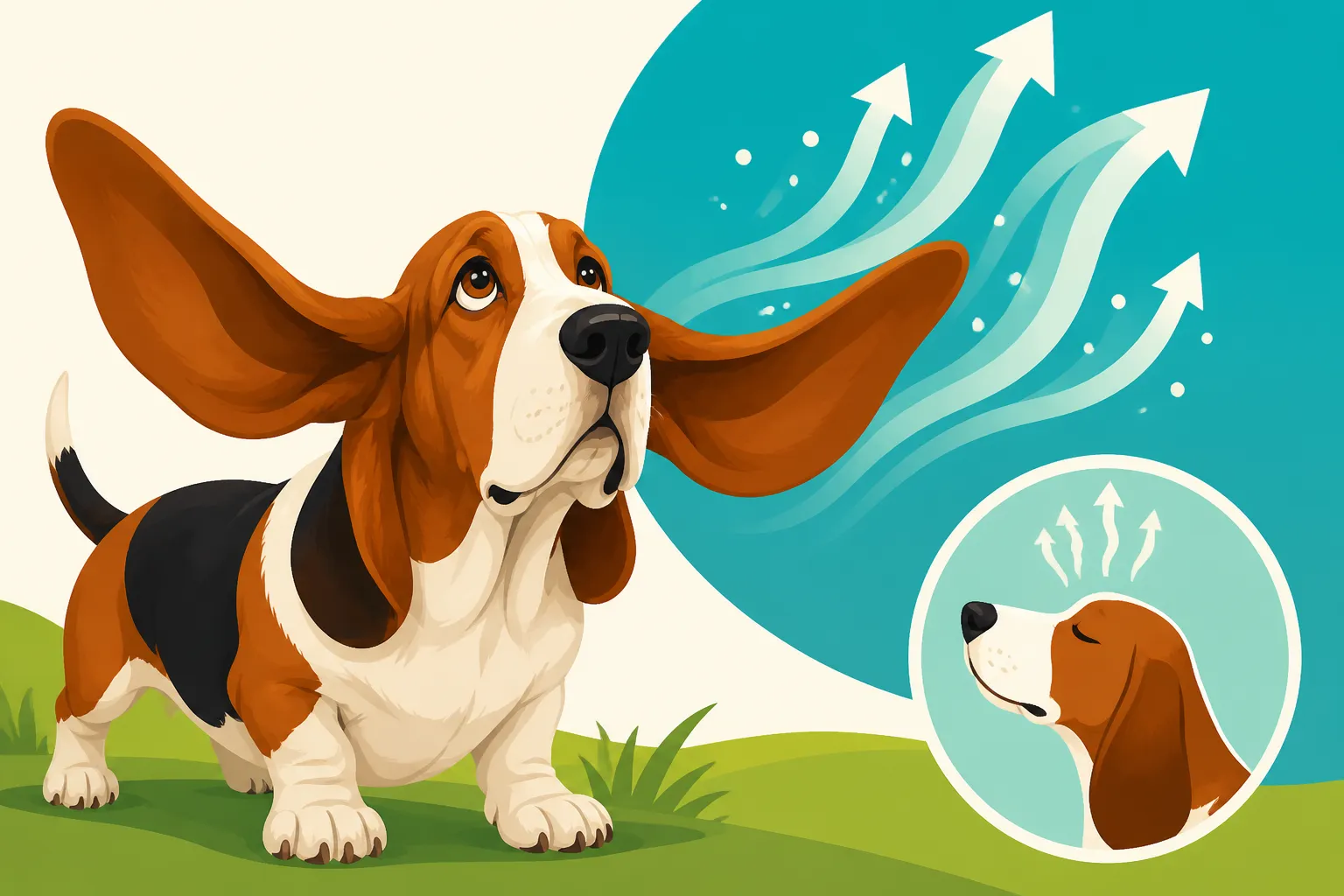
The Basset Hound's ears are truly a marvel. They are incredibly long and heavy, often dragging on the ground as the dog moves, and made of soft, velvety cartilage and skin. This isn't just a quirky feature; it's a critical component in their scenting prowess. The scientific community has long theorized, and largely accepted, that these long ears, known as leathers, aren't just for listening. As a Basset Hound moves, its head low to the ground, those ears swing and sway. This motion is believed to gently stir up scent particles from the ground and directly channel them towards the dog's highly sensitive nose. Imagine a little scent cloud being constantly wafted right where it needs to be! It's less about a forceful "sweep" and more about an ongoing, subtle funneling effect, trapping airborne scent molecules and concentrating them for the nose. Think of them as natural scent magnifiers. The sheer surface area of the ears also contributes; they are constantly absorbing residual scent from the environment, which, combined with the motion, further enriches the olfactory experience for the dog. This anatomical adaptation is a key reason why they are so exceptional at following cold trails, especially over varied terrain.
The Dewlap and Wrinkles: More Than Just Character
While the ears often get all the glory, we can't forget the other features that contribute to the Basset Hound's scenting superiority. The prominent dewlap – that loose, saggy skin around their neck and chin – and the characteristic facial wrinkles are not just for looking adorable or giving them that perpetually worried expression. These features also play a vital role in trapping and holding scent. As the Basset Hound works a trail, nose to the ground, the dewlap acts like a natural reservoir, holding scent particles close to the face. The wrinkles, particularly around the muzzle and eyes, create additional pockets where scent can accumulate and linger. This means that even if a strong gust of wind momentarily disperses a scent trail, the Basset Hound has a built-in "backup" system, with concentrated scent literally clinging to its face. It's a truly brilliant design, ensuring that precious scent information isn't lost. This combination of the ears, dewlap, and wrinkles creates a micro-environment around the Basset's nose, maximizing their exposure to even the faintest of odors. It’s no wonder they are so singularly focused when a good scent crosses their path; their entire head is a highly specialized scent-detecting machine. To fully appreciate this, you really need to understand The Nose That Puts a Basset Hound Second to a Bloodhound.
The Science and History Behind the "Scent Sweeping" Theory
For centuries, hunters and breeders have observed the unique way Basset Hounds track, with their heads low and ears dragging. This observation led to the hypothesis that the ears weren't merely passive, but actively participated in enhancing scent detection.
The "Sweeping" Theory and Its Nuances
The idea that a Basset Hound's ears "sweep scent upward" is a common one, and while it captures a part of the truth, it might be a slight oversimplification. It's not so much a forceful broom-like sweep, but rather a more gentle and continuous process of air disturbance and scent concentration. As a Basset Hound walks, those long, heavy ears swing rhythmically. This movement creates a subtle air current. This current lifts scent particles from the ground, or even from vegetation, and directs them into the Basset's nasal passages. Think of it less as a vacuum cleaner and more like a gentle fan that continuously refreshes the scent for their nose. The large surface area of the ears, which can reach impressive lengths – we're talking about The Twelve Inch Ears a Basset Hound Was Given on Purpose – also increases the chances of intercepting airborne scent molecules as they move through the environment. So, while "sweeping" might conjure an image of aggressive movement, it's more about the passive yet highly effective action of their unique ear structure enhancing their olfactory input. This continuous funneling action helps maintain a high concentration of odor molecules around the nose, making it easier for the Basset to analyze and follow even the most faint or dispersed trails.
Beyond Sweeping: Other Olfactory Enhancements
The ears' contribution to a Basset Hound's scenting ability goes beyond just the physical movement. Their velvety texture and large surface area are also believed to help capture and retain scent molecules. This means the ears themselves can briefly hold scent, essentially creating a "scent memory" right next to the nose. This is similar to how Whether a Basset Hound's Loose Skin Traps Scent is thought to work. This prolonged exposure to scent allows the Basset Hound's incredibly powerful olfactory system more time to process and interpret the complex information. The Basset Hound's unique head shape, with a broad muzzle and prominent olfactory bulbs in the brain, further amplifies their scenting prowess. It's a holistic design where every physical attribute, from the length of their ears to the density of their nasal receptors, works in concert to make them supreme scent hounds. It’s not just one feature doing all the work; it’s the symphony of their anatomy that makes them so effective. This combination ensures that the Basset Hound is exceptionally well-equipped for sustained tracking, even when conditions are less than ideal. This physiological setup is also a significant factor in Why a Basset Hound's Ears Help It Smell.
How Physiology Dictates Behavior and Training
Understanding why a Basset Hound is built the way it is can be a game-changer for owners. It helps us appreciate their natural instincts and adapt our training methods to work with, rather than against, their inherent drives.
How Their Physiology Dictates Their Tracking Style
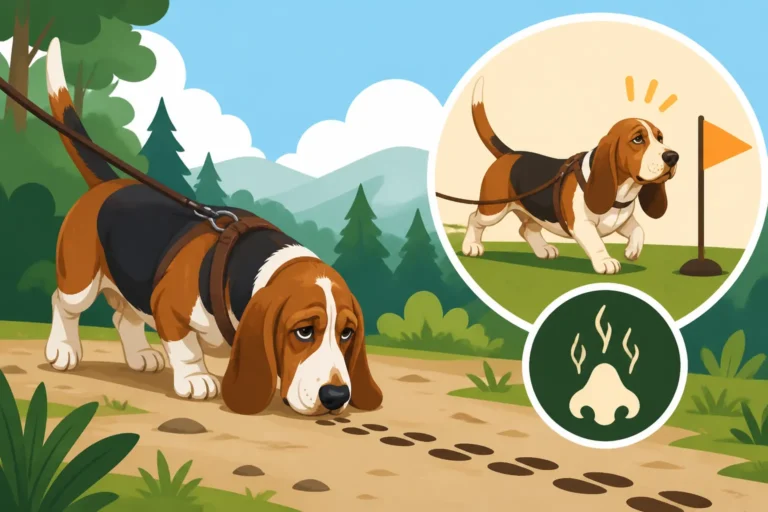
A Basset Hound's specialized anatomy dictates a very distinct tracking style. When a Basset Hound is on a scent, its head is almost invariably down, with its nose glued to the ground, almost as if it's vacuuming up information. This isn't just a preference; it's the most effective way for them to utilize their unique ear and facial structure to maximum advantage. The long ears, dewlap, and wrinkles all work best when close to the source of the scent. This ground-hugging approach allows them to detect minute scent particles that other breeds, tracking with their heads higher, might miss. They are truly masters of the low trail, capable of deciphering complex scent tapestries left by game or even humans. Their deliberate, methodical pace is also a direct result of this deep concentration on scent. They aren't built for speed, but for relentless, unwavering pursuit of a trail, often going into a state of intense focus where the rest of the world fades away. This means that Whether a Basset Hound Trails With Its Nose on the Ground is not just a habit, but a fundamental part of their tracking efficiency.
Practical Implications for Owners: Harnessing the Nose
For Basset Hound owners, understanding this innate drive and physiological setup is crucial for their well-being and training. Firstly, never underestimate the power of that nose. A Basset Hound following a scent is often oblivious to anything else, including your calls. This is why off-leash adventures are almost always a bad idea unless in a securely fenced area. A long line can be a great compromise, allowing them to explore scents safely. Whether a Basset Hound Should Wear a Tracker is also a very practical consideration for any owner, given their propensity to follow their nose to distant lands. Secondly, you can use their love of scent work to your advantage in training and enrichment. Activities like scent games, finding hidden treats, or even formal nose work classes can provide immense mental stimulation and fulfill their natural instincts. Brands like BAXTER & Bella offer online puppy training programs that can help you channel this natural drive constructively, even if it's just teaching "find it" games indoors. Providing appropriate outlets for their nose can also help with common Basset behaviors like digging or counter-surfing, as a bored nose is often a mischievous nose. Remember, you're living with a world-class scent detection expert, so embrace it!
Common Misconceptions and the Bigger Picture of Basset Scenting
It's easy to get caught up in one fascinating aspect of a Basset Hound's physiology, but it's important to remember that their incredible scenting ability is a complex interplay of many factors.
Are the Ears the Only Reason They're Great Scent Hounds?
While the ears certainly play a significant role, it would be a mistake to attribute the Basset Hound's supreme scenting ability solely to them. Their ears are a brilliant adaptation, enhancing what is already an extraordinary sense of smell. However, the true powerhouse resides within their nasal passages and brain. Basset Hounds possess an astonishing number of olfactory receptors – orders of magnitude more than humans – and a large proportion of their brain is dedicated to processing scent information. Their elongated skull provides ample space for these complex structures. The moistness of their nose also helps trap scent molecules, and they have an vomeronasal organ (Jacobson's organ) that allows them to detect pheromones, adding another layer to their sensory world. So, while the ears are fantastic 'scent funnels,' they are merely amplifying an already incredible natural talent. They are one part of a highly specialized biological system designed for one purpose: tracking. Understanding How Good a Basset Hound's Nose Actually Is reveals the true depth of their capability.
The Full Scenting Package: Nose, Brain, and Drive
Ultimately, a Basset Hound's prowess as a scent hound is a combination of several factors:
- Exceptional Olfactory System: Their primary weapon is their nose itself, packed with millions of scent receptors, allowing them to differentiate between incredibly subtle odors and follow trails hours, or even days, old.
- Specialized Anatomy: The long ears, dewlap, and wrinkles all work in concert to concentrate scent around the nose and minimize its dispersal, creating an optimal scenting environment. This whole system helps maximize the efficiency of their primary scent organ.
- Innate Drive: Basset Hounds were purpose-bred for tracking. They possess an almost obsessive determination to follow a scent once they've picked it up. This perseverance, coupled with their methodical pace, makes them relentless trackers. It’s this drive that makes them so singular in their focus and why you might find Whether a Basset Hound Is Stubborn or Just Not Interested to be a relatable challenge during training.
- Brain Power: Their brains are wired to prioritize and interpret scent data, allowing them to piece together a complex scent picture from minimal information.
This table summarizes some of these features and their benefits:
| Feature | Description | Scenting Benefit |
|---|---|---|
| Long Ears (Leathers) | Large, pendulous ear flaps, often dragging the ground. | Channel scent particles upwards, create air currents, increase scent collection area. |
| Dewlap | Loose skin around the neck and throat. | Traps and holds scent particles close to the nose, minimizing dispersal. |
| Facial Wrinkles | Folds of skin around the muzzle and eyes. | Create pockets to collect and retain scent molecules. |
| Low Stature | Short legs and heavy body, keeping the nose very close to the ground. | Positions the nose directly in the strongest part of the scent trail. |
| Olfactory Receptors | Millions more than humans, lining the nasal passages. | Detects and differentiates an immense range of odors, even faint ones. |
| Olfactory Bulb | Large, well-developed area of the brain dedicated to scent processing. | Highly efficient interpretation and memory of scent information. |
| Damp Nose | Moist surface of the nose. | Helps trap airborne scent molecules, facilitating detection. |
When you see a Basset Hound with its nose to the ground, ears swinging, and dewlap collecting, you're witnessing generations of selective breeding and natural adaptation at work. It's truly a marvel to behold. For those interested in exploring this further, activities like Whether a Basset Hound Takes to Scent Work can be incredibly rewarding. If you're looking for gear to aid in scent work or just daily walks, check out options on Amazon for long lines, snuffle mats, and durable harnesses designed for strong scent hounds. Their whole being is centered around that glorious nose, and understanding this allows us to provide them with the most fulfilling lives possible.
Disclaimer
This article is for general informational purposes only and does not constitute professional advice. Laws, prices and regulations vary by location and change over time. Consult a qualified professional for guidance on your specific situation.