Whether a Basset Hound Refuses to Move
Basset Hound stubbornness during walks stems from powerful scent tracking instincts and physical limitations regarding exercise pace.

Basset Hound stubbornness during walks stems from powerful scent tracking instincts and physical limitations regarding exercise pace.

Basset Hound walking distances and exercise routines explained by age, physiology, short legs, and scent hound instincts.

Harsh correction fails on Basset Hounds because scent-driven independence requires positive methods and patient motivation instead.

Basset Hound training challenges explain why dogs ignore commands outdoors when powerful scents override memory and focus.

Basset Hound training struggles stem from scent instincts and selective intelligence rather than a lack of actual dog intelligence.

Basset Hound training duration, stubbornness versus selective hearing, and how scent-driven instincts influence learning timelines.

Basset Hound motivation explains how scent drives, independent thinking, and positive reinforcement affect their response to verbal praise.

Basset Hound motivation relies on primal scent tracking, food rewards, and affectionate human praise during daily training.

Teaching a Basset Hound a quiet cue involves patient strategies to redirect their natural baying, barking, and howling instincts.
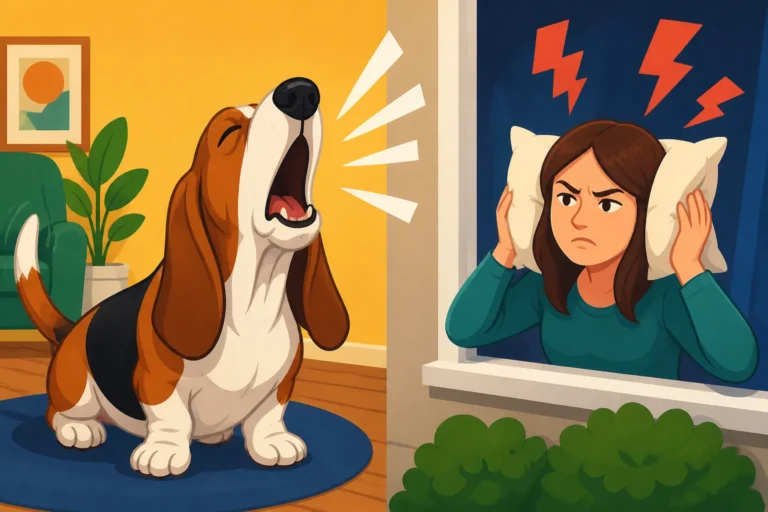
Basset Hound vocalizations and the iconic bay explain why these hunting dogs trigger noise complaints from neighborhood residents.