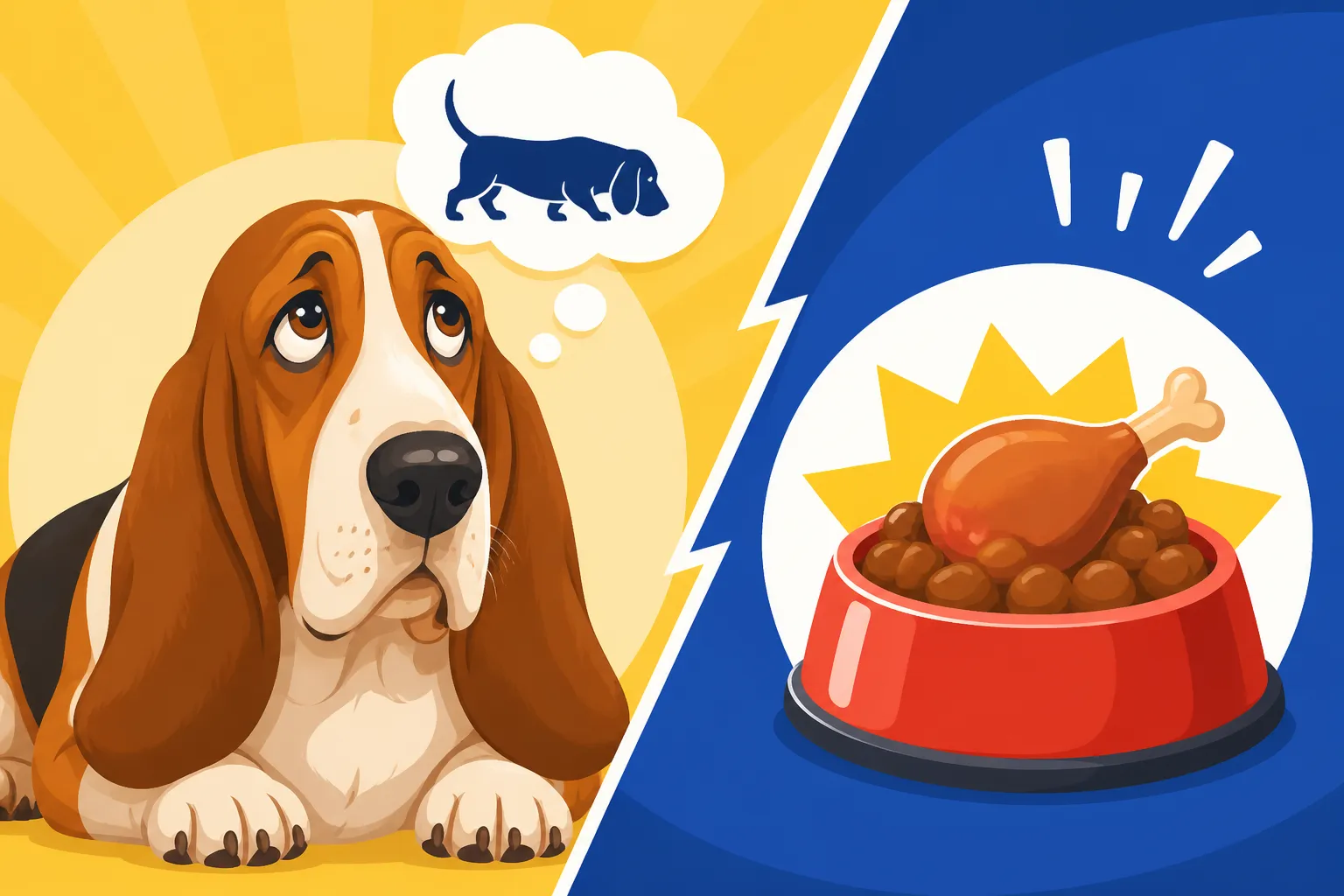
Whether a Basset Hound Works for Food Only
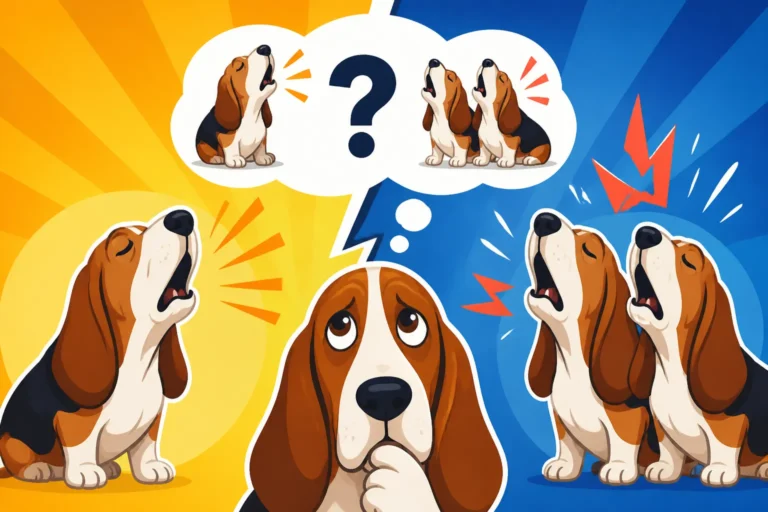
Many Basset Hound owners find themselves wondering if their beloved, low-slung companion has a one-track mind when it comes to motivation: food. It’s a common frustration when your otherwise sweet and goofy hound seems to develop selective hearing the moment a treat isn't in play, making you question if anything else truly sparks their interest. This guide is here to unravel the complex motivations of the Basset Hound, moving beyond the treat pouch to explore how you can truly connect and engage with your scent-driven friend.
The Powerful Allure of a Basset Hound's Nose and the Treat That Follows
Let's be honest, those soulful eyes and that incredible nose often lead us directly to the treat jar. It feels like the quickest, most reliable way to get a Basset Hound to do pretty much anything, from coming when called (sometimes!) to tolerating nail trims. But while food is undeniably a powerful motivator for a breed famous for its insatiable appetite and incredible sense of smell, it's a bit too simplistic to say it's the only thing they work for. Their world is dictated by scent, and often, that scent leads to a tasty reward.
Their Primal Drive: Scent Above All Else
Imagine a world painted in smells, a constantly shifting tapestry of information. That's the world your Basset Hound lives in. Their long ears, loose skin, and pendulous lips are all perfectly designed to sweep and trap scent, directing it straight to their phenomenal nose. When a Basset Hound is on a scent, it's an almost trance-like state. Their brain is firing on all cylinders, processing every nuanced detail of the trail. In this moment, a piece of kibble might not even register if the scent is compelling enough. This isn't stubbornness; it's instinct. It's the very essence of what makes a Basset a Basset. They were bred for this, to follow a scent trail relentlessly, and that primal drive often outweighs many other forms of motivation, especially when it comes to things we want them to do that don't align with their current olfactory mission. This is why Why a Basset Hound Stops Hearing You When It Smells Something is such a common complaint among Basset owners.
The Immediate Gratification of a Treat
Beyond the sheer joy of smelling, food also provides immediate and tangible gratification. For a breed that often takes its sweet time to process commands or decide if an action is worth the effort, a quick, high-value treat can cut through the deliberation. It's clear, it's delicious, and it's over quickly, allowing them to get back to whatever important sniffing they were doing. This instant feedback loop makes treats incredibly effective in initial training stages, especially for capturing attention or shaping new behaviors. If you're trying to teach a new trick or even just get them to sit reliably in a distracting environment, a potent treat can be your best friend. Many owners find that using a variety of treats, from soft, smelly commercial options to small pieces of cooked chicken, helps keep things fresh and interesting, ensuring the reward remains high-value. However, relying solely on treats can create a dog that performs only when food is present, which isn't ideal for real-world reliability.
Beyond the Kibble: Other Motivators for Your Basset Hound
While food is powerful, it's not the only currency in a Basset Hound's world. Understanding and leveraging other types of rewards can lead to a more well-rounded, engaged, and intrinsically motivated dog. It requires a bit more creativity and observation on your part, but the payoff is a deeper bond and a more responsive companion.
The Power of Praise and Affection
Basset Hounds, despite their independent nature, are generally affectionate dogs who cherish their human companions. Many of them thrive on genuine praise and gentle attention. A happy, excited "Good boy!" delivered with a scratch behind those long ears, or a moment of focused petting, can be a surprisingly effective reward. The trick is to make it genuine and timely. If your Basset finally sits after a moment of contemplation, don't just stand there; immediately shower them with enthusiastic praise. They want to please you, even if their instincts often get in the way. For some Bassets, a favorite spot for a belly rub or a vigorous ear massage is even more rewarding than a dry piece of kibble, especially after they’ve done something particularly challenging for them, like tolerating a routine grooming task. Building a strong, positive relationship where praise is a key component is vital, and it helps transition away from a constant reliance on food.
Toy Motivation and Play Rewards
While perhaps not as universally driven by toys as some high-energy breeds, many Basset Hounds do enjoy a good game, especially if it involves tugging or squeaky elements. The key is finding the right toy. For a Basset, it might not be a fetch toy or a frisbee, but perhaps a durable chew toy or a squeaky plush that they can "kill" with satisfying gusto. Using a favorite toy as a reward after a training session can be very motivating. For example, after a few successful "down-stays," a quick game of tug or a moment with a coveted squeaky toy can reinforce the behavior without adding extra calories. Interactive toys, like puzzle feeders that require them to use their nose and brain, can also be a fantastic reward for mental stimulation, offering a double whammy of engagement and satisfaction. You can find a vast array of such toys on platforms like Amazon, offering everything from snuffle mats to treat-dispensing balls that appeal to their natural foraging instincts.
Environmental Rewards: The World is Their Oyster
This is where understanding the Basset Hound truly shines. For a breed whose entire existence revolves around scent, access to interesting smells and the opportunity to explore them is a huge motivator. Think of it as rewarding them with what they naturally love to do. Did your Basset look at you when you called them, even briefly, while on a sniffari? Reward them with permission to sniff that fascinating patch of grass for a few extra moments. Did they walk nicely on the leash for a stretch? Allow them to investigate a new lamppost or follow an intriguing scent trail for a short distance. This kind of reward teaches them that listening to you can lead to more of what they enjoy, rather than always interrupting it. It makes you a conduit to their pleasure, strengthening your bond and making you more relevant in their world. This is especially useful for a breed whose The Recall a Basset Hound Will Never Reliably Give You can be a huge challenge; using the environment as a reward can make them more inclined to check in with you, knowing it might lead to more fun.
Crafting a Balanced Reward System for Basset Hounds
The goal isn't to eliminate food entirely, but to create a varied reward system that keeps your Basset Hound engaged, thinking, and genuinely motivated to cooperate. A balanced approach utilizes different motivators for different situations, preventing your dog from becoming solely reliant on one type of reward.
Finding Your Basset's Personal Currency
Every Basset Hound is an individual, and what motivates one might not motivate another. It's your job to become a detective and figure out what makes your particular hound's tail thump. Is it a high-pitched "good dog!"? Is it a game of tug with a specific toy? Is it simply a moment of calm affection and ear scratches? Or is it indeed that special, stinky treat they only get for the toughest tasks? Observe their reactions closely. If they respond with enthusiasm and repeat the desired behavior, you've found a valuable piece of their personal currency.
You might find that for mundane tasks around the house, praise and a quick pet are enough. For more challenging behaviors, like recall in a distracting environment or getting them to stay put while the mail carrier passes, you'll need a higher-value reward, which might be a chunk of cheese or hot dog. The key is to avoid using high-value treats for low-value behaviors, as this diminishes their impact. A good strategy is to have a hierarchy of rewards, from low to medium to high value, and match them to the difficulty of the task.
Variable Reinforcement for Long-Term Engagement
Once your Basset Hound understands a command, you can start to introduce variable reinforcement. This means you don't reward every single time they perform the behavior, but rather intermittently. This actually makes the behavior stronger and more resistant to extinction because the dog never knows when the big reward is coming, so they keep trying. Think of it like a slot machine: you don't win every time, but the possibility of a big payout keeps you pulling the lever.
For a Basset, this might mean that sometimes they get a treat, sometimes they get praise, sometimes they get a quick toss of their favorite toy, and sometimes they get a chance to sniff a really interesting bush. This keeps them guessing and prevents them from becoming complacent or demanding specific rewards. It fosters a more robust understanding that "doing what I'm asked leads to good things, even if those good things vary." It builds resilience and makes them more likely to perform even when you don't have a treat in your hand.
Many online training platforms, such as BAXTER & Bella, emphasize building intrinsic motivation and using a variety of positive reinforcement techniques beyond just food, which can be incredibly helpful for owners looking for structured guidance on this approach.
Incorporating Life Rewards into Training
Life rewards are simply using things your dog naturally wants as a reward for performing a desired behavior. This ties back into environmental rewards but expands beyond just sniffing. Does your Basset love to go for walks? Make sitting politely at the door or putting on their harness calmly a prerequisite. Do they get excited for dinner? Have them perform a sit-stay before their bowl is put down. Do they want to get on the sofa for cuddles? Ask for a "paw" or a "down" first.
This teaches them impulse control and that good things come to those who cooperate. It’s not about withholding necessities, but about structuring interactions so that you control access to desirable resources, making polite behavior the key to unlocking them. This also helps with issues like Whether a Basset Hound Steals Food or counter-surfing, as they learn that waiting patiently, rather than snatching, leads to a reward.
Here's a quick comparison of different reward types:
| Reward Type | Pros | Cons | Best For |
|---|---|---|---|
| Food/Treats | High value, immediate, easy to deliver, versatile | Can lead to weight gain, dependency, distraction | New behaviors, high-distraction environments, quick attention grab |
| Praise/Affection | Strengthens bond, no calories, always available | Less motivating for some dogs, less immediate | Maintenance of known behaviors, building confidence, general good behavior |
| Toys/Play | Channels energy, can be high value for some dogs | Not all Bassets are highly toy-motivated, can escalate excitement | Energizing breaks, specific trick training, fun reinforcement |
| Environmental/Life | Highly relevant, builds intrinsic motivation, real-world | Can be slower to deliver, requires observation | Improving leash manners, impulse control, recall foundation |
The Downside of a "Food Only" Approach for Your Basset Hound
While using food is an excellent training tool, relying on it exclusively can inadvertently create several challenges for both you and your Basset Hound. It's a common trap many owners fall into, especially with a breed so notoriously food-motivated.
Weight Management Concerns
Basset Hounds are already prone to carrying extra weight, and it's a serious health concern for them. What Extra Weight Does to a Basset Hound is no joke; it exacerbates issues like The Back Trouble a Basset Hound Is Built Into, puts strain on their Why One Basset Hound in Seven Has Bad Elbows, and can shorten their lifespan. If every command requires a treat, those calories add up fast. Even if you're using small, low-calorie treats, constant reinforcement with food can easily lead to an overweight Basset.
Many owners struggle with Getting Weight Off a Basset Hound That Will Not Exercise, and excessive treat-giving only makes it harder. It’s vital to factor treats into their daily caloric intake, perhaps by deducting the equivalent amount from their regular meals, or by switching to healthier, low-calorie options like small pieces of carrot or green bean if your dog enjoys them. This is where diversifying your rewards becomes a health imperative, not just a training preference.
Lack of Intrinsic Motivation
A dog that only works for food isn't truly choosing to engage with you or perform a behavior. They're simply performing a transaction: "I do X, you give me Y." This can lead to a dog that lacks intrinsic motivation, meaning they don't perform behaviors because they enjoy the act itself, because they want to please you, or because they find it inherently rewarding.
This transactional relationship can make training feel more like a chore for both of you. It can also make your Basset less reliable when you don't have food on hand, or if another more appealing "offer" (like a fascinating scent) comes along. The goal of training should be to build a partner who is genuinely engaged and interested in working with you, not just an employee waiting for their paycheck. Encouraging different types of rewards helps foster that deeper, more willing partnership.
Dependency on External Rewards
If your Basset Hound only performs when there's a visible treat in your hand or pouch, they've developed a dependency on external rewards. This can be problematic in unexpected situations. What if you're out on a walk and need an emergency recall, but forgot your treat pouch? What if you're at the vet, and your dog needs to be calm for an examination, but you can't offer food?
While food can be an excellent prompt and reinforcer, a truly well-trained Basset Hound should respond to known cues regardless of whether a treat is immediately visible. The goal is to fade the lure and the constant presence of food, moving towards a point where the anticipation of a reward (which might be praise, a game, or simply permission to proceed) is enough to elicit the desired behavior. This builds a dog that trusts your cues and is responsive in a variety of real-world scenarios, making both your lives easier and safer.
Real-World Training Challenges and Solutions for Your Basset Hound
Training a Basset Hound is an adventure, often filled with laughter, patience, and sometimes, a healthy dose of head-scratching. Their unique blend of scent-driven instinct, independent thought, and undeniable charm presents its own set of challenges, especially when trying to motivate them.
The Stubborn Streak: When Your Basset Just Says "No"
Ah, the infamous Basset Hound "stubbornness." It's not malicious, it's just… profound. Your Basset might know exactly what "sit" means, but if they're not in the mood, or if a more compelling scent is nearby, they might give you a long, drawn-out stare that clearly says, "Is this really worth my effort right now?" This isn't usually about defiance; it's often about priorities. Their priorities are usually about food, comfort, or scent, in that order.
When facing this, remember that consistency and patience are your best friends. Don't fall into the trap of repeating commands; if they don't respond, it's either because they don't understand, or the motivation isn't high enough. Increase the value of your reward (higher-value treat, more enthusiastic praise, a quick play session) or reduce distractions. Sometimes, simply walking away for a moment and returning to try again can reset the situation. For a deeper dive into this, you might explore Whether a Basset Hound Is Stubborn or Just Not Interested. Also, keep sessions short and positive. Bassets aren't known for their long attention spans when it comes to formal training.
Overcoming Distractions on the Trail
The moment a Basset Hound hits a scent trail, the world as you know it ceases to exist for them. Their ears might be filled with your frantic calls, but their brain is consumed by the intricate details of that fascinating smell. This is perhaps the biggest challenge for Basset owners, especially when it comes to recall or walking politely on a leash. An invisible fence is rarely a match for a determined Basset on a fresh scent.
To overcome this, start training in low-distraction environments and gradually increase the challenge. Use a long line (easily found on Amazon) to practice recall in a safely fenced area, rewarding heavily when they disengage from a scent and come back to you. Pair a high-value treat with an exciting sound or movement to create a truly irresistible recall cue. Also, consider enrolling in scent work classes or providing plenty of Giving a Basset Hound's Nose Something to Do at home. Allowing them controlled opportunities to use their nose can actually make them more responsive when you need their attention in other contexts, as their primal drive is being satisfied.
Making Ear and Nail Care Rewarding
Grooming can be a significant point of contention for many Basset Hounds. Those long, heavy ears are prone to infections, meaning The Twice Weekly Ear Ritual a Basset Hound Owner Signs Up For is a non-negotiable. Similarly, their nails grow quickly and need regular trimming. Many Bassets tolerate these necessary evils with the stoicism of a saint, but some put up quite a fuss.
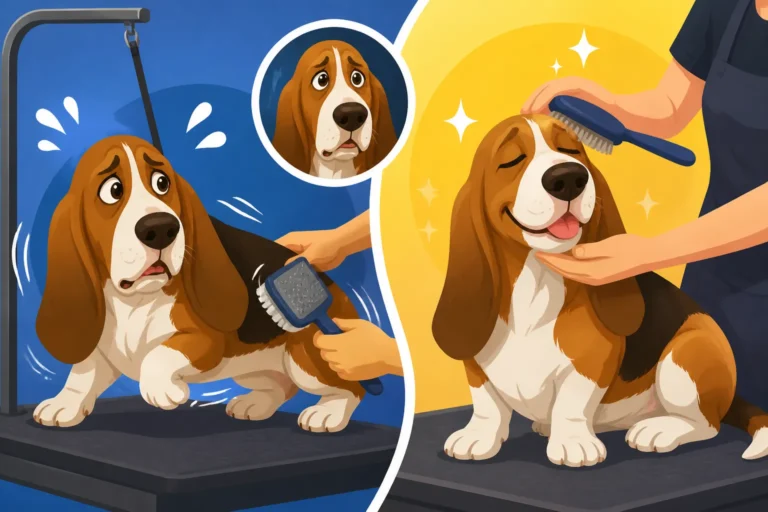
The key here is positive association and desensitization, starting from puppyhood if possible. Pair every step of the grooming process with a high-value treat. For ear cleaning, start by just touching an ear, then immediately reward. Gradually increase the duration and intensity, building up to actually using a cleaner. Similarly, for nail trims, introduce the clippers or grinder slowly, rewarding for simply allowing you to touch their paws. Many owners find success using a lick mat smeared with peanut butter as a distraction during grooming, keeping their Basset occupied and happy. The positive experience needs to consistently outweigh the perceived unpleasantness. You'll find more information on this in Teaching a Basset Hound to Have Its Ears Handled. Consistent, gentle handling from a young age, coupled with generous rewards, can turn these necessary tasks into manageable routines.
Training a Basset Hound certainly isn't always easy, but it's incredibly rewarding. By understanding their unique drives and motivations, you can move beyond solely relying on food and build a deeper, more cooperative relationship with your wonderful, quirky companion.
Disclaimer
This article is for general informational purposes only and does not constitute professional advice. Laws, prices and regulations vary by location and change over time. Consult a qualified professional for guidance on your specific situation.