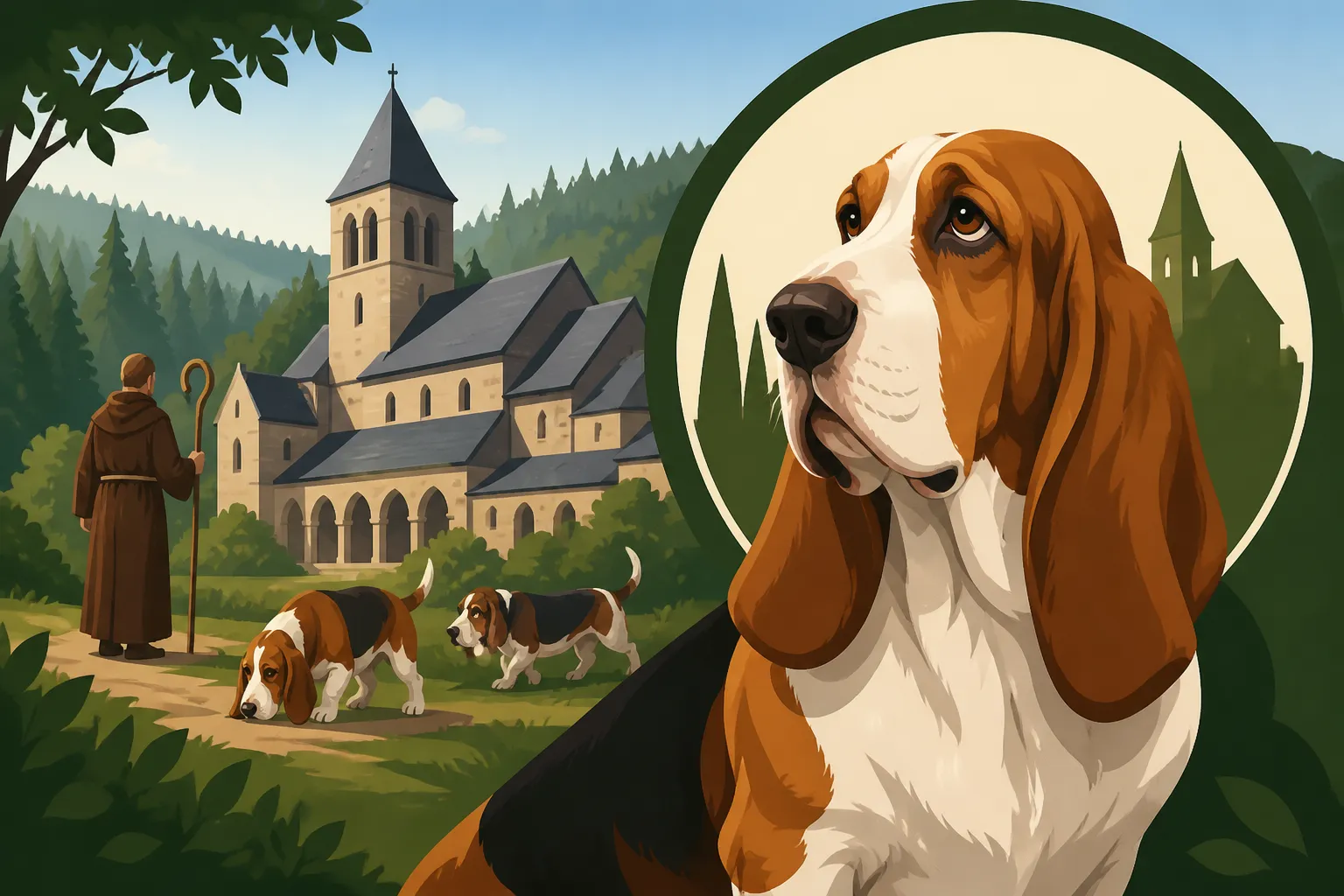
The Ardennes Abbey That Bred the First Hounds
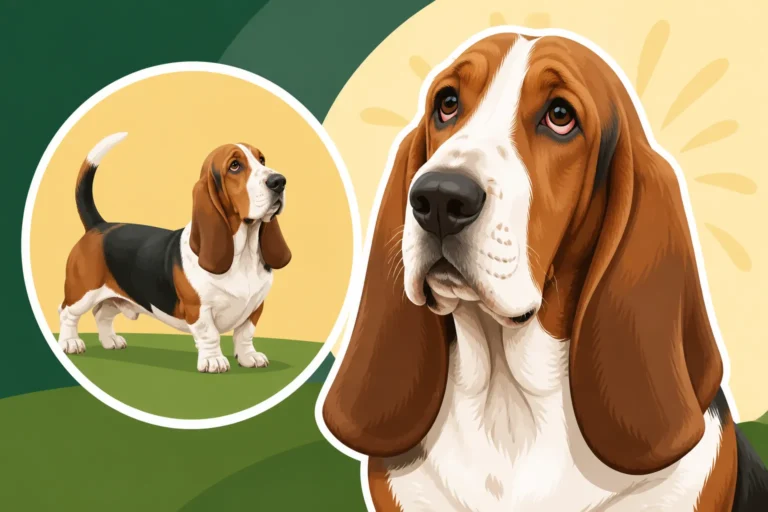
Many Basset Hound owners find themselves captivated by their dog's unique traits – those impossibly long ears, the mournful gaze, the incredible nose, and that distinctive low-slung body. Yet, it's easy to wonder, "Where did all this come from?" The story isn't just about a breed; it's a fascinating journey back to medieval Europe, where dedicated monks meticulously shaped the very foundations of what would become our beloved Basset Hounds. This guide will take you deep into the historical heart of the breed, exploring the very abbey that played a pivotal role in their creation.
Tracing the Ancient Roots of the Basset Hound
To truly understand our Bassets, we have to journey back to a time when hunting wasn't just a sport for the aristocracy, but often a necessity for food, and a major form of recreation. The dogs of that era were prized for very specific attributes, and their development was often intertwined with the institutions that had the resources and dedication for such endeavors: the monasteries.
The Medieval European Context of Scent Hounds
Imagine medieval Europe, vast forests, and rough terrain. Hunting was an intricate affair, often done on foot, especially for the common folk or for specific game. In this environment, a fast, wide-ranging hound, while impressive, wasn't always practical. What was needed was a dog that could meticulously follow a scent, even a cold one, through dense undergrowth, without outrunning the hunters. This demand for a slower, more deliberate tracking dog laid the groundwork for the "basset" type.
The development of specific dog breeds was often overseen by religious orders. Monasteries, with their vast land holdings, structured environments, and long-term planning, were ideal places for selective breeding. They weren't just about prayer and contemplation; many also engaged in practical pursuits like agriculture and animal husbandry. They had the time, the resources, and the consistency required to develop and maintain distinct lines of working animals, including hounds. These monastic breeding programs were less about creating pretty show dogs and more about perfecting working traits.
Saint Hubert and the Legendary Hounds
Any discussion of the Basset Hound's lineage must begin with Saint Hubert, the patron saint of hunters. The legend, which dates back to the 7th century, tells of a nobleman who, after a divine encounter with a stag, renounced his secular life and became a bishop. His association with hunting meant that the hounds developed in his region, particularly around his monastery, became known as "Hubert Hounds" or "St. Hubert Hounds." These were formidable, large, deep-chested hounds known for their incredible scenting ability and persistence. They were, in essence, the progenitors of many modern scent hound breeds.
The Hubert Hounds weren't short-legged like our Bassets today; they were more akin to what we now call Bloodhounds – large, powerful, with deeply wrinkled faces and long, pendulous ears. Their reputation for tracking was legendary, and they were highly sought after by royalty and nobility across Europe. They symbolized the pinnacle of scent-hound breeding for centuries. Their methodical, nose-to-the-ground trailing style was precisely what would later be refined and adapted into the Basset type. This foundational work by the monastic orders, particularly those associated with the legend of Saint Hubert, created the genetic reservoir from which the shorter-legged bassets would eventually spring. Who Saint Hubert Was
The Ardennes Abbey: A Cradle of Canine Lineage
While "Hubert Hound" refers broadly to a type of dog linked to the saint, a specific location in the Ardennes region holds a special place in the Basset Hound's direct history. This was the Abbey of Saint-Hubert, located in what is now Belgium, nestled deep in the vast, ancient forests.
The Abbey's Role in Hound Development
The Abbey of Saint-Hubert became a renowned center for hound breeding, particularly for those dogs descended from the legendary Hubert Hounds. The monks there took the already superb scenting abilities of these hounds and began to selectively breed for certain characteristics. Their goal was to produce a dog that could still perform the arduous task of trailing game, but at a pace that was more manageable for hunters on foot. Think of deer, boar, or rabbits fleeing into thickets – a fast hound might lose the hunter entirely, but a slower, more deliberate dog would patiently follow the trail, allowing the hunter to keep up.
This intentional selection led to the development of dogs with shorter legs – the "basset" type, a French word meaning "low." The monks understood that a lower dog had several advantages in certain hunting scenarios. It could navigate dense undergrowth more easily, and its nose would be closer to the ground, allowing it to pick up faint scent trails with even greater precision. This deliberate engineering of a dog's physical structure to enhance its working ability is a testament to the sophisticated understanding of animal husbandry held by these medieval monastic breeders.
From Saint Hubert to the Basset Type
The transition from the tall, majestic Hubert Hounds to the low-slung basset type wasn't a sudden mutation, but a gradual, purposeful development. It's believed that shorter-legged individuals occasionally appeared in litters of Hubert Hounds. Instead of culling them as anomalies, the monks recognized the potential utility of these "dwarf" variations. They began to selectively breed these shorter individuals, exaggerating the trait over generations.
The practical reasons for this were compelling: a low-to-the-ground hound was excellent for tracking game that moved slowly or hid in thick cover. Their unique conformation allowed them to stay on a scent without becoming fatigued too quickly by speed, or without overshooting the trail. This specialization allowed hunters to pursue game like rabbits and badgers more effectively on foot, making hunting accessible to a wider segment of the population, not just those on horseback. The dogs were still working animals, but their job description had evolved to fit a particular niche in the hunting world. This is where the concept of "basset" as a functional descriptor truly began to take hold. Why the Word Basset Just Means Low
Distinguishing the Early Basset Types
As the "basset" type became more established, various regional variations began to emerge across France. Each region, often influenced by local hunting traditions and terrain, refined the short-legged hound to suit its specific needs. This led to a fascinating diversity within the overarching "basset" category.
The Emergence of Distinct Basset Breeds
France, with its rich hunting heritage, saw the proliferation of several distinct basset breeds. You had your Basset Fauve de Bretagne, a wiry-haired, reddish hound from Brittany; the Basset Bleu de Gascogne, a striking blue-mottled dog from Gascony; and the Basset Griffon Vendéen, further divided into Grand and Petit, known for their shaggy coats. Each of these breeds retained the core "basset" characteristic of short legs and an incredible nose, but developed unique appearances and temperaments reflecting their local development.
These distinctions were important for the hunters. A specific type of coat might be better suited for certain weather conditions or thorny undergrowth, while a particular size might be ideal for hunting specific game. While they all shared a common ancestry rooted in the larger scent hounds, their paths diverged as breeders focused on fine-tuning them for their respective roles. It’s a bit like how different tools in a toolbox are all designed for a purpose but have their own unique strengths. Where the First Basset Hounds Came From
The Basset Artesien Normand and the Modern Basset Hound
Among these early French bassets, the Basset Artesien Normand holds a particularly significant place in the lineage of the modern Basset Hound we know and love today. This breed, originating from the regions of Artois and Normandy, was a blend of two earlier short-legged hounds: the Basset d'Artois and the Basset Normand. It possessed many of the traits that would eventually become hallmarks of the international Basset Hound.
The Basset Artesien Normand was a medium-sized, short-legged hound with a distinctive long head, slightly wrinkled forehead, and pendulous ears, much like its modern descendent. When Basset Hounds were first imported to England and then to America in the mid-19th century, they were largely derived from these French bassets. Over time, through further selective breeding, primarily in England, the modern Basset Hound developed its characteristic exaggerated features – even longer ears, more pronounced wrinkles, and a heavier bone structure. While the Basset Artesien Normand is still a recognized and cherished breed in its own right, it played a crucial role as a direct ancestor and a bridge to the Basset Hound's global popularity. What the Basset Artesien Normand Is
The Monastic Influence on Hound Traits
The monks at the Ardennes Abbey and other similar institutions weren't just breeding for short legs; they were cultivating a complete package of traits that made their hounds supremely effective for specific hunting tasks. These chosen characteristics are still evident in our Basset Hounds today, long after their primary role shifted from the hunt to the hearth.
Selection for Scenting Prowess and Temperament
Foremost among the desired traits was an absolutely unparalleled sense of smell. These hounds were bred to be living scent-detection machines. Their entire physiology, from nose to tail, was geared towards tracking. They needed to be able to distinguish faint traces of scent from a confusing mix of environmental odors, and follow them with unwavering focus for long periods. This demanded a specific temperament: persistent, patient, and utterly devoted to the task at hand, often to the exclusion of all else.
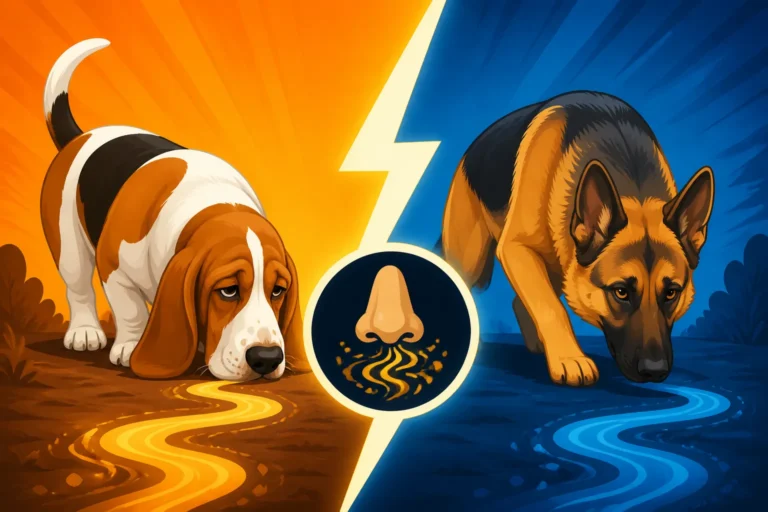
This laser-like focus on scent often translated into what we now affectionately call "stubbornness" in our modern Basset Hounds. When a Basset's nose is down and working, the world outside that scent trail simply ceases to exist. Yelling commands, rattling keys, or even offering treats often falls on deaf ears. The monastic breeders inadvertently (or perhaps intentionally, for their purposes) selected for dogs that could tune out distractions and commit fully to their olfactory mission. This single-mindedness, coupled with a generally calm and affable disposition when not on a trail, made them excellent partners for hunters who needed a reliable, tenacious tracker. Whether a Basset Hound's Nose Is Second Only to a Bloodhound
The Physical Adaptations for a "Low" Hunt
Every physical feature of the early bassets served a purpose in enhancing their scenting ability and effectiveness in the field. Let's look at a few of the most iconic traits:
- Long, Pendulous Ears: These aren't just for show! When a Basset Hound tracks, its long ears sweep the ground, effectively stirring up scents and funneling them directly towards its nose. They act like scent antennae, concentrating airborne odor particles. This ingenious natural design helps the dog maintain a consistent, strong scent picture, even on challenging trails.
- Loose Skin and Dewlap: The characteristic loose skin and deep folds around a Basset's neck (the dewlap) also play a role in scent collection. As the dog moves, this loose skin drapes and traps scent particles, holding them closer to the nose and extending the "scent cone" around the dog's head. It's like having a built-in scent trap!
- Short Legs and Heavy Bone: The most defining characteristic, the short legs, positioned the Basset's nose perfectly close to the ground, minimizing the distance scent particles had to travel. The heavy bone structure, while making them somewhat clumsy, also contributed to their slow, deliberate pace, preventing them from outrunning the scent or their human companions. This slow, methodical approach was key to persistent tracking.
These physical adaptations, carefully cultivated over generations by the monks and subsequent breeders, are what make the Basset Hound such a marvel of specialized breeding. However, these very traits that made them exceptional hunters also come with their own set of care considerations in modern homes. Those magnificent ears, for example, require regular cleaning to prevent infections, a common woe for Basset owners. Finding the right ear cleaning solutions and tools, perhaps from reputable online retailers like Chewy, is a common task for Basset parents today. The Twelve Inch Ears a Basset Hound Was Given on Purpose
Legacy and Lasting Impact
The legacy of the Ardennes Abbey and its monastic breeders is far-reaching, extending from the medieval hunting grounds to the modern living rooms where Basset Hounds are cherished companions. Their dedication to a specific type of hound laid the groundwork for an entire breed.
The Basset Hound's Journey to Modernity
From its origins in French abbeys and hunting fields, the Basset Hound began its journey across continents. In the 19th century, the breed gained popularity in England, where further selective breeding honed the distinctive look we recognize today – those exaggerated features like even longer ears, more pronounced wrinkles, and a heavier, more substantial body. From there, they made their way to America, captivating hearts with their unique appearance and charming, if sometimes obstinate, personalities.
Today, the Basset Hound might not be primarily a hunting dog for most owners, but its historical function profoundly shapes its character and needs. While their hunting instincts are still very much alive, manifest in their relentless sniffing on walks and their powerful bay, they've seamlessly transitioned into beloved family pets. Their gentle nature and patient demeanor make them wonderful companions, though their scent-driven minds mean they often have their own agenda. Understanding this deep history helps us appreciate why our Bassets are the way they are, from their incredible noses to their laid-back personalities, always with a hint of that ancient, determined tracker. The Abbey Hounds a Basset Hound Descends From
Preserving the Heritage: Modern Care for an Ancient Breed
The physical traits bred into the Basset Hound for hunting millennia ago require specific care in today's world. Their long ears, while excellent for scent work, are prone to infections due to poor air circulation. Regular cleaning is absolutely essential to keep them healthy. A Basset owner's routine often includes twice-weekly ear checks and cleaning. Thankfully, products like specialized ear cleaners and gentle wipes are readily available, making this vital task much easier. Many owners find it convenient to stock up on these essentials, along with high-quality dog food and treats, through online pet supply stores like Chewy, ensuring they always have what they need for their Basset's unique requirements. The Twice Weekly Ear Ritual a Basset Hound Owner Signs Up For
Similarly, their low-slung, heavy bodies, while perfect for ground-level tracking, mean that joint health is a lifelong consideration. Keeping a Basset at a healthy weight is paramount to protecting their long backs and sturdy but vulnerable joints. Providing appropriate exercise that doesn't overtax their structure, such as gentle walks and mental stimulation through scent games, helps preserve their mobility. We must also consider their strong prey drive, a direct inheritance from their hunting ancestors. A secure, fenced yard is a must, and walks should almost always be on a leash, because once that powerful nose locks onto a scent, recall often goes out the window! Modern Basset owners embrace these responsibilities, honoring the careful selection and dedication that went into creating this truly special breed centuries ago.
Here’s a comparison of traits likely emphasized in the early Hubert Hounds versus the developing Basset type:
| Trait | Early Hubert Hounds (Ancestral) | Developing Basset Type (Monastic Selection) |
|---|---|---|
| Primary Function | Tracking large game, often on horseback | Tracking smaller game, primarily on foot |
| Leg Length | Longer, athletic | Shorter, "bas" (low) |
| Speed | Moderate to fast | Slow, methodical |
| Scenting Ability | Excellent, persistent | Exceptional, highly refined |
| Temperament | Persistent, focused, vocal | Extremely persistent, calm, focused, vocal |
| Ear Length | Long, pendulous | Even longer, very pendulous |
| Body Build | Muscular, deep-chested | Heavy-boned, long body |
| Wrinkles/Dewlap | Present, but less exaggerated | More pronounced, aids scent trapping |
| Ideal Terrain | Open forests, varied landscapes | Dense undergrowth, thickets |
Disclaimer
This article is for general informational purposes only and does not constitute professional advice. Laws, prices and regulations vary by location and change over time. Consult a qualified professional for guidance on your specific situation.