Whether a Basset Hound Is Stubborn or Just Not Interested
It’s a tale as old as time for many Basset Hound owners: you call your dog, you know they hear you, but they appear to simply… not care. This can be incredibly frustrating, leading many to label their beloved Basset as stubborn, disobedient, or even dim-witted. This guide is here to unravel that mystery, diving deep into the unique Basset Hound psyche to help you understand whether it's truly stubbornness or if your furry friend is simply following their ancient instincts.
Understanding the Basset Hound Mindset
Many of us bring a Basset Hound into our lives with visions of a cuddly, docile companion. And while they are undeniably loving and sweet, their "docile" nature often comes with a hefty dose of perceived stubbornness. It’s easy to feel like you're talking to a brick wall sometimes, especially when there's a fascinating smell involved. But what if that brick wall isn't defiance, but rather a deeply ingrained response to the world around them?
The Scent-Driven World of a Basset Hound
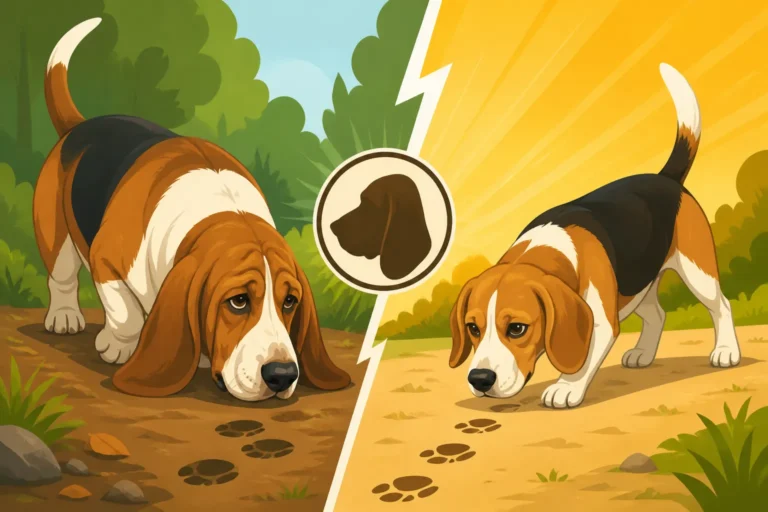
To truly understand a Basset Hound, you have to imagine experiencing the world primarily through your nose. For us humans, sight and sound dominate our perception, but for a Basset, every rustle of leaves, every discarded wrapper, every blade of grass tells a complex, irresistible story. Their incredible olfactory senses are legendary, often touted as second only to the Bloodhound. This isn't just a fun fact; it's the fundamental operating system of their brain.
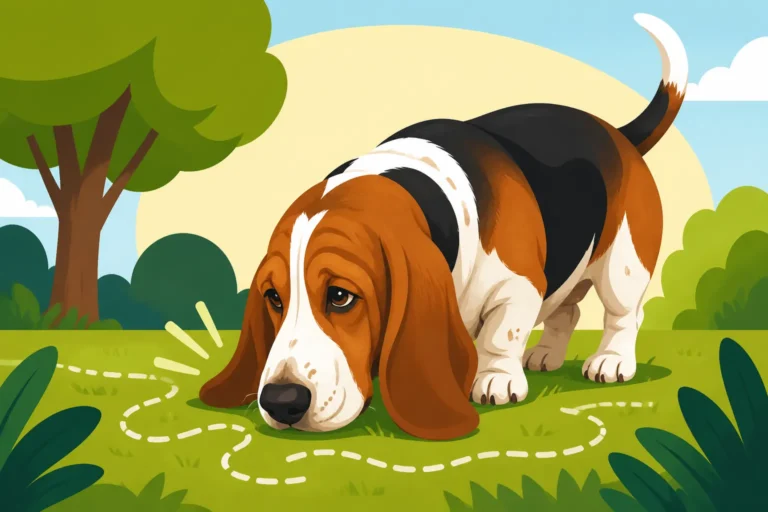
When a Basset Hound's nose locks onto a scent, it's like a highly compelling, multi-dimensional movie playing out in their mind. Every other input, including your voice, can become secondary. Picture yourself engrossed in a thrilling novel or a captivating movie; how easily do you hear someone calling your name from another room? Now, multiply that intensity by a hundred, and you're getting close to what a Basset experiences on a strong scent trail. This isn't them being rude or ignoring you on purpose; their brain is quite literally overwhelmed by a more powerful, primal stimulus. It’s why you might find yourself wondering Why a Basset Hound Stops Hearing You When It Smells Something when you're out on a walk.
For instance, you might be walking your Basset, let's call him Barnaby, down a quiet street. Suddenly, Barnaby’s head drops, his tail wags a little faster, and his entire body language shifts. He's found something – perhaps a squirrel ran across the path an hour ago, or another dog marked a spot. You call his name, "Barnaby, let's go!" He might twitch an ear, but his nose remains glued to the ground, his paws moving with an uncharacteristic determination. In that moment, he’s not hearing "Barnaby," he's hearing "ancient squirrel passed this way, tell me more, tell me more!" It's a deep, genetic imperative that he simply cannot, and will not, easily switch off.
"Stubbornness" as a Misinterpretation
The term "stubborn" often carries a negative connotation, implying a willful defiance or a conscious choice to be difficult. With Basset Hounds, it's more accurate to view it as an exceptionally strong independent drive, coupled with a highly selective attention span. They weren't bred to be eager-to-please, heel-at-your-side companions like a Golden Retriever or a Border Collie. Their job was to follow a scent trail independently, sometimes for hours, without constant direction from a human. Their reward was the successful completion of the trail, not a pat on the head or a "good boy."
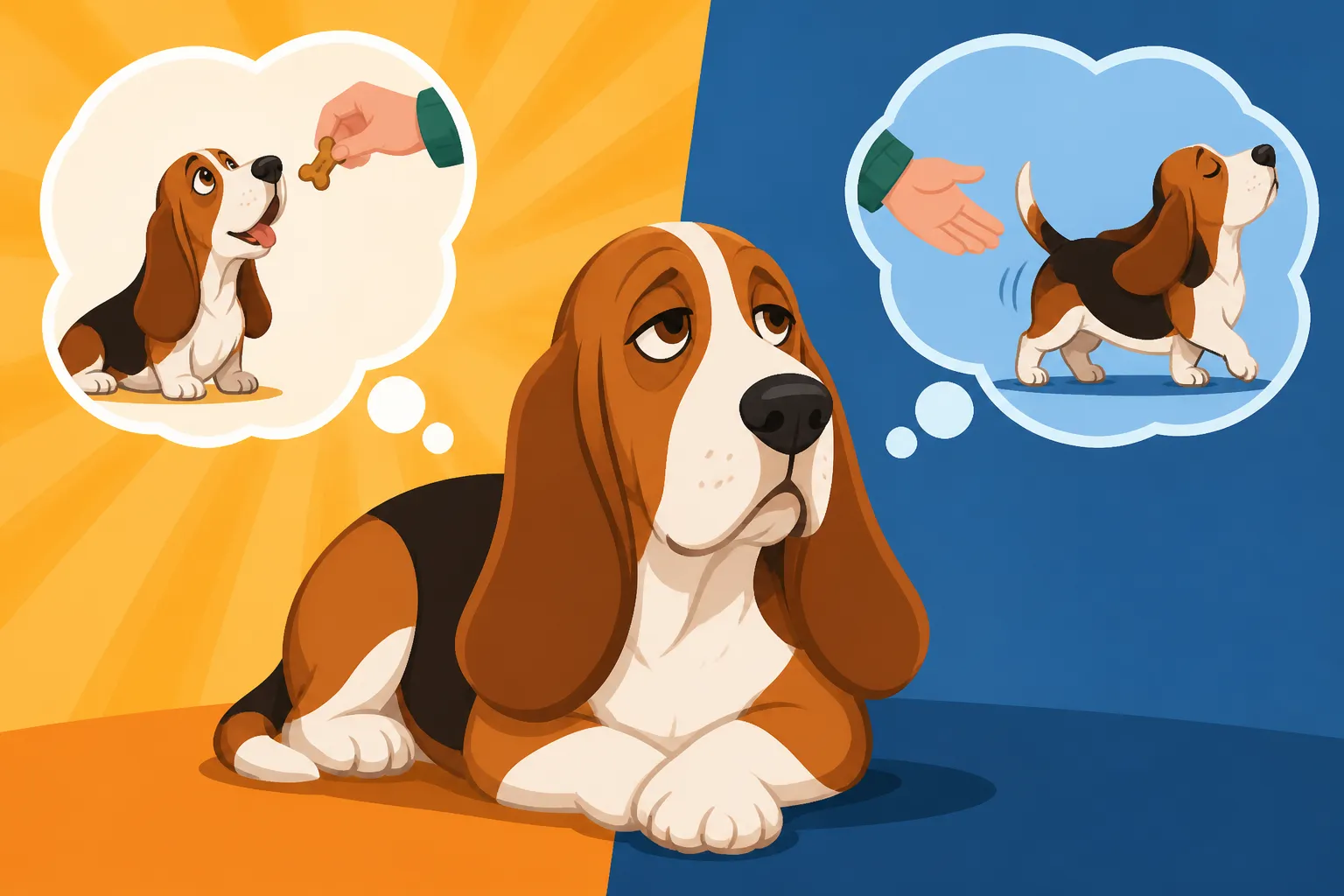
This inherent independence means they often weigh their options: "Do I follow this amazing scent, or do I respond to my human's request, which offers a less immediate and often less interesting reward?" More often than not, the scent wins. It’s not that they don't understand what you're asking; it's that their priorities are fundamentally different. They're not being deliberately difficult; they're simply being a Basset Hound. This is why many owners eventually realize Whether a Basset Hound Chooses Not to Obey isn't really a choice based on malice, but on magnificent sensory overload.
Consider the classic scenario: you're trying to teach your Basset, let's say Daisy, to sit. You show her a treat, give the command, and she looks at you with those soulful eyes, then perhaps looks at the treat, then glances out the window at a butterfly. She knows what "sit" means, she knows the treat is there, but her brain is processing a dozen other stimuli, and none of them are compelling enough to make her drop everything and sit right now. It's a matter of motivation and perceived importance, not outright refusal. This isn't laziness; it's a prioritization of their inner world over external demands, a trait that makes them both endearing and challenging.
The Role of Instinct in Basset Hound Behavior
To truly appreciate your Basset Hound, you need to journey back in time to their origins. These aren't just cute, floppy-eared dogs; they are living relics of a specific purpose, bred for a job that demanded a very particular set of traits. Understanding this historical context is key to unlocking their modern-day behaviors.
Bred to Trail, Not to Obey Instantly
Basset Hounds were developed in France, primarily by monks, to track game through dense underbrush. Their low stature allowed them to easily navigate thickets, while their powerful noses and deep baying voice kept hunters informed of their progress. Crucially, these hunters were often on foot, not horseback. They needed a hound that would follow a trail steadily, relentlessly, and relatively slowly, allowing the human to keep up. They did not need a dog that would instantly break off a trail at a whistle or a call.
This historical role is paramount to understanding their current behavior. A Basset Hound's instincts tell them to follow a trail to its conclusion, regardless of distractions. Instant obedience would have been a detriment to their original purpose. Think about it: if a hound immediately returned to its master every time it was called, it would never successfully track game. The breed was cultivated for persistence and independent decision-making based on scent. This is why asking a Basset to ignore a compelling scent is like asking a bird not to fly; it goes against their very nature. It’s fascinating to learn Why French Hunters Wanted a Slow Hound and how that breeding intention still shapes our Bassets today.
Imagine a hunting scenario hundreds of years ago. A small deer or rabbit runs into the woods. The Basset is released, nose to the ground. If the hunter yelled "Come!" and the Basset instantly broke off the track, the hunt would fail. Instead, the Basset was expected to methodically work the scent, perhaps letting out a deep bay every now and then to indicate its progress. The reward for the Basset was the successful pursuit of the scent, leading to the eventual cornering of the game. Your modern-day Basset, trotting along with their nose firmly planted on a particularly interesting patch of grass, is simply fulfilling this ancient contract. They are responding to an instinct that has been refined over centuries, an instinct that prioritizes scent above almost all else.
Selective Attention and the "Off Switch"
One of the most defining characteristics of a Basset Hound is their ability to achieve a state of almost trance-like focus when on a scent. This isn't just casual sniffing; it's an immersive experience where their world shrinks to the immediate sensory data provided by their nose. When a Basset enters this "scent zone," their hearing, sight, and even their awareness of your presence can diminish dramatically. Trying to get their attention in this state is often a futile exercise, akin to trying to wake someone from a deep sleep with a whispered word.
They essentially have an "off switch" for external stimuli that aren't related to the current scent puzzle they are solving. Once that switch is flipped, it takes a significant, highly motivating, and often repetitive effort to bring them back to "your" reality. This selective attention isn't a flaw; it's a highly effective adaptation for a scent hound. It allows them to concentrate on their primary task without being diverted by minor environmental changes or even human commands that seem irrelevant to the thrilling trail underfoot. Understanding this helps you appreciate a Basset Hound ignoring you on a scent not as a sign of disrespect, but of deep engagement.
Picture your Basset, Charlie, out in the park. He’s happily trotting along, enjoying the sniffs. Suddenly, he picks up a phenomenal scent – maybe a forgotten picnic crumb, or a neighboring dog's recent visit. His head goes down, his tail might start a slow, purposeful wag, and his long ears might even seem to sweep the ground, gathering more information. You clap your hands, call his name loudly, maybe even rattle the treat bag. Charlie might not even lift his head. He's not being deliberately disobedient; he's simply in a different world, a world where that scent is the only thing that matters. It’s a testament to the incredible power of their noses and the instinctual drive that still fuels them, even in our modern homes and parks.
Motivation: What Actually Works for a Basset Hound
Given their independent nature and powerful instincts, traditional training methods or assumptions about compliance often fall flat with Basset Hounds. You can't simply demand obedience and expect instant results. Instead, you need to understand what truly makes them tick, what ignites their interest, and what they consider a worthwhile trade-off for their precious scenting time.
The Power of Food and Scent Rewards
Let's be blunt: Basset Hounds are often highly food-motivated. This isn't a character flaw; it's a powerful tool in your training arsenal. Because their nose is so central to their existence, anything related to delicious smells and tastes holds immense value for them. Low-value kibble might get a polite sniff, but a piece of cooked chicken, a cheesy treat, or even a dollop of peanut butter can work wonders.
When training a Basset, you need to ensure your rewards are genuinely exciting. Think high-value, aromatic, and easy-to-consume. This means moving beyond basic biscuits for challenging tasks like recall or focus work. For example, if you're trying to teach your Basset, Lucy, to "look at me" when on a walk, you'll need something so enticing that it can briefly override the fascinating smells around her. A tiny piece of hot dog or leftover steak might just do the trick. You'll quickly learn Whether a Basset Hound Works for Food Only and adapt your strategy accordingly.
Beyond edible treats, consider incorporating scent itself as a reward. This can be done by using toys imbued with attractive scents, or by allowing them brief periods of "free sniffing" in a designated area after a successful training session. This taps into their primal drive and reinforces the idea that cooperating with you leads to fulfilling their natural instincts. Finding what truly motivates your Basset is an ongoing experiment, but starting with the most delicious and aromatic options is usually a winning strategy. Companies like Amazon offer a wide range of treat pouches and high-value training treats that can be a real game-changer for Basset owners.
Positive Reinforcement and Patience
Due to their sensitive nature and independent streak, Basset Hounds respond best to positive reinforcement techniques. Harsh corrections, scolding, or punishment are not only ineffective but can also damage your relationship with your Basset. They are unlikely to suddenly become compliant out of fear or intimidation. Instead, they might shut down, become anxious, or simply learn to avoid interacting with you in training contexts.
The key is to reward the behaviors you do want, consistently and enthusiastically. When your Basset offers even a momentary glance in your direction, mark it with a verbal "yes!" or a clicker, and immediately follow with that high-value reward. Patience is truly a virtue when training a Basset. You might need more repetitions, shorter sessions, and a greater understanding of their unique learning style than with other breeds. Remember, they are not fast-twitch responders; they are methodical thinkers who operate on their own timeline. This is precisely why Whether Short Sessions Suit a Basset Hound is often the secret to success, keeping them engaged before their attention drifts.
For example, when teaching your Basset, Gus, to come when called, start in a quiet environment with minimal distractions. When you call "Gus, come!" and he takes even one step towards you, celebrate it with lavish praise and the best treat you have. Slowly increase the distractions and distance, always setting him up for success. If he doesn't respond, don't get frustrated; simply try again in a less challenging setting. It's a marathon, not a sprint, and every small victory builds towards a more responsive, confident Basset Hound who trusts you and enjoys learning.
Training Strategies for the "Independent" Basset Hound
Since Basset Hounds operate on a different wavelength than many other breeds, your training strategies need to be tailored to their unique strengths and challenges. What works for a Border Collie simply won't cut it for a Basset. It's about working with their nature, not against it, and understanding that success might look a little different.
Leash Training and Containment as Essentials
Let's be absolutely clear: a Basset Hound should rarely, if ever, be off-leash in an unfenced area. Their nose is a powerful siren call, and once they're locked onto a scent, traffic, other dogs, and your desperate pleas will fade into irrelevance. Leash training, therefore, isn't just a courtesy; it's a matter of safety for your Basset. Investing in a good, comfortable harness that distributes pressure evenly across their chest (rather than their neck) is crucial, as they can pull with surprising strength.
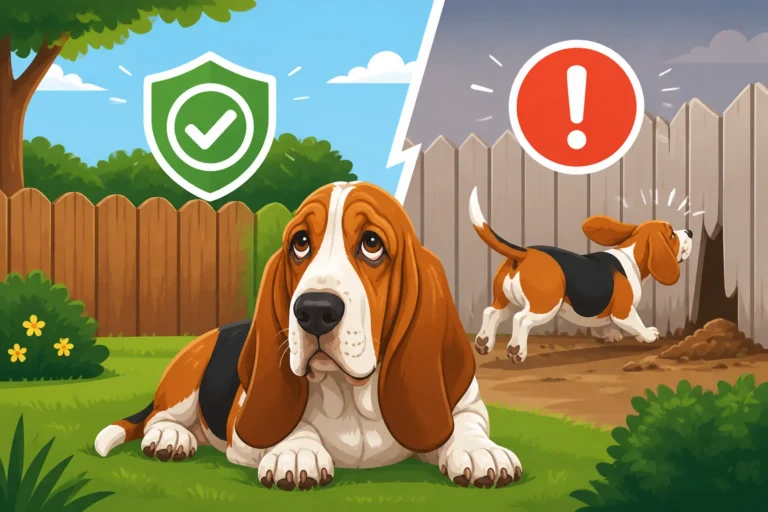
Beyond the leash, secure containment at home is non-negotiable. A Basset Hound's determination to follow a scent means they can be surprisingly adept escape artists. They will test fences, dig under them, or squeeze through seemingly impossible gaps if a captivating smell is on the other side. A solid, tall fence (at least 5-6 feet) with no easy digging spots or gaps is a must. If you have an invisible fence, understand that a determined Basset will likely ignore the correction if the scent is strong enough. It's a harsh truth, but one that every Basset owner needs to internalize: Whether a Basset Hound Should Ever Be Off Leash is almost always a resounding "no" outside of a secure, controlled environment.
Consider using a long line (a very long lead, typically 15-30 feet) in securely fenced areas or very open, safe spaces to practice recall and give them more freedom to explore scents without completely losing control. This allows them to indulge their instincts safely while still being tethered to you. You can find durable long lines on Amazon that can withstand the pull of a determined Basset. Building solid boundaries, both physical and through training, is the foundation of a safe and happy life for your independent Basset.
Making Training a Game, Not a Chore
For a Basset Hound, training shouldn't feel like a series of commands to be obeyed. It should feel like a fascinating game, a puzzle to solve, or an opportunity for delicious rewards. Capitalizing on their natural love for scent work is one of the most effective ways to make training engaging and rewarding. Instead of fighting their nose, embrace it!
Enroll in scent work classes, often called "nose work" or "canine scent detection." These classes teach your dog to use their natural abilities to find specific odors, and Bassets excel at them. It's mentally stimulating, builds confidence, and truly tires them out in a way a simple walk might not. Using snuffle mats or puzzle toys at home, where they have to use their nose to find hidden treats, also provides valuable enrichment. This taps into their core drive and gives them a "job" that is inherently satisfying. You’ll be amazed at Whether Nose Work Tires a Basset Hound Out and how much calmer they are after a good session.
Many online training platforms, such as BAXTER & Bella, offer resources and courses that can guide you in making training fun and engaging for intelligent, yet independent, breeds like the Basset Hound. They often focus on positive reinforcement and game-based learning, which aligns perfectly with a Basset's personality. By reframing training as an exciting adventure rather than a tedious task, you'll find your Basset is far more willing to participate and learn, forging a stronger bond based on mutual understanding and enjoyment.
Common Scenarios and How to Handle Them
Life with a Basset Hound is full of endearing quirks and moments that can test your patience. These specific scenarios are almost universally experienced by Basset owners, and understanding them, along with having a few strategies up your sleeve, can make all the difference.
The "Statue" on a Walk
Ah, the Basset statue. You know the one. You're walking along, and suddenly, your Basset stops dead in their tracks. Their nose might be to the ground, or perhaps they've simply decided they've had enough of this walking business for now. They plant their feet, become incredibly heavy, and defy all attempts to move them forward. It's frustrating, especially when you're on a schedule or navigating a busy area. This isn't usually an act of defiance, but often a combination of being utterly captivated by a scent, or simply deciding they're done.
Trying to yank them forward rarely works and can even be counterproductive, potentially causing discomfort or injury to their neck and back. Instead, try to make yourself more interesting than whatever has captivated them. Get down on their level, use an excited voice, and produce a high-value treat. Waving the treat just out of reach, in the direction you want to go, can sometimes break their spell. If that fails, try moving a few steps away and calling them with exaggerated enthusiasm. Sometimes a change in perspective or the promise of something truly delicious is enough to restart the engine. It's a classic Basset moment that makes you ponder Whether a Basset Hound Refuses to Move and what magic spell can break their immobility.
Another effective strategy is to simply wait it out, if your schedule allows. Bassets are masters of the waiting game. Often, if you stop pulling and simply stand patiently, they will eventually process the scent, decide it's not worth further investigation, and begin to move on their own. This reinforces that they control their pace, but also that you're not going to force them. It’s a delicate dance of wills, but often a moment of calm patience on your part can be more effective than any amount of tugging.
Ignoring Recall in the Yard
The dream of a Basset romping freely in a vast, open space, only to return cheerfully when called, is often just that – a dream. Even in a securely fenced yard, where you think there are no major distractions, a Basset's nose can find something utterly compelling. A squirrel ran up a tree an hour ago? A neighbor's dog walked by on the sidewalk? These are monumental events in the Basset world, and your recall command often pales in comparison.
Their genetic predisposition to follow a scent trail means that recall is one of the most challenging commands to teach a Basset Hound, and arguably, one of the least reliable. They aren't trying to upset you; they are simply fulfilling their ancient purpose. This is why strict management is always more reliable than relying solely on recall with a Basset. Training recall must begin in a completely distraction-free environment, rewarding generously every single time they choose to come to you. You have to be the most exciting, most rewarding thing in their environment. This is why The Recall a Basset Hound Will Never Reliably Give You often remains a harsh reality for owners.
To improve recall, practice frequently with a long line in a secure area. Call your Basset, and if they don't respond, gently reel them in while still making it a positive experience with treats and praise when they reach you. Never punish them for not coming when called, as this will only make them less likely to return in the future. The goal is for them to associate coming to you with positive outcomes, even if it means interrupting a fascinating sniff. Remember, consistency, high-value rewards, and realistic expectations are your best friends in the uphill battle of Basset recall.
Beyond Training: Enriching a Basset Hound's Life
While understanding and adapting your training methods is crucial, truly living harmoniously with a Basset Hound also means looking beyond commands and focusing on fulfilling their inherent needs. When a Basset's natural instincts are satisfied, many of the behaviors we label as "stubborn" or "disobedient" can lessen, or at least become easier to manage.
Scent Work: A Natural Outlet
If there's one thing a Basset Hound was born to do, it's sniff. Their entire physical structure – long ears that sweep scent, loose skin that traps scent, and a low center of gravity – is designed for it. Denying them the opportunity to use their nose is like asking a human to sit in a silent, dark room all day; it's mentally depriving. Embracing scent work is not just a fun activity; it's a vital part of their mental and emotional well-being. It provides an intellectual challenge and a physical outlet that taps directly into their deepest drives.
There are many ways to engage your Basset's nose. Formal nose work classes, as mentioned before, are fantastic. But you can also do simple scent games at home. Hide treats around the house and let them "hunt" for them. Invest in a snuffle mat, which is a fabric mat with hidden pockets and folds where you can hide kibble or small treats, forcing them to use their nose to find their meal. Scatter-feeding their meals in the grass in your yard (if safe) can also turn dinner into a stimulating activity. These activities not only provide mental exercise but also exhaust them in a way a casual walk cannot. For a breed that was created to be led by its nose, truly Giving a Basset Hound's Nose Something to Do is the ultimate gift you can give.
Even during walks, try to incorporate "sniff breaks" where you allow them to deeply investigate an area without rushing them. This isn't just wasted time; it's their equivalent of reading the newspaper or catching up on social media. Allowing them this freedom to explore their world through scent will make them happier, more content dogs, and often more willing to cooperate when you do need their attention.
Creating a Predictable and Safe Environment
While Bassets are independent, they thrive on routine and predictability within their home environment. Knowing what to expect, and when, can reduce anxiety and make them more settled companions. A predictable feeding schedule, consistent potty breaks, and regular (but not necessarily strenuous) walk times all contribute to a sense of security.
Crucially, a Basset Hound's home needs to be tailored to their physical needs and potential vulnerabilities. Their long backs and short legs make them prone to spinal issues, so preventing jumps off furniture or prolonged stair use is vital. This means investing in steps or ramps for couches and beds, and baby gates to block access to stairs if necessary. Creating a safe physical environment reduces the risk of injury, which in turn reduces pain-related grumpiness that might be mistaken for stubbornness. You’ll find that investing in The Ramps, Beds and Gates a Basset Hound Needs makes a huge difference in their overall well-being and willingness to participate.
Beyond physical safety, consistency in your own behavior is key. If you sometimes let them get away with counter-surfing but other times scold them, they'll become confused, and their "stubbornness" might increase as they try to figure out the rules. Clear, consistent expectations, combined with ample opportunities for mental enrichment through scent work and positive reinforcement, will lead to a Basset Hound who feels understood, respected, and is far more likely to engage with you, even if their nose still occasionally takes them on a grand adventure.
Busting the "Stupid Dog" Myth
It's truly unfair how often Basset Hounds are labeled as "dumb" or "stupid" because they don't respond to commands with the lightning speed or unwavering eagerness of some other breeds. This perception couldn't be further from the truth. Bassets possess a keen intelligence, but it's an intelligence geared towards problem-solving related to scent and navigating their world, not necessarily human-defined obedience.
Intelligence vs. Compliance
Intelligence manifests in many forms. While a Border Collie's intelligence shines in its ability to rapidly learn and execute complex commands, a Basset Hound's intelligence lies in its ability to follow a scent trail over varied terrain, to backtrack when a trail goes cold, and to navigate complex olfactory landscapes. This requires immense concentration, memory, and analytical skills – all hallmarks of a smart dog. They're just intelligent in a way that doesn't always align with our human expectations of "good" behavior. This distinction is vital when discussing Whether a Basset Hound Is Actually Unintelligent.
Think about a Basset's approach to a puzzle toy. They might not immediately grasp the mechanics, but they will methodically use their nose, paw, and mouth to figure out how to get to the delicious reward. They are persistent, patient problem-solvers when the motivation is right. Their "stubbornness" often stems from a high degree of confidence in their own judgment (especially where scents are concerned) and a lower inclination to simply comply with a human's arbitrary request if it doesn't make sense to them or offer a compelling reward. They are not unintelligent; they are simply discerning.
Consider a Basset trying to open a cabinet where treats are stored. They won't just stare blankly; they'll nudge, paw, try to get a nose under the door, and remember which cabinets have yielded treasures in the past. This isn't a mindless animal; this is a thinking, strategizing creature. Their intelligence is simply expressed differently than in breeds bred for immediate, unquestioning partnership with humans. They're thinkers, not just doers, and that thinking often involves a deep dive into the world of scent.
Celebrating Their Unique Personality
Ultimately, owning a Basset Hound means embracing their unique personality, including the traits that might be labeled "stubborn" or "independent." These qualities are not flaws; they are integral to what makes a Basset a Basset. Their deep, resonant bay, their soulful eyes, their clownish antics, and yes, their unwavering commitment to a good smell, are all part of the package. Trying to change a Basset into something they're not will only lead to frustration for both you and your dog.
Instead, learn to love their quirks. Marvel at the incredible power of their nose, chuckle at their determined saunter, and appreciate their independent spirit. They may not be the fastest learners in traditional obedience, but they are incredibly loyal, affectionate, and bring an immense amount of joy and laughter to a home. The true art of living with a Basset Hound lies in understanding their history, respecting their instincts, and adapting your life to accommodate their unique way of experiencing the world. It's a relationship built on patience, humor, and a deep appreciation for a breed that marches to the beat of its own (scent-driven) drum.
Disclaimer
This article is for general informational purposes only and does not constitute professional advice. Laws, prices and regulations vary by location and change over time. Consult a qualified professional for guidance on your specific situation.